10 Best Tire Plug Kits for Nails: Easy Flat Repair

A nail in your tire does not always mean you need a new tire. If the puncture is small and located in the tread, a quality tire plug kit gives you a practical way to repair the leak and get back on the road. The right kit should include a strong reamer, insertion tool, reliable plugs, pliers, and a way to trim the excess plug.
For most drivers, the best tire plug kit for a nail is one that is easy to use, stores neatly in your vehicle, and has tools strong enough to handle your tire type. Trucks, SUVs, UTVs, and off-road vehicles often need heavier-duty tools than a standard passenger car.
| Tire Plug Kit | Best For | Key Feature |
|---|---|---|
| Rhino USA 86-Piece | Overall | 60 plugs, heavy-duty tools |
| Slime Tire Repair | Budget | Quick sealant repair |
| Boulder Tools | Compact | 15 plugs, full-size tools |
| Western Weld 65-Piece | Frequent Repairs | 60 self-vulcanizing plugs |
| Grand Pitstop | Alternative | Mushroom-style plugs |
1. Rhino USA 86-Piece Tire Repair Kit
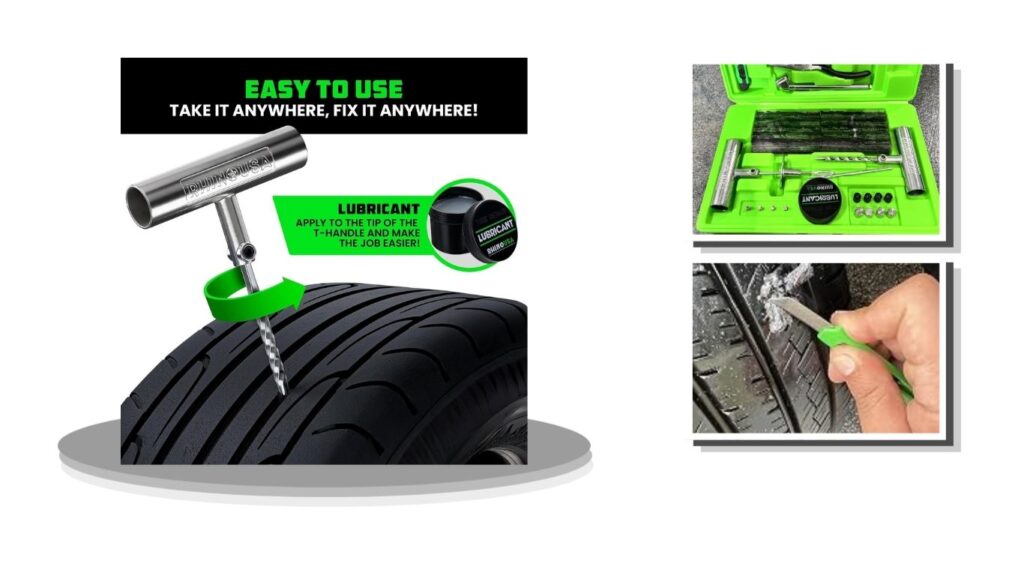
The Rhino USA 86-Piece Tire Repair Kit provides a complete roadside setup for handling common tire punctures. Its 86-piece configuration includes 60 tire plugs, a T-handle reamer, insertion tool, pliers, valve repair components, tire pressure gauge, and a carrying case. The heavy-duty construction suits repeated roadside repairs.
The repair tools prepare the puncture, while the plugs seal nail holes in suitable tread areas. The carrying case keeps the repair components organized and ready for use.
Why It Works for Nail Punctures
This kit is designed for small tread punctures caused by nails and similar objects. You can use the included pliers to remove the nail, the reamer to prepare the puncture, and the insertion tool to install a tire plug.
After inserting the plug, check the area for air leakage. You also need an air compressor or inflator to restore the tire to the recommended pressure.
Best Vehicle Applications
- Cars
- SUVs
- Trucks
- UTVs
- ATVs
Pros and Cons
Pros:
- Heavy-duty repair tools
- 60 tire plugs
- Complete roadside setup
- Organized carrying case
Cons:
- Larger than compact tire repair kits
- More equipment than occasional users need
2. Slime Tire Repair
Slime uses a different approach to puncture repair. Instead of inserting a physical rope plug into the puncture, its liquid tire sealant enters the tire through the valve stem and works inside the tire.
The compact format makes it convenient for emergency situations. Since the sealant works with the tire internally, you also need an air compressor or inflator to restore tire pressure.
Why Choose Slime for a Nail Puncture?
A physical tire plug fills the puncture directly with rubber material. A liquid sealant takes a different approach by circulating inside the tire and sealing suitable small leaks.
This makes Slime useful when you need an emergency-oriented solution without using a reamer and insertion tool.
Limitations
- Uses liquid sealant instead of a rope plug
- Requires tire inflation
- Primarily suited to emergency use
- Does not provide the same installation method as a traditional plug kit
3. Boulder Tools Tire Repair Kit
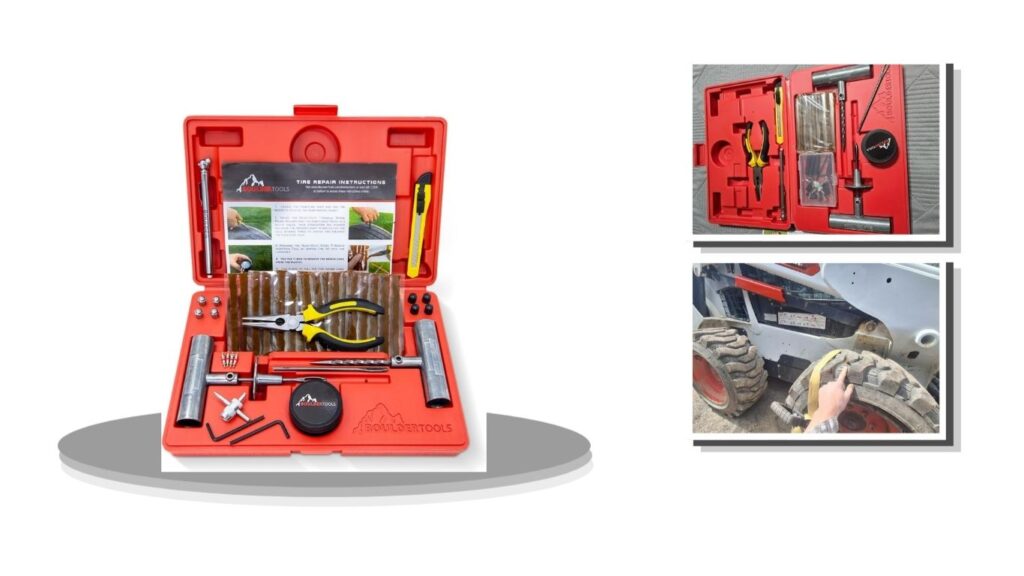
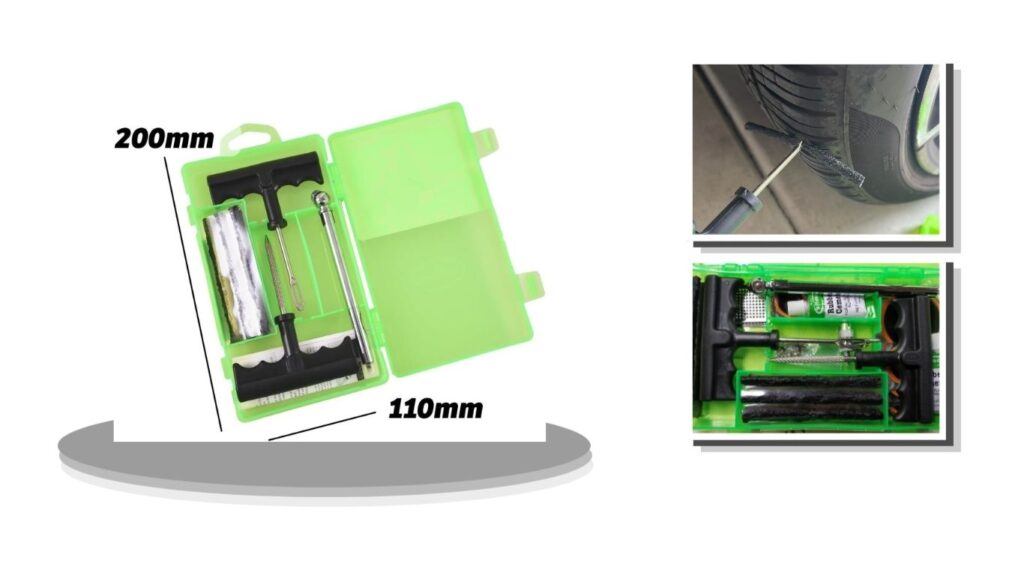
The Boulder Tools Tire Repair Kit combines full-size repair tools with a compact carrying case. It includes a T-handle reamer, insertion tool, 15 tire plugs, pliers, razor blade, valve-stem repair components, and a tire pressure gauge.
The compact case makes vehicle storage easier, while the full-size handles provide leverage when preparing and plugging a puncture. The included plugs are designed for suitable tread punctures.
Best For
- Cars
- Motorcycles
- ATVs
- Emergency roadside storage
4. Western Weld 65-Piece Tire Repair Kit
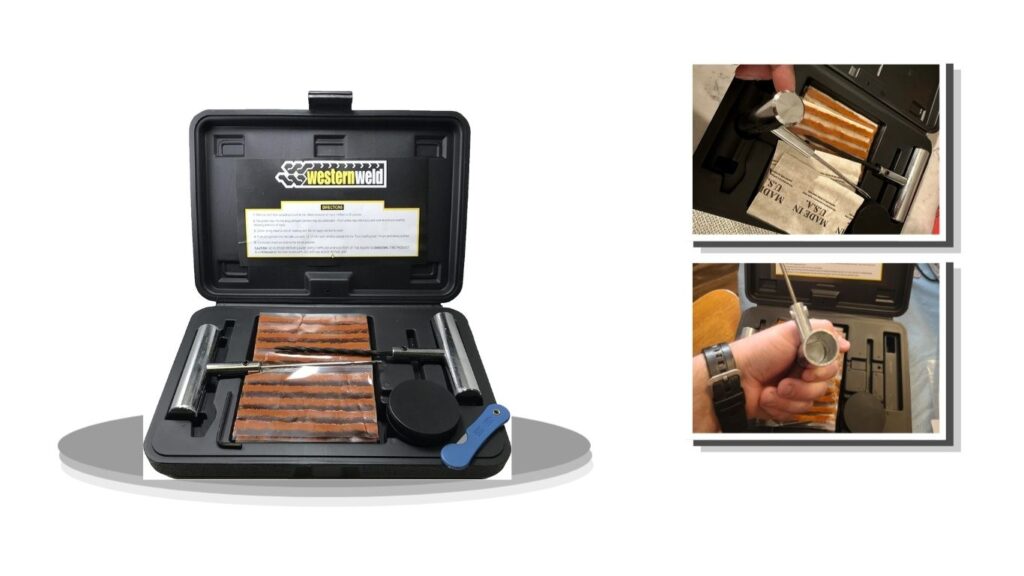
The Western Weld 65-Piece Tire Repair Kit includes 60 self-vulcanizing plugs, heavy-duty T-handle tools, and a hard carrying case. Its large plug supply makes it useful for drivers and equipment owners who handle tire repairs more frequently.
The self-vulcanizing plugs bond with tire rubber as part of the repair process. The heavy-duty T-handles also provide leverage when working with thicker tires.
Best For Frequent Tire Repairs
This kit suits vehicles and equipment where punctures are more likely to occur or where repeated repairs are needed.
- Trucks
- UTVs
- ATVs
- Lawn equipment
- Off-road vehicles
5. Grand Pitstop Tire Repair Kit
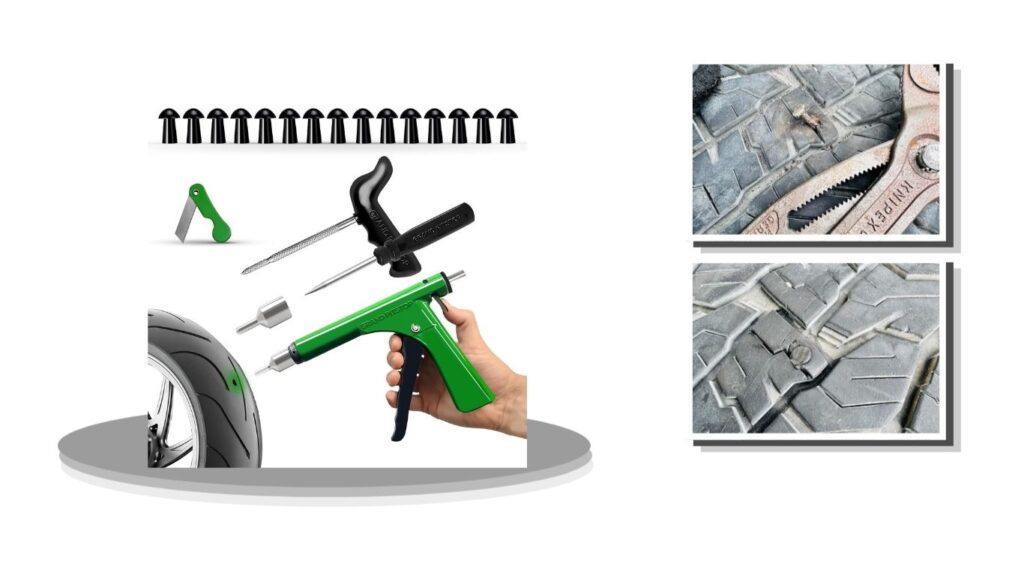
The Grand Pitstop Tire Repair Kit uses a mushroom-style tire plug instead of the conventional rope plug found in many puncture repair kits. Its specialized insertion mechanism installs the mushroom plug through the puncture.
The mushroom plug enters the puncture while its plug head seals against the inner surface of the tire. This creates a different repair mechanism from traditional string plugs.
How the Mushroom Plug Works
The insertion mechanism positions the mushroom plug at the puncture. The plug passes through the damaged area, while the wider plug head sits against the inner tire surface.
This differs from conventional rope plugs, which use a strip of rubber material inserted directly into the puncture channel. The mushroom-style design focuses on sealing from inside the tire while filling the puncture.
6. Grand Pitstop Tire Repair Kit
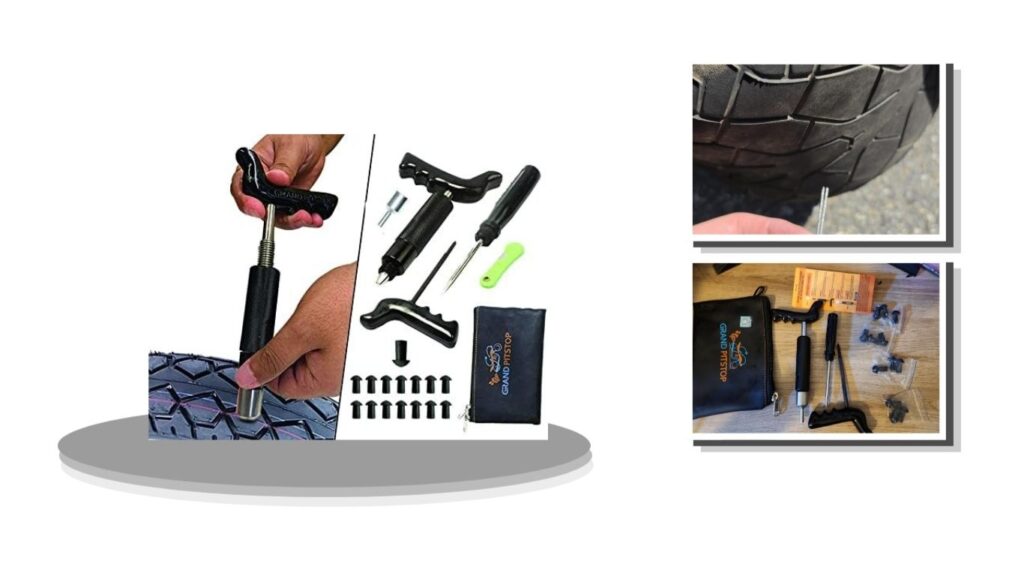
The Grand Pitstop Tire Repair Kit uses a mushroom-style tire plug instead of the traditional rope plug. Its specialized insertion mechanism is designed to guide the mushroom plug through the puncture and position the wider plug head against the inner surface of the tire.
Why It Works for Nail Punctures
A nail can penetrate the tire tread and create a small channel for air to escape. The mushroom plug enters through this puncture and seals the damaged area.
The plug head provides an internal sealing point, while the plug body fills the puncture channel. This differs from conventional rope plugs, which rely on a rubber strip inserted directly into the hole.
How the Repair Mechanism Differs
Traditional rope plugs require you to ream the puncture, load the plug into a forked insertion tool, and push it into the tire.
The Grand Pitstop approach uses a dedicated mushroom plug and insertion mechanism. This gives the kit a different installation process and makes it an alternative for drivers who prefer a more specialized plug design.
Best For
- Small tread punctures
- Nail punctures
- Roadside emergency repairs
- Drivers who prefer mushroom-style plugs
- Vehicles with suitable repairable tire damage
7. Boulder Tools Tire Repair Kit
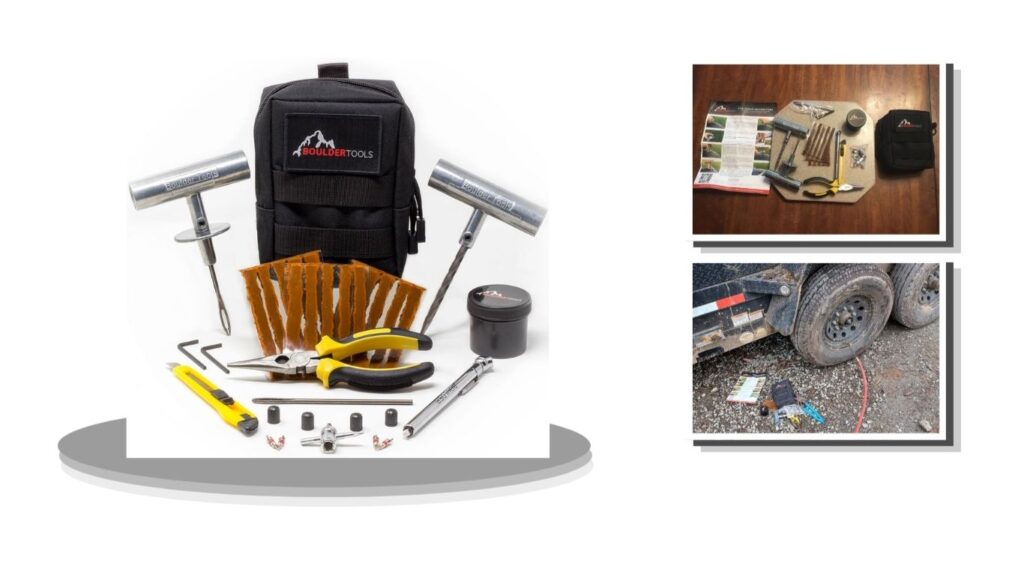
The Boulder Tools Tire Repair Kit is a compact option for drivers who want essential puncture repair tools without carrying a large roadside kit. It includes a T-handle reamer, insertion tool, 15 tire plugs, pliers, razor blade, valve-stem repair components, and a tire pressure gauge.
| Feature | Details |
|---|---|
| Plug supply | 15 plugs |
| Main tools | Reamer, insertion tool, pliers |
| Extra tools | Razor blade, valve repair tools |
| Pressure check | Tire pressure gauge |
| Storage | Compact carrying case |
Why It Works for Nail Punctures
The kit provides the basic tools needed to handle a suitable tread puncture caused by a nail. Pliers help remove the nail, while the T-handle reamer cleans and prepares the puncture.
The insertion tool then carries the plug into the prepared hole. After installation, the tire pressure gauge helps you check the tire pressure.
Compact Storage
The compact case makes the kit practical for keeping in a car, motorcycle, or ATV. Its smaller footprint also helps when trunk or storage space is limited.
Best For
- Cars
- Motorcycles
- ATVs
- Emergency roadside storage
- Drivers who want a compact repair kit
8. Flat Tire Repair Kit 68pcs 2-Pack
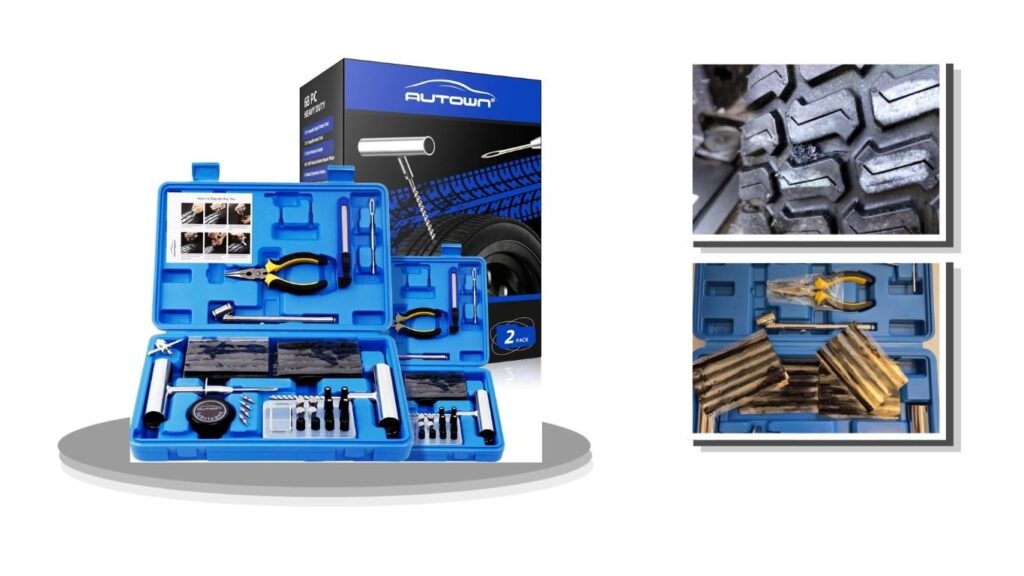
Flat Tire Repair Kit 68pcs 2-PackTire Repair Kit is designed for repeated puncture repairs. It includes 60 self-vulcanizing plugs, heavy-duty T-handle tools, and a hard carrying case.
The large plug supply makes it useful for drivers and equipment owners who want multiple repairs available in one kit.
Why It Works for Nail Punctures
A nail can create a small tread puncture that allows air to escape. After removing the nail, the heavy-duty T-handle tools help prepare the puncture and install a suitable plug.
The self-vulcanizing plugs are designed to bond with tire rubber, helping seal the puncture after installation.
Large Plug Supply
With 60 plugs included, the kit provides more replacement plugs than many compact roadside kits. This makes it practical for frequent tire repairs involving trucks, off-road vehicles, and equipment.
Heavy-Duty Construction
The heavy-duty T-handles provide leverage when working with thicker tire rubber. The hard case also protects and organizes the repair components between uses.
Best For
- Trucks
- UTVs
- ATVs
- Lawn equipment
- Off-road vehicles
- Frequent tire repairs
9. Universal Heavy Duty Tire Repair Kit For Car
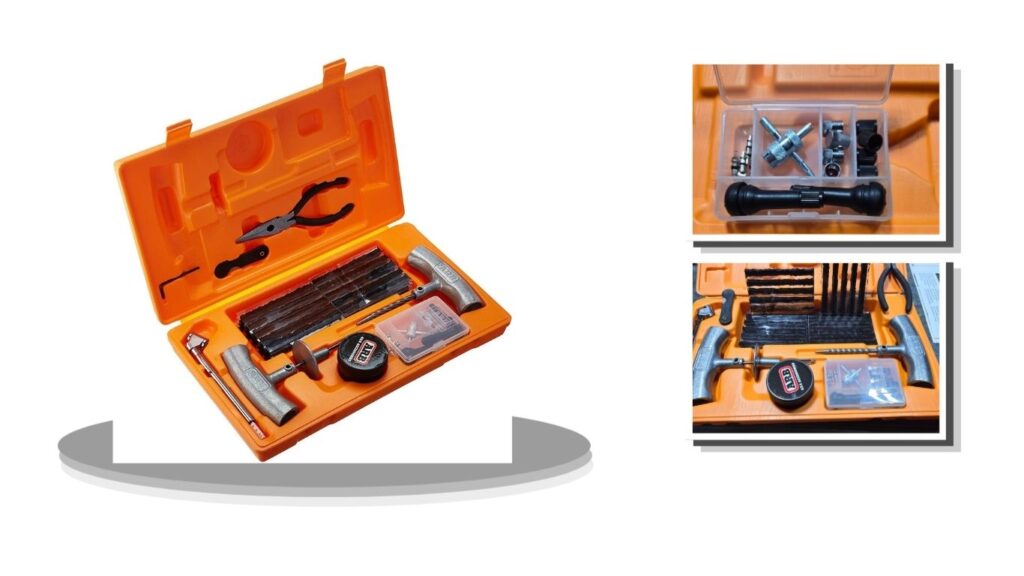
The Universal Heavy Duty Tire Repair Kit For Car is built for drivers who want a complete roadside solution for common tire punctures. Its heavy-duty tools help you remove a nail, prepare the puncture, install a plug, and check tire pressure before getting back on the road.
| Feature | Details |
|---|---|
| Main use | Nail and tread puncture repair |
| Tools | Reamer, insertion tool, pliers |
| Plug type | Tire repair plugs |
| Pressure check | Tire pressure gauge |
| Storage | Carrying case |
Why It Works for Nail Punctures
The kit provides the tools needed for the main stages of a plug repair. Use the pliers to remove the nail, then use the reamer to clean and prepare the puncture.
The insertion tool carries the plug into the prepared hole. After inflating the tire, use the pressure gauge to verify the tire pressure and inspect the repair for leaks.
Heavy-Duty Tools
The stronger tool construction provides leverage when working with firm tire rubber. This makes the kit more suitable for roadside use than basic emergency kits with small handles.
Best For
- Cars
- SUVs
- Trucks
- UTVs
- ATV owners
- Roadside emergency storage
10. Slime Tire Repair Kit
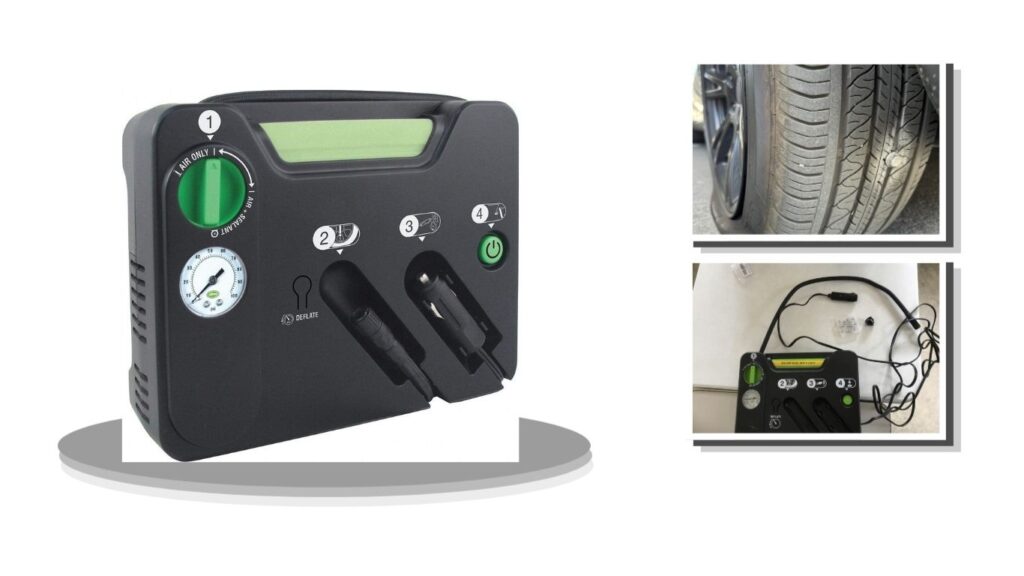
The Slime Tire Repair Kit takes a different approach to nail punctures by using liquid tire sealant instead of a traditional rope plug. The sealant enters through the valve stem and works inside the tire to seal suitable small punctures.
| Feature | Details |
|---|---|
| Repair method | Liquid tire sealant |
| Application | Through valve stem |
| Format | Compact |
| Air required | Yes |
| Main purpose | Emergency tire repair |
Why Choose Slime for a Nail Puncture?
A conventional plug physically fills the puncture from the outside. Slime uses liquid sealant, which enters through the valve stem and spreads inside the tire.
This makes the process different from using a reamer and insertion tool. It is useful when you need a compact emergency solution for a suitable small puncture.
Compact Emergency Solution
The compact format makes Slime easy to keep in a vehicle. You do not need to carry a large set of mechanical plug tools.
However, the tire needs adequate inflation for the sealant to work through the tire. An air compressor or inflator is therefore an important part of the roadside setup.
Best For
- Cars
- SUVs
- Emergency roadside situations
- Drivers who prefer liquid sealant
- Small suitable tread punctures
How to Plug a Nail Hole in a Tire
Find the Puncture
Start by locating the nail puncture and checking where air is escaping. If the nail is difficult to see, apply soapy water around the tread and look for bubbles. The size and location of the puncture matter before you begin any repair.
Remove the Nail
Use pliers to grip the exposed nail firmly. Pull the nail straight out of the tire tread. Avoid twisting or enlarging the hole because additional damage can make the puncture unsuitable for a simple plug repair.
Ream the Puncture
Insert the reamer into the puncture and work it through the damaged area. The reamer cleans the hole and roughens the surrounding rubber, helping prepare the surface for plug insertion.
Prepare the Plug
Take a suitable tire plug and connect it to the forked end of the insertion tool. Position the plug securely so it stays in place while you push it into the puncture.
Insert the Plug
Push the insertion tool and plug into the prepared puncture. The plug should occupy the puncture channel and provide material for sealing the hole.
Remove the Insertion Tool
Once the plug is properly positioned, withdraw the insertion tool from the puncture. The tool should come out while the plug remains inside the tire.
Trim the Plug
Use a blade or cutting tool to remove excess plug material extending above the tread. Trim it carefully without cutting into the tire rubber.
Inflate the Tire
Use an air compressor or portable inflator to restore the tire to the vehicle manufacturer’s recommended pressure. Check the pressure with a reliable tire pressure gauge.
Check for Leaks
Apply soapy water around the repaired puncture. Watch for new bubbles. Continuous bubbling indicates air is still escaping and the repair needs further assessment.
Plug vs Patch vs Plug-Patch vs Tire Replacement
The four methods use different repair points and serve different purposes. A plug fills a puncture from the outside, while a patch seals the inner liner. A plug-patch combines both methods. Tire replacement removes the damaged tire entirely.
| Repair Method | Entry Point | Primary Function | Best Situation |
|---|---|---|---|
| Tire Plug | Outside | Fills puncture | Roadside tread repair |
| Tire Patch | Inside | Seals inner liner | Professional repair |
| Plug-Patch | Outside + inside | Fills and seals | Long-term professional repair |
| Replacement | N/A | Removes damaged tire | Unsafe or severe damage |
A tire plug is convenient for a suitable tread puncture, especially as a roadside repair. A patch requires access to the inside of the tire and is normally handled by a tire professional.
A plug-patch combines a plug that fills the puncture channel with a patch that seals the inner liner. This approach is commonly associated with professional tire repair.
Replacement is the appropriate option when damage is severe, the sidewall is affected, the tire has significant internal damage, or the tire is otherwise unsafe to repair.
Best Tire Plug Kit by Vehicle
The right tire plug kit depends on your vehicle’s tire size, storage space, driving conditions, and likelihood of punctures. A compact kit works well for daily drivers, while trucks and off-road vehicles benefit from stronger tools and larger plug supplies.
Best for Cars
Cars generally benefit from a compact and lightweight repair kit. A kit with around 10 to 15 plugs, a reamer, insertion tool, pliers, and a small carrying case provides the basic equipment for roadside puncture repairs.
A smaller kit also takes less trunk space. Choose one that includes durable tools rather than focusing only on the total piece count.
Best for Trucks and SUVs
Trucks and SUVs benefit from heavy-duty tire repair tools. Their larger tires often require more leverage during puncture preparation and plug insertion.
Look for strong T-handle tools, durable construction, a larger plug supply, and a protective carrying case. A portable air compressor is also useful because repairing a puncture requires restoring tire pressure.
Best for Motorcycles
Motorcycles have limited storage space, so compact size and portability matter. A small repair kit with lightweight tools and several plugs fits more easily under a seat or inside a motorcycle storage compartment.
Prioritize essential tools and a compact case. A portable compressor or inflator should also fit your motorcycle’s available storage.
Best for UTVs and ATVs
UTVs and ATVs often travel over terrain where sharp rocks, thorns, and debris increase puncture exposure. These vehicles benefit from heavy-duty tools, durable cases, and a larger supply of plugs.
A portable compressor is especially useful for off-road trips. Choose a kit that is easy to carry and strong enough for repeated repairs in demanding conditions.
Highway vs Off-Road Tire Plug Kits
Highway Kit
A highway tire plug kit should focus on portability and basic roadside repairs. A compact design takes less trunk or storage space, while lightweight tools make the kit easier to carry.
Look for a basic plug supply, reamer, insertion tool, pliers, and a small carrying case. For regular highway driving, portability is often more important than having a large collection of heavy-duty tools.
Off-Road Kit
An off-road tire plug kit needs stronger equipment because rocks, thorns, and sharp debris create greater puncture exposure. Heavy-duty tools provide more leverage when working with tougher tire rubber.
Look for a heavy-duty reamer, strong insertion tool, at least 30 plugs, a durable case, and a portable air compressor. A larger kit also gives you more repair capacity during longer off-road trips.
Why You Need an Air Compressor With a Tire Plug Kit
A tire plug kit repairs the puncture, but it does not restore lost tire pressure. After removing the nail and installing the plug, you need to inflate the tire to the recommended pressure.
A portable air compressor or 12V inflator provides the air needed to restore pressure. A pressure gauge measures PSI so you know when the tire reaches the correct level.
You should also verify the repair for leaks before driving. A complete roadside setup therefore includes a plug kit, air source, pressure gauge, and a method for checking the repaired area.
Common Tire Plugging Mistakes
Skipping the reaming step can leave the puncture poorly prepared for the plug. This reduces the chance of achieving a proper seal.
Using weak tools increases the risk of bending or breaking the reamer or insertion tool during installation.
Incorrect plug insertion can reduce sealing quality. The plug needs to be installed according to the repair kit’s instructions.
Do not plug a sidewall puncture as if it were a normal tread repair. Sidewall damage requires professional assessment because it affects an important structural area of the tire.
Driving on a flat or severely underinflated tire can cause internal structural damage. External inspection alone might not reveal this damage.
Skipping the leak test leaves potential air leakage unresolved. Always check the repaired area after inflation.
How Long Does a Tire Plug Last?
The service life of a tire plug depends on the plug material, puncture size, puncture location, installation quality, tire condition, and driving conditions.
A properly installed plug in a suitable tread puncture provides a seal, but not every plug repair has the same reliability. Poor installation, excessive tire wear, or damage around the puncture can reduce repair performance.
A professional plug-patch repair provides a more comprehensive repair method because it seals both the puncture channel and the inner liner. Follow the tire manufacturer’s recommendations and have questionable repairs inspected by a qualified tire professional.
How Big of a Nail Hole Can a Tire Plug Fix?
A standard tire plug is generally intended for a small tread puncture. Many repair guidelines use approximately 1/4 inch as a common upper reference for puncture diameter, but the exact limit depends on the tire, plug system, and applicable repair standard.
The puncture diameter needs to match the capabilities of the plug and repair system. A hole larger than the recommended size can exceed the sealing capability of a standard plug.
If the puncture is large, irregular, torn, or close to the shoulder, have the tire professionally inspected instead of relying on a conventional plug.
When Should You Replace the Tire Instead?
Tire replacement becomes the safer choice when damage compromises the tire’s structure or falls outside accepted repair areas.
Sidewall damage is a major concern because the sidewall flexes during normal driving. Large or irregular punctures also require professional assessment.
Replace the tire when there is structural damage, excessive tread wear, evidence of internal damage after driving flat, or multiple repairs that compromise the tire’s repairability.
The severity and location of the damage should determine the repair decision. An unsafe tire requires replacement rather than another plug.
Frequently Asked Questions
Can I plug a tire with a nail still in it?
No. Remove the nail before preparing the puncture and installing a plug. Leaving the nail in place prevents proper inspection and plug installation.
Can you plug a nail hole in a tire?
Yes, a small puncture in a suitable tread area is often repairable. The tire should have no serious internal or structural damage.
How do I know if a nail puncture is repairable?
Check the puncture location, size, and tire condition. A small tread puncture is more likely to qualify, while sidewall damage, large holes, or internal damage require professional assessment.
Can I plug a tire without removing it?
Some emergency plug kits allow you to repair a suitable tread puncture while the wheel remains mounted. Access must be sufficient for safe tool use, and the repair should follow the kit instructions.
How long does a tire plug last?
Service life depends on plug material, installation quality, puncture location, tire condition, and driving conditions. A qualified tire professional should assess repairs when long-term reliability is important.
Can I plug a sidewall puncture?
A sidewall puncture should not be treated as a standard plug repair. Have the tire professionally inspected because sidewall damage can compromise tire structure.
How big of a hole can a tire plug fix?
Many standard plug systems use approximately 1/4 inch as a common reference for maximum puncture size. Always follow the specific plug manufacturer’s limits and professional tire repair guidance.
Do tire plugs need rubber cement?
Some rope plug systems use rubber cement during installation, while other plug products have their own adhesive or self-vulcanizing properties. Follow the instructions for your specific kit.
Can I use a tire plug kit on a motorcycle?
Yes, a suitable tire plug kit works with many tubeless motorcycle tires for appropriate tread punctures. Carry a compact kit and portable inflator for roadside emergencies.
Can tire plugs work on tubeless tires?
Yes. Tire plugs are designed primarily for repairing suitable punctures in tubeless tires. The puncture must be in a repairable area and within the plug system’s size limits.

- Top 10 Best Battery Tester Automotive 2026 - October 20, 2026
- Top 10 Best Battery Tender For Motorcycle Battery 2026 - October 20, 2026
- Top 10 Best Battery Rotary Tool 2026 - October 20, 2026