15 Types of Car Tyres in the UK: Uses, Climate Guide and Where to Buy

British roads demand more from tyres than almost any other road network in Europe. The unpredictable weather, a mix of urban stop start traffic, rural single track lanes, motorway cruising, and some of the worst pothole density of any developed nation all place different demands on the rubber connecting your car to the road. Choosing the wrong tyre type for your driving pattern is one of the most common and most costly mistakes UK drivers make.
This guide covers all 15 types of car tyres available in the UK, explaining what each type is designed for, its advantages and disadvantages, and exactly which UK drivers and driving conditions each one suits best.
Whether you drive a city hatchback in Manchester, a family SUV in rural Scotland, or a performance car on B roads in Wales, the right tyre type makes a measurable difference to your safety, fuel economy, and running costs.
Why Tyre Type Matters More Than Most UK Drivers Realise
Most UK drivers replace tyres reactively when they get a puncture or when a tyre fails its MOT check rather than proactively selecting the right tyre type for their specific driving needs. This reactive approach means the majority of UK drivers are running on a tyre type that is a compromise rather than a match for their actual conditions.
The UK legal minimum tread depth is 1.6mm across the central three quarters of the tyre’s width. Driving on tyres below this depth carries a fine of up to £2,500 per tyre and three penalty points on your licence. Understanding the 15 tyre types below gives every UK driver the knowledge to make an informed decision rather than simply accepting whatever the local tyre fitter recommends without context.
15 Types of Car Tyres in the UK: Full Guide
1. Summer Tyres
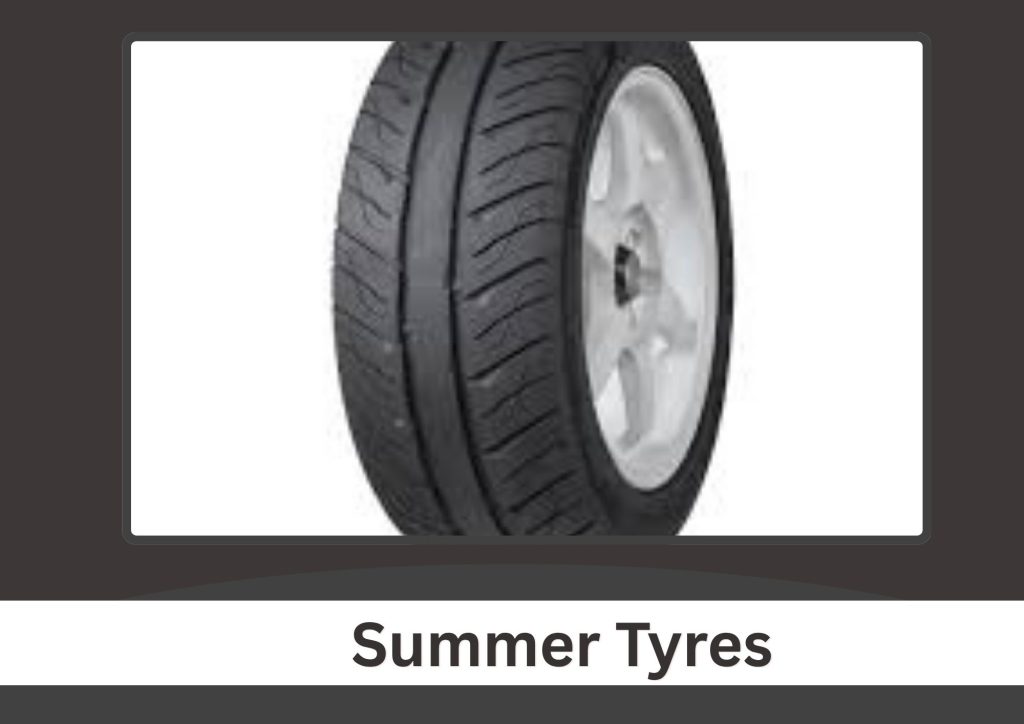
Summer tyres are the standard tyre type fitted to the vast majority of new cars sold in the UK. Despite their name, they are not designed exclusively for hot weather.
They are optimised for road temperatures above 7 degrees Celsius, which in the UK means they perform at their best from roughly late March through to October.
Summer tyres use a harder rubber compound than winter tyres, which delivers lower rolling resistance, better fuel economy, and sharper handling response in warm and dry conditions.
In wet conditions above 7 degrees Celsius, summer tyres outperform all season tyres in terms of aquaplaning resistance and wet braking distance because their tread patterns are specifically engineered to channel water away from the contact patch. However, below 7 degrees Celsius, the harder rubber compound stiffens and loses grip significantly.
Identify Your Vehicle’s Requirements
Summer tyres are suited to passenger cars, hatchbacks, saloons, and sports cars with standard suspension setups. Check your vehicle handbook or the placard inside the driver’s door jamb for the recommended tyre size, load index, and speed rating. Most summer tyres carry speed ratings of H (210 km/h), V (240 km/h), or W (270 km/h). Always match or exceed the speed rating specified for your vehicle. If your car was originally fitted with summer tyres from the factory, summer tyres remain the correct base choice for warmer month driving.
Choose a Tyre Type Based on Climate
Summer tyres are the right choice for UK drivers in Southern England, the Midlands, and major urban areas such as London, Birmingham, Manchester, and Bristol where winter temperatures rarely fall below freezing for extended periods. If you live in Scotland, the Pennines, Snowdonia, or Dartmoor where sub zero temperatures are common between November and March, summer tyres become a genuine safety risk on ungritted roads below 7 degrees Celsius. In those regions, pairing summer tyres with a seasonal winter tyre change delivers the best year round safety outcome.
Evaluate Performance and Value
Premium summer tyres from Michelin, Continental, and Bridgestone deliver the best dry and wet performance but carry a higher purchase price. Mid range options from Hankook, Yokohama, and Falken offer strong independent test scores at a noticeably lower cost per tyre. Budget summer tyres from Tier 3 brands pass legal safety standards but consistently show longer wet braking distances in independent Which? and ADAC tests. The performance gap between premium and budget summer tyres is most pronounced in wet braking, which is the most safety critical measurement for UK road conditions given Britain’s annual rainfall.
Where to Buy
Summer tyres are available from all major UK tyre retailers including Kwik Fit, ATS Euromaster, National Tyres, and Halfords Autocentre. Online retailers such as Blackcircles, Mytyres, and Tyrereviews offer competitive pricing with fitting arranged at a local garage. When buying online, always confirm that the fitting centre can accommodate your specific rim size and that the tyre carries the correct EU label fuel efficiency and wet grip rating for your intended use.
Important Notes
Summer tyres are legal year round in the UK as there is no law mandating seasonal tyre changes. However, using summer tyres in sub zero conditions significantly increases stopping distances and is a safety decision the driver must take responsibility for. Never fit summer tyres with a speed rating lower than the vehicle manufacturer’s specification. Check the DOT date code on any summer tyre and avoid purchasing tyres manufactured more than two years before the sale date as the compound begins to harden from the point of manufacture.
2. Winter Tyres
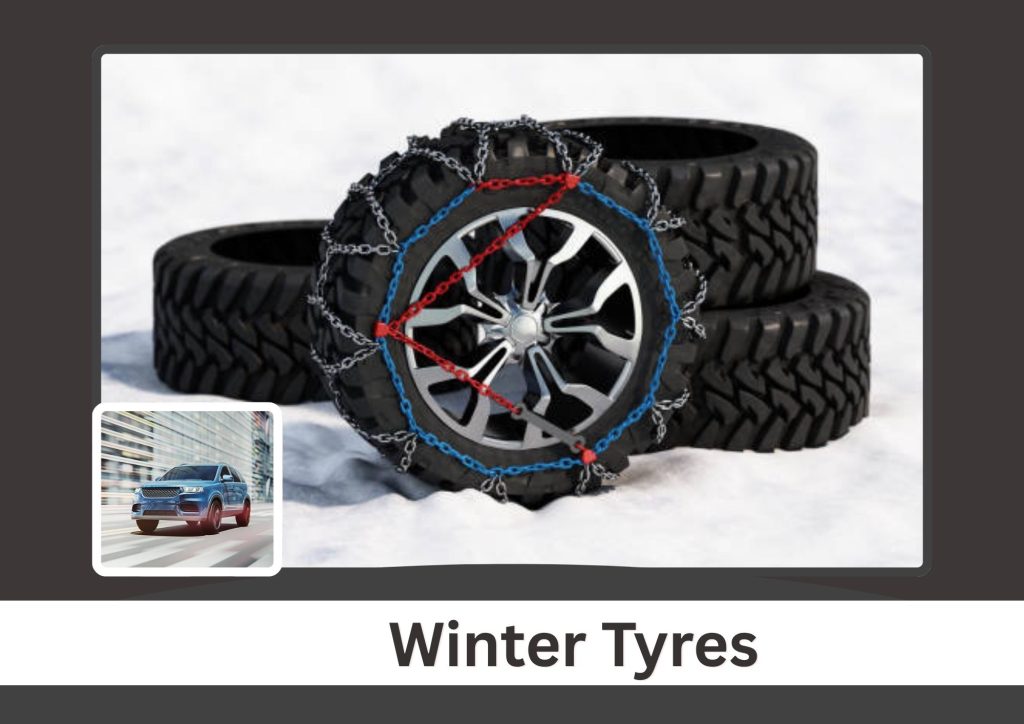
Winter tyres use a softer silica rich rubber compound that remains flexible and grippy at temperatures below 7 degrees Celsius
. Their tread patterns feature thousands of tiny cuts called sipes, which create additional biting edges that grip into wet, icy, and snowy road surfaces.
In independent tests by organisations including TUV SUD and Which?, winter tyres reduce wet stopping distances at 5 degrees Celsius by up to 11 metres compared to summer tyres at 62 mph, the equivalent of two car lengths at that speed.
In the UK, winter tyres are used far less frequently than in continental Europe despite large parts of Scotland, Northern England, Wales, and the West Country regularly experiencing conditions that make them highly beneficial.
Identify Your Vehicle’s Requirements
Winter tyres are available for virtually every passenger car, SUV, and light commercial vehicle sold in the UK. They must match your vehicle’s rim diameter, width, and aspect ratio exactly. The load index and speed rating must meet or exceed your vehicle manufacturer’s specification. Many drivers purchase a second set of steel or alloy wheels specifically for winter tyres, which makes seasonal changeovers faster and avoids the cost of repeated tyre mounting and dismounting. Check that your TPMS sensors are compatible with any second set of wheels you purchase, as TPMS is legally required on all UK cars registered after November 2014.
Choose a Tyre Type Based on Climate
Winter tyres are strongly recommended for drivers in the Scottish Highlands, Aberdeenshire, the Pennines, Snowdonia, the Brecon Beacons, Dartmoor, Exmoor, and the Lake District, all areas where snow, ice, and sustained sub zero temperatures are common between November and March. Drivers in urban England who occasionally encounter frost benefit more from a quality all season tyre than from the logistical and financial investment of a seasonal winter tyre change. The clearest indicator that winter tyres are the right choice is whether you regularly drive on ungritted rural roads or elevated routes during winter months.
Evaluate Performance and Value
The Bridgestone Blizzak LM005, Continental WinterContact TS 870, Michelin Alpin 6, and Pirelli Winter Sottozero 3 are the benchmark winter tyre options for UK buyers based on independent European test results. These premium options carry a higher upfront cost but deliver measurably shorter stopping distances on snow and ice compared to mid range alternatives. The total cost of a seasonal winter tyre system including a second set of wheels is typically recouped within two to three years through the extended lifespan of both tyre sets, since neither set is driven year round.
Where to Buy
Winter tyres are available from major UK tyre chains but stock can be limited outside of October to December. Online retailers including Blackcircles, Mytyres, and Point S carry wider winter tyre ranges. Many independent tyre retailers offer tyre hotel services where your second set of tyres is stored between seasons for a modest annual fee, resolving the storage problem that prevents many UK drivers from adopting winter tyres.
Important Notes
All winter tyres sold in the UK must display the Three Peak Mountain Snowflake symbol, known as the 3PMSF mark, to confirm they meet the European winter tyre performance standard. Tyres marked M plus S only, without the 3PMSF snowflake, do not meet this standard and should not be relied upon for genuine winter driving. Winter tyres must not be used in sustained high temperatures above 25 degrees Celsius as the softer compound wears rapidly on warm dry roads. Always change all four tyres to winter specification simultaneously. Fitting winter tyres on two wheels only creates dangerous handling imbalance.
3. All Season Tyres
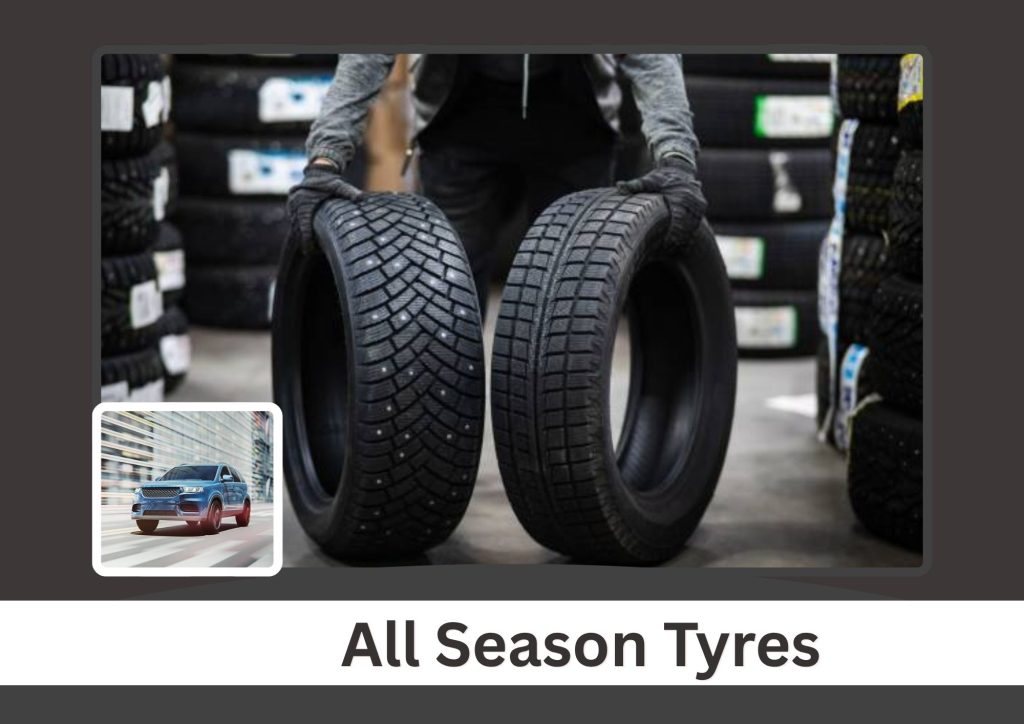
All season tyres, increasingly marketed as all weather tyres in the UK, are the fastest growing tyre category in the British market.
They use a compound formulation that sits between summer and winter tyre rubber, delivering acceptable performance across the full temperature range that UK drivers typically encounter.
They carry the 3PMSF snowflake symbol, confirming they meet the European winter tyre standard, while also performing adequately in summer conditions.
Leading options in the UK include the Michelin CrossClimate 2, Continental AllSeasonContact 2, Goodyear Vector 4Seasons Gen 3, and Bridgestone Weather Control A005, all of which score highly in UK specific independent tests.
Identify Your Vehicle’s Requirements
All season tyres are available for passenger cars, SUVs, and crossovers across the full range of rim sizes used by UK vehicles. They are particularly well suited to family hatchbacks, estate cars, and compact SUVs where a single tyre set covering all conditions is the priority. Check your vehicle handbook for the load index and speed rating requirement. Most quality all season tyres carry H or V speed ratings, covering vehicles up to 240 km/h rated speed. Confirm that the all season tyre you select carries the 3PMSF snowflake symbol and not just the M plus S marking.
Choose a Tyre Type Based on Climate
All season tyres are the ideal single solution for most UK drivers in England and Wales who experience mild winters, occasional frost, and frequent rain rather than sustained snow and ice. They outperform summer tyres in temperatures below 7 degrees Celsius and outperform winter tyres on warm dry summer roads. For Scotland, the Pennines, and Welsh mountain passes where severe winter conditions are more prolonged, independent testing shows that dedicated winter tyres still provide a meaningful safety advantage over all season alternatives in the most extreme cold and snow conditions.
Evaluate Performance and Value
The Michelin CrossClimate 2 consistently leads UK and European all season tyre tests for its combination of summer like dry performance and winter like cold weather grip. The Continental AllSeasonContact 2 and Goodyear Vector 4Seasons Gen 3 are close competitors that offer strong all round performance at a slightly lower price point. Mid range all season options from Hankook and Nexen provide a budget friendly entry into the all season category with acceptable if not class leading performance across both summer and winter metrics.
Where to Buy
All season tyres are now stocked by all major UK tyre retailers and online platforms. Kwik Fit, ATS Euromaster, and National Tyres all carry the leading all season brands. Blackcircles and Mytyres offer competitive online pricing. When comparing prices, always check that the quoted tyre carries the 3PMSF symbol rather than only the M plus S marking, as budget all season tyres sometimes carry only the M plus S mark and offer significantly reduced winter performance.
Important Notes
All season tyres wear faster than dedicated summer tyres when driven primarily in warm conditions because their softer compound is in contact with warm tarmac for more months of the year. Drivers in Southern England who use all season tyres primarily in summer conditions may find that replacing the tyres every three years rather than four to five years offsets some of the convenience advantage. Always check the EU tyre label wet grip rating when selecting an all season tyre. Wet grip is the most critical safety metric for UK conditions and varies meaningfully between all season products at similar price points.
4. Performance Tyres
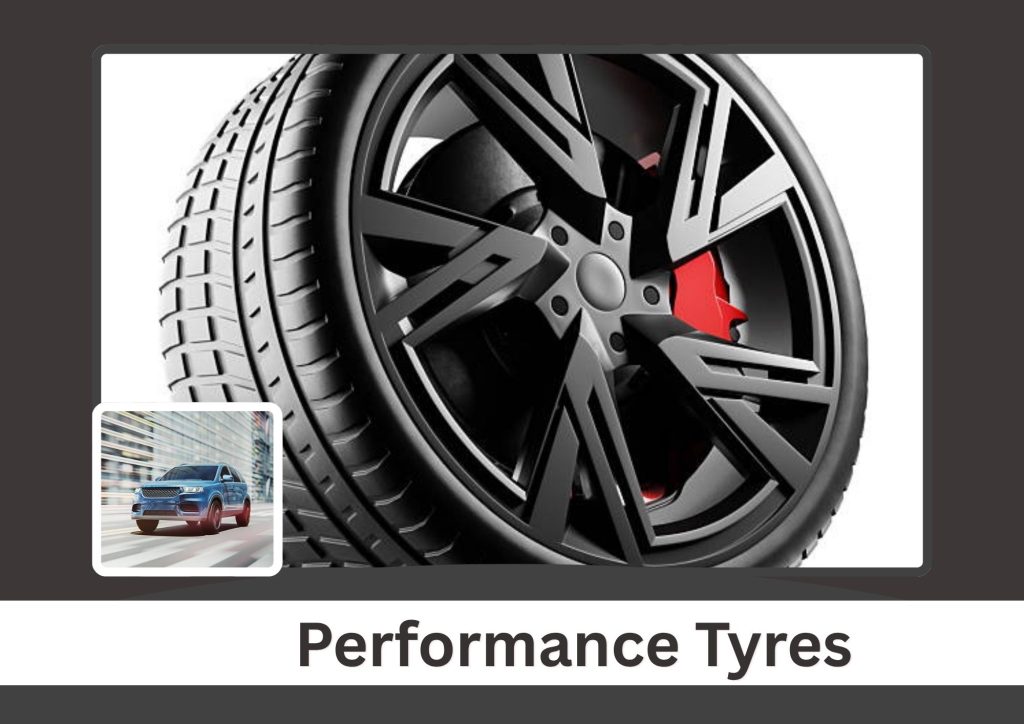
Performance tyres are engineered for cars with higher power outputs, lower ride heights, and sportier suspension setups.
They use stickier rubber compounds, wider contact patches, and more aggressive tread patterns that prioritise lateral grip and steering response over longevity and fuel economy. Performance tyres are rated to higher speed indices, typically H, V, W, or Y ratings covering speeds up to 300 km/h.
In the UK, performance tyres are commonly fitted to hot hatchbacks, sports saloons, coupes, and sports cars where they deliver noticeably sharper handling and better feedback through corners compared to standard touring tyres.
Identify Your Vehicle’s Requirements
Performance tyres are designed for vehicles including the Volkswagen Golf GTI, Ford Focus ST, Honda Civic Type R, BMW M Series, and similar sports oriented models. Your vehicle handbook will specify the minimum speed rating required. Hot hatchbacks typically require V or W rated tyres as a minimum. Always check the original factory tyre size precisely, as performance cars are often sensitive to tyre profile changes that alter steering geometry and speedometer accuracy. Low profile performance tyres with aspect ratios of 40 or below require particular care on UK roads where pothole damage is a significant risk.
Choose a Tyre Type Based on Climate
Performance tyres are a warm season tyre choice. Their stickier compounds deliver maximum grip in dry and wet conditions above 10 degrees Celsius but harden and lose grip more rapidly in cold weather than standard summer compounds.
For UK drivers who use a performance car year round, a dedicated winter tyre or all season tyre change for the colder months is strongly recommended. Driving a performance car on summer performance tyres on cold UK winter roads is a significant safety risk given the combined effect of high power outputs and reduced tyre grip below 7 degrees Celsius.
Evaluate Performance and Value
The Michelin Pilot Sport 5, Bridgestone Potenza Sport, Goodyear Eagle F1 Asymmetric 6, and Continental SportContact 7 are the leading performance tyres for UK buyers based on independent test results from Autocar, Evo magazine, and TUV SUD. These premium options deliver the best combination of dry lap times, wet braking distances, and feedback quality. Performance tyres wear faster than touring tyres due to their softer compounds, making cost per mile higher than a standard tyre. High mileage UK commuters who happen to drive performance cars often find that a touring tyre compound in the correct speed rating delivers better overall value without significantly compromising daily road driving safety.
Where to Buy
Performance tyres in low profile and wide sizes may not be stocked locally by smaller tyre retailers. Blackcircles, Mytyres, and Tyrereviews carry the widest range of performance tyre sizes online. When fitting performance tyres, use a reputable fitter with laser alignment capability, as low profile performance tyres are more sensitive to alignment errors than standard profile alternatives. Many franchised dealerships and specialist performance car workshops offer tyre fitting as part of their service offering for the relevant vehicle brand.
Important Notes
Performance tyres are more susceptible to pothole damage than standard tyres due to their stiffer sidewall construction and lower profile. UK roads, particularly in urban areas and on some A roads outside major cities, carry a pothole risk that can cause sidewall bulges and bead damage on low profile performance tyres driven at normal road speeds. After any significant pothole impact, inspect the sidewall of a low profile performance tyre carefully for bulging before continuing to drive. Never repair a performance tyre sidewall puncture. Sidewall damage on a performance tyre requires immediate replacement.
5. Ultra High Performance Tyres
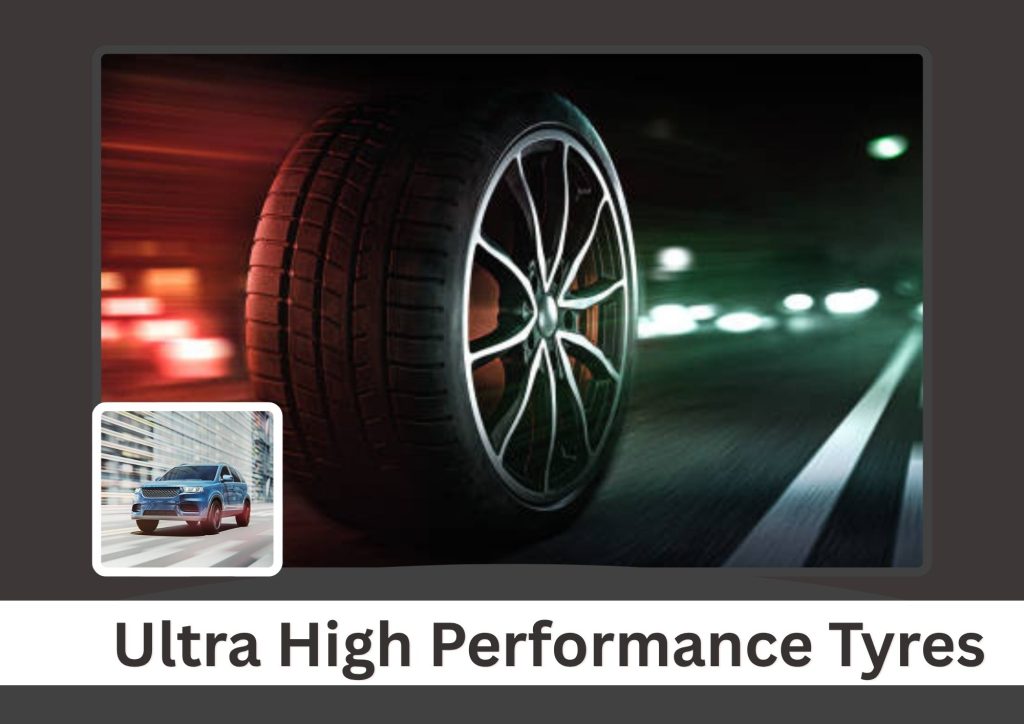
Ultra high performance tyres represent the top tier of road legal tyre technology, used on supercars, high performance sports cars, and luxury GT vehicles. They are engineered for maximum grip at very high speeds with compounds derived directly from motorsport development programmes. UHP tyres carry the highest speed ratings, typically W (270 km/h), Y (300 km/h), or the Y rating in brackets indicating speeds above 300 km/h.
Identify Your Vehicle’s Requirements
Ultra high performance tyres are required on vehicles including the Porsche 911, Ferrari Roma, Lamborghini Urus, McLaren GT, and AMG Mercedes models. These vehicles are delivered with OEM specified tyre sizes and ratings that must be matched exactly. Many supercar manufacturers use bespoke tyre specifications developed jointly with Michelin, Pirelli, or Bridgestone that are not interchangeable with standard off the shelf tyres in the same size. Always check whether your vehicle requires a manufacturer specific OEM tyre marking before purchasing a replacement.
Choose a Tyre Type Based on Climate
Ultra high performance tyre compounds are optimised for temperatures above 10 degrees Celsius and deliver progressively less grip as temperatures fall. In the UK, supercar owners who drive their vehicles year round face a genuine dilemma in winter months. A dedicated winter tyre or quality all season tyre on a second set of wheels is the recommended approach for any high performance vehicle owner who drives between October and March in Scotland or Northern England. Southern England supercar drivers who exercise the vehicle infrequently in winter can often manage with a quality all season tyre as a compromise solution.
Evaluate Performance and Value
The Pirelli P Zero, Michelin Pilot Sport S 5, Continental SportContact 7, and Bridgestone Potenza Sport are the benchmark UHP options available to UK buyers. Ultra high performance tyres command the highest price of any road tyre category, with popular sizes for common supercars and performance cars often costing significantly more per tyre than mid range alternatives. The performance premium is genuine and measurable in independent tests, delivering shorter lap times, better lateral grip in high speed cornering, and more consistent performance near the limit of tyre adhesion.
Where to Buy
Ultra high performance tyres in supercar specific sizes are often only available from specialist retailers or directly from franchised dealerships for the relevant manufacturer. Blackcircles and Mytyres carry many common UHP sizes. For genuinely exotic sizes used on limited production supercars, contacting the vehicle manufacturer’s approved service network is often the most reliable route to sourcing the correct OEM specified tyre. Never substitute a standard performance tyre for a UHP specification on a vehicle whose manufacturer has specified UHP as the minimum requirement.
Important Notes
Ultra high performance tyres require a TPMS system to operate safely. The high speed rating of these tyres means that pressure loss at speed can cause rapid tyre failure with very little warning. Never drive a supercar or high performance vehicle on UHP tyres without a functioning TPMS system and a regular manual pressure check routine. UHP tyres are also more susceptible to UV degradation and compound hardening if the vehicle is stored for extended periods. If a high performance vehicle is stored for six months or more, a professional inspection of the tyre compound condition is recommended before resuming normal use.
6. Run Flat Tyres
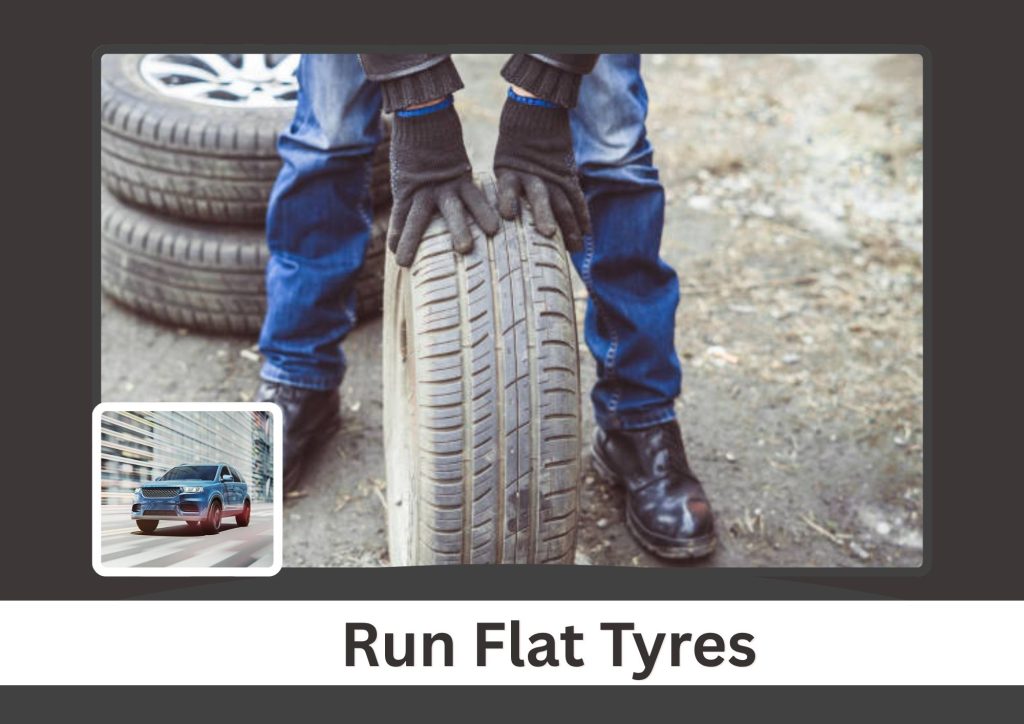
Run flat tyres are constructed with reinforced sidewalls strong enough to support the vehicle’s weight even when internal air pressure is completely lost. This allows the driver to continue at reduced speed, typically a maximum of 80 km/h or 50 mph, for up to 80 kilometres after a puncture, eliminating the need to change a tyre at the roadside. Run flat tyres are standard fitment on many BMW, MINI, and Mercedes Benz models sold in the UK.
Identify Your Vehicle’s Requirements
If your vehicle was originally fitted with run flat tyres by the manufacturer, your car was almost certainly designed without a spare tyre and may have a boot floor and suspension setup calibrated for the stiffer ride characteristics of run flat construction. Fitting standard tyres to a vehicle designed for run flats can cause the car to sit slightly differently on its suspension and will leave the vehicle without any roadside emergency option if a puncture occurs. Check your vehicle handbook to confirm whether run flat tyres are specified as a requirement for your particular model.
Choose a Tyre Type Based on Climate
Run flat technology is available across summer, winter, and all season tyre types, which means climate choice is determined by the tyre’s seasonal compound rather than the run flat construction itself. BMW owners in Scotland requiring winter performance can purchase winter run flat tyres from Continental and Bridgestone. The most common UK run flat combination is a summer run flat on southern England vehicles that are driven primarily in mild conditions. MINI owners who drive in Northern England or Scotland through winter should investigate winter run flat availability for their specific rim size.
Evaluate Performance and Value
Run flat tyres typically cost 50 to 100 percent more than an equivalent standard tyre in the same size and brand. They wear faster than equivalent standard tyres due to their heavier and stiffer construction, and they cannot be repaired after a puncture in most cases, meaning the full replacement cost applies for every puncture event. Against these cost disadvantages, the safety benefit of avoiding a roadside tyre change on a UK motorway or A road at night or in poor weather is genuinely significant. For frequent motorway drivers and those who travel alone on remote roads, the safety premium is considered worthwhile by many UK road safety experts.
Where to Buy
Run flat tyres must be sourced in the exact original equipment size for your vehicle. BMW and MINI run flat sizes are widely stocked by Kwik Fit, ATS Euromaster, and BMW franchised service centres. Blackcircles and Mytyres carry the widest range of run flat sizes online. When fitting run flat tyres, always use a fitting centre with a tyre machine capable of handling run flat construction, as standard tyre fitting equipment can damage the reinforced bead and sidewall of a run flat tyre during mounting.
Important Notes
Run flat tyres are only safe and effective when paired with a functioning TPMS system. Without tyre pressure monitoring, the driver has no way of knowing that a puncture has occurred, since run flat tyres support the vehicle’s weight even with zero pressure and the car continues to handle largely normally. Driving on a run flat tyre in the zero pressure condition for longer than the manufacturer’s stated range, typically 80 kilometres, or faster than the specified maximum speed of 50 mph causes irreversible damage to the tyre and wheel. Run flat tyres that have been driven in the zero pressure condition must be replaced, not repaired, regardless of how small the original puncture was.
7. All Terrain Tyres
All terrain tyres are designed for SUVs, 4×4 vehicles, and pickup trucks that divide their use between paved UK roads and off road surfaces including gravel tracks, farm lanes, muddy fields, and light off road routes. They feature an aggressive open tread pattern with larger tread blocks and wider grooves than road tyres, which helps them shed mud and maintain traction on loose surfaces. Most carry both the M plus S marking and the 3PMSF snowflake symbol.
Identify Your Vehicle’s Requirements
All terrain tyres are appropriate for genuine dual purpose vehicles including the Land Rover Defender, Toyota Land Cruiser, Ford Ranger, Nissan Navara, and similar trucks and SUVs. These vehicles require tyres that meet specific load index ratings due to their heavier construction and payload capacity. Always check the load index requirement for your specific vehicle variant, particularly for pickup trucks where the load index requirement changes based on whether the vehicle is used in single or dual rear wheel configuration. Confirm that the all terrain tyre you select carries the load index required for your vehicle’s maximum gross vehicle weight rating.
Choose a Tyre Type Based on Climate
All terrain tyres with the 3PMSF snowflake symbol are a practical year round choice for rural UK drivers in Scotland, Wales, and Northern England who regularly access unpaved tracks, farm roads, and elevated routes that may be affected by snow and ice in winter. They outperform road tyres on loose surfaces in any season and provide acceptable winter performance on light snow. For urban SUV drivers in England who never leave tarmac, the on road noise, fuel economy penalty, and longer wet braking distance of an all terrain tyre are unnecessary compromises that a road focused SUV tyre avoids entirely.
Evaluate Performance and Value
The BF Goodrich All Terrain T/A KO2 is widely regarded as the benchmark all terrain tyre for UK buyers, combining strong off road capability with acceptable on road behaviour and excellent durability ratings. The Michelin LTX AT2, Toyo Open Country A/T III, and Cooper Discoverer AT3 are strong alternatives at varying price points. All terrain tyres last longer than mud terrain tyres in mixed use but wear faster than road tyres when driven primarily on tarmac. Total cost of ownership over the life of the tyre is the most meaningful value comparison for dual use vehicles.
Where to Buy
All terrain tyres in common truck and SUV sizes are widely available from Kwik Fit, ATS Euromaster, and National Tyres. Less common sizes for specialist or older 4×4 vehicles may require ordering from online retailers such as Blackcircles or through 4×4 specialist tyre suppliers. When purchasing all terrain tyres, confirm that the fitter has experience with the specific rim type of your vehicle, as alloy wheels on modern SUVs require more care during mounting than the steel wheels common on older commercial 4x4s.
Important Notes
All terrain tyres produce noticeably more road noise than road focused SUV tyres at motorway speeds. If your SUV is used primarily for motorway driving or urban commuting with only occasional off road use, the noise and fuel economy penalties of all terrain tyres significantly outweigh the occasional off road benefit. A road focused SUV tyre with winter tyres for cold months is a better combination for most UK SUV drivers. All terrain tyres should be inspected more frequently than road tyres for sidewall damage, as off road use exposes the sidewall to cuts and impacts from rocks, roots, and debris that road driving does not.
8. Mud Terrain Tyres
Mud terrain tyres feature dramatically open tread patterns with large, widely spaced tread blocks designed to dig into deep mud and expel it quickly, maintaining forward traction in conditions where all terrain tyres would lose grip entirely. They are the most aggressive off road tyre type available for road legal use in the UK and represent a significant on road compromise in exchange for maximum off road capability.
Identify Your Vehicle’s Requirements
Mud terrain tyres are appropriate only for vehicles that genuinely operate in deep mud conditions regularly, including agricultural vehicles, green laning vehicles, and off road competition vehicles. They are available for the Land Rover Defender, Toyota Land Cruiser, Ford Ranger, and similar heavy duty 4×4 platforms. The load index and speed rating requirements for commercial and agricultural vehicles are particularly important to verify, as these vehicles often operate at or near maximum payload capacity where a correctly rated tyre is both a safety and legal requirement.
Choose a Tyre Type Based on Climate
Mud terrain tyres provide exceptional traction in wet mud, which is the dominant off road condition encountered in the UK during autumn and winter months. They are a genuine tool for UK farmers who regularly access waterlogged fields between October and April, and for green lane enthusiasts who navigate deep rutted tracks on Welsh, Scottish, and Northern English byways. In dry summer conditions, mud terrain tyres still perform adequately off road but the open tread pattern creates more road noise and requires more frequent inspection for embedded stones in the tread blocks.
Evaluate Performance and Value
The BF Goodrich Mud Terrain T/A KM3, Toyo Open Country M/T, and Nitto Trail Grappler are the leading mud terrain options for UK buyers. These tyres are significantly more expensive than standard road tyres but offer exceptional durability in off road environments where sidewall punctures and tread damage are common risks. Mud terrain tyres wear considerably faster than road tyres when driven regularly on tarmac, making total cost of ownership the key evaluation metric for any vehicle that divides time between off road and road use.
Where to Buy
Mud terrain tyres are a specialist product not widely stocked by mainstream UK tyre chains. Online retailers including Mytyres and 4×4 specialist suppliers carry the widest range. Fitting mud terrain tyres requires experience with the specific rim type of your vehicle, and many standard tyre fitting centres lack the equipment and expertise to correctly mount large diameter mud terrain tyres on steel wheels. Seek out a 4×4 specialist fitting centre when purchasing mud terrain tyres for the first time.
Important Notes
Mud terrain tyres are substantially louder than any other tyre type on tarmac roads. On motorways above 60 mph, the noise level inside the cabin can be significantly higher than a driver accustomed to road tyres would expect. Fuel economy is also measurably worse due to the higher rolling resistance of the open tread pattern. Mud terrain tyres should not be used as primary tyres on vehicles that spend more than 30 percent of their time on tarmac roads, as the on road penalties become disproportionate to the occasional off road benefit for mixed use drivers.
9. Touring Tyres
Touring tyres are designed for high mileage, long distance driving with an emphasis on comfort, low noise, durability, and fuel economy rather than outright grip or handling precision. They are the natural choice for UK drivers who cover high annual mileages on motorways and A roads, particularly company car drivers, sales representatives, and drivers who regularly make long journeys between UK cities.
Identify Your Vehicle’s Requirements
Touring tyres are best suited to family saloons, estate cars, executive cars, and MPVs used primarily for motorway commuting and long distance driving. Models including the Vauxhall Insignia, Ford Mondeo, Skoda Superb, BMW 5 Series, and similar vehicles used as company cars are the natural home for touring tyre compounds. Check your vehicle’s specified load index and speed rating carefully. Touring tyres typically carry H or V speed ratings and must meet the minimum speed rating specified by your vehicle manufacturer, particularly if the car has a higher performance engine variant where the speed rating requirement may be W rather than H or V.
Choose a Tyre Type Based on Climate
Touring tyres are summer season products and should be changed to winter or all season alternatives for UK drivers who regularly drive in Scotland or Northern England between November and March. For high mileage company car drivers in England and Wales who cover primarily motorway miles year round, a quality all season touring tyre such as the Michelin CrossClimate 2 or the Continental AllSeasonContact 2 provides a practical year round alternative that avoids the cost and complexity of a seasonal tyre change while maintaining acceptable winter performance in the mild conditions typical of most of England and Wales.
Evaluate Performance and Value
The Michelin Primacy 4 Plus, Continental PremiumContact 7, and Bridgestone Turanza T005 are the leading touring tyre options for UK buyers. These premium options offer the highest mileage ratings, with some warranted to 70,000 miles under normal use conditions, combined with strong wet braking performance that is particularly relevant for UK motorway driving in rain. The cost per mile calculation over the full tyre lifespan often makes premium touring tyres better value than cheaper alternatives that wear faster and require earlier replacement.
Where to Buy
Touring tyres in common passenger car sizes are widely available from all UK tyre retailers and online platforms. Kwik Fit, ATS Euromaster, and Halfords Autocentre stock the leading touring tyre brands. When purchasing touring tyres for a company car or high mileage vehicle, compare the mileage warranty offered by different brands alongside the purchase price to identify the best total cost of ownership rather than simply the lowest upfront price per tyre.
Important Notes
Touring tyres sacrifice some dry handling precision for their longevity and comfort advantages. Drivers who switch from a performance tyre to a touring compound will notice a reduction in steering feel and lateral grip in spirited driving. This trade off is entirely appropriate for the high mileage motorway use these tyres are designed for but should be understood before purchasing. Rotate touring tyres at every service interval to maximise even wear and extend the tyre life to its rated maximum mileage.
10. Eco Tyres
Eco tyres are engineered with a specific focus on minimising rolling resistance, which is the primary tyre related factor affecting a vehicle’s fuel consumption and CO2 emissions. They achieve low rolling resistance through specialised silica compound formulations, lighter construction materials, and tread patterns optimised for minimal energy loss during rotation. The EU tyre label rates tyres from A to E for fuel efficiency, wet grip, and noise, and is the key reference point for identifying eco tyre performance in the UK market.
Identify Your Vehicle’s Requirements
Eco tyres are particularly important for electric vehicle owners, where the combination of additional battery weight, instant torque delivery, and regenerative braking demands a tyre engineered specifically for EV characteristics. Electric vehicles including the Tesla Model 3, Volkswagen ID.4, Nissan Leaf, and Hyundai Ioniq 5 all benefit from EV specific eco tyres that balance low rolling resistance for range preservation with reinforced load ratings for the heavier EV body structure. Check whether your EV manufacturer specifies an OEM marked EV tyre before purchasing a general eco tyre, as some EV models have specific acoustic and load requirements that are not met by standard eco tyres.
Choose a Tyre Type Based on Climate
Eco tyres are primarily a summer season product. Their compound formulation prioritises rolling efficiency over the temperature flexibility needed for winter performance. For EV owners in Scotland and Northern England who drive in cold conditions through winter months, an eco all season tyre or a dedicated winter tyre change is strongly recommended. Reduced range in cold weather is already a characteristic of EV battery chemistry, and adding the grip and rolling resistance penalty of a summer eco tyre below 7 degrees Celsius compounds both the range and safety disadvantage.
Evaluate Performance and Value
The Michelin e Primacy, Goodyear EfficientGrip Performance 2, and Continental EcoContact 6 are the leading eco tyre options for UK buyers, all rated A for fuel efficiency on the EU label. The fuel saving from a top rated eco tyre compared to a C rated alternative is estimated at between 2 and 4 percent of total fuel consumption, which over a full tyre lifespan of 30,000 to 40,000 miles represents a meaningful cost saving for high mileage drivers and a measurable range improvement for EV owners.
Where to Buy
Eco tyres are available from all major UK tyre retailers and increasingly from EV specialist service centres. Tesla approved service partners and Volkswagen Group dealerships often stock the OEM specified eco tyre for the relevant EV models. When buying eco tyres online, always check the EU label fuel efficiency rating of the specific tyre you are purchasing, not just the brand’s marketing description, as fuel efficiency ratings vary between sizes within the same tyre range.
Important Notes
The fuel efficiency advantage of an eco tyre is most pronounced for drivers who spend the majority of their mileage at consistent motorway or A road speeds where rolling resistance is the dominant factor in fuel consumption. In stop start urban driving, where acceleration and braking dominate the energy equation, the rolling resistance advantage of an eco tyre is less impactful than in sustained speed driving. Never sacrifice wet grip rating for fuel efficiency rating when selecting an eco tyre. A wet grip rating of A or B is important for UK conditions given the frequency of rain throughout the year.
11. SUV and 4×4 Tyres
SUV and 4×4 tyres are a dedicated tyre category engineered specifically for the unique demands of sport utility vehicles and four wheel drive cars. They must handle the additional weight of SUV body structures, manage the higher centre of gravity that makes SUVs more susceptible to instability in sudden manoeuvres, and provide acceptable off road capability while remaining optimised for on road comfort and fuel economy. SUVs and crossovers now account for over 50 percent of new car registrations in the UK, making this one of the most important tyre categories for British drivers.
Identify Your Vehicle’s Requirements
Every SUV and crossover sold in the UK, including the Nissan Qashqai, Kia Sportage, Volkswagen Tiguan, Hyundai Tucson, Ford Puma, and Land Rover Discovery Sport, requires a tyre with a load index appropriate for the vehicle’s kerb weight and maximum load rating. SUV specific tyres carry higher load indices than standard passenger car tyres in the same physical size, reflecting the additional weight of the SUV body and all wheel drive system. Fitting standard passenger car tyres to an SUV, even in the correct physical dimensions, is not recommended because the load and structural requirements differ significantly from what a passenger tyre is designed to handle.
Choose a Tyre Type Based on Climate
SUV and 4×4 tyres are available in summer, winter, and all season variants, giving UK SUV drivers the same seasonal choice available to passenger car owners. For most UK SUV drivers in England and Wales, a quality all season SUV tyre provides year round coverage without the need for seasonal changes. For Scotland, the Pennines, and Welsh uplands where genuine winter conditions are experienced, a winter SUV tyre on a second set of wheels provides the best cold weather safety combined with a summer or all season SUV tyre for the rest of the year.
Evaluate Performance and Value
The Michelin Pilot Sport 4 SUV, Continental CrossContact SUV, and Pirelli Scorpion Verde are leading summer SUV tyre options for UK buyers. The Michelin CrossClimate SUV and Continental AllSeasonContact SUV lead the all season SUV category. For winter use, the Michelin Pilot Alpin 5 SUV and Continental WinterContact TS 860 S SUV are benchmark options. Premium SUV tyres carry a higher upfront cost but deliver meaningfully better wet braking distances and stability in emergency manoeuvres, which are particularly important safety metrics for higher centre of gravity vehicles.
Where to Buy
SUV and 4×4 tyres in common sizes for popular UK models are widely available from all major tyre retailers. Less common sizes for specialist or premium SUVs may require ordering from online retailers or through franchised dealerships. Confirm that the fitting centre has a wheel alignment system calibrated for SUV geometry, as incorrect alignment causes faster and uneven tyre wear on heavier SUV vehicles that is more expensive to correct than on lighter passenger cars.
Important Notes
Never fit standard passenger car tyres to an SUV even if the physical dimensions match. The load index of a standard passenger tyre is insufficient for the operating weight of a fully laden SUV with passengers and luggage, and tyre failure on an SUV at motorway speed is particularly dangerous due to the vehicle’s higher centre of gravity. Always check the load index of any replacement tyre against the vehicle manufacturer’s specification before purchasing.
12. Van and Commercial Tyres
Van and light commercial vehicle tyres are a legally distinct tyre category in the UK. They are engineered to handle the higher load ratings, heavier kerb weights, and full load operating conditions of vans and light commercial vehicles including the Ford Transit, Volkswagen Transporter, Mercedes Benz Sprinter, Vauxhall Vivaro, and similar vehicles. Commercial tyres carry a reinforced load index and are typically marked with a C designation on the sidewall.
Identify Your Vehicle’s Requirements
If your vehicle is classified as a light commercial vehicle in its registration documents, you are legally required to fit tyres with a load index that meets the vehicle’s gross vehicle weight rating. This is a legal requirement in the UK, not merely a recommendation. The load index printed on the tyre sidewall must equal or exceed the minimum specified in your vehicle’s handbook. Many LCV operators carry maximum or near maximum payload regularly, which makes the load index the most safety critical specification to verify before purchasing any van tyre.
Choose a Tyre Type Based on Climate
Van tyres are available in summer, winter, and all season variants for the most popular LCV sizes. UK van operators in Scotland, the North of England, and rural Wales who drive on ungritted roads in winter months should consider winter or all season commercial tyres rather than relying on summer compound van tyres in cold conditions. Many UK delivery fleets operating in areas with winter road closures or difficult access routes now specify all season commercial tyres as standard across the whole fleet to reduce seasonal downtime.
Evaluate Performance and Value
The Michelin Agilis 3, Continental VanContact Eco, and Bridgestone Duravis R660 are leading van tyre options for UK operators. Premium commercial tyres deliver longer wear life, lower rolling resistance for fuel efficiency, and better wet braking performance compared to budget alternatives. For a van covering high annual mileage, the total cost of ownership calculation almost always favours a premium tyre that lasts significantly longer over a budget option requiring earlier replacement.
Where to Buy
Commercial van tyres are stocked by all major UK tyre chains and can be fitted at any Kwik Fit, ATS Euromaster, or National Tyres centre. Fleet operators purchasing multiple tyres across a managed fleet can negotiate volume pricing directly with tyre manufacturers or through fleet tyre management programmes offered by Michelin Fleet Solutions, Bridgestone Fleet, and Goodyear Fleet. Online purchasing for individual van tyres is available through Blackcircles and Mytyres with fitting arranged at a local centre.
Important Notes
Fitting passenger car tyres to a van is illegal in the UK if the vehicle is classified as a light commercial vehicle. The load rating of a passenger tyre is insufficient for the operating weights of a laden commercial vehicle. UK trading standards and DVSA enforcement officers can prohibit a vehicle from the road if it is found to be fitted with incorrectly rated tyres. Van operators are personally responsible for ensuring that tyres fitted to their vehicles carry the correct load rating for the vehicle’s gross vehicle weight at all times.
13. Acoustic Tyres
Acoustic tyres incorporate a layer of noise absorbing foam bonded to the inside of the tyre carcass. This foam layer dampens the resonance frequency of the air column inside the tyre as it contacts the road surface, which is the primary source of the low frequency road noise that becomes prominent at motorway speeds. Acoustic tyres typically reduce interior cabin noise by 3 to 9 decibels compared to an equivalent non acoustic tyre, a reduction that is clearly perceptible to occupants.
Identify Your Vehicle’s Requirements
Acoustic tyres are particularly appropriate for electric vehicles where engine noise is absent and road noise becomes the dominant source of interior sound at speed. Tesla, Volkswagen ID range, BMW iX, Mercedes EQS, and Audi e tron owners all benefit measurably from acoustic tyre technology. Some manufacturers specify acoustic tyres as OEM equipment for specific EV models. Check your vehicle handbook or the tyre placard to identify whether acoustic construction is specified. Acoustic tyres are also available in run flat construction for BMW and MINI models that require both run flat safety and noise reduction.
Choose a Tyre Type Based on Climate
Acoustic tyres are available in summer and all season variants. For EV owners in Scotland and Northern England who require acoustic performance year round, all season acoustic tyre options are available from Michelin and Continental. The noise reduction benefit of acoustic foam construction is consistent across all temperature conditions, making seasonal performance the same consideration as for any equivalent non acoustic tyre in the same compound category.
Evaluate Performance and Value
Pirelli’s Elect range, Michelin’s Acoustic technology tyres, Continental ContiSilent, and Goodyear SoundComfort Technology are the main acoustic tyre options available to UK buyers. Acoustic foam construction adds to production cost, making acoustic tyres a premium priced option. For EV owners, the noise reduction benefit is considered genuinely significant given that EV ownership is partly motivated by a quieter, more refined driving experience that acoustic tyres directly support at motorway speeds.
Where to Buy
Acoustic tyres are a specialist product not universally stocked by mainstream tyre chains. EV specialist service centres, franchised dealerships for EV brands, and online retailers including Blackcircles and Mytyres are the most reliable sources for acoustic tyre options in UK relevant sizes. Confirm when ordering that the tyre is described as acoustic or noise cancelling and that it carries the foam interior layer, as standard tyres from the same brand range do not carry this designation.
Important Notes
The acoustic foam layer inside acoustic tyres requires a TPMS compatible tyre pressure monitoring approach, as the foam can partially obstruct certain internal TPMS sensor positions. Always confirm with the fitting centre that your vehicle’s TPMS sensor type is compatible with acoustic tyre fitting before proceeding. The foam layer does not affect tyre repair eligibility in the same way that run flat construction does, but the repair decision should always be made by a qualified tyre technician who is familiar with acoustic tyre construction.
14. Self Sealing Tyres
Self sealing tyres contain a layer of viscous sealant compound bonded inside the tread area of the tyre. When a sharp object such as a nail or screw penetrates the tread, the sealant flows into the puncture channel and seals around the object, preventing significant air loss. This allows the driver to continue driving normally without any immediate action, with the puncture often going undetected until the next routine pressure check.
Identify Your Vehicle’s Requirements
Self sealing tyres are available for the most common passenger car rim sizes used by UK hatchbacks, saloons, and crossovers. They are particularly relevant for vehicles driven primarily in urban environments where nail and screw punctures from road works and construction sites are the most common type of tyre damage. Check that the self sealing tyre you select matches your vehicle’s size specification exactly and carries the correct load index and speed rating. Self sealing tyres are not a substitute for a spare tyre or run flat capability in the event of sidewall damage, blowout, or large impact punctures.
Choose a Tyre Type Based on Climate
Self sealing tyres are primarily a summer season product. The sealant compound is most effective within the temperature range suited to standard summer tyre compounds. In very cold conditions, the viscosity of the sealant layer can change, potentially affecting sealing performance. For year round self sealing capability, manufacturers including Pirelli offer self sealing construction in all season compound variants for certain sizes. Check availability for your specific tyre size before assuming self sealing is available as a year round solution.
Evaluate Performance and Value
Self sealing tyres carry a price premium over standard tyres in the same size and brand but represent genuine value for urban UK drivers who regularly encounter nail and screw punctures. The cost of a single puncture repair or replacement when a standard tyre is affected by road debris is often comparable to the price premium of a self sealing tyre over the full life of the tyre. For drivers who have experienced multiple punctures in a short period due to local construction activity, the convenience and potential cost saving of self sealing construction is a meaningful financial argument as well as a safety benefit.
Where to Buy
Self sealing tyres are available from major UK tyre retailers in the most common passenger car sizes. Pirelli, Goodyear, and Continental all offer self sealing variants in popular UK sizes. Online retailers carry the widest range of self sealing sizes and brands. When purchasing, confirm that the tyre carries a genuine internal sealant layer by checking the manufacturer’s product description rather than relying on retailer descriptions, which can occasionally misrepresent the construction specification.
Important Notes
Self sealing technology addresses tread punctures up to approximately 5mm in diameter only. Sidewall damage, large impact gashes, blowouts, and bead damage are not addressed by the sealant layer. A tyre with self sealing construction that suffers a sidewall puncture or impact damage requires the same immediate attention as any standard tyre with the same damage. Always have the tyre professionally inspected after any incident that might have caused sidewall or bead damage, regardless of whether the tyre appears to have retained its pressure.
15. Space Saver and Temporary Spare Tyres
Space saver tyres are compact, narrower than standard tyres mounted on a smaller rim, designed to take up minimal boot space while providing a means to reach a garage or tyre fitter after a puncture. UK drivers using a space saver spare are legally restricted to a maximum speed of 50 mph and must replace it with a full size tyre as soon as possible. They are not designed for sustained use and carry specific legal restrictions on UK roads.
Identify Your Vehicle’s Requirements
Space saver spare tyres are not universal fitments. They are designed to work only with the specific vehicle they were supplied with, fitting the correct hub bore, stud pattern, and offset of that vehicle’s wheel hub. A space saver spare from a different vehicle may physically mount on your car’s hub but could be incorrectly offset, causing dangerous handling characteristics or brake interference. Always use only the space saver spare wheel supplied with your vehicle or a correctly specified replacement sourced for your specific make and model. Check your vehicle handbook for the space saver maximum speed limit, which may be lower than the standard UK 50 mph limit on some manufacturer specifications.
Choose a Tyre Type Based on Climate
Space saver tyres are emergency use tools rather than climate specific tyre choices. They are designed for short distance use in any weather condition to reach the nearest tyre fitter or garage. In severe winter conditions in Scotland or Northern England, a standard space saver tyre fitted as an emergency measure should be treated with particular caution on snow or ice at the 50 mph maximum speed restriction, as space saver tyres have no cold weather compound optimisation. Reaching a place of safety and arranging professional tyre replacement is the only appropriate use of a space saver in severe winter conditions.
Evaluate Performance and Value
Space saver spare tyres are a one time emergency purchase item for most drivers. Their value is determined by availability when needed rather than by comparative performance criteria. Many new UK cars are now delivered without any spare tyre, instead including a tyre inflation and sealant kit. Drivers who regularly travel long distances on remote UK roads, particularly in Scotland and Wales where recovery wait times can exceed two hours, should consider purchasing a full size or space saver spare tyre as additional equipment even if the vehicle was not supplied with one.
Where to Buy
Replacement space saver spare tyres must be sourced to the exact specification of the original fitment for your vehicle. Main dealer parts departments, online automotive parts retailers including Euro Car Parts and GSF Car Parts, and specialist wheel and tyre suppliers are the most reliable sources. Ensure that any replacement space saver spare tyre carries the correct maximum speed marking and that the wheel matches the stud pattern, offset, and hub bore of your vehicle before purchasing.
Important Notes
Driving on a space saver spare tyre above 50 mph is illegal in the UK and dangerous. Space saver tyres have narrower contact patches and different handling characteristics to the standard tyres on the other three wheels, creating an asymmetric grip situation that worsens at higher speeds. Do not use the space saver spare as a permanent replacement for a full size tyre under any circumstances. Anti lock braking and traction control systems may also behave differently with a space saver fitted due to the different rolling circumference affecting wheel speed sensor readings.
Full Comparison Table: 15 Types of Car Tyres in the UK
Use this table to compare all 15 UK tyre types across their primary use, seasonal suitability, speed rating, best driver profile, and price level.
| No | Tyre Type | Primary Use | Season | Speed Rating | Best UK Driver Profile | Price Level |
|---|---|---|---|---|---|---|
| 1 | Summer | Everyday road use above 7 degrees C | Spring to Autumn | H to Y | Southern England commuters, mild winter areas | Medium |
| 2 | Winter | Cold and icy roads below 7 degrees C | November to March | T to H | Scotland, Pennines, rural Wales, Northern England | Medium High |
| 3 | All Season | Year round mixed UK conditions | All year | H to V | Most UK drivers in England and Wales | Medium High |
| 4 | Performance | Sports and enthusiast driving | Spring to Autumn | V to Y | Hot hatchback and sports car drivers | High |
| 5 | Ultra High Performance | Supercars and high power vehicles | Spring to Autumn | W to Y | Supercar and performance GT owners | Very High |
| 6 | Run Flat | Continued driving after puncture | All year | H to Y | Motorway commuters, BMW and MINI owners | High |
| 7 | All Terrain | Mixed road and off road use | All year | S to H | Rural drivers, farmers, Defender and Ranger owners | Medium High |
| 8 | Mud Terrain | Deep mud and serious off road | All year | Q to S | Green lane drivers, off road competition | Medium High |
| 9 | Touring | Long distance motorway comfort | Spring to Autumn | H to V | High mileage commuters, company car drivers | Medium |
| 10 | Eco | Fuel efficiency and low emissions | Spring to Autumn | H to V | EV owners, eco conscious drivers, hybrids | Medium High |
| 11 | SUV and 4×4 | SUV specific on road with light off road | All year seasonal variants | H to V | All UK SUV and crossover drivers | Medium High |
| 12 | Van and Commercial | Light commercial vehicles under load | All year | T to H | UK van drivers, delivery fleets, tradespeople | Medium |
| 13 | Acoustic | Noise reduction for EV and premium driving | All year | H to Y | Electric vehicle owners, premium saloon drivers | High |
| 14 | Self Sealing | Automatic tread puncture protection | All year | H to V | Urban commuters, construction zone drivers | High |
| 15 | Space Saver Spare | Emergency temporary use only | All year | Max 50 mph | Emergency use only | Low |
Frequently Asked Questions About Car Tyre Types in the UK
What is the most common type of car tyre in the UK?
Summer tyres are the most common type fitted to UK cars, followed by all season tyres which are the fastest growing category in the British market.
Are winter tyres worth it in the UK?
Yes, especially in Scotland, Northern England, and Wales where sub 7 degree temperatures are common. Winter tyres reduce wet stopping distances by up to 11 metres at 5 degrees Celsius compared to summer tyres at 62 mph.
Are all season tyres good enough for UK winters?
For most of England and Wales, yes. For Scotland, the Pennines, and mountain routes, dedicated winter tyres provide a measurable safety advantage in severe cold and compacted snow conditions.
Is it legal to use summer tyres all year in the UK?
Yes. The UK has no law requiring seasonal tyre changes. However, summer tyres below 7 degrees Celsius deliver significantly longer stopping distances and reduced grip on cold wet roads.
What does the 3PMSF symbol mean on a UK tyre?
The Three Peak Mountain Snowflake symbol confirms the tyre meets the European winter tyre performance standard for grip in snow and cold weather below 7 degrees Celsius.
What is the minimum tyre tread depth in the UK?
1.6mm across the central three quarters of the tyre width around the full circumference. The penalty is up to £2,500 and three penalty points per illegal tyre fitted to the vehicle.
Do I need special tyres for an electric car in the UK?
Not legally required, but EV specific tyres with low rolling resistance, reinforced load ratings, and acoustic noise reduction are strongly recommended to preserve range and manage the additional weight of the battery pack.
What are run flat tyres and are they worth it in the UK?
Run flat tyres allow continued driving at up to 50 mph for 80 km after a puncture. They are worth the premium for motorway commuters and drivers without roadside assistance, particularly those travelling alone on remote UK roads.
Can I use van tyres on a car in the UK?
No. Commercial tyres are engineered for different load requirements and vehicle weights. Fitting van tyres to a passenger car is not recommended and the differing construction affects handling and safety performance.
What does the EU tyre label mean for UK drivers?
The EU tyre label rates tyres from A to E for fuel efficiency, wet grip, and external noise. Despite Brexit, UK sold tyres still carry EU label ratings. Wet grip is the most safety critical rating for British road conditions given the country’s rainfall levels.
What is the best tyre type for UK motorway driving?
Touring tyres or highly rated all season tyres offer the best combination of comfort, longevity, fuel economy, and wet safety performance for sustained UK motorway driving at national speed limits.
Are self sealing tyres worth buying in the UK?
Yes, particularly for urban UK drivers near construction sites where nail and screw punctures are common. Self sealing tyres seal tread punctures automatically without the driver needing to stop and change the tyre.
Conclusion
Choosing the right tyre type for UK roads is not a one size fits all decision. The 15 tyre types covered in this guide each serve a specific combination of vehicle type, driving pattern, geographic location, climate exposure, and budget. From the standard summer tyre fitted to most new British cars, to the specialist acoustic tyre that transforms the motorway refinement of an electric vehicle, every type exists because a segment of UK drivers genuinely needs what that tyre delivers.
The four sections added to every tyre type in this guide, covering how to identify your vehicle’s requirements, how to choose based on climate, how to evaluate performance and value, and where to buy, are designed to take the knowledge from the page directly into a purchase decision. Understanding that your vehicle needs a specific load index, or that your region of the UK justifies the investment in winter tyres, or that your EV ownership makes an acoustic eco tyre the most logical compound choice, transforms tyre selection from a confusing price comparison into a straightforward, informed decision.
Whatever tyre type you choose, always prioritise wet grip rating above all other performance metrics for UK conditions. British roads are wet for a significant proportion of the year, and the safety distance gap between an A rated and a C rated wet grip tyre at 60 mph on a rain soaked UK motorway is the number that matters most when an emergency stop becomes necessary.

- 10 Best Electric Hydraulic Jack For Car Review (October 2026) - October 12, 2026
- 10 Best Electric Jack For Car Review (October 2026) - October 12, 2026
- 10 Best Jack For Electric Vehicle Review (October 2026) - October 12, 2026