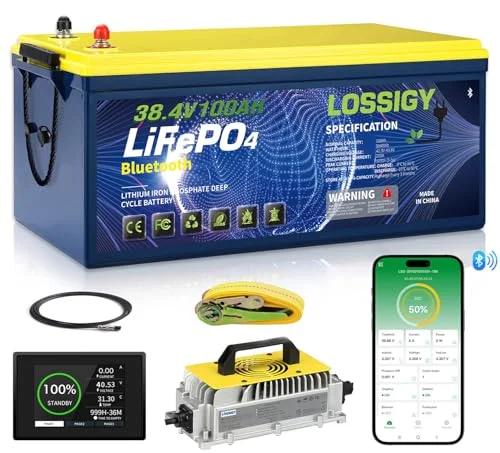
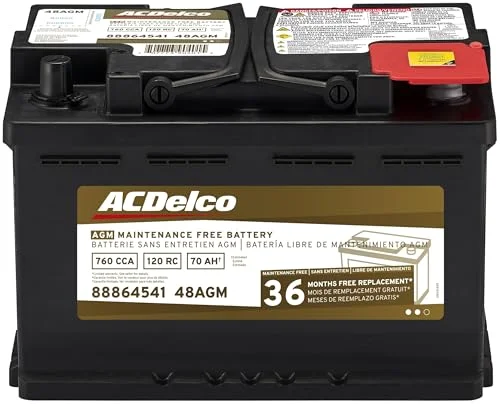
Picking the best deep cycle battery for camper use comes down to three things I would check before anything else: how much power you actually burn in a day, how much weight your rig can carry, and whether you camp in freezing weather. AGM lead-acid and lithium serve very different budgets and trip styles, and getting that match right is what keeps the fridge humming on day three.
List of Best Deep Cycle Battery For Camper
Here are the batteries worth shortlisting, grouped by what each one actually does well.
| Product |
Best For |
Why |
Link |
| Weize Deep Cycle AGM 12 Volt 100Ah Battery, Mainte |
Best budget AGM option |
A maintenance-free AGM workhorse , my pick for straightforward weekend power at a sensible price. |
View |
| Renogy 12 Volt 100Ah Deep Cycle AGM Battery, Lead |
Best for extreme temperatures |
A widely trusted AGM option with a strong safety record; the one I’d point people to who don’t want to troubleshoot. |
View |
| Renogy 12 Volt 200Ah Deep Cycle AGM Battery, Lead |
Best for heavy energy storage |
A big 200Ah AGM unit for running heavier appliances , just mind the weight. |
View |
| Newport 12V 50Ah Deep Cycle AGM Marine Battery – R |
Best for small watercraft |
A compact 50Ah AGM battery better suited to kayaks and trolling motors than campers. |
View |
| HeyFuture 12V 100Ah Bluetooth LiFePO4 Battery for |
Best lightweight Bluetooth lithium |
A lightweight LiFePO4 option with a protective BMS and app tracking built in. |
View |
| Power Queen 12V 125Ah LiFePO4 Lithium Battery Grou |
Best extended runtime upgrade |
A Group 27 lithium battery that squeezes extra capacity into a standard footprint, with Bluetooth monitoring. |
View |
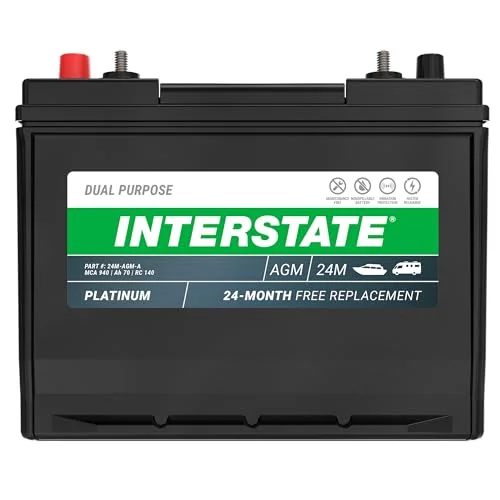
| Interstate Batteries Marine/RV Battery 12V 70Ah 75 |
Best dual-purpose cranking power |
A pure lead AGM battery that can start an engine while also running house loads. |
View |
| 12V 100Ah LiFePO4 Battery, Up to15K Cycles, 1280Wh |
Best long-cycle lifespan pick |
A light lithium battery built for thousands of deep cycles and fast recharge times. |
View |
| Litime 12v 100Ah RV Self-Heating LiFePO4 Lithium B |
Best cold-weather lithium system |
A self-heating lithium twin-pack aimed squarely at winter campers. |
View |
❄️
Best for Winter Camping Trips
Cold weather quietly wrecks batteries , capacity drops, and standard lithium cells can be permanently damaged if you try to charge them below freezing. If you camp through winter, my read is that you want either a built-in heater or a low-temperature cutoff protecting the cells. That’s what keeps the furnace fan and lights running all night in January.
⭐ TOP PICK
Litime 12v 100Ah RV Self-Heating LiFePO4 Lithium Battery for
This self-heating lithium twin-pack warms its cells before accepting a charge, so you’re not guessing whether it’s safe to plug in on a cold morning. The heating adjusts to the conditions automatically. Add the weight savings and long service life, and winter power stops being something you lose sleep over.
✦ Dual smart heating modes✦ Real-time Bluetooth 5.0 tracking✦ Universal Group 24 size
💡 Pro Tip: Use the efficient heating mode on longer sub-zero trips so you keep some reserve power in the tank.
🔄 RUNNER-UP
Power Queen 12V 125Ah LiFePO4 Lithium Battery Group 27 Bluet
This Bluetooth lithium option has low-temperature charge and discharge protection, which is the next best thing to active heating when a cold snap catches you off guard.
View Alternative
🏕️
Best for Budget-Conscious Weekend Warriors
If you’re out a few weekends a year, spending lithium money doesn’t add up. AGM batteries handle moderate loads safely, need no topping-off of liquids, and slide into standard battery boxes. For most casual campers, that’s the smarter math.
⭐ TOP PICK
Weize Deep Cycle AGM 12 Volt 100Ah Battery, Maintenance-Free
This 100Ah AGM battery has a low self-discharge rate, so it holds its charge between trips instead of sulking in storage. The sealed construction means no acid leaks and no maintenance chores. It’ll cover lights, phone charging, and small pumps without drama.
✦ Sealed AGM leak-free build✦ Low monthly self-discharge rate✦ Reliable 100Ah capacity
💡 Pro Tip: Store it fully charged over the off-season , it makes a real difference to how long the battery lasts.
🔄 RUNNER-UP
Renogy 12 Volt 100Ah Deep Cycle AGM Battery, Lead Acid Solar
This widely trusted AGM option is worth considering if you want a proven safety record and steadier behavior when temperatures swing.
View Alternative
🚐
Best for Extended Off-Grid Living
Living off-grid full-time means running a coffee maker, a fridge, maybe an inverter , and that adds up fast. You need serious capacity, a battery that recharges quickly, and one that won’t die after a season of deep discharges. Weight is the trade-off you’ll be managing.
⭐ TOP PICK
Renogy 12 Volt 200Ah Deep Cycle AGM Battery, Lead Acid Solar
This 200Ah AGM unit carries enough storage to run multiple appliances without hovering over your voltage meter. Its quinary alloy plates handle high discharge currents without stressing the internals. As the backbone of a large camper electrical system, it holds up well.
✦ Massive 200Ah capacity✦ High discharge current tolerance✦ Advanced valve-regulated technology
💡 Pro Tip: Check your floor or tongue weight capacity before committing , a 200Ah lead-acid battery is no featherweight.
🔄 RUNNER-UP
12V 100Ah LiFePO4 Battery, Up to15K Cycles, 1280Wh Higher En
If you’d rather shed the weight, this expandable lithium battery offers far higher energy density and cycle life for a modern upgrade.
View Alternative
🛶
Best for Kayaks and Trolling Motors
On a kayak or small boat, every pound matters and hull space is tight. A heavy battery throws off your balance and makes the carry from the parking lot miserable. A compact marine-oriented battery keeps the trolling motor quiet and running all day.
⭐ TOP PICK
Newport 12V 50Ah Deep Cycle AGM Marine Battery – Rechargeabl
This 50Ah AGM battery is sized for small watercraft , jon boats, kayaks, that kind of thing. It’s light enough to carry to the shoreline by yourself and delivers steady power for hours of fishing. My read is that it’s the sensible fit for small hulls, not a primary camper battery.
✦ Compact and portable size✦ Optimized for trolling motors✦ Sealed marine-grade construction
💡 Pro Tip: Strap it down inside the hull so it can’t shift in chop.
🔄 RUNNER-UP
HeyFuture 12V 100Ah Bluetooth LiFePO4 Battery for Rv, Trolli
Step up to this lightweight lithium option if you want shock resistance and faster recharging on the water.
View Alternative
📱
Best for Smart App Monitoring
A lot of campers want to see their battery state without crawling into a storage bay with a flashlight. Bluetooth-enabled batteries push voltage, state of charge, and current straight to your phone, which means no more guessing when it’s time to charge.
⭐ TOP PICK
Power Queen 12V 125Ah LiFePO4 Lithium Battery Group 27 Bluet
This Group 27 lithium battery streams real-time data , state of charge, voltage, current, temperature , over Bluetooth 5.0, and lets you cut discharge remotely from the app. On top of the monitoring, the Group 27 footprint packs in extra runtime versus standard 100Ah units of similar size.
✦ Real-time Bluetooth 5.0 app✦ Universal Group 27 size✦ Self-developed smart BMS protection
💡 Pro Tip: Stay within about ten meters of the battery for a stable connection when monitoring remotely.
🔄 RUNNER-UP
Litime 12v 100Ah RV Self-Heating LiFePO4 Lithium Battery for
The self-heating twin-pack pairs Bluetooth tracking with cold-weather controls, which covers both bases if you camp into the shoulder seasons.
View Alternative
⚙️
Best Dual-Purpose Engine Starting
Some setups ask one battery to do two jobs: crank an engine and run the house loads afterward. That’s usually a space problem , there’s no room for a dedicated starting battery. A true dual-purpose unit delivers cranking amps and survives deep discharges.
⭐ TOP PICK
Interstate Batteries Marine/RV Battery 12V 70Ah 750CCA Group
This pure lead AGM battery doubles as a starter and a deep-cycle house battery. Thick plate construction handles repeated deep discharges without shortening its life. It turns over the motor and still powers lights and appliances after the engine’s off.
✦ Dual-purpose starting and cycling✦ Pure non-alloy lead design✦ Extended service life technology
💡 Pro Tip: Check your alternator’s output specs first , pure lead AGM chemistry needs compatible charging to reach full lifespan.
🔄 RUNNER-UP
Weize Deep Cycle AGM 12 Volt 100Ah Battery, Maintenance-Free
If starting power isn’t a concern and you’re focused on house loads, a standard AGM deep-cycle option does the job for less.
View Alternative
🎯 Which Scenario Are You?
A few honest questions about how you camp will narrow this down faster than any spec sheet. Think about your climate, your payload limits, and what you’re actually powering.
❓ What is your primary concern?
If you camp in freezing temps, cold-weather protection should be at the top of your list. If weight is your pain point, lithium is the way to cut payload.
❓ What is your budget level?
AGM is the cheaper entry for occasional weekends. Lithium costs more upfront but pays off the longer you own it.
❓ How often will you use it?
Full-time boondockers get the most out of high-cycle lithium. If you’re out a handful of weekends a year, a durable AGM will do the job just fine.
Frequently Asked Questions
What makes a deep cycle battery for camper setups different from a standard car battery?
A deep cycle battery delivers steady power over hours , that’s what runs a fridge or lights overnight. A car battery is built for short, high-amp engine starts and nothing more.
Can I upgrade my old lead-acid system to a lithium deep cycle battery for camper use?
Mostly yes , lithium drop-in replacements usually fit standard battery boxes. The thing I would check is your charger: it needs a lithium charging profile.
How do I calculate the right capacity for a deep cycle battery for camper adventures?
Add up the daily watt-hours of everything you run, then pick a capacity that covers it without regularly draining past the safe depth-of-discharge. It’s better to have headroom than to size it exactly.
Why is ambient temperature important when choosing a deep cycle battery for camper storage?
Cold cuts available capacity and can permanently damage lithium cells charged below freezing. Batteries with self-heating or a low-temperature cutoff avoid that failure mode.
How long will a typical deep cycle battery for camper applications last?
A well-maintained AGM battery typically gets you two to four years. Lithium can run ten or more, which is where the price gap starts to close.