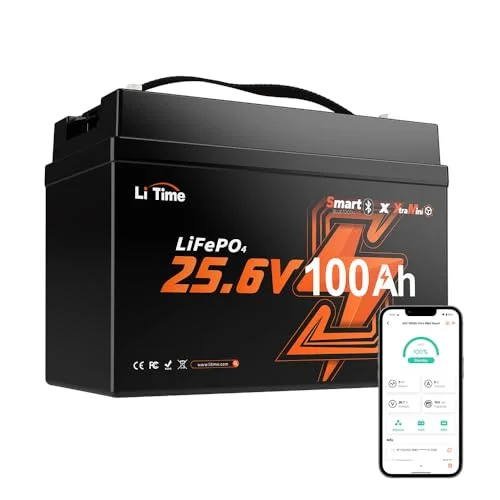
The right deep cycle battery really comes down to what you’re powering and where you’re taking it. An RV parked for the weekend has different needs than a trolling motor cutting across a lake at dawn. Solar banks want to stretch every amp-hour for cloudy days, while marine setups care as much about surviving the waves as they do about voltage. I’ve found that matching the battery’s chemistry and construction to your actual use case usually matters more than chasing the biggest spec sheet.
List of Best Deep Cycle Battery
Deep cycle batteries aren’t one-size-fits-all, and the ten options below reflect that. Some lean into raw capacity, others into lightweight lithium, and a few split the difference with dual-purpose AGM designs. I’m walking through what each one does well, so you can line that up against how you actually use power when you’re off the grid.
| Product |
Best For |
Why |
Link |
| Weize Deep Cycle AGM 12 Volt 100Ah Battery, Mainte |
Best for budget-conscious RV owners |
AGM battery that keeps things simple and reliable for smaller off-grid setups. |
View |
| Renogy 12 Volt 100Ah Deep Cycle AGM Battery, Lead |
Best for extreme temperature performance |
Sealed AGM built to hold steady whether it’s freezing out or pushing triple digits. |
View |
| Renogy 12 Volt 200Ah Deep Cycle AGM Battery, Lead |
Best for high-capacity energy storage |
High-capacity AGM that gives you more runtime between charges when you need it. |
View |
| 12V 100Ah LiFePO4 Lithium Battery Group 31 Deep Cy |
Best for lightweight long-term use |
Lightweight lithium pack built for long trips and frequent recharging. |
View |
| 12V 100Ah LiFePO4 Battery, Group 24 Deep Cycle for |
Best for compact replacement setups |
Group 24 lithium battery that drops right into standard compartments. |
View |
| Newport 12V 50Ah Deep Cycle AGM Marine Battery – R |
Best for small boat and kayak power |
Compact AGM tuned for trolling motors that need to run all day. |
View |
| Interstate Batteries Marine/RV Battery 12V 70Ah 75 |
Best for dual-purpose marine needs |
Dual-purpose AGM that can start your engine and keep accessories powered. |
View |
| Renogy 12 Volt 100Ah Deep Cycle AGM Battery, 3% Se |
Best for appliance-ready setups |
AGM that puts out steady juice for sensitive gear like CPAPs or microwaves. |
View |
| dumfume 12V 150Ah Max LiFePO4 Battery, IP65 Waterp |
Best for scalable lithium expansion |
Waterproof lithium unit that scales well for bigger bank builds. |
View |
| OPTIMA® Batteries D34M BLUETOP® Dual Purpose Boat |
Best for premium dual-function power |
Spiral-wound AGM that mixes starting punch with deep-cycle staying power. |
View |
🏕️
Best for budget-conscious RV owners
If you’re using your RV for weekend trips or short getaways, you probably don’t need to overthink the battery choice. You want something that can carry lighting, maybe a small fridge, and a few outlets through the night without fuss. AGM tends to work well here because it’s sealed, low-maintenance, and doesn’t demand the premium price of lithium. The goal is reliability without added complexity.
⭐ TOP PICK
Weize Deep Cycle AGM 12 Volt 100Ah Battery, Maintenance-Free
This Weize 100Ah AGM battery lines up well with typical RV usage. It’s sealed, so there’s no worrying about spills or venting, and the 100Ah capacity is enough to carry common loads overnight. The broad operating temperature range and solid discharge current make it flexible for different conditions. At a lower entry price point than lithium, it’s an easy recommendation for casual campers who want dependable power without overengineering it.
✦ Maintenance-free AGM construction✦ 1100A peak discharge current✦ Wide temperature tolerance
💡 Pro Tip: Keep it stored fully charged if you’re not using it for a stretch to avoid sulfation.
🔄 RUNNER-UP
Renogy 12 Volt 200Ah Deep Cycle AGM Battery, Lead Acid Solar
Going with Renogy’s 200Ah AGM gives you more headroom if your setup leans heavier or you’re often between charges. Thicker plates mean more durability over time, and the extra capacity can ease anxiety about running things down. It’s heavier, sure, but for anyone pushing a bigger load or extending trips longer, that trade-off often pays off.
View Alternative
🌡️
Best for extreme temperature performance
Extreme temperatures are brutal on batteries. In cold weather, you lose capacity fast, and in heat, you shorten lifespan. If you’re out in northern winters or desert sun regularly, you need a battery that’s built around thermal stability, not just raw specs. AGM designs with advanced electrolyte handling usually hold up better across wider ranges than basic flooded or standard lithium units.
⭐ TOP PICK
Renogy 12 Volt 100Ah Deep Cycle AGM Battery, Lead Acid Solar
Renogy’s AGM battery rates for operation down to -4°F and up to 140°F, which covers most real-world extremes. The upgraded electrolyte keeps things stable across those swings, which translates to more predictable power whether you’re in a winterized cabin or a hot off-grid site. It handles everyday loads reliably in tough conditions, and the sealed build means less worry about freezing damage.
✦ -4°F to 140°F operation✦ 1100A discharge current✦ Sealed leak-proof design
💡 Pro Tip: Keep terminals clean and tight, especially in colder months when conductivity drops.
🔄 RUNNER-UP
Renogy 12 Volt 100Ah Deep Cycle AGM Battery, 3% Self-Dischar
The 100Ah model shares the same temperature resilience but at a smaller capacity. If your power needs are more modest or you’re working with tighter storage space, this is a reasonable alternative that still holds up when the weather turns.
View Alternative
☀️
Best for high-capacity solar storage
Solar setups run on consistency. You’re cycling the battery daily, often down to a set depth of discharge, so shelf life and self-discharge matter more than peak numbers. Larger Ah ratings buy you autonomy on cloudy days, while low self-discharge means the battery stays ready between uses. AGM batteries tend to hold up better here than flooded types because they handle the repeated cycling and can be mounted in more positions.
⭐ TOP PICK
Renogy 12 Volt 200Ah Deep Cycle AGM Battery, Lead Acid Solar
At 200Ah, this Renogy AGM gives you serious runtime in a single unit. The low self-discharge rate under 3% monthly is a big win for solar where you can go days between full charges. Thick plates help with the daily cycling rhythm that solar puts batteries through, and the ability to parallel units makes expanding the bank down the road pretty straightforward.
✦ 200Ah capacity rating✦ Under 3% monthly self-discharge✦ Up to 4P parallel support
💡 Pro Tip: Stick with matching charge controllers across your bank to keep voltages balanced.
🔄 RUNNER-UP
Weize Deep Cycle AGM 12 Volt 100Ah Battery, Maintenance-Free
The Weize 100Ah AGM works if your solar system is more modest or budget is a main concern. It still holds up to regular cycling pretty well and is cheaper upfront, making it easier to scale later.
View Alternative
⚡
Best for lightweight long-term use
Lithium is the premium option for people who are on the move a lot or depend on daily cycling. You’re paying more upfront, but the math shifts fast if you’re recharging often or carrying the battery around. Weight savings also help, especially in RVs where every pound affects handling. The longer cycle life and faster charging also remove a lot of the usual battery anxiety.
⭐ TOP PICK
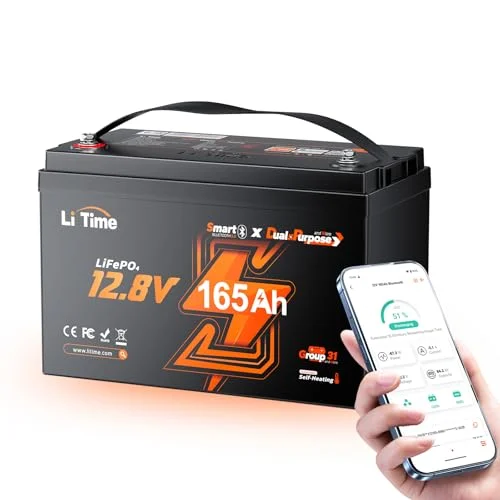
12V 100Ah LiFePO4 Lithium Battery Group 31 Deep Cycle for RV
This LiFePO4 battery from the 12V 100Ah line hits the sweet spot for mobile use. The low 24 lb weight saves a ton of effort over lead-acid, and the 15,000+ cycle life at 60% DOD means it’s built for the long haul. The 100A BMS adds real protection against the usual failure points, and being able to recharge in about five hours keeps things moving if you’re living on the road.
✦ 15,000+ cycle lifespan✦ Only 24 lbs weight✦ Fast 5-hour charging
💡 Pro Tip: Make sure you’re not trying to charge below freezing since it has a low-temp cutoff built in.
🔄 RUNNER-UP
12V 100Ah LiFePO4 Battery, Group 24 Deep Cycle for RVs & Tro
The SUPER EMPOWER 100Ah LiFePO4 brings similar benefits in a slightly more compact Group 24 form. If your install space is tight or you’re coming in on price, it’s still a solid lithium option with good cycle performance.
View Alternative
🚤
Best for small boat and kayak power
Small boats and kayaks have unique constraints. You need something compact, sealed, and light enough to handle safely. Trolling motors draw steady current for hours, so capacity matters, but so does the ability to mount the battery in awkward positions. AGM tends to work well here because it’s spillproof and handles vibration better than flooded options.
⭐ TOP PICK
Newport 12V 50Ah Deep Cycle AGM Marine Battery – Rechargeabl
The Newport 50Ah AGM battery is purpose-built for smaller watercraft. It’s sealed, so it’s fine getting tilted or splashed, and the form factor fits into tight hatches without a struggle. It powers standard 12V trolling motors well for extended sessions, and being a mainstream capacity means replacements are easy to find if needed.
✦ Compact sealed AGM design✦ Optimized for trolling motors✦ Lightweight and portable
💡 Pro Tip: Use strap-downs or mounting hardware to keep it secure in rough water to avoid movement fatigue.
🔄 RUNNER-UP
Interstate Batteries Marine/RV Battery 12V 70Ah 750CCA Group
If you’re pushing bigger loads or planning longer trips, the 70Ah AGM option gives more capacity while staying manageable in size. It also carries some starting power, which is a nice backup if you need it.
View Alternative
⛵
Best for dual-purpose marine needs
On the water, your battery often has to do double duty. You need starting power to fire up the engine, then deep-cycle draw to run electronics while anchored. That means looking for dual-purpose designs with high C ratings and rugged construction. Vibration resistance becomes non-negotiable, and pure lead or spiral-wound constructions usually win here over standard flooded batteries.
⭐ TOP PICK
Interstate Batteries Marine/RV Battery 12V 70Ah 750CCA Group
This Interstate 70Ah AGM battery really does cover both sides of marine use. At 750 CCA, it cranks engines cleanly, and the thick plates let it keep running accessories at anchor without dropping voltage fast. It’s built to take on waves and salt, which matters in a marine environment where reliability translates directly to safety.
✦ 750 CCA starting power✦ Thick plate deep-cycle design✦ Pure lead vibration resistance
💡 Pro Tip: Aim to fully recharge after each trip to keep sulfation from building up over time.
🔄 RUNNER-UP
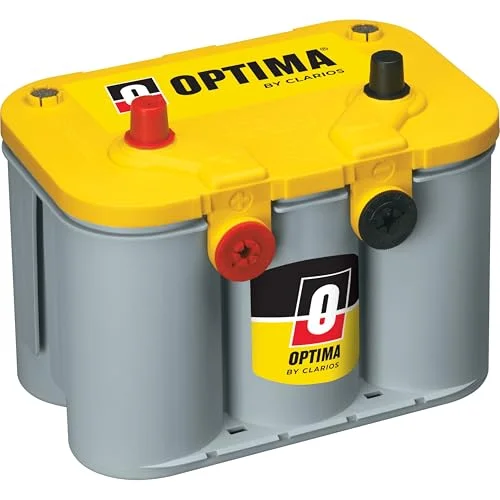
OPTIMA® Batteries D34M BLUETOP® Dual Purpose Boat and RV Sea
OPTIMA’s D34M brings spiral-wound toughness and dual-purpose capability in a smaller package. If your boat is lighter or you’re running modest loads, it holds up well to rough conditions and repeated use.
View Alternative
🎯 Which Scenario Are You?
The biggest mistake I see is people buying a battery based on Ah alone without thinking about how they actually use it. Frequency of use, climate, available charging, and physical constraints all matter more than raw numbers. I would start by narrowing down your primary scenario first, then match chemistry and capacity to that use case instead of trying to cover everything.
❓ What is your primary concern?
If you’re using power daily or in demanding conditions, I would lean toward lithium despite the cost. The long-term replacement savings usually make up for the upfront price. But if you’re only out on weekends occasionally, a solid AGM battery is more practical and still covers the basics well.
❓ What is your budget level?
AGM lands in a good middle ground price-wise. It’s more than flooded but less than lithium, and you get the benefit of being sealed and low-maintenance. Lithium makes sense if you’re pushing frequent full cycles or need the weight savings to justify the cost over time.
❓ How often will you use it?
Match the battery to how often you expect to cycle it. Daily deep cycling favors lithium durability. Occasional weekend use doesn’t really tax an AGM enough to justify lithium. And if you’re mostly topping off electronics rather than running big draws, the lighter AGM options keep it simple.
Frequently Asked Questions
Which battery type is best for best deep cycle battery buyers?
For casual or moderate use, AGM is usually the smarter value. Lithium shines when you’re cycling hard and often, or when weight and space are real constraints. Flooded still works if cost is the main factor and you don’t mind maintenance. I would base it mostly on how often you use it and what kind of conditions you’re facing.
Should I choose AGM or lithium for best deep cycle battery applications?
Lithium wins on cycle life, weight, and charging speed every time, but AGM costs less upfront and is easier to replace. If you’re only using your setup a few times a year, AGM is honestly fine. But if you’re out regularly or dependent on the power, lithium usually pays off faster than people expect.
How do I compare best deep cycle battery models fairly?
Start with amp-hours matched to your daily load, then check the chemistry fits your usage pattern. Look at operating temperature range if you’re in extreme climates, and always verify physical dimensions and terminal layout before buying. Warranty length and manufacturer support are worth checking too since batteries are one thing you really don’t want to replace under warranty.
Is a higher Ah always better for best deep cycle battery purchases?
Higher Ah means more runtime, but it also means more weight, cost, and bulk. I would size it to what you’re actually drawing each day rather than maxing out. You want a little buffer, sure, but oversizing typically just adds unnecessary expense and complexity without real benefit.
What maintenance does my best deep cycle battery require?
AGM and lithium are both sealed, so they’re virtually maintenance-free. Flooded batteries need periodic water checks and terminal cleaning. Regardless of type, I would store them charged in a cool, dry place and check voltage periodically if they’re sitting unused for months. Catching a slow drain or sulfation early usually saves a battery.