Powering a boat or RV isn’t just about voltage; it’s about surviving vibration, salt spray, and the deep discharges that kill standard automotive batteries. I’ve found that marine environments punish equipment quickly, so picking the right deep cycle battery depends heavily on your specific rig. A kayak angler has vastly different needs than someone running a house bank on a cruiser, and solar users face their own efficiency challenges. My goal here is to cut through the spec sheets and match you with a battery that actually fits how you use your vessel, preventing that dreaded power loss miles from shore.
List of Best Deep Cycle Marine Battery
I’ve broken down ten notable deep cycle marine batteries below, organized by the specific scenarios where they shine brightest. Rather than a generic list, this table pairs each model with its ideal use case and a quick summary of why it earned that spot. It’s designed to help you skip the guesswork and find the unit that matches your boating style.
| Product |
Best For |
Why |
Link |
| Interstate Batteries Marine/RV Battery 12V 70Ah 75 |
Best for Group 24 dual purpose marine and RV use |
Interstate’s 70Ah AGM pulls double duty as a starter and deep cycle source, built to outlast standard alloys. |
View |
| Newport 12V 50Ah Deep Cycle AGM Marine Battery – R |
Best for kayaks small boats and inflatables |
Newport’s 50Ah AGM is a compact, sealed workhorse tailored for trolling motors on smaller craft. |
View |
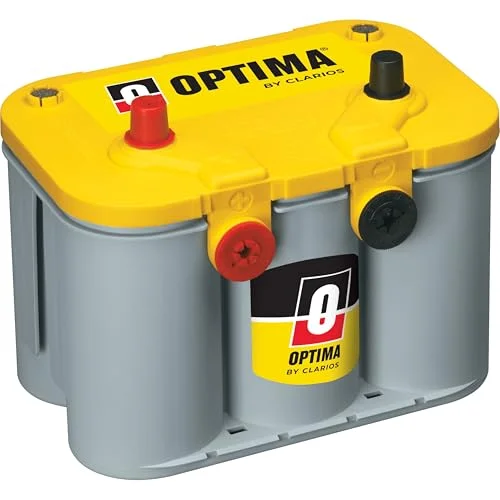
| OPTIMA® Batteries D34M BLUETOP® Dual Purpose Boat |
Best for dual purpose boats and RVs |
OPTIMA D34M uses spiral-wound cells to resist vibration while delivering strong cranking and cycling amps. |
View |
| Weize Deep Cycle AGM 12 Volt 100Ah Battery, Mainte |
Best for high capacity RV solar and marine systems |
Weize 100Ah AGM offers maintenance-free operation with high discharge currents for extended off-grid runs. |
View |
| Renogy 12 Volt 200Ah Deep Cycle AGM Battery, Lead |
Best for large capacity solar and deep cycle needs |
Renogy 200Ah AGM handles massive loads and low self-discharge rates for serious solar or marine banks. |
View |
| UPLUS BCI Group 24M Dual Purpose AGM Marine Batter |
Best for dual purpose with engine starting power |
UPLUS Group 24M combines 350HP starting capability with deep cycle endurance in a space-saving footprint. |
View |
| Interstate Batteries Marine/RV Battery 12V 100Ah 9 |
Best for Group 31 heavy duty marine and RV |
Interstate 100Ah Group 31 AGM delivers extreme reserve capacity for larger vessels powering multiple accessories. |
View |
| Renogy 12 Volt 100Ah Deep Cycle AGM Battery, Lead |
Best for standard 100Ah marine applications |
Renogy 100Ah AGM balances safety and consistent output for mixed RV, marine, and solar applications. |
View |
| 12V 100Ah LiFePO4 Battery, Group 24 Deep Cycle for |
Best for lithium off grid and marine deep cycle |
SUPER EMPOWER LiFePO4 100Ah sheds lead-acid weight and maintenance for efficient, long-lasting power. |
View |
| Weize BCI Group 31M Dual Purpose AGM Battery, 240R |
Best for dual purpose Group 31 marine and RV |
Weize 110Ah Group 31M AGM charges quickly and resists pounding waves better than most flooded options. |
View |
🛶
Best for Kayaks and Small Watercraft
Kayak anglers and inflatable boat owners often struggle to find power that doesn’t eat up precious storage space. You need something light enough to carry to the water but durable enough to handle splashes and constant trolling motor draw. In my view, the priority here is portability without sacrificing the runtime needed for a full morning on the water.
⭐ TOP PICK
Newport 12V 50Ah Deep Cycle AGM Marine Battery – Rechargeabl
I’d shortlist the Newport 12V 50Ah Deep Cycle AGM for kayaks because it hits that sweet spot of size and output. The sealed AGM design means I wouldn’t worry about acid spills if it tips over in rough water, and 50Ah is generally sufficient for typical trolling motor usage on small hulls. It’s a straightforward, leak-proof solution that keeps gear weight manageable.
✦ Compact Design✦ Sealed AGM Tech✦ Optimized for Trolling
💡 Pro Tip: Always double-check terminal tightness at the launch ramp; vibration on small boats can loosen connections faster than you’d expect.
🔄 RUNNER-UP
Interstate Batteries Marine/RV Battery 12V 70Ah 750CCA Group
If you need more cranking amps for a kicker motor, Interstate’s 70Ah Group 24 AGM is a worthy alternative. My read is that its pure lead construction offers significantly longer service life than flooded batteries, making it a smarter long-term investment if you have the extra space.
View Alternative
🚣
Best for Small Fishing Boats and Trolling Motors
Small fishing boats and jon boats demand versatility: enough cold cranking amps to start an outboard reliably, plus the stamina to run a trolling motor all day. Space is usually tight, and the battery will take a beating from choppy water. I look for dual-purpose designs here that don’t compromise on either starting or cycling performance.
⭐ TOP PICK
OPTIMA® Batteries D34M BLUETOP® Dual Purpose Boat and RV Sea
The OPTIMA D34M BLUETOP stands out to me because its SpiralCell technology is inherently more resistant to the vibration that destroys flat-plate batteries. With 750 CCA and 55Ah capacity, it covers both starting and trolling duties confidently. I appreciate that it performs well even when the weather turns, which is exactly when you don’t want battery anxiety.
✦ 750 CCA Cranking✦ 55Ah Capacity✦ Vibration Resistant
💡 Pro Tip: Invest in a proper hold-down clamp; securing this battery rigidly is critical to maximizing its vibration resistance in open water.
🔄 RUNNER-UP
UPLUS BCI Group 24M Dual Purpose AGM Marine Battery 12V 79AH
The UPLUS BCI Group 24M is another strong contender if you’re pushing engines up to 350HP. Its dual-purpose design saves installing two separate batteries, and I’ve noted its construction specifically targets the shock damage common in trailer transport and wave impact.
View Alternative
🛥
Best for Medium Sized Boats and RVs
For medium-sized cruisers and RVs, the challenge is balancing weekend capacity with practical maintenance. You’re likely running lights, pumps, and maybe a fridge, so reliability matters more than raw cranking power. I tend to favor maintenance-free AGMs in this bracket because nobody wants to top off distilled water after every trip.
⭐ TOP PICK
Weize Deep Cycle AGM 12 Volt 100Ah Battery, Maintenance-Free
I consider the Weize 12V 100Ah AGM a pragmatic choice for this segment. The 3% monthly self-discharge rate means it holds charge well between weekend trips, and the 1100A max discharge current provides ample headroom for accessory surges. It’s a set-and-forget option that supports extended camping or cruising without fuss.
✦ 100Ah Capacity✦ 1150A Discharge✦ 3% Self-Discharge
💡 Pro Tip: Store this battery in a temperature-stable environment during the off-season; extreme heat or cold accelerates aging regardless of chemistry.
🔄 RUNNER-UP
Interstate Batteries Marine/RV Battery 12V 100Ah 925CCA 1110
Interstate’s 100Ah Marine/RV battery earns a nod for its proven longevity claims, up to 3x the life of flooded batteries. If brand heritage and extreme deep-cycle durability are your top priorities for a mid-size vessel, this is the one I’d examine closely.
View Alternative
⛴
Best for Large Boats and Heavy Duty Applications
Large vessels and heavy-duty marine applications require serious reserve capacity. When you’re powering navigation systems, autopilots, and live wells simultaneously, voltage sag isn’t an option. My focus here shifts to high-capacity AGMs that maintain stable output under sustained load and can recover efficiently between charges.
⭐ TOP PICK
Renogy 12 Volt 200Ah Deep Cycle AGM Battery, Lead Acid Solar
Renogy’s 200Ah Deep Cycle AGM is my pick for high-demand setups because of its proprietary plate design that supports discharge currents up to 10x rated capacity. That headroom is crucial for large boats with complex electrical systems. The sub-3% self-discharge also gives me confidence for seasonal storage without constant topping charges.
✦ 200Ah Capacity✦ High Discharge✦ Low Self-Discharge
💡 Pro Tip: Pair this with a smart multi-stage charger; proper absorption and float stages are essential to preserve capacity in high-investment battery banks.
🔄 RUNNER-UP
Renogy 12 Volt 100Ah Deep Cycle AGM Battery, Lead Acid Solar
The Renogy 100Ah AGM serves as a modular building block if you prefer paralleling smaller units over one massive battery. I like its safety profile and consistent performance across temperature ranges, offering flexibility for custom large-vessel configurations.
View Alternative
☀️
Best for Solar and Off-Grid Power Systems
Solar and off-grid users prioritize efficiency, weight, and cycle life over cranking amps. Integration with charge controllers and long-term storage stability matter most here. I’ve seen many boaters transition to lithium for these applications because the usable capacity per pound is simply unmatched.
⭐ TOP PICK
12V 100Ah LiFePO4 Battery, Group 24 Deep Cycle for RVs & Tro
The SUPER EMPOWER LiFePO4 100Ah is my top recommendation for solar integration because it weighs only 21.6 pounds yet delivers full usable capacity, unlike lead-acid where you can only safely use 50%. The built-in BMS protects against over-discharge, and I value the drop-in compatibility for upgrading older systems without rewiring.
✦ LiFePO4 Chemistry✦ Integrated BMS✦ Lightweight 21.6lbs
💡 Pro Tip: Verify your charger has a dedicated lithium profile; improper charging algorithms can trigger BMS protection or reduce lifespan.
🔄 RUNNER-UP
Weize BCI Group 31M Dual Purpose AGM Battery, 240RC 825CCA 1
If budget constraints rule out lithium, the Weize Group 31M AGM is a respectable fallback. Its fast-charge acceptance and vibration resistance make it viable for marine-solar hybrids, though I’d remind buyers to factor in the deeper depth-of-discharge limitations versus LiFePO4.
View Alternative
💰
Best for Budget Dual Purpose Boats and RVs
Budget-conscious boaters still need reliability; cheap batteries that fail mid-season cost more in tow bills and frustration. I look for dual-purpose models that maximize utility per dollar without cutting corners on plate thickness or sealing. Value here means years of service, not just the lowest sticker price.
⭐ TOP PICK
Interstate Batteries Marine/RV Battery 12V 70Ah 750CCA Group
Interstate’s 70Ah 750CCA AGM strikes the best balance I’ve seen for entry-level dual-purpose use. Backed by decades of marine reputation, it offers 2-3x the lifespan of conventional flooded batteries at a reasonable price point. For weekend warriors who need both starting and trolling capability without breaking the bank, this is my go-to suggestion.
✦ 750CCA Cranking✦ 2x-3x Longer Life✦ Dual Purpose
💡 Pro Tip: Take advantage of Interstate’s recycling program when replacing; proper disposal offsets environmental impact and sometimes yields core credits.
🔄 RUNNER-UP
UPLUS BCI Group 24M Dual Purpose AGM Marine Battery 12V 79AH
The UPLUS Group 24M is another value play worth considering, especially if engine starting is your primary concern. Its lighter weight eases installation, and the space-saving dual-purpose design eliminates the cost of buying two separate batteries for tighter budgets.
View Alternative
🎯 Which Scenario Are You?
Narrowing down the right battery starts with honesty about how you actually use your boat. Are you primarily starting an engine, running electronics all day, or storing solar energy? Capacity, chemistry, and physical size all interact differently depending on your scenario. I recommend matching specs to your real-world demands rather than chasing the highest numbers on paper.
❓ What is your primary concern?
Your vessel size and accessory load dictate capacity. Kayaks need portability; cruisers need reserve. Don’t overspend on amp-hours you’ll never use.
❓ What is your budget level?
Premium AGM or LiFePO4 costs more upfront but typically lasts longer and requires less maintenance. Budget flooded options work for occasional use but demand more care.
❓ How often will you use it?
Daily users should prioritize cycle life and vibration resistance. Weekend warriors can optimize for value and shelf life between outings.
Frequently Asked Questions
What makes a deep cycle marine battery ideal for different situations?
Marine batteries must withstand vibration, moisture, and deep discharges that car batteries can’t. My scenario breakdowns show how design choices like AGM sealing or spiral cells directly address these stresses.
How do I choose between AGM and LiFePO4 batteries for marine use?
AGM excels at dual-purpose starting and cycling with zero maintenance. LiFePO4 wins on weight and usable capacity for solar or trolling-only setups, though at higher initial cost.
What are the key features to look for in a deep cycle marine battery?
Prioritize adequate CCA for your engine and low self-discharge for storage. Sealed construction is non-negotiable for marine safety and longevity.
Is a deep cycle marine battery worth the investment for RV and boat owners?
Absolutely. A quality marine battery prevents strandings and protects sensitive electronics. Over several seasons, the longer lifespan of premium models usually justifies the investment.
Which deep cycle marine battery fits my budget and usage?
Match the battery to your primary use case from the scenarios above. There’s no single ‘best’ option, only the best fit for your specific boat and habits.