What Is A Good Substitute For Penetrating Oil?

Penetrating oil seeps into rust and grime, then reduces the friction holding stuck threads, hinges, and other metal parts in place. If you do not have any on hand, you still have options, but the best substitute depends on the job. A rusted bolt needs more penetration than a dry hinge, and a part near plastic or electronics needs different treatment from a bare steel fastener.
Effective substitutes combine two things: a carrier that can wick into a narrow gap and chemistry that helps dissolve or weaken rust. For many stuck bolts, options such as kerosene, ATF, penetrating-style products, or an ATF-and-acetone DIY approach can help over minutes to hours. You will still need controlled force to finish the job.
Quick Choices for Stuck Hardware
- Match the substitute to the problem. Rusted threads need different treatment from dry hinges.
- Allow enough soak time. Many substitutes work after 30 minutes to a few hours.
- Avoid flame risks. Keep solvents such as acetone away from sparks, flames, and hot surfaces.
- Protect yourself first. Use eye protection and gloves, especially when working underneath a vehicle.
- Check for thread damage. If the bolt feels gritty or the wrench slips, stop and reassess.
- Apply follow-up lubricant. Lubricating the part after it loosens can slow rapid re-seizing.
What Makes a Good Penetrating-Oil Substitute?
A useful substitute must creep into the gap and reduce the friction caused by rust or contamination. Penetrating oil also leaves a thin film that helps a fastener turn without galling or tearing the threads. If the liquid cannot wick into the joint, it will mostly sit on the surface while the fastener remains stuck.
The most common mistake is using a lubricant when corrosion is the real problem. Grease and thicker oils can lubricate, but they do not travel through a rust layer very well. For seized bolts, rusty hinges, and stuck hardware, choose something that offers both seepage and chemical action. You may also need to change the conditions first by adding heat, tapping the part, or cleaning away debris.
💡 Kroil Original offers deep penetration and corrosion protection, matching the criteria for an effective substitute. Kroil Original Penetrating Oil with SprayTech 360° Nozzle & Straw (Aerosol Spray-13oz Can-Single) | Every Drop, Every Angle, Even Upside Down | Penetrant for Rusted Bolts, Hinges, Chains (KS132ST).
Choose the Substitute by the Problem
Stuck fasteners often fail because rust bridges the threads, corrosion swells the joint, or dirt packs into the crevices. Dry, squeaky hinges usually need a thin film of lubricant and movement rather than aggressive rust treatment.
Use this decision logic:
- Rusted solid bolt: Prioritize penetration and allow time to soak.
- Stiff hinge without visible corrosion: Use a light oil or dry-film lubricant and work the hinge back and forth.
- Joint covered in mud or paint: Clean it first, then apply a penetrating substitute.
- Part exposed to heat: Avoid high-volatility solvents and choose a heat-tolerant option.
Many substitutes still need mechanical help. A few firm taps with a hammer handle – not a full-power swing – can break the rust seal and give the liquid a path into the joint.
How to Apply a Substitute Effectively
Start by removing loose scale with a wire brush if possible. Wipe away oily grime so the substitute can contact the metal. Aim at the thread gap, rust seam, or hinge knuckle instead of soaking only the outside. A straw attachment helps direct the liquid into a narrow crevice.
Control both heat and time. Solvents and light oils can evaporate or run off, so one application is rarely enough. Reapply after 15 to 30 minutes, especially on vertical or overhead fasteners. If the bolt is important or difficult to replace, use a properly fitting wrench to avoid rounding it. Stop if you feel sudden binding.
Keep solvent-based substitutes away from flames, hot surfaces, and smoking materials. Acetone and similar liquids are flammable, so arrange ventilation and remove ignition sources before you pour or spray.
A Practical Method for Stuck Bolts
- Clean the outside so you can see and reach the thread gap.
- Apply the substitute directly to the thread gap or rust seam.
- Wait and reapply every 15-30 minutes if the part remains immobile.
- Tap the fastener lightly to help break the rust bond.
- Try gentle turning first, then increase force gradually.
- Re-lubricate after it moves to reduce the chance of quick re-seizing.
Why Penetration Helps Prevent Damage
A good substitute does more than help a fastener turn. It reduces the need to brute-force a corroded joint, which can strip threads, shear a stud, or deform a hinge-pin bore. Lower friction lets you keep the force within what the metal can handle.
A substitute can also save a trip to the store when you already have a suitable product in the tool shed or garage. Kerosene, ATF, light oils, and penetrating-style products may handle many household and automotive jobs when used appropriately. Solvents require more caution and are not interchangeable with ordinary lubricants.
After the part loosens, wipe away residue and apply a lubricant suited to the environment. That follow-up step helps outdoor hardware withstand repeated wet and dry cycles and reduces repeat seizure.
Helpful pick
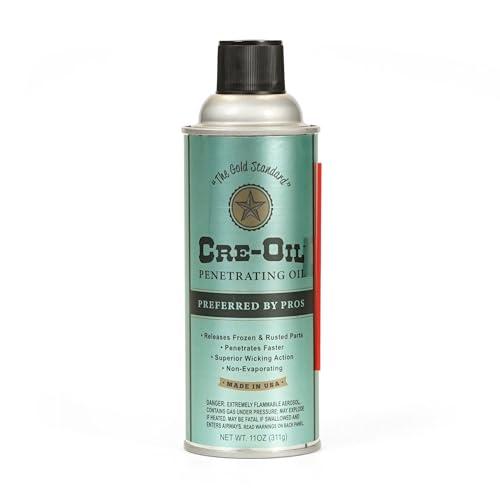
Cre-Oil Penetrating Oil – Low-Viscosity Thread Penetrant for Rusted Bolts, Nuts & Fittings; Bolt Loosener Spray with Residual Lubrication; Automotive & Industrial Use, 11 oz
Cre-Oil’s low-viscosity penetrates tightly threaded joints, minimizing force and preventing thread damage.
Substitute Options and Their Trade-Offs
| Substitute option | Best for | What to expect | Main trade-off |
|---|---|---|---|
| Penetrating-style aerosol (grab-bag of commercial products) | Rusted bolts, seized hinges | Wicks in and loosens after soaking | You still need time, and cheap versions vary |
| ATF (automatic transmission fluid) | Mild rust and sticky hardware | Often helps break friction over time | Not as aggressive on heavy corrosion as true penetrating products |
| Kerosene | Surface rust and grime | Can creep and wash off crud | Smells, and it may take longer |
| WD-40 Specialist-style products (or similar) | Light corrosion, non-critical fasteners | Can help loosening and displacing moisture | Some formulations are more “lubricant/corrosion-prep” than true penetration |
| Acetone mix approach (DIY) | Really stuck, rust-sealed joints | Solvent action can help loosen contamination | Flammable, use with ventilation and care |
| Heat + light oil (heat first, then lube) | Corrosion that resists chemical action | Thermal expansion breaks the bond | Risk of burns, paint damage, and nearby plastic damage |
Internet recipes often combine ATF and acetone or other solvents. Treat that approach as hazardous chemical handling, not a casual spray-and-go fix. Wear gloves and eye protection, ventilate the area, and keep the mixture away from ignition sources.

Helpful pick
Free All Rust Eater Deep Penetrating Oil, 11 oz Aerosol – Loosens Rusted Bolts, Nuts, Pipe Connections & Locks – Industrial-Grade Rust Remover, Silicone-Free, Safe on Paint & Plastic Surfaces, 2-Pack
Free All Rust Eater provides strong rust removal while remaining safe on paint and plastic.
How to Free Hardware Without Breaking It
Heat can help when chemical substitutes fail, but it is not safe for every part. Use localized heat when possible, and avoid heating painted or coated components or parts near wiring, rubber, or plastic. After the fastener loosens, remove residue and apply a protective lubricant suited to the environment, such as outdoor hardware or an engine-bay area.
Apply force gradually. If you have to shock the fastener repeatedly, you may be damaging the threads or deforming the surrounding metal. Back off, clean the area, add more substitute, and try again with controlled torque. For high-value fasteners such as structural bolts, escalate carefully instead of forcing the fastener until it fails.
Examples for Common Household and Garage Jobs
For a stuck bike chain link or garden-gate hinge, start with a light penetrating-style oil and work the joint. If the hinge is stiff but not deeply corroded, a light oil that displaces moisture may free it within minutes as you move the hinge back and forth while it soaks.
For a rusted car battery clamp or similar clamp hardware, focus on safety and cleanliness. Apply a penetrating-style substitute and let it sit, then clean the contact surfaces after the clamp loosens. Avoid aggressive DIY solvent use near sensitive electronics or anywhere residue could interfere with electrical contact.
For a seized trailer hitch pin that binds after rain, kerosene or a penetrating-style product can help. Finish with a dry-film or light protective lubricant to reduce repeat seizure. If you live in a road-salt area, expect re-seizing and plan periodic maintenance.
For a bolt that will not budge after multiple soaks, stop ratcheting before the head rounds. A heat-and-lube approach – heat the bolt, then apply a suitable lubricant – may break the rust bond faster than more chemical treatment alone.
“Any oil is a substitute” is a common misconception. On rust-sealed threads, thick oil applied to the outside may be too slow to penetrate, leading you to apply more force than the threads can handle.

Helpful pick
Lucas Oil 11043 Penetrating Oil – 11 Ounce
Lucas Oil Penetrating Oil works well on bike chains and garden gate hinges for quick household fixes.
FAQ
What is a good substitute for penetrating oil if I only have household items?
Kerosene or ATF can work for mild to moderate rust. Apply the liquid directly to the thread gap, let it soak, and reapply every 15 to 30 minutes. For heavy corrosion, a penetrating-style commercial aerosol usually performs more consistently than household oils. Clean the outside first so the substitute can reach the metal interface.
How long should I let a substitute soak before trying to loosen a bolt?
Most penetrating-style substitutes improve after 30 minutes to a few hours, especially on rust-sealed fasteners. Vertical or overhead parts may lose the liquid to run-off, so reapply after 15 to 30 minutes. Try gentle turning after each soak and increase force gradually only when the fastener begins to move.
Is a DIY acetone mix a safe substitute for penetrating oil?
DIY solvent mixes can work, but they are flammable and may create hazardous fumes depending on the conditions. If you use an acetone-based approach, provide ventilation, wear eye protection and gloves, and keep the liquid away from ignition sources and hot surfaces. Near paint, plastics, or electronics, test a small area first.
What substitute works best for squeaky, stiff hinges instead of rusted bolts?
Use a light oil or a lubricant made for hinges, then move the hinge back and forth while the lubricant soaks in. Thick grease can trap debris and make a hinge stiffer over time. If you see rust, use a penetrating-style product first and switch to a protective lubricant after the hinge frees up.
What common mistake ruins substitute attempts?
The biggest mistake is spraying once and immediately applying maximum torque. Rust needs time to soften, and many substitutes evaporate or run off before reaching the joint. Clean the area, apply the liquid into the seam, let it soak, reapply as needed, and use controlled force to avoid rounding the threads.

- Best Bug And Bird Poop Remover For Cars 2026 - September 15, 2026
- Can Vaseline Work As Wd-40? - September 15, 2026
- Best Bug Remover For Bumper 2026 - September 15, 2026