Top 10 Best Battery For A Boat 2026

Choosing the best battery for a boat requires more than matching voltage. Capacity, battery chemistry, mounting security, and charging support determine whether trips stay productive or end with a dead motor.
A strong marine power setup combines dependable energy storage with safe containment and suitable charging. These products cover batteries, chargers, boxes, trays, switches, and solar maintenance for different boat sizes.
⚡ Quick Verdict
List of Best Battery For A Boat
| Image | Product | Score | Link |
|---|---|---|---|
 |
NOCO GEN5X3 12V 15A 3-Bank OnBoard Marine Battery Charger & 👑 Premium Pick |
9.0/10 |
View on Amazon Free Shipping & 30-Day Returns |
 |
Newport 12V 50Ah Deep Cycle AGM Marine Battery – Rechargeabl 🏆 Editor’s Pick |
8.8/10 |
View on Amazon Free Shipping & 30-Day Returns |
 |
Newport Trolling Motor Smart Battery Box Power Center with U 💰 Best Value |
8.7/10 |
View on Amazon Free Shipping & 30-Day Returns |
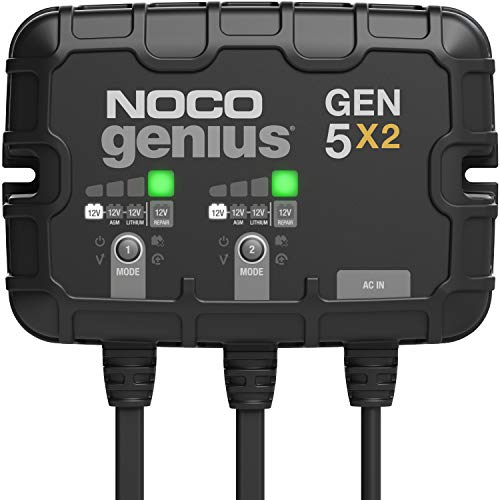 |
NOCO GEN5X2 12V 10A 2-Bank OnBoard Marine Battery Charger & 🥈 Runner-Up |
8.6/10 |
View on Amazon Free Shipping & 30-Day Returns |
 |
2 Bank Marine Battery Charger 5X2, 10A (5A/Bank) – 12V Boat | 8.4/10 |
View on Amazon Free Shipping & 30-Day Returns |
 |
Attwood 9067-1 Vented Battery Box with Mounting Strap, Fits | 8.3/10 |
View on Amazon Free Shipping & 30-Day Returns |
 |
Attwood Group 24 Vented Marine Battery Box 💵 Budget Pick |
8.1/10 |
View on Amazon Free Shipping & 30-Day Returns |
 |
Nilight – 90015A Battery Switch 12-48V Waterproof Heavy Duty | 7.9/10 |
View on Amazon Free Shipping & 30-Day Returns |
 |
Attwood Adjustable Marine Battery Tray Group 27 | 7.5/10 |
View on Amazon Free Shipping & 30-Day Returns |
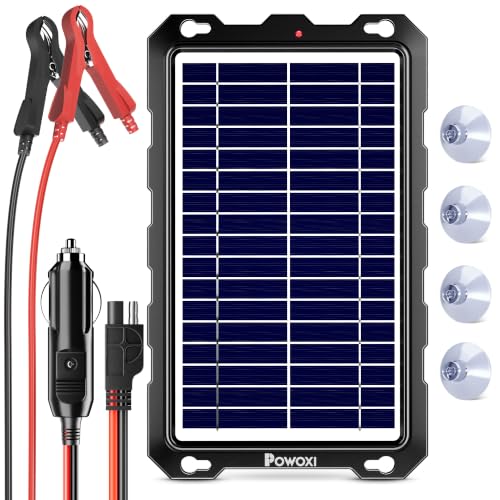 |
POWOXI 7.5W 12V Solar Battery Charger Trickle Maintainer Kit | 6.8/10 |
View on Amazon Free Shipping & 30-Day Returns |
📋 How We Evaluated
Evaluation focused on build quality, stated performance, installation practicality, and overall value. Amazon rating signals were unavailable for every listed product, so user suitability and documented features received greater weight.
Detailed Reviews
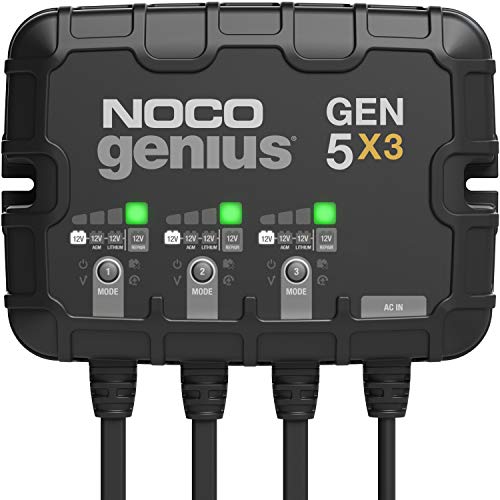
NOCO GEN5X3 12V 15A 3-Bank OnBoard Marine Battery Charger & 👑 Premium Pick
| Bank Count | 3 |
| Total Output | 15A |
| Output Per Bank | 5A |
| Supported Modes | 12V, AGM, Lithium, Repair |
What We Found
This onboard charger provides three independent banks, with 5 amps available to each bank. Each bank offers 12V, AGM, lithium, and repair modes. That arrangement supports separate starter, deep-cycle, and auxiliary batteries in one system. An integrated thermal sensor adjusts charging for ambient conditions.
The charger can begin with batteries at 1 volt, while Force Mode can initiate charging at zero volts. NOCO says this model is smaller and more powerful than its previous GENM3 version. The listing does not include cable length or mounting information. Its output suits maintenance more than rapid recovery.
💬 My Take
My read is that this is the strongest charger for a three-battery boat. Smaller systems may not justify its extra bank and installation complexity.
Who It’s For
This charger suits boats with three 12V batteries requiring independent maintenance. It is especially useful for systems combining starter, trolling, and auxiliary batteries. Broad chemistry support leaves room for future battery changes. Five amps per bank keeps charging controlled, though large batteries may take considerable time.
Single-battery owners should choose a simpler unit. Confirm compartment space and shore-power compatibility before installation.
✅ Pros
- Three independent banks support complex marine power systems.
- Each bank accepts multiple battery chemistries.
- Thermal sensing supports more controlled charging.
❌ Cons
- Five amps per bank may provide slow recovery.
- Three banks add cost and installation complexity.
- No price or user rating data is available.
Newport 12V 50Ah Deep Cycle AGM Marine Battery – Rechargeabl🏆 Editor’s Pick
| Nominal Voltage | 12V |
| Capacity | 50Ah |
| Battery Chemistry | Sealed AGM lead-acid |
| Intended Use | Trolling motors and compatible 12V marine electronics |
What We Found
This sealed AGM battery is aimed at trolling motors and other 12V marine electronics. Its 50Ah capacity supports steady output during fishing, cruising, and exploration. The sealed design avoids routine water checks and suits portable use. Its format fits kayaks, inflatable boats, jon boats, and other small craft.
Newport specifically positions it for trolling motors, though compatible 12V electronics can also use it. Portability matters when batteries move between vehicles and shorelines. The listing does not provide weight, dimensions, reserve capacity, or charging specifications. Confirm those details before installation.
💬 My Take
My read is that this is the most focused battery option for small-boat trolling motors. Missing specifications make it harder to judge fully.
Who It’s For
This battery suits anglers using 12V trolling motors on small boats and kayaks. Sealed AGM construction benefits owners seeking low-maintenance operation between outings. Capacity should suit moderate day trips, though runtime depends on thrust, speed, load, and weather. Portable users may appreciate its manageable format.
Buyers seeking lithium-level weight savings or longer range should compare other options. Confirm dimensions, terminal style, and charger compatibility first.
✅ Pros
- Sealed AGM construction reduces routine maintenance requirements.
- 50Ah capacity provides practical deep-cycle storage for small craft.
- Compact design supports transport between vehicles and launch points.
❌ Cons
- No published rating, price, weight, or dimensions are provided.
- Lead-acid construction weighs more than comparable lithium batteries.
- Runtime depends heavily on motor load and operating conditions.
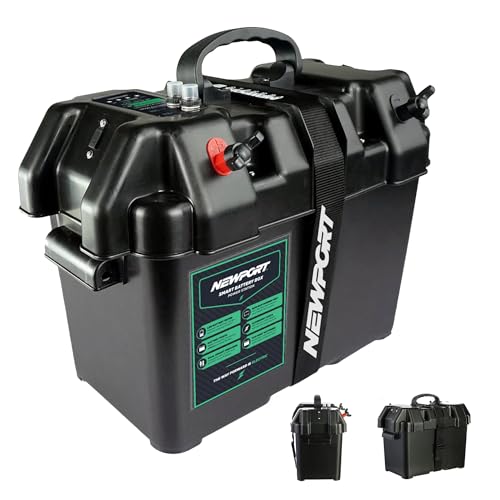
Newport Trolling Motor Smart Battery Box Power Center with U💰 Best Value
| Battery Compatibility | Lead-acid only |
| Accessory Ports | USB and 12V DC |
| Circuit Breakers | 10A and 60A |
| Monitoring | Built-in battery meter |
What We Found
This portable power center organizes a 12V trolling-motor setup for kayaks, jon boats, and small watercraft. External terminals connect a motor, fish finder, and accessories without opening the case. Built-in USB and 12V DC ports can power phones, GPS units, and other essentials.
Integrated circuit breakers help protect connected circuits from overloads. A battery meter shows charge status before launch and during a trip. The box works with lead-acid batteries, but not lithium-ion models. Newport emphasizes cleaner wiring and fewer exposed connections for portable installations.
The listing does not provide dimensions or breaker-reset details.
💬 My Take
My read is that this is the most useful portable power-management option for lead-acid systems. Its lithium restriction matters, but the organized connections add practical value.
Who It’s For
This power center suits small-boat users wanting organized connections without permanent rewiring. Anglers can run a trolling motor, fish finder, phone, and GPS from one portable hub. The meter helps track remaining charge during longer outings. Lead-acid compatibility makes it suitable for AGM installations. Lithium owners should avoid it.
Verify motor current, battery size, and compartment space before buying.
✅ Pros
- External terminals make accessory connections easier.
- USB and 12V ports expand practical onboard power.
- Built-in breakers and a meter improve basic power management.
❌ Cons
- It is incompatible with lithium-ion batteries.
- The listing omits dimensions and detailed electrical ratings.
- It does not provide charging or battery storage capacity.
NOCO GEN5X2 12V 10A 2-Bank OnBoard Marine Battery Charger & 🥈 Runner-Up
| Bank Count | 2 |
| Total Output | 10A |
| Output Per Bank | 5A |
| Supported Modes | 12V, AGM, Lithium, Repair |
What We Found
This onboard charger uses two independent banks, with 5 amps available to each bank. Each bank supports 12V, AGM, lithium, and repair modes. That flexibility suits mixed marine battery systems and seasonal maintenance. An integrated thermal sensor adjusts charging for surrounding conditions.
The charger can begin with batteries at 1 volt, while Force Mode addresses batteries at zero volts. NOCO says this model is smaller and more powerful than its previous GENM2 version. The listing does not provide price, rating, cable length, or mounting details.
It is a charger, not a replacement battery.
💬 My Take
My read is that this charger makes sense for two-bank maintenance and mixed battery chemistries. Its output is less appealing for batteries needing rapid recovery.
Who It’s For
This charger fits boat owners maintaining two 12V batteries onboard. It suits boats combining starter and deep-cycle batteries, especially when chemistry differs between banks. Independent controls simplify seasonal storage and routine charging. Five amps per bank favors steady charging over quick recovery.
Owners with one battery may not need the second bank. Verify installation space, cable routing, and shore-power requirements before mounting.
✅ Pros
- Independent bank controls support different battery types.
- Thermal compensation helps adapt charging to temperature changes.
- Force Mode can address severely discharged batteries.
❌ Cons
- The 5A-per-bank output may charge large batteries slowly.
- It requires permanent onboard installation and suitable shore power.
- No price or user rating data is listed.
2 Bank Marine Battery Charger 5X2, 10A (5A/Bank) – 12V Boat
| Bank Count | 2 |
| Output Per Bank | 5A |
| Waterproof Rating | IP68 |
| Warranty | 3 years |
What We Found
This two-bank marine charger provides 5 amps to each 12V bank. It supports lead-acid, AGM, lithium-ion, and calcium battery modes. Each bank selects its charging mode independently, allowing mixed battery applications. Its IP68 waterproof design suits continuous onboard use when installed correctly.
Automatic repair and diagnostic functions address overvoltage, bad batteries, overheating, and reverse connections. An integrated thermal sensor adjusts charging for surrounding conditions. A display shows charge levels in broad percentage steps. The package includes clips, connectors, spare fuses, screws, and a manual. A three-year warranty is stated.
The listing recommends charging in a well-ventilated area.
💬 My Take
My read is that this charger covers the key needs of a two-bank system. IP68 protection and included accessories may outweigh brand preference for some buyers.
Who It’s For
This charger fits boat owners needing two-bank maintenance with broad chemistry compatibility. Included connectors and fuses may simplify installation or replacement work. IP68 construction suits permanent marine placement when installation follows the manual. Five amps per bank favors steady maintenance over fast charging.
The display offers a quick estimate, not precision battery monitoring. Confirm ventilation, cable lengths, and compatibility before installation.
✅ Pros
- IP68 sealing supports onboard marine installation.
- Independent modes accommodate different battery chemistries.
- Diagnostics can identify several common charging problems.
❌ Cons
- Five amps per bank may charge large batteries slowly.
- The percentage display provides limited battery information.
- The product requires well-ventilated charging conditions.
Attwood 9067-1 Vented Battery Box with Mounting Strap, Fits
| Battery Size | Group 27 |
| Interior Dimensions | 13.06 x 6.9 x 10.5 inches |
| Material | Impact-tested polypropylene |
| Compliance | ABYC E-10 and USCG 183.420 |
What We Found
This vented box accommodates larger Group 27 batteries up to 10.5 inches high. Its interior measurements help buyers assess fit before installation. The polypropylene shell is impact-tested across a broad temperature range. Integrated ventilation allows hazardous gases to escape, while the cover helps reduce water intrusion.
A 40-inch strap rated for 350 pounds secures the battery during use. The product states compliance with ABYC E-10 and USCG requirements for certain hold-down systems. Like the smaller version, it provides containment rather than charging or power distribution. Verify cable routing and terminal clearance carefully.
💬 My Take
My read is that this is the better box for larger battery installations. Its appeal comes from fit and compliance, not added electrical functions.
Who It’s For
This model fits boat owners using larger Group 27 batteries in fixed marine compartments. It suits installations needing restraint, ventilation, and basic water protection. The larger interior supports batteries exceeding Group 24 dimensions. Measure the battery and compartment first, because the width remains relatively narrow.
This box works well for straightforward systems. It lacks battery monitoring, circuit protection, and accessory ports.
✅ Pros
- The Group 27 format accommodates larger marine batteries.
- Venting and a protective cover support safer containment.
- The heavy-duty strap exceeds stated regulatory requirements.
❌ Cons
- It does not fit smaller installations as efficiently as Group 24 boxes.
- The box provides no charging or monitoring functions.
- Narrow interior width requires careful battery measurement.
Attwood Group 24 Vented Marine Battery Box💵 Budget Pick
| Battery Size | Group 24 |
| Interior Dimensions | 10.6 x 7 x 10.125 inches |
| Material | Impact-tested polypropylene |
| Hold-Down Strap | 40 inches, rated for 350 pounds |
What We Found
This vented battery box fits standard Group 24 batteries up to 10.125 inches tall. Its interior dimensions provide useful fit references before installation. Polypropylene construction is impact-tested across a broad temperature range. Ventilation lets hazardous gases escape, while the cover helps limit water intrusion.
The included hold-down strap is rated for 350 pounds. Attwood says that rating exceeds the applicable USCG requirement. The box also meets USCG requirements for certain OEM-installed hold-down systems. It provides containment rather than charging or electrical power. Match battery dimensions carefully and maintain suitable ventilation paths.
💬 My Take
My read is that this box covers the basic safety needs of a Group 24 installation. It does not replace a complete power-management system.
Who It’s For
This box suits boat owners installing a Group 24 lead-acid battery in a fixed location. It adds containment, ventilation, and restraint without requiring a power center. The strap helps limit movement during normal marine use. Measure height, width, terminal clearance, and surrounding access before ordering.
Owners needing USB ports, battery monitoring, or circuit breakers should consider a power center instead.
✅ Pros
- Vented construction helps manage hazardous battery gases.
- The included strap provides strong battery restraint.
- USCG compliance supports appropriate marine installations.
❌ Cons
- It fits Group 24 batteries only.
- The box adds protection but no electrical controls.
- Exact terminal and cable clearance still requires measurement.
Nilight – 90015A Battery Switch 12-48V Waterproof Heavy Duty
| Voltage Range | 12 to 48V DC |
| Continuous Rating | 275A at 12V DC |
| Intermittent Rating | 455A at 12V DC |
| Positions | On and Off |
What We Found
This waterproof switch disconnects 12V to 48V systems. Its current ratings support many high-demand 12V marine applications. The switch isolates a boat’s electrical system and can reduce battery drain during storage. Its ABS housing includes a rear cover that insulates terminals against accidental shorts.
The package includes mounting hardware and a two-position switch. Nilight lists marine boats, RVs, vehicles, trailers, and battery banks among its applications. The device controls circuit connection, but it does not charge, store, or monitor energy. Installation requires correct cable sizing, terminal protection, and suitable mounting.
A two-year warranty is stated.
💬 My Take
My read is that this is a practical protection accessory, not a battery solution. Its value depends on matching the boat’s current demand.
Who It’s For
This switch suits boat owners wanting a simple master disconnect for storage and servicing. It can reduce parasitic drain when the boat remains unused. Actual suitability depends on the motor, cable, and system requirements. It works alongside a battery, box, charger, or tray.
Buyers should confirm whether switching the negative or positive side suits their installation. High-current systems may benefit from professional installation.
✅ Pros
- Disconnecting power helps reduce storage battery drain.
- High stated current ratings suit many marine systems.
- The rear cover adds terminal insulation.
❌ Cons
- It does not provide charging or battery monitoring.
- Installation errors can create serious high-current hazards.
- The listing does not specify terminal stud dimensions.
Attwood Adjustable Marine Battery Tray Group 27
| Battery Size | Group 27 |
| Mounting Hardware | Adjustable crossbar and two retaining bolts |
| Installation Screws | Number 10 screws |
| Compliance | ABYC E-10 and US Coast Guard requirements |
What We Found
This adjustable tray secures a compatible Group 27 battery with a crossbar and retaining bolts. It meets stated ABYC E-10 and US Coast Guard requirements. The design targets larger marine batteries than a Group 24 tray. Installation uses number 10 screws, which buyers must supply or confirm separately.
The adjustable crossbar accommodates battery-height variations within the intended range. Unlike a battery box, the tray does not fully enclose the battery or provide a cover. It offers no charging, monitoring, ventilation, or accessory connections. Confirm the tray dimensions and mounting surface before purchase.
💬 My Take
My read is that this is a straightforward restraint component for Group 27 systems. I would choose a box when containment and water protection matter.
Who It’s For
This tray suits boat owners adding or replacing a Group 27 restraint system. It works where an open, accessible installation suits the boat better than a covered box. The adjustable crossbar can simplify fit across compatible battery heights.
Buyers needing water protection or reduced accidental contact should choose a vented box instead. Installation requires a structurally sound mounting surface and appropriate screws. Check applicable marine requirements before finalizing the setup.
✅ Pros
- Adjustable restraint accommodates some height variations.
- Group 27 compatibility suits larger marine batteries.
- Stated compliance supports proper marine installations.
❌ Cons
- The open tray provides less protection than a battery box.
- Installation screws are not clearly included.
- No dimensions or electrical accessories are listed.
POWOXI 7.5W 12V Solar Battery Charger Trickle Maintainer Kit
| Rated Power | 7.5W |
| System Voltage | 12V |
| Solar Efficiency | 25 to 30 percent stated |
| Connection Options | Vehicle outlet or alligator clips |
What We Found
This solar charger provides low-output maintenance charging for 12V batteries. Its stated solar conversion efficiency falls between 25 and 30 percent. Internal protection and a blocking diode aim to limit overvoltage, short circuits, and overcharging. The panel uses tempered glass with an ABS and PC frame.
POWOXI describes the construction as impact-resistant, weather-resistant, and maintenance-free. Installation can use a vehicle outlet or direct alligator-clip connections. It is marketed for cars, so marine installation requires careful placement and protected connections. Its 7.5-watt output maintains charge gradually rather than replacing a dedicated charger.
Shade, weather, panel angle, and battery size affect results.
💬 My Take
My read is that this works as a supplemental maintainer for a stored boat. I would not use it as the primary charger for active boating.
Who It’s For
This maintainer suits boat owners storing a compatible 12V battery where sunlight remains available. It can offset standby drain during periods of inactivity. The low output suits maintenance, not rapid charging or recovery. Direct clips may work temporarily, while permanent marine connections need additional protection.
Keep the panel exposed and avoid shaded storage locations. Verify outlet behavior before relying on the vehicle socket.
✅ Pros
- Solar operation can maintain batteries without shore power.
- Built-in protection addresses common charging faults.
- Tempered glass and rigid framing support outdoor use.
❌ Cons
- Low output cannot rapidly charge a depleted marine battery.
- The product is marketed primarily for automotive applications.
- Shade and weather can significantly reduce charging performance.
What to Look For Before Buying
Start with the boat’s voltage, battery count, and expected operating load. Separate energy-storage products from charging and mounting accessories. Chemistry affects charger compatibility, enclosure choice, weight, and maintenance. Installation space and marine compliance matter as much as capacity.
Check Match Capacity To Motor Demand
Check the trolling motor’s voltage before selecting a battery. Estimate runtime using capacity, speed, wind, current, and boat load. A 50Ah battery may suit moderate small-boat use, but demanding trips need more reserve. Confirm dimensions and terminal placement before ordering. Do not judge runtime from amp-hours alone.
Value Choose Charging Banks Carefully
Count the batteries requiring independent charging. Two-bank chargers suit starter and trolling batteries, while three-bank units support additional accessories. Confirm each bank’s output and supported chemistries. Lower amperage favors maintenance but can extend recovery time. Temperature sensing and repair modes may improve charging reliability.
Rating Treat Ratings As One Signal
Ratings can reveal recurring failures, fit problems, and installation complaints. These listings do not provide rating data, so documented specifications deserve extra attention. Look for clear capacity, dimensions, compliance, warranty, and compatibility details. Suitability should guide the final choice. Do not assume price guarantees better marine performance.
Verify Verify Marine Installation Details
Measure the battery, compartment, tray, and cable path before purchasing. Use suitable ventilation for lead-acid batteries and secure restraints against movement. Confirm wiring, fuse, disconnect, and breaker ratings against the boat’s electrical demand. Check whether chargers require permanent installation or shore power. Follow applicable ABYC, USCG, and manufacturer instructions.
Frequently Asked Questions
What battery size is suitable for a small boat trolling motor?
A 12V 50Ah battery can suit moderate use on small boats and kayaks. Runtime depends on thrust, speed, wind, boat weight, and battery condition. Larger motors or longer trips need additional capacity. Check the motor manufacturer’s voltage and battery recommendations.
Can a marine battery box replace a charger?
No. A battery box provides containment, restraint, and sometimes ventilation. It does not replenish stored energy. A separate charger or solar maintainer handles charging. Power centers may add ports, breakers, and meters, but they still need a compatible battery and charging source.
Are AGM and lithium batteries interchangeable in marine equipment?
They are not automatically interchangeable. Chargers must use the correct chemistry-specific charging profile. The portable power center discussed here supports lead-acid batteries only. Confirm charger, battery box, wiring, and motor compatibility before changing chemistry.
Do boat batteries need a disconnect switch?
A disconnect switch can reduce parasitic drain during storage and simplify servicing. It must match system voltage, current, cable size, and installation layout. High-current wiring needs careful terminal protection and secure mounting. Follow applicable marine standards and manufacturer instructions.
Is a solar maintainer enough to charge a boat battery?
A 7.5-watt solar maintainer can offset standby drain under favorable sunlight. It generally cannot quickly charge a depleted or heavily used marine battery. Shade, weather, panel angle, and battery size reduce output. Use a properly rated marine charger for regular recovery and full charging.
🎯 Final Verdict
The sealed 12V 50Ah AGM battery earns my top pick for small boats and trolling motors. Its portable format and targeted capacity create a practical starting point. The portable power center suits lead-acid users needing breakers, ports, and charge monitoring. Larger boats should consider the three-bank charger for independent charging.
Match voltage, chemistry, dimensions, and expected runtime before buying. The right choice depends on the boat’s actual electrical system.

- Top 10 Best Battery For Car Audio System 2026 - October 22, 2026
- Top 10 Best Battery For A Boat 2026 - October 22, 2026
- Top 10 Best Battery Charger For Marine Batteries 2026 - October 22, 2026