Power needs don’t fit a one-size-fits-all mold, and the battery backing your inverter really defines how reliably you stay powered up. Whether you’re off-grid in an RV, running tools on a job site, or keeping essentials alive during an outage, matching the battery capacity and inverter output to your actual draw can save a lot of hassle. This guide walks through common use cases and calls out which battery-inverter setups hold up where it matters.
List of Best Battery For Inverter
Here’s a snapshot of the top battery-powered inverter picks, organized by what they’re best suited for. Each one balances output, compatibility with common battery systems, and feature set differently, so use this as a starting point for figuring out what lines up with your setup.
| Product |
Best For |
Why |
Link |
| LANDERPOW 3000W Pure Sine Wave Inverter 12V DC to |
Best for heavy-duty RV and off-grid power |
Pushes 3000W continuous and 6000W surge pure sine wave power for heavy-duty RV and home backup use. |
View |
| Azocek 220W Power Inverter Compatible with Dewalt |
Best for DeWalt 20V tool battery users |
Designed to mate with DeWalt 20V batteries for on-the-spot portable power at the job site. |
View |
| BELTTT 2000W Pure Sine Wave Inverter 12V DC to 120 |
Best for mid-range solar and home backup |
2000W pure sine wave inverter with an LCD screen showing real-time voltage and battery status. |
View |
| 220W Azocek Power Inverter Compatible with Milwauk |
Best for Milwaukee 18V tool battery users |
Built to run off Milwaukee 18V batteries for tradespeople who stick with one tool ecosystem. |
View |
| BESTEK 500W Power Inverter DC 12V to 110V AC Conve |
Best for everyday car and travel use |
500W inverter with dual AC outlets and USB ports, plus alligator clamps for flexible car hookups. |
View |
| YSOLX 500W Power Inverter 12V to 110V for Vehicles |
Best for vehicle emergency and outdoor power |
Car-friendly 500W inverter that handles laptops, tablets, and small appliances on the road. |
View |
| VEVOR 2500W Sump Pump Battery Backup System, LCD D |
Best for basement sump pump backup |
2500W pure sine wave system built to keep a sump pump running automatically through outages. |
View |
| LIVOWALNY 220W-250W Power Inverter, Compatible wit |
Best for DeWalt 20V flexible job site use |
Roughly 220W to 250W with an adjustable LED light and multiple charging ports for campsite tasks. |
View |
| EGO POWER+ Portable Inverter, 400W, Power Inverter |
Best for EGO 56V battery owners |
EGO 56V-compatible 400W inverter with a PD port that can also recharge EGO batteries. |
View |
| Kzreect 220W Power Inverter Compatible with Dewalt |
Best for lightweight DeWalt 20V portability |
Ultra-light 220W inverter with an LED light and fast-charging ports, easy to toss in a bag. |
View |
🏠
Best for heavy-duty RV and home backup power
When you’re living in an RV full-time or planning for whole-home backup, the inverter has to handle big startup loads without flinching. Things like microwaves, AC units, and power tools draw a lot at once, so pure sine wave output and a high surge rating matter more than raw continuous power.
⭐ TOP PICK
LANDERPOW 3000W Pure Sine Wave Inverter 12V DC to 120V AC 60
This LANDERPOW unit puts out 3000W continuous with a 6000W surge, and the pure sine wave keeps sensitive gear like laptops and CPAPs running cleanly. It’s the kind of inverter that lets you run heavy appliances while also protecting them from voltage junk.
✦ 3000W continuous, 6000W surge✦ Pure sine wave output✦ 3 AC outlets plus USB-C/PD
💡 Pro Tip: Set the 15ft remote display where you can see it from your seat or table, that way you’re not walking out to check battery levels every time something clicks off.
🔄 RUNNER-UP
BELTTT 2000W Pure Sine Wave Inverter 12V DC to 120V AC, 4000
BELTTT’s 2000W model gives you solid mid-range output with an LCD that actually shows what’s happening in real time. It’s a better fit if your loads are smaller or you’re running a partial-home setup rather than going full off-grid.
View Alternative
🔧
Best for DeWalt 20V battery-powered tools and kits
Job sites reward gear that works with the batteries you’re already using. If you’ve already bought into a DeWalt 20V ecosystem, an inverter that drops right onto those packs cuts down on setup time and extra gear in the truck.
⭐ TOP PICK
Azocek 220W Power Inverter Compatible with Dewalt 20V Batter
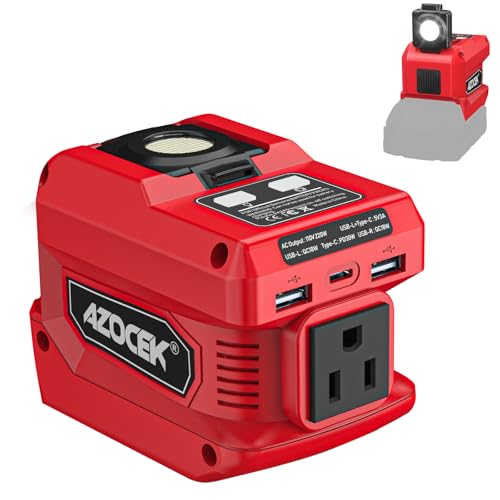
The Azocek inverter connects straight to a DeWalt 20V battery and gives you an AC outlet plus USB-A and USB-C fast charging. That means you can keep your phone topped up and still run a small drill charger or laptop.
✦ DeWalt 20V compatible✦ Fast USB-C and USB-A ports✦ 400LM LED work light
💡 Pro Tip: Grab a couple of the bigger DeWalt packs (like the 10Ah DCB206 equivalent) and you’ll stretch runtime past a full workday without hunting for an outlet.
🔄 RUNNER-UP
LIVOWALNY 220W-250W Power Inverter, Compatible with DeWALT 2
LIVOWALNY lands in a similar power range and adds an adjustable LED light, which is handy if you’re working after dark or in a dim garage. Output’s a little more modest, but it covers the basics.
View Alternative
🔋
Best for Milwaukee 18V battery system compatibility
Milwaukee users get the same benefit, inverters built for their specific battery mount mean you’re not jury-rigging adapters or worrying about voltage mismatch. These are usually smaller units meant for charging and light appliance duty.
⭐ TOP PICK
220W Azocek Power Inverter Compatible with Milwaukee 18V Bat
The Azocek 220W model hooks right onto an 18V Milwaukee pack and gives you an AC outlet plus fast USB ports. The built-in LED flashlight is a small thing that comes in handy when you’re poking around in a toolbox or under a cabinet.
✦ Milwaukee 18V compatible✦ 30W PD Type-C port✦ Strobe LED work light
💡 Pro Tip: Keep it mounted with a short cord in your service truck. You’ll grab power without thinking twice during inspections or quick repairs.
🔄 RUNNER-UP
Kzreect 220W Power Inverter Compatible with Dewalt 20V Batte
Kzreect makes a featherweight alternative at the same wattage, with an LED light that adjusts brightness. It doesn’t feel as refined as the Azocek, but it’s easy to carry and works with the same batteries.
View Alternative
🚗
Best for everyday car travel and emergency roadside use
For daily driving and weekend trips, versatility beats brute force. You want something that can plug into a cigarette lighter for minor tasks or clamp directly to the battery when you need a bit more juice.
⭐ TOP PICK
BESTEK 500W Power Inverter DC 12V to 110V AC Converter with
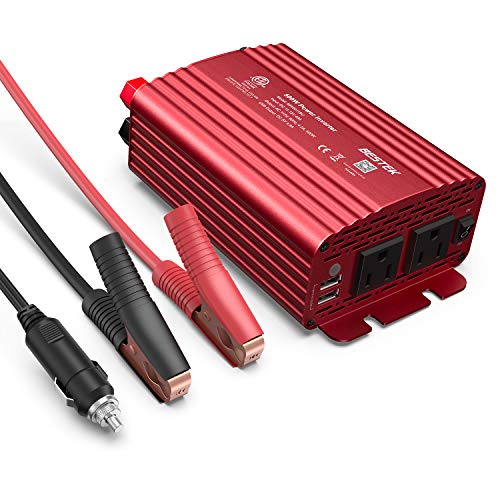
BESTEK’s 500W inverter gives you two AC outlets and dual USB ports, plus the clamps and car adapter in the box. Built-in protections for overload, overheating, and short circuits make it feel a little less sketchy when you’re running a laptop or small appliance.
✦ 500W continuous power✦ Dual AC outlets and USB ports✦ Cigarette lighter and clamp options
💡 Pro Tip: Before you trust a 500W load, peek at your car’s fuse box. Some vehicles limit cigarette lighter circuits to 150W or so.
🔄 RUNNER-UP
YSOLX 500W Power Inverter 12V to 110V for Vehicles
YSOLX splits the difference with both connection methods and a 500W ceiling. It’s not as polished as BESTEK, but it handles the essentials, charging devices, running a router, that sort of thing.
View Alternative
💧
Best for basement and sump pump emergency backup
In flood-prone areas, a sump pump failure during a power outage is the last thing you want. A dedicated backup system with automatic switchover takes that worry out of the equation, even if you’re not home when the grid drops.
⭐ TOP PICK
VEVOR 2500W Sump Pump Battery Backup System, LCD Display, Au
The VEVOR 2500W setup is purpose-built for sump pumps, the pure sine wave output is gentle on the motor, and the automatic switchover means your basement stays dry without anyone flipping a switch.
✦ 2500W pure sine wave output✦ Automatic battery switch✦ LCD monitoring display
💡 Pro Tip: Test the transition once a month by pulling the main breaker. You’ll know the system kicks in fast enough before you actually need it.
🔄 RUNNER-UP
LANDERPOW 3000W Pure Sine Wave Inverter 12V DC to 120V AC 60
LANDERPOW doesn’t auto-switch, but that 6000W surge can muscle through a stubborn pump startup if paired with the right battery bank. Just remember it requires manual setup if the grid goes down.
View Alternative
🍃
Best for lightweight EGO 56V battery owners and eco users
If you’re deep in the EGO ecosystem, their branded inverter keeps everything compatible without guessing. It’s more about convenience and sustainability, especially if you’re topping off batteries with solar.
⭐ TOP PICK
EGO POWER+ Portable Inverter, 400W, Power Inverter Generator
This 400W inverter works seamlessly with EGO 56V packs and has a 100W USB-C PD port that can both power devices and recharge the EGO battery itself. That kind of loop is perfect for campers or anyone going solar-assisted.
✦ 400W continuous output✦ USB-C PD 100W in/out✦ Quiet and compact design
💡 Pro Tip: Pair it with a compatible solar panel and you’ve basically got a self-contained power station that refills itself during the day.
🔄 RUNNER-UP
Kzreect 220W Power Inverter Compatible with Dewalt 20V Batte
Kzreect makes a lighter option with fast charging and an LED light, though it doesn’t speak EGO natively. It works with DeWalt 20V packs, so it’s a decent second choice if you’re cross-platform.
View Alternative
🎯 Which Scenario Are You?
Picking the right battery-powered inverter really comes down to what you’re running, where you’re running it, and how much you want to spend staying ready. Think about your heaviest load, whether you already use a specific battery brand, and how often you expect to fire it up. The answers shape everything else.
❓ What is your primary concern?
Start with your highest-draw device. If it’s a microwave or small AC unit, you’ll need serious surge capacity. For phones and lights, something in the 200W-500W range usually suffices.
❓ What is your budget level?
Pure sine wave units cost more upfront but play nicer with sensitive electronics. If you’re only charging phones or running a fan, a modified sine wave model gets you by cheap.
❓ How often will you use it?
Daily or semi-regular use means investing in something with decent cooling and sturdy housing. Occasional backup duty? A lighter, less expensive model is fine, and easier to stash away.
Frequently Asked Questions
What should I look for in the best battery for inverter?
Match the inverter’s continuous rating to your largest expected load, and always check the surge spec for motor-driven gear. If you’re powering laptops, CPAPs, or anything finicky, lean toward pure sine wave. Battery-wise, make sure the voltage and chemistry align with your inverter’s input range.
How do I choose between different best battery for inverter options?
Higher-wattage inverters naturally cost more, especially if they’re pure sine wave. But stepping up from modified sine wave to sine wave is usually worth it for long-term gear protection. Battery compatibility adds cost too, brand-specific models tend to run pricier than generic ones.
Can the best battery for inverter handle multiple devices at once?
Most inverters with multiple outlets can handle several devices at once, but keep the total wattage under the continuous rating. If your phone charger, laptop brick, and small fan together pull 400W and your inverter is rated for 500W, you’re fine. Push past that continuous limit and you’ll trip the safety switch or cook the circuitry.
Is pure sine wave necessary in the best battery for inverter choice?
Sine wave inverters are the safer bet for anything with internal power supplies or processors, laptops, CPAPs, game consoles, that kind of thing. Modified sine wave can work for simpler loads like incandescent bulbs or basic power tools, but it sometimes causes humming, overheating, or early failure in sensitive gear.
How long will a battery last with the best inverter for my situation?
Runtime is basically battery capacity divided by total load, minus efficiency losses. A 100Ah battery running a 500W inverter at full tilt might last around 2 hours. But if you’re only drawing 100W? That could stretch to 10 hours or more. Inverter efficiency usually sits around 85%-95%, so factor that in when estimating real-world runtime.