BMW X3 vs. X5: Comparing Size, Performance, and Tech

When shopping for a luxury crossover in the US, BMW’s X-line models consistently rank at the top of buyer shortlists. The decision almost always comes down to two vehicles: the compact BMW X3 and the midsize BMW X5.
While both deliver signature BMW dynamic handling, aggressive styling, and cutting-edge tech, they serve noticeably different driver priorities. The X3 leans into maneuverability and efficiency, while the X5 offers a plush, commanding presence with more standard power and higher towing limits.
1. Exterior Dimensions & Size Comparison
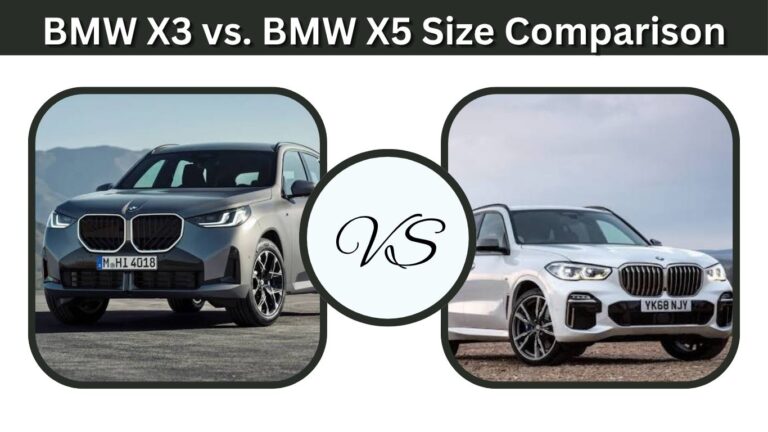
The size difference between the X3 and X5 is immediately apparent in parking lots and narrow garage spaces. The X5 sits on a wider chassis with a longer wheelbase, giving it a chunkier stance.
The X3 stretches 187.2 inches long and 75.6 inches wide. Its compact footprint makes navigating tight downtown parking decks and city traffic effortless.
By contrast, the X5 measures 194.2 inches in length and 78.9 inches in width. That extra 7 inches of overall length and 3.3 inches of width grant the X5 a broader cabin and a more commanding road presence.
2. Engines, Performance, and Fuel Economy
One of the largest distinctions between the two models lies in what sits under the hood.
BMW X3 Powertrains
- 30 xDrive: Powered by a 2.0-liter turbocharged 4-cylinder engine with 48V mild-hybrid assistance, generating 255 hp and 295 lb-ft of torque. It goes 0–60 mph in 6.0 seconds and achieves up to an EPA-estimated 27 mpg city / 33 mpg highway.
- M50 xDrive: Steps up to a 3.0-liter turbocharged inline-6 producing 393 hp and 428 lb-ft of torque, dropping the 0–60 time to a rapid 4.4 seconds.
BMW X5 Powertrains
- sDrive40i / xDrive40i: Features a potent 3.0-liter turbocharged inline-6 engine right from the base trim, outputting 375 hp and 398 lb-ft of torque. Acceleration to 60 mph takes just 5.2 seconds.
- xDrive50e (Plug-In Hybrid): Combines the 3.0-liter inline-6 with an electric motor for a massive 483 hp combined and up to 38 miles of pure electric range before switching to gasoline power.
- M60i & X5 M Competition: For enthusiasts, the M60i packs a 523-hp twin-turbo V8, while the X5 M Competition surges to 617 hp and rockets 0–60 mph in 3.7 seconds.
Key Difference: If electrification is high on your priority list, only the X5 currently offers a plug-in hybrid (PHEV) variant in the US lineup.
3. Interior Comfort, Cargo, and Tech
Step inside, and both cabins showcase BMW’s signature Curved Display that seamlessly merges the instrument cluster and central infotainment screen. However, the cabin materials and spatial layouts cater to different needs.
Space & Cargo
- BMW X3: Offers 31.5 cu. ft. of cargo space behind the second row, expanding to 67.1 cu. ft. with the rear seats folded. Rear legroom is surprisingly close to the X5 (36.3 inches), but shoulder room is tighter.
- BMW X5: Yields 33.9 cu. ft. of standard cargo room and 72.3 cu. ft. with rear seats stowed. The cabin feels distinctly roomier side-to-side, providing extra elbow room for front and rear passengers.
Cabin Amenities & Technology
- BMW X3: Features the iDrive 9 system and the distinctive BMW Interaction Bar, which incorporates backlit controls and ambient lighting along the dashboard.
- BMW X5: Runs on iDrive 8.5 and upgrades the luxury quotient with richer standard upholstery options, available massaging seats, a Sky Lounge LED roof, and the optional Highway Assistant (allowing hands-free driving on compatible highways up to 85 mph).
4. Side-by-Side Specifications Comparison
| Metric | 2026 BMW X3 (30 xDrive) | 2026 BMW X5 (sDrive40i / xDrive40i) |
| Starting MSRP (US) | ~$50,900 | ~$67,600 |
| Drivetrain | Standard xDrive AWD | Standard RWD (AWD available) |
| Base Engine | 2.0L Turbo Inline-4 (255 hp) | 3.0L Turbo Inline-6 (375 hp) |
| Max Towing Capacity | Up to 4,850 lbs | Up to 7,200 lbs |
| EPA Fuel Economy (Comb.) | ~29 MPG | ~25 MPG (Gas) / 58 MPGe (PHEV) |
| Overall Length | 187.2 in | 194.2 in |
| Max Cargo Capacity | 67.1 cu. ft. | 72.3 cu. ft. |
5. The Verdict: Which One Should You Buy?
Choose the BMW X3 if:
- You want optimal fuel efficiency: Achieving up to 33 mpg highway on standard AWD makes it a far more budget-friendly daily commuter.
- You deal with city parking regularly: The compact dimensions and smaller turning radius make parallel parking and urban maneuvering much simpler.
- Value is your primary driver: Starting around $50,900 with standard AWD, it delivers 80% of the luxury experience for nearly $17,000 less than the X5.
Choose the BMW X5 if:
- You need serious towing power: The X5’s 7,200 lb towing capacity easily handles boats, campers, and heavy trailers that exceed the X3’s limits.
- You prioritize highway road-tripping: The wider stance, quieter cabin insulation, and optional hands-free Highway Assistant make long highway stints significantly less tiring.
- You want a Plug-In Hybrid or V8 engine: The X5 xDrive50e PHEV and V8-powered M60i offer performance options unavailable on the X3 platform.

- Top 10 Best Helmet For A Running Back 2026 - September 16, 2026
- Best Bug Remover For Car Wash 2026 - September 16, 2026
- Best Bug And Bird Poop Remover For Cars 2026 - September 15, 2026