BMW X3 vs. BMW X5 Size Comparison: Dimensions, Cargo, and Garage Fit Guide

When shopping for a luxury crossover in the US market, size is often the single most important factor deciding between BMW’s two most popular models: the compact BMW X3 and the midsize BMW X5.
While both vehicles share BMW’s signature dynamic handling, digital Curved Display, and aggressive styling, their physical dimensions dictate two very different ownership experiences. On paper, a length difference of around seven inches might sound modest, but in real-world driving, it fundamentally changes how these SUVs fit into your garage, navigate urban parking structures, handle family road trips, and haul cargo.
1. Exterior Dimensions: Footprint and Stance
The physical presence of each vehicle on the road is defined by its footprint. The BMW X3 is designed with tighter suburban and urban environments in mind, whereas the X5 commands the lane with a wider, lower, and longer posture.
Exterior Dimensions Breakdown
- Overall Length: The X3 measures 187.2 inches from bumper to bumper, making it nimble and easy to slot into standard street parking spaces. The X5 stretches to 194.2 inches—adding 7.0 inches of total length that goes directly into cabin room and rear cargo depth.
- Body Width (Without Mirrors): The X3 sits at 75.6 inches wide. The X5 expands to 78.9 inches, making it 3.3 inches wider across its track.
- Total Width (With Mirrors Extended): Including side mirrors, the X3 spans 83.9 inches. The X5 reaches 87.3 inches wide. That extra 3.4 inches of total width requires a bit more care when pulling through older suburban single-car garage doors.
- Overall Height: The X3 stands 65.4 inches tall, maintaining a car-like roofline. The X5 sits higher at 69.1 to 69.5 inches (depending on suspension setup), offering a higher eye-level view of the road ahead.
- Wheelbase: The X3’s wheelbase measures 112.8 inches, while the X5 boasts a 117.1-inch wheelbase. The X5’s longer wheelbase contributes to a noticeably smoother, more isolated ride on highway expansion joints.
2. Interior Dimensions: Passenger Comfort Across Both Rows
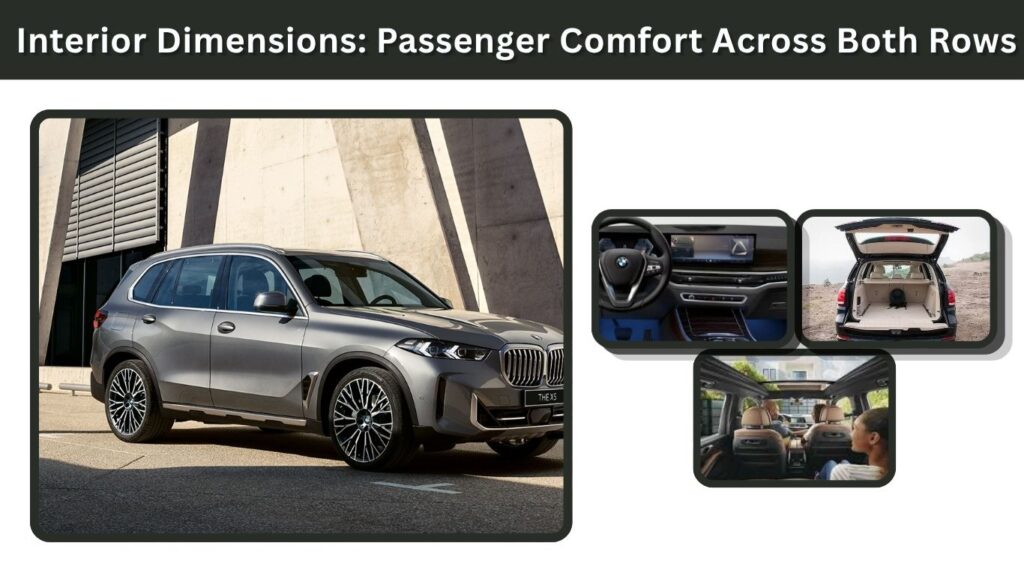
Step inside, and the structural differences between these two platforms become immediately apparent. While both vehicles seat five passengers comfortably, the cabin volume is distributed differently.
Front-Row Comfort
Up front, both models offer generous headroom and legroom that easily accommodate tall drivers:
- Headroom: The X3 and X5 both offer around 40.5 to 40.8 inches of front headroom under their standard glass roofs.
- Legroom: Surprisingly, the X3 offers roughly 40.3 inches of front legroom, while the X5 offers 39.8 inches. Both provide more than enough stretch-out space for long highway commutes.
- Shoulder & Elbow Room: This is where the X5 sets itself apart. The X5 provides 60.0 inches of front shoulder room versus 57.6 inches in the X3. The X5’s wider center console creates a far more expansive armrest area, giving driver and front passenger substantial personal space.
Second-Row Passenger Experience
The rear seat is often the deciding factor for families with growing teenagers or child safety seats:
- Rear Legroom: The X3 provides 36.5 inches of rear legroom, whereas the X5 increases that metric to 37.4 inches. While a 0.9-inch gain seems small, the X5’s seat contouring provides better thigh support for adult passengers.
- Rear Shoulder Room: The X5 measures 58.1 inches across the rear seat shoulder area, compared to roughly 56.0 inches in the X3. If you frequently carry three adult passengers across the back bench or need to install two bulky rear-facing car seats alongside a center passenger, the X5’s wider bench is significantly more practical.
3. Cargo Space and Practical Utility
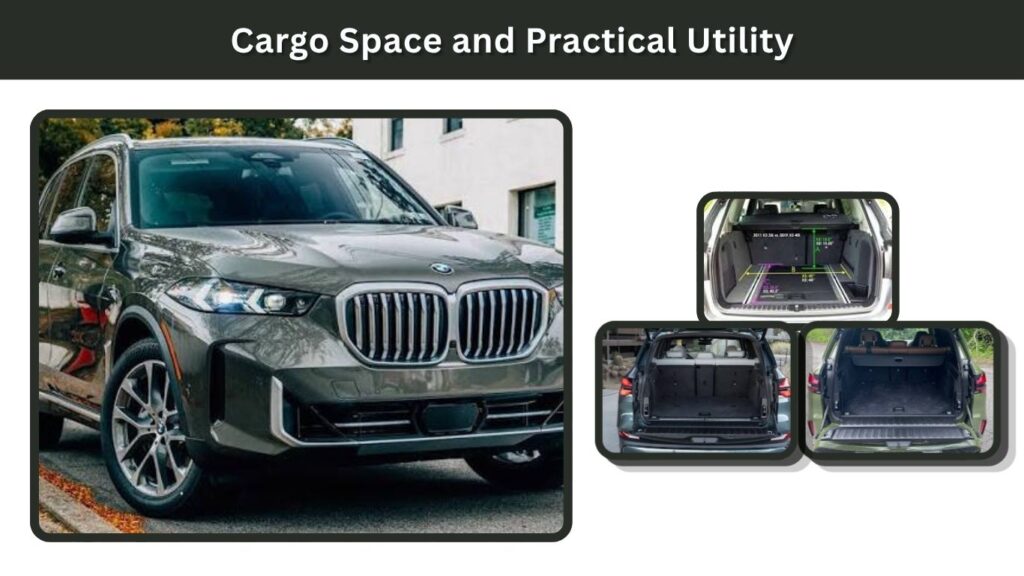
Whether loading luggage for a trip to the airport, hauling home improvement supplies, or packing golf bags, cargo space is a primary metric for luxury SUV buyers.
Key Utility Note: The X5 offers 33.9 cubic feet of cargo room behind the rear seats, which is 2.4 cubic feet more than the X3’s 31.5 cubic feet. However, folding the seats down reveals a much larger capacity gap.
Cargo Volume Comparison
- Cargo Space Behind 2nd Row:
- BMW X3: 31.5 cu. ft.
- BMW X5: 33.9 cu. ft. (Gas models) / 33.1 cu. ft. (xDrive50e Plug-in Hybrid)
- Maximum Cargo Volume (2nd Row Folded):
- BMW X3: 67.1 cu. ft.
- BMW X5: 72.3 cu. ft. (Gas models) / 71.2 cu. ft. (xDrive50e Plug-in Hybrid)
Tailgate Functionality: Traditional vs. Split Tailgate
Beyond total cubic volume, the opening mechanism differs significantly between the two models:
- BMW X3 (Single Liftgate): Utilizes a standard one-piece power liftgate. It opens quickly and requires less depth clearance behind the vehicle when backed close to a garage wall or parking structure pillar.
- BMW X5 (Clamshell Split Tailgate): Features BMW’s iconic two-piece split tailgate. The top section swings upward electronically, while the lower section folds down flat. The lower portion acts as a loading ledge to prevent heavy cargo from rolling out, and it doubles as a tailgate seat supporting up to 550 lbs.
4. Side-by-Side Size & Specification Matrix
Below is a direct metric comparison of the current US-spec BMW X3 and BMW X5:
| Measurement | 2026 BMW X3 | 2026 BMW X5 | Difference (X5 vs. X3) |
| Segment Class | Compact Luxury SAV | Midsize Luxury SAV | +1 Class Size |
| Overall Length | 187.2 in | 194.2 in | +7.0 in |
| Body Width (no mirrors) | 75.6 in | 78.9 in | +3.3 in |
| Width (with mirrors) | 83.9 in | 87.3 in | +3.4 in |
| Overall Height | 65.4 in | 69.1–69.5 in | +3.7 to +4.1 in |
| Wheelbase | 112.8 in | 117.1 in | +4.3 in |
| Front Headroom | 40.5 in | 40.8 in | +0.3 in |
| Front Legroom | 40.3 in | 39.8 in | -0.5 in |
| Rear Legroom | 36.5 in | 37.4 in | +0.9 in |
| Rear Shoulder Room | 56.0 in | 58.1 in | +2.1 in |
| Cargo Space (Seats Up) | 31.5 cu. ft. | 33.9 cu. ft. | +2.4 cu. ft. |
| Cargo Space (Seats Flat) | 67.1 cu. ft. | 72.3 cu. ft. | +5.2 cu. ft. |
| Max Towing Capacity | 4,850 lbs | 7,200 lbs | +2,350 lbs |
| Turning Diameter | 40.0 ft | 41.3 ft | +1.3 ft |
5. Real-World Usability: Garage Fit & Parking in US Homes
A critical aspect of choosing between these two crossovers is evaluating how they fit into standard American residential spaces.
Fitting in a Standard US Garage
A standard single-car garage door in the US measures 8 feet wide (96 inches), while garage depths typically range from 20 to 22 feet (240 to 264 inches).
- Garage Width Margin:
- The X3 (83.9 inches wide with mirrors) leaves roughly 6.0 inches of clearance on each side when driving through a standard 8-foot garage door.
- The X5 (87.3 inches wide with mirrors) leaves only 4.3 inches of clearance on each side. Drivers with narrow single-bay doors will find pulling the X3 in and out significantly less stressful.
- Garage Length Margin:
- In a standard 20-foot (240-inch) garage, the 187.2-inch X3 leaves roughly 52.8 inches (4.4 feet) of total walking clearance around the front and rear bumpers.
- The 194.2-inch X5 leaves 45.8 inches (3.8 feet) of clearance. If you store lawn equipment, bicycles, or tool workbenches at the head of your garage, the X3’s shorter tail provides valuable extra space.
Urban Maneuverability & Parking
- Turning Radius: The X3 turns around in a curb-to-curb diameter of 40.0 feet, compared to 41.3 feet for the X5. This makes U-turns on tight suburban streets and navigating tight parking decks noticeably easier in the X3.
- Parallel Parking: The 7-inch difference in length makes the X3 far easier to slide into tight street spots in major metropolitan centers.
6. Towing Capability and Heavy-Duty Hauling
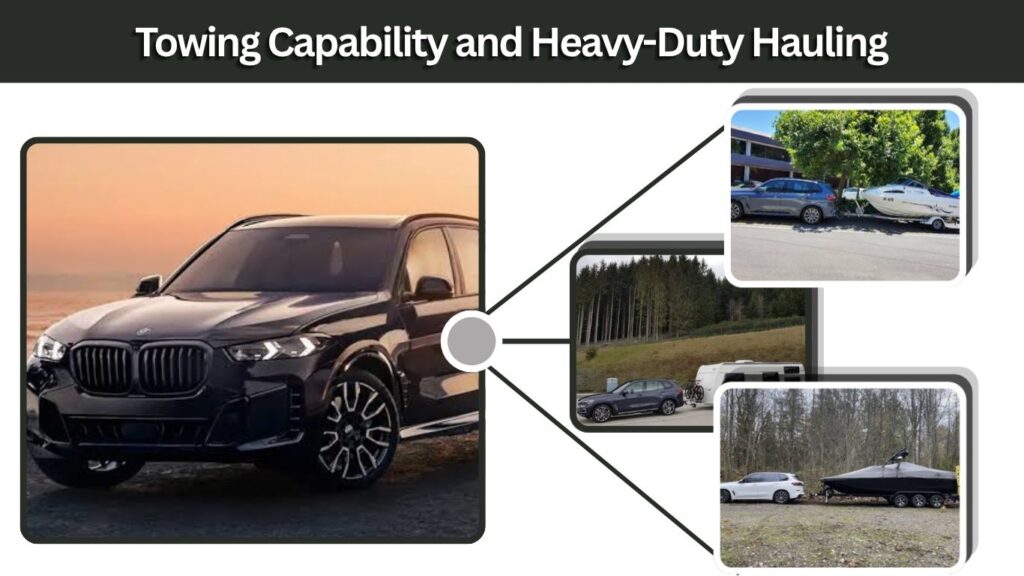
Size and curb weight directly correlate to towing confidence. While both models offer factory-installed trailer hitches, their capabilities suit different recreational demands:
- BMW X3 Towing: Rated to tow up to 4,850 lbs when properly equipped. This is ideal for lightweight utility trailers, small jet skis, single-horse trailers, or teardrop campers.
- BMW X5 Towing: Rated to tow up to 7,200 lbs on gasoline models. Supported by its wider track, longer wheelbase, and heavier curb weight (4,919 to 5,573 lbs), the X5 easily handles medium-sized ski boats, travel trailers, or car haulers that exceed the X3’s safety limits.
7. The Final Decision: Which Size Fits Your Needs?
Choose the BMW X3 if:
- You live in an urban environment: Its tighter turning circle and compact footprint make parallel parking and city commuting effortless.
- You have a narrow or tight garage: The 83.9-inch total width gives you extra margin when pulling through standard 8-foot garage doors.
- Primary usage is 1-2 passengers: Front-row space is virtually identical to the X5, making it an efficient choice for solo commuters or couples.
Choose the BMW X5 if:
- You regularly carry rear passengers: The extra 2.1 inches of rear shoulder room and wider cabin make carrying three people across the back seat far more comfortable.
- You need maximum cargo depth & towing: The 72.3 cu. ft. max cargo volume, split tailgate, and 7,200 lb towing limit handle heavy family road trips and recreational trailering effortlessly.
- You prefer a commanding road view: The higher seating position and broader hood line give you a more authoritative perspective in traffic.

- Best Bug And Bird Poop Remover For Cars 2026 - September 15, 2026
- Can Vaseline Work As Wd-40? - September 15, 2026
- Best Bug Remover For Bumper 2026 - September 15, 2026