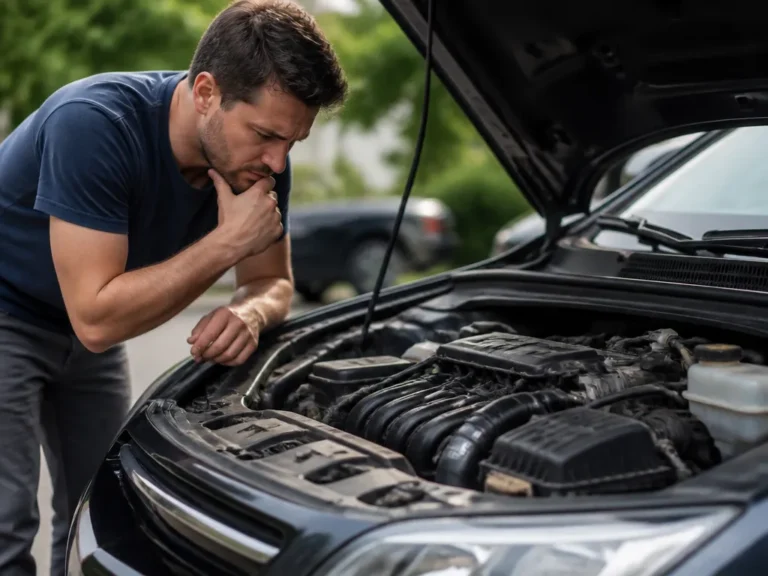
Can A Clogged Catalytic Converter Cause Overheating?

Yes, a clogged catalytic converter can contribute to overheating by restricting exhaust flow and increasing backpressure. When hot exhaust cannot leave efficiently, the exhaust manifold and nearby components run hotter. That extra heat can overwhelm a cooling system that is already marginal.
A clogged converter often causes power loss, a check engine light – commonly P0420 or P0430 – and a sulfur or “rotten egg” smell. Start by checking coolant and cooling-system operation, then confirm exhaust restriction before replacing the converter.
Key Takeaways
- Yes, it can. A clogged catalytic converter can restrict exhaust flow and increase backpressure, raising heat upstream.
- Coolant problems are more common. Most overheating comes from the cooling system, not the catalytic converter.
- Heat builds up upstream. Restricted exhaust flow heats the exhaust manifold and can raise engine-bay temperatures.
- Look for a symptom cluster. Overheating combined with power loss, misfires, and sulfur odor points more strongly toward exhaust restriction.
- Diagnose before replacing. Check coolant level, pressure, fan operation, and trouble codes before condemning the converter.
- Fix the root cause. Converter overheating usually follows a misfire, fuel problem, or exhaust issue that must be repaired.
Can a Clogged Catalytic Converter Cause Overheating?
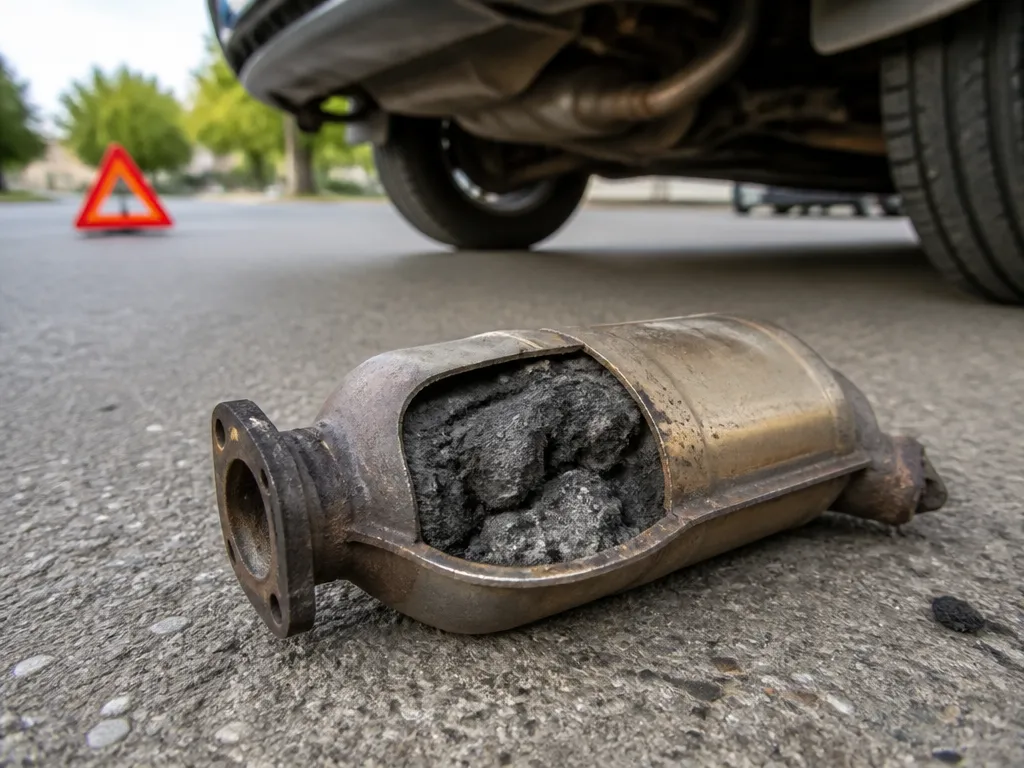
A clogged catalytic converter can cause an engine to overheat, but it is not the most common cause. The converter sits in the exhaust stream rather than the cooling system, yet a blockage can trap exhaust heat upstream and increase the engine’s overall heat load.
When the converter’s ceramic substrate clogs, exhaust gases cannot pass normally. Backpressure rises, and heat concentrates around the exhaust manifold. Engine temperatures are more likely to climb during idling, steep climbs, hard acceleration, or stop-and-go driving.
Check coolant level, thermostat operation, radiator-fan behavior, radiator condition, and leaks when investigating overheating. These components can explain rising temperatures directly, whether or not the exhaust is restricted.
How a Clogged Catalytic Converter Restricts Exhaust Flow
A clogged converter blocks exhaust gases, forcing the engine to push against added resistance. That resistance increases backpressure and changes how the engine breathes and how heat moves through the exhaust system.
A severely blocked converter can reduce exhaust flow and keep gas hotter around the exhaust manifold. If the engine also has a fuel or ignition problem, unburned fuel can reach the converter and burn inside it, adding even more heat.
The performance symptoms follow the same mechanical problem. Restricted exhaust flow commonly causes sluggish acceleration, poor fuel economy, and sometimes rough running because the engine cannot expel exhaust normally.
The chain looks like this:
- The converter clogs and restricts exhaust flow.
- Backpressure rises, and exhaust heat stays concentrated upstream.
- The engine bay and surrounding components absorb more heat.
- Overheating becomes more likely if the cooling system is weak.
What Happens When a Catalytic Converter Overheats?
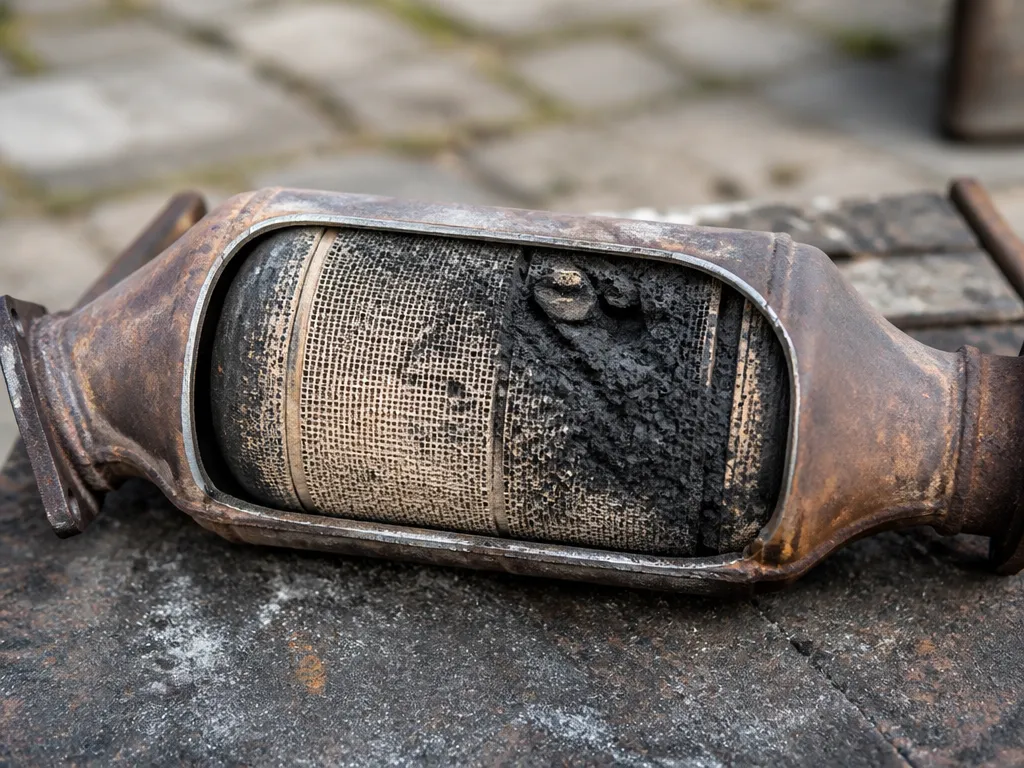
A catalytic converter normally operates at high temperature, but an extreme heat spike can damage its ceramic substrate and nearby components. It can also trigger trouble codes when abnormal combustion changes the exhaust oxygen readings.
Excessive heat can make the ceramic substrate melt, crack, or collapse. Once the substrate breaks apart, it may create an even tighter restriction, accelerating heat buildup and worsening drivability.
An overheating converter may produce a sulfur or “rotten egg” odor when unburned fuel reaches it. Dark smoke may also appear, depending on whether the underlying problem involves a misfire or an overly rich fuel mixture.
An overheated converter usually signals a problem upstream. The converter may be the hottest component, but the lasting repair usually involves correcting the misfire, fuel issue, or exhaust problem sending excess heat or fuel into the exhaust stream.
Symptoms of a Bad or Overheated Catalytic Converter
Catalytic converter symptoms overlap with other engine problems, so the combination matters more than any single clue. A seriously restricted converter usually causes both drivability problems and abnormal heat.
Common symptom patterns to watch
- Check engine light. Catalytic-efficiency codes such as P0420 or P0430 are common when the converter is not working properly.
- Power loss. A blocked or failing converter can reduce acceleration and make the car feel “choked.”
- Sulfur smell. A strong rotten egg odor points to hydrogen sulfide produced when combustion or fuel delivery is abnormal.
- Excess heat near the exhaust. The area beneath the vehicle may feel unusually hot after driving.
- Rough running or misfires. A misfiring engine can send unburned fuel into the converter and overheat it.
Pay attention to how quickly the overheating starts. If the temperature gauge climbs quickly after a hot restart or spikes under load, exhaust restriction could be contributing. If the gauge rises steadily from the beginning of a drive, low coolant, a thermostat problem, or a fan failure is more likely.
Overheating combined with a check engine light and power loss makes the converter a serious suspect. Still, rule out cooling-system failures immediately because continued overheating can warp engine components.
Other Causes of Engine Overheating to Rule Out
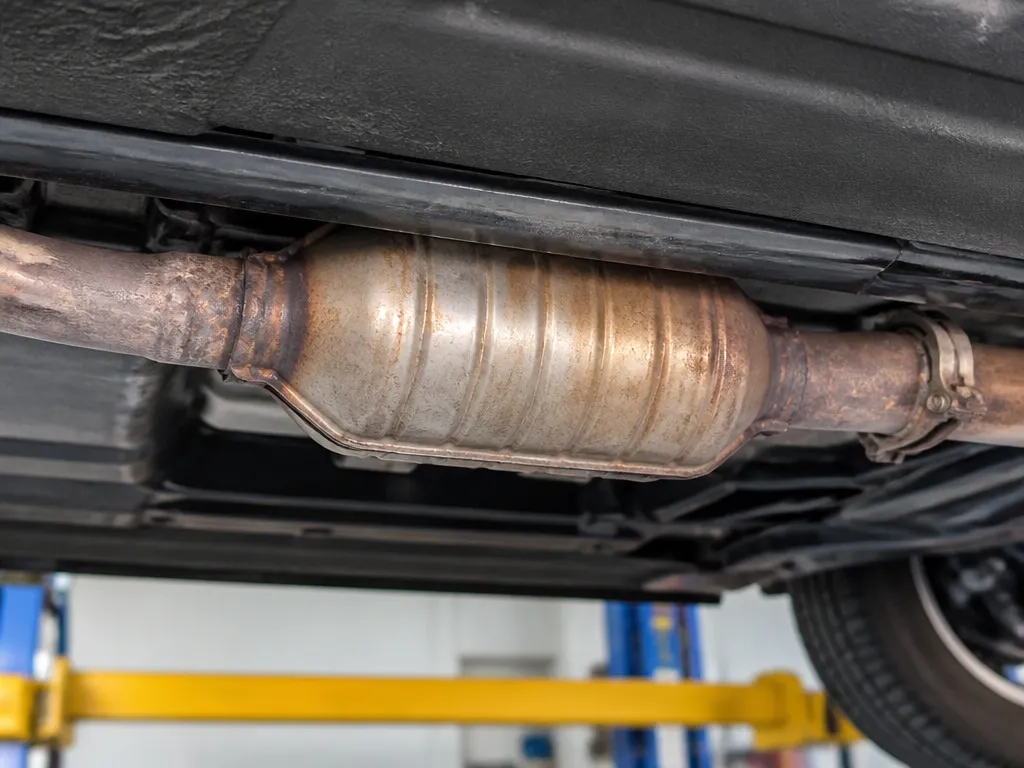
Several cooling-system problems can mimic or accompany converter-related overheating. The initial problem may be a coolant leak, a thermostat stuck closed, a failing water pump, or a cooling-fan failure.
Low coolant, air trapped in the system, a failed radiator fan, a clogged radiator, and a bad thermostat can all cause rising temperatures and serious engine damage.
Ignition and fuel problems can also overheat the exhaust indirectly. A misfire may send unburned fuel into the converter, raising its temperature enough to damage the substrate, worsen the restriction, and increase heat in the engine bay.
Use this order of operations:
- Verify coolant level and look for signs of leaks.
- Confirm that the thermostat and radiator fans are moving heat away from the engine.
- Confirm that the engine is running normally, with no ongoing misfire or major fuel-trim problem.
- Check for exhaust restriction as a contributing cause.
This order matters because a cooling-system failure can warp cylinder heads or damage internal engine components regardless of the catalytic converter’s condition.
How to Diagnose a Clogged Catalytic Converter That Causes Overheating
The strongest diagnosis combines temperature, odor, performance, pressure, and trouble-code information.
Overheating with reduced power and an exhaust odor points toward exhaust restriction or an upstream misfire. It does not prove that the converter is clogged.
Let the vehicle cool before checking leaks or working underneath it. Exhaust parts can remain hot long after the engine is shut off. Keep the hood open only as long as needed for safe observation.
A Practical Diagnostic Sequence
- Check coolant level and look for obvious leaks under the car, around hoses, and at the radiator seams.
- Confirm fan operation by observing whether the radiator fans run when the engine reaches operating temperature.
- Read trouble codes with a scan tool. P0420 and P0430 point toward converter-efficiency problems, while other codes may indicate cooling-system faults.
- Assess drivability clues. Note whether power loss and rough running occur at the same time as the temperature increase.
- Inspect for exhaust leaks near gaskets and oxygen-sensor bungs. Leaks can alter sensor readings and contribute to abnormal heat.
- Perform a heat and restriction check safely. After a short drive, compare exhaust-pipe temperatures upstream and downstream of the converter, taking care around hot components. A severe restriction often produces a sharp upstream temperature increase and less heat transfer downstream.
- Check for misfire or rich running. If misfires are present, unburned fuel may be overheating the converter.
If the engine overheats without power loss, sulfur odor, abnormal exhaust heat, or other restriction clues, treat the cooling system as the primary fault until testing proves otherwise.
How to Fix an Overheating Catalytic Converter
Fixing an overheating catalytic converter starts with repairing whatever is causing the excessive heat. If the converter is clogged, it may need professional cleaning or replacement, but the engine problem that sent unburned fuel or excess heat into the exhaust must be corrected too.
The right repair depends on whether the engine is running cleanly and whether the converter is physically restricted or simply being overheated.
Repair Options That Make Sense
- Minor engine repairs, such as sensors, plugs, or leaks: $150-$500. This range can apply when the root cause is an ignition misfire, an O2 sensor-related issue, or a small exhaust or cooling leak.
- Cleaning with additives: $25-$50. Additives may help a lightly fouled converter when the engine is not misfiring. They are not a substitute for diagnosing a serious blockage.
- Universal converter: $200-$800. This is a replacement option when the original converter is restricted or internally damaged.
- OEM converter: $1,000-$2,500+. The higher price reflects matching the original part for fitment and emissions compliance.
After diagnosing the cooling system and engine operation, choose between a cleaning attempt and replacement based on the converter’s condition.
Preventing a repeat failure requires keeping the engine running properly. Maintain the spark plugs, air filters, and oil to reduce misfires and rich conditions that send extra fuel into the exhaust. Repair exhaust leaks and maintain proper fuel and ignition operation to reduce repeated converter overheating.
FAQ
Can a clogged catalytic converter cause overheating even if the coolant is full?
Yes, but it is less common than a cooling-system failure. A clogged converter restricts exhaust flow and increases backpressure, raising heat upstream and potentially adding to engine temperature. If the coolant is full and the fans run, look for power loss, sulfur odor, and catalytic-efficiency codes while checking for other cooling-system faults.
How long does it take for a catalytic converter to overheat?
A restricted converter can heat up quickly during hard driving, idling, or a misfire-rich event. The timing depends on engine load, airflow, and the reason the converter is overheating. If the temperature gauge rises quickly alongside drivability problems, treat the condition as urgent.
Is it safe to drive with a suspected overheating catalytic converter?
Driving is risky because the converter can suffer more damage, and the engine may be overheating for a separate reason. If the temperature gauge reaches the warning range, pull over and shut off the engine. If the vehicle runs normally but has a sulfur smell and power loss, limit driving until it is inspected.
What are the cheapest fixes before replacing the catalytic converter?
Start with diagnosis and root-cause repairs. Code checks, spark-plug inspection, vacuum or air-leak checks, fuel-trim verification, and exhaust-leak repairs can fall within the $150-$500 range for minor repairs. If the converter is only lightly fouled and there are no signs of misfire, cleaning with additives may cost about $25-$50.
Will oxygen-sensor issues cause catalytic converter overheating?
Yes. A faulty oxygen sensor can disrupt fuel and air control, causing rich running or misfires that send unburned fuel into the converter. That extra fuel can overheat the converter and contribute to restriction. When catalytic codes appear with overheating, test sensor-related causes before replacing the converter.

- Top 10 Best Helmet For Xtreme 125r 2026 - October 5, 2026
- Top 10 Best Helmet For Xpulse 200 2026 - October 5, 2026
- Top 10 Best Helmet For Xsr 155 2026 - October 5, 2026