18 vs 20 Inch Tires: Which Size Enhances Your Ride?

Choosing between 18 and 20 inch tires can feel overwhelming, especially with so many options available. Each size has its own advantages and disadvantages, which can impact your vehicle’s safety, performance, and overall driving experience. Understanding these differences is essential for making the right choice.
When comparing 18 inch and 20 inch tires, consider performance, cost, and compatibility with your vehicle. Generally, 18 inch tires offer better comfort and fuel efficiency, while 20 inch tires provide enhanced handling and aesthetics. Making an informed decision is crucial.
Understanding the Basics
Understanding tire sizes is essential for making informed decisions about your vehicle’s performance and safety.
This section will introduce the fundamental differences between 18-inch and 20-inch tires, focusing on their characteristics, benefits, and limitations.
By grasping these basics, you’ll be better equipped to evaluate which tire size is more suitable for your specific needs.
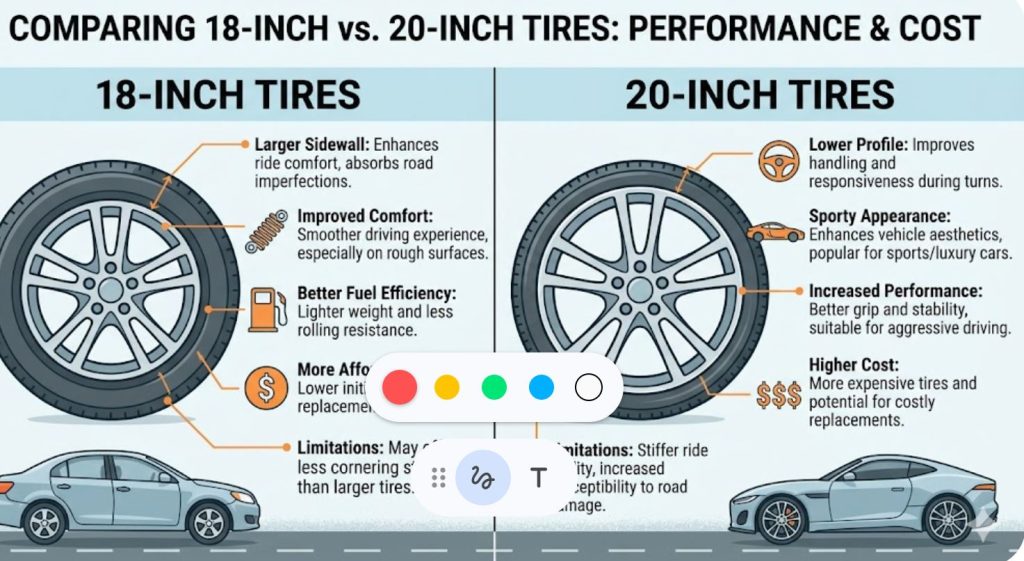
18-inch tires are commonly found on a variety of vehicles, providing a good balance between comfort and handling.
They typically offer a larger sidewall, which can enhance ride quality by absorbing road imperfections. This size is often associated with better fuel efficiency due to lighter weight and less rolling resistance. However, they may not provide the same level of cornering stability as larger tires.
On the other hand, 20-inch tires are becoming increasingly popular, especially in sports and luxury vehicles.
They characterize a lower profile, which can improve handling and responsiveness during turns. Although they can enhance your car’s aesthetic appeal, they may result in a stiffer ride and increased susceptibility to road damage.
Additionally, 20-inch tires often come at a higher price point, both for the tires themselves and potential replacement costs.
Key Concepts and Fundamentals
Understanding the implications of choosing between 18-inch and 20-inch tires is crucial for optimal vehicle performance and safety. Each tire size offers distinct characteristics that can affect handling, ride quality, and cost. This section will provide clarity on the key factors to consider when comparing these two sizes.
18-inch tires generally offer a better ride comfort due to their taller sidewalls, which can absorb road imperfections more effectively. This can translate to a smoother driving experience, especially on rough surfaces. Additionally, they may be more affordable and provide better fuel efficiency due to reduced rolling resistance.
Conversely, 20-inch tires are often favored for their sporty appearance and improved handling characteristics. The shorter sidewalls can enhance responsiveness during turns, making them suitable for performance-oriented vehicles. However, they may lead to a harsher ride quality and can be more expensive to replace.
Compatibility with your vehicle is paramount. Ensure that your vehicle can accommodate the larger tire size without impacting safety or performance. Always consult your vehicle’s manual or a tire specialist to determine the best fit for your needs.
How It Works
This section explains the fundamental differences between 18-inch and 20-inch tires, focusing on their sizes, dimensions, and how these factors influence performance. Understanding these elements is crucial for making an informed decision about which tire size suits your vehicle best.
The primary distinction between 18-inch and 20-inch tires lies in their diameter. An 18-inch tire has a smaller circumference compared to a 20-inch tire, affecting the overall handling, ride comfort, and aesthetics of your vehicle. Generally, a larger tire diameter can provide more grip due to a wider contact patch, enhancing traction and stability during cornering. However, this can also lead to a stiffer ride, as larger tires often have lower-profile sidewalls.
Additionally, the size of your tires influences speedometer accuracy, fuel efficiency, and braking distance. Larger tires can offer improved performance in certain conditions, but they may also increase rolling resistance, leading to potential decreases in fuel economy. Compatibility with your vehicle’s specifications is essential; consult your owner’s manual or a tire professional to ensure proper fitment before making a choice.
Benefits and Advantages
Understanding the benefits and advantages of 18-inch and 20-inch tires can help clarify which option aligns better with your driving needs. Each tire size offers distinct characteristics that can affect performance, comfort, and cost. Below are the key benefits associated with both sizes.
18-inch Tires:
- Cost-Effective: Generally, 18-inch tires are less expensive than their 20-inch counterparts, making them a budget-friendly option for many drivers.
- Improved Comfort: They often provide a smoother ride due to a taller sidewall, which can absorb road imperfections more effectively.
- Better Winter Performance: The additional sidewall height can enhance traction in snow and icy conditions, making them suitable for regions with harsh winters.
20-inch Tires:
- Enhanced Handling: The lower profile of 20-inch tires typically offers improved handling and responsiveness, making them ideal for sporty driving.
- Visual Appeal: Larger tires can enhance the aesthetics of a vehicle, giving it a more aggressive and modern look.
- Better Braking Performance: They often provide improved braking performance due to a wider contact patch with the road.
Evaluating these benefits helps determine which tire size better complements your driving style and vehicle requirements.
Practical Applications
Understanding the practical applications of 18-inch versus 20-inch tires can help you make a well-informed decision for your vehicle. Each tire size offers unique characteristics that can significantly impact your driving experience, safety, and vehicle performance.
18-inch tires generally provide a balance of comfort and performance. They are typically better at absorbing road imperfections, which enhances ride quality. This makes them an ideal choice for daily drivers or those who prioritize a smooth ride. Additionally, they are often less expensive than 20-inch tires, making them a cost-effective option for replacements.
On the other hand, 20-inch tires are often chosen for their aesthetic appeal and sporty performance. They offer improved handling and grip, especially during cornering, which might be beneficial for those who enjoy a more spirited driving experience. However, the trade-off is a stiffer ride and increased susceptibility to road damage due to their lower profile.
Ultimately, your choice should align with your driving habits, the type of vehicle you own, and your budget. Evaluating how you use your vehicle daily will guide you in selecting the tire size that best suits your needs.
Expert Tips and Best Practices
Understanding the differences between 18-inch and 20-inch tires is essential for making an informed decision about your vehicle. Each size offers distinct advantages and disadvantages that can affect performance, safety, and cost. Here are key considerations to help guide your choice.
18-inch tires generally provide a better ride quality due to their larger sidewall, which can absorb bumps and imperfections on the road. This size is often more affordable, making it a budget-friendly option. Additionally, they can offer better traction in adverse weather conditions because of their increased sidewall height.
On the other hand, 20-inch tires are typically wider and have a lower profile, which can enhance cornering stability and provide a sportier appearance. However, they may lead to a firmer ride and increased road noise. It’s crucial to check your vehicle’s specifications to ensure compatibility with either tire size, as some vehicles are optimized for specific diameters.
Balancing performance and comfort according to your driving needs will aid in selecting the best option for your vehicle.
Real-World Examples
Understanding the real-world implications of choosing between 18-inch and 20-inch tires can provide clarity and confidence in your decision-making process. Here are some practical examples that illustrate the differences and considerations involved.
For instance, a sedan owner may opt for 18-inch tires to enhance comfort and fuel efficiency, benefiting from a smoother ride on city streets. These tires can offer better sidewall flex, which helps absorb bumps and imperfections in the road.
Conversely, a driver of a performance SUV may choose 20-inch tires for improved handling and a sportier aesthetic. The lower profile of these tires can enhance cornering stability and responsiveness, making them more suited for spirited driving or off-road adventures.
Cost is another critical factor. 20-inch tires often come at a premium price due to their larger size and specialized performance characteristics. For example, a set of 20-inch tires could cost 20-30% more than 18-inch options, which may significantly impact your budget.
Ultimately, each tire size serves different preferences and driving needs. Assessing your driving habits, vehicle compatibility, and budget will guide you in making the best choice between 18-inch and 20-inch tires.
Getting Started
Understanding the differences between 18-inch and 20-inch tires is crucial in making an informed decision for your vehicle. This section summarizes the key considerations to help clarify which option might suit your needs better, taking into account safety, performance, cost, and compatibility.
18-inch tires typically provide a smoother ride due to their greater sidewall height, which aids in absorbing road imperfections. They are often more affordable and can offer better fuel efficiency, making them a cost-effective choice for daily driving. Additionally, their compatibility with a wider range of vehicles can make them easier to source and replace.
On the other hand, 20-inch tires are often favored for their sporty appearance and improved handling characteristics. They provide better cornering stability and responsiveness, appealing to those who prioritize performance. However, this comes at a cost, as they tend to be more expensive and may result in a harsher ride quality due to the shorter sidewalls.
Ultimately, the choice between 18-inch and 20-inch tires should align with your driving style, budget, and the specific demands of your vehicle. Consider factors such as your typical driving conditions and whether you prioritize comfort or performance to make the best decision for your tire upgrade or replacement.
Quick Summary
- 18-inch tires generally offer a smoother ride due to more sidewall height, which can absorb road imperfections better.
- 20-inch tires tend to provide better handling and cornering performance due to a lower profile, enhancing stability.
- 18-inch tires are often more cost-effective, both in terms of initial purchase price and potential replacement costs.
- 20-inch tires may improve the aesthetic appeal of a vehicle, giving it a sportier look.
- Fuel efficiency can vary, with 18-inch tires sometimes providing better mileage due to reduced rolling resistance.
- 18-inch tires typically offer a wider range of tire options for varying weather conditions.
- Personal driving style and vehicle type should heavily influence the choice between 18-inch and 20-inch tires.
Frequently Asked Questions
What are the main differences between 18 inch and 20 inch tires?
The primary difference between 18 inch and 20 inch tires is their size, which affects handling and ride comfort. Generally, larger tires (20 inch) can provide better grip and stability but may result in a harsher ride compared to smaller tires (18 inch).
How do 18 inch and 20 inch tires impact vehicle performance?
Larger tires often enhance cornering stability and improve traction, especially in performance vehicles. However, they can also lead to a heavier overall wheel setup, which may affect acceleration and fuel efficiency.
Are 20 inch tires more expensive than 18 inch tires?
Yes, 20 inch tires typically cost more than 18 inch tires due to their larger size and demand for specialized manufacturing. It’s important to consider not just the initial cost but also potential differences in tread wear and replacement costs over time.
Can I upgrade from 18 inch to 20 inch tires on my vehicle?
Upgrading from 18 inch to 20 inch tires is possible, but you must ensure that your vehicle can accommodate the larger size. This includes checking for adequate clearance in the wheel wells and ensuring that the new tires do not interfere with the suspension or brakes.
Which tire size is safer for everyday driving?
Both 18 inch and 20 inch tires can be safe for everyday driving if they are properly installed and maintained. However, 18 inch tires may offer a more comfortable ride and better performance on rough roads, while 20 inch tires are often favored for performance-oriented driving.

- Top 10 Best Helmet For Xpulse 210 Blue Colour 2026 - October 5, 2026
- Top 10 Best Helmet For Xtreme 125r 2026 - October 5, 2026
- Top 10 Best Helmet For Xpulse 200 2026 - October 5, 2026