Top 10 Smart Auto-tracking Telescopes: Find, Track, And Photograph The Night Sky 2026

Buying a telescope with auto tracking often means choosing between clunky mounts and confusing setup. The goal is simple tracking from day one, not hours of star charts and alignment stress.
A strong auto-tracking telescope pairs reliable object-finding with stable optics. Look for dependable alignment, smooth follow mode, and output options that match how you observe.
⚡ Quick Verdict
Our Top Picks at a Glance
| Image | Product | Score | Link |
|---|---|---|---|
 |
ZWO Seestar S30 Pro Smart Telescope, App-Controlled Astropho 🏆 Editor’s Pick |
9.2/10 |
View on Amazon Free Shipping & 30-Day Returns |
 |
Celestron NexStar 8SE Computerized Telescope – 8-Inch Schmid | 9.0/10 |
View on Amazon Free Shipping & 30-Day Returns |
 |
Celestron StarSense Explorer 150AZ App-Enabled Telescope – 1 🥈 Runner-Up |
8.8/10 |
View on Amazon Free Shipping & 30-Day Returns |
 |
Celestron – NexStar 130SLT Computerized Telescope – Compact 💰 Best Value |
8.4/10 |
View on Amazon Free Shipping & 30-Day Returns |
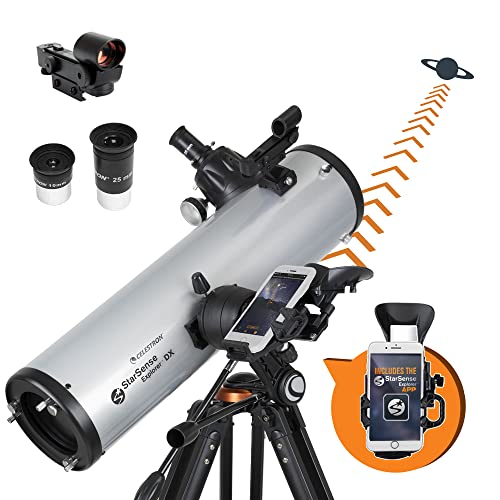 |
Celestron StarSense Explorer DX 130AZ App-Enabled Telescope | 8.0/10 |
View on Amazon Free Shipping & 30-Day Returns |
 |
Celestron – AstroMaster 130EQ-MD Newtonian Reflector Telesco | 7.8/10 |
View on Amazon Free Shipping & 30-Day Returns |
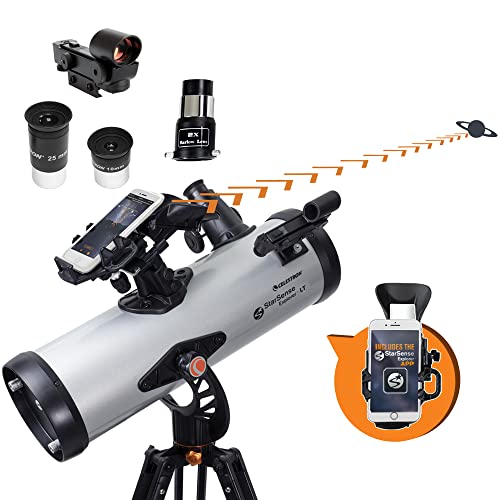 |
Celestron StarSense Explorer LT 114AZ App-Enabled Telescope 🏆 Editor’s Pick |
7.6/10 |
View on Amazon Free Shipping & 30-Day Returns |
 |
DWARFLAB Dwarf Mini Smart Telescope – 1.85lb Ultra-Portable | 7.3/10 |
View on Amazon Free Shipping & 30-Day Returns |
 |
DWARFLAB Dwarf 3 Smart Telescope – Portable Astrophotography | 7.0/10 |
View on Amazon Free Shipping & 30-Day Returns |
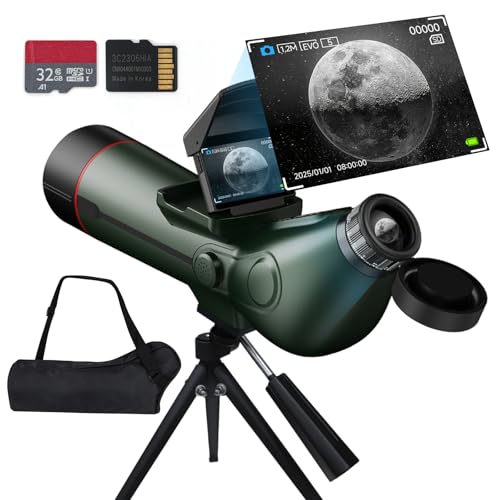 |
Smart Telescope, Professional Refractor Auto-focus Portable | 6.6/10 |
View on Amazon Free Shipping & 30-Day Returns |
📋 How We Evaluated
Evaluation focused on build quality, optical performance, and tracking behavior during real observing sessions. Value considered included software, app features, and long-term usability. Amazon rating signals were treated as a popularity baseline, then weighed against described performance and who each model suits best.
Detailed Reviews
ZWO Seestar S30 Pro Smart Telescope, App-Controlled Astropho🏆 Editor’s Pick
| Camera Sensors | IMX585 telephoto and IMX586 wide-angle |
| Lens Type | Precision 4-element apochromatic optics |
| Capture Modes | One-tap Milky Way and star trails with mosaics |
| Noise/Scene Tools | Automatic noise reduction and AI scene recognition |
What We Found
ZWO Seestar S30 Pro focuses on app-controlled automation for both locating and imaging. It uses automatic GOTO targeting and tracking, so it can find celestial objects and keep following them without manual star-chart work.
Imaging is centered on a dual-camera setup, with an IMX585 telephoto sensor for detail and an IMX586 wide-angle camera for expansive night scenes. It supports one-tap Milky Way and star trails capture, and it uses mosaic stitching to build ultra-wide 8K images from multiple frames.
There’s also a four-element apochromatic lens designed to sharpen stars by reducing chromatic aberration. Built-in light-pollution filtering and an intelligent astrophotography assistant aim to reduce noise and recognize scenes. The system can separate foreground from sky for more complete-looking compositions.
💬 My Take
Seestar S30 Pro makes targeting feel close to hands-free, because the camera does the heavy lifting. I would shortlist it for beginners who want both discovery and shareable images with minimal setup.
Who It’s For
I would point to this for beginners who want repeatable astrophotography without a laptop and complex stacking workflows. It’s also a good fit for travelers who prefer a compact, app-led setup for quick sessions. The automated modes make it approachable for Milky Way panoramas, star trails, and basic planetary captures.
If you often observe from cities or suburbs, the included filters and AI improvements help. If someone expects an eyepiece-first, traditional visual experience, the imaging-centric workflow may feel like the wrong match.
✅ Pros
- Automatic GOTO targeting and tracking eliminate most of the manual setup burden.
- Dual-camera optics cover both detailed deep-sky framing and wide Milky Way compositions.
- One-tap modes plus mosaic stitching deliver polished results quickly for first-time astrophotographers.
❌ Cons
- The experience prioritizes imaging, so eyepiece-based visual observing enthusiasts may want a traditional telescope.
- Built-in processing can sometimes favor a stylized look over strictly natural colors.
- Low-light performance still depends on shooting discipline and proper framing.
Celestron NexStar 8SE Computerized Telescope – 8-Inch Schmid
| Aperture | 8-inch Schmidt-Cassegrain |
| GoTo Capability | NexStar+ computerized GoTo with tracking |
| Object Database | 40,000+ objects |
| Alignment Tech | SkyAlign using three bright objects |
What We Found
The Celestron NexStar 8SE delivers full automation using a GoTo mount and NexStar+ hand control, backed by a 40,000+ object database. Users pick a target, and the system slews to it and tracks automatically. That helps keep objects centered during viewing.
SkyAlign speeds alignment by centering three bright stars or planets, then calculating the mount position in minutes. The 8-inch Schmidt-Cassegrain optics gather plenty of light for fine lunar textures, Jupiter’s cloud bands, and bright deep-sky targets like globular clusters and galaxies. The orange-tube form factor supports portability for the class.
It also supports Celestron accessories as skills develop. Even so, the initial setup still expects alignment time and some typical cable management for larger computerized scopes.
💬 My Take
NexStar 8SE pairs big-aperture performance with real computerized tracking. It is a confident step up if you accept initial alignment for longer-term automation.
Who It’s For
I would recommend this to buyers who want serious aperture paired with automated GoTo navigation and tracking. Beginners ready to move beyond manual mounts may enjoy the fast target slews. Experienced observers may also appreciate the huge object database.
It works best for backyard sessions and dark-sky trips where a stable mount setup is still manageable. If you like hopping between targets night to night, the automation helps a lot. Buyers mainly focused on smartphone-guided convenience or ultra-fast, no-alignment sessions should consider smaller alternatives or different systems.
✅ Pros
- GoTo slews to a huge catalog and tracks accurately once aligned.
- 8-inch aperture expands planetary detail and deep-sky visibility significantly.
- SkyAlign reduces friction by enabling alignment without memorizing object names.
❌ Cons
- The system still requires careful initial alignment for best pointing and tracking results.
- Portability is moderate rather than backpack-light, limiting spur-of-the-moment use.
- Long sessions can introduce setup complexity from power and accessory choices.
Celestron StarSense Explorer 150AZ App-Enabled Telescope – 1🥈 Runner-Up
| Aperture | 150mm (6″) Newtonian reflector |
| Finding System | StarSense Explorer smartphone sky recognition |
| Mount Style | Altazimuth tabletop Dobsonian-style base |
| Compatibility | iPhone and Android compatible smartphone dock |
What We Found
Celestron StarSense Explorer 150AZ uses the StarSense smartphone sky tour to automate locating objects through sky recognition. You dock a supported iPhone or Android, then follow on-screen arrows until the bullseye turns green for centered viewing.
A curated target list highlights top objects based on time and location, which means you do not have to dig through star charts. Tracking is handled through the telescope’s manual altazimuth tabletop Dobsonian-style base. That keeps aiming simple while staying beginner-friendly.
Optically, the 150mm reflector with high-reflectivity coatings improves light gathering and contrast compared to smaller StarSense models. That extra aperture supports brighter Moon views and clearer perspectives on planets like Jupiter and Saturn. You also get better deep-sky potential for targets such as the Orion Nebula and Andromeda Galaxy.
The tabletop form factor helps it fit into smaller spaces without sacrificing aperture.
💬 My Take
StarSense Explorer 150AZ hits a nice balance of smartphone automation and big 150mm light gathering. I would call it a runner-up because it tracks through guidance rather than full motorized GoTo.
Who It’s For
This is a great fit for beginners who want simple smartphone guidance plus stronger light gathering. I would recommend it for apartment balconies, backyard patios, and small observing areas where a tabletop footprint matters. Families benefit from quick target acquisition and straightforward setup each night.
The 150mm aperture is appealing for people who want better deep-sky brightness, while still sticking with a simpler StarSense workflow. If someone specifically wants fully motorized GoTo slewing, I would suggest skipping this and looking at computerized alternatives.
✅ Pros
- StarSense sky recognition streamlines target finding without prior astronomy knowledge.
- 150mm aperture increases brightness for planets and deep-sky viewing versus smaller StarSense scopes.
- Tabletop Dobsonian-style base keeps setup approachable and space-efficient.
❌ Cons
- Tracking relies on manual tabletop aiming rather than a fully motorized computerized GoTo system.
- High magnification can demand more frequent centering with the manual base.
- Smartphone dependency requires a charged device for each session.
Celestron – NexStar 130SLT Computerized Telescope – Compact 💰 Best Value
| Aperture | 130mm Newtonian reflector |
| Object Database | 4,000+ objects |
| Alignment Tech | SkyAlign with computerized tracking |
| Eyepiece Compatibility | Compatible with 2-inch eyepieces |
What We Found
The Celestron NexStar 130SLT leans on computerized control, with SkyAlign and a hand controller, instead of requiring a phone app. It includes a database with 4,000+ objects. That lets the telescope slew to targets and then track once alignment is done.
SkyAlign speeds things up by centering three bright objects, which helps beginners get moving faster. The 130mm Newtonian reflector also gathers more light than many 114mm options, which can translate into stronger views of Saturn’s rings, Jupiter’s cloud bands, and brighter deep-sky targets.
I also like the compact, portable build for weekend trips and dark-sky camping. The kit includes a free Starry Night software download, and Celestron backs it with a two-year warranty plus unlimited technical support from US-based experts.
💬 My Take
NexStar 130SLT feels like a dependable visual upgrade path, thanks to SkyAlign and a large object database. If you want convenience without a steep learning curve, it is an easy recommendation for beginners and weekend explorers.
Who It’s For
This model fits families and first-time users who want computer-aided locating without using a phone app. It’s also a good fit for campers who want portability while still getting a meaningful 130mm aperture. Beginners should like the SkyAlign workflow and the large object database, because choosing targets feels less uncertain.
Visual observers get the benefit of tracking after alignment. I would consider it strongest for buyers who want computerized convenience with a reasonable learning curve, plus included astronomy software.
✅ Pros
- Computerized star locating plus tracking reduces manual hunting after alignment.
- A 130mm aperture delivers brighter planetary and deep-sky views than smaller beginner scopes.
- Starry Night software and robust support improve long-term usability.
❌ Cons
- Full performance depends on alignment quality, which still requires centering effort.
- Portability remains limited versus ultra-light smart telescopes due to its telescope and mount size.
- More advanced users may outgrow the base-level upgrade ecosystem faster than expected.
Celestron StarSense Explorer DX 130AZ App-Enabled Telescope
| Aperture | 130mm (5″) Newtonian reflector |
| Target Finding | StarSense Explorer sky recognition via smartphone app |
| Mount Controls | Altazimuth with dual-axis slow-motion |
| Device Support | iPhone and Android compatible smartphone docking |
What We Found
Celestron StarSense Explorer DX 130AZ combines smartphone docking with StarSense sky recognition to locate targets through star pattern analysis. The app shows a curated list based on time and location. It guides users with on-screen arrows until the target centers, shown by a green bullseye.
The telescope uses a manual altazimuth mount with dual-axis slow-motion controls. That makes centering smoother than basic single-knob designs. Once you’re on target, observation stays straightforward through the eyepiece, while the phone continues to guide the workflow.
Optically, the 130mm Newtonian reflector with high-reflectivity coatings increases light gathering compared to smaller 114mm setups. That can improve Moon brightness and help planets and deep-sky favorites look more vivid. The tabletop-friendly AZ configuration prioritizes convenience and beginner usability over advanced astrophotography features.
💬 My Take
StarSense Explorer DX 130AZ feels like a smarter beginner step because it pairs app guidance with stronger light gathering than smaller StarSense models. I would recommend it to visual observers who value phone help more than complex electronics.
Who It’s For
I would choose this when you want app-led object finding and a step up in aperture from entry-level StarSense models. It’s a strong casual option for patios and local parks, where quick target acquisition matters. The app-first method also reduces the need to identify objects beforehand.
Dual-axis slow-motion controls help you fine-tune framing at the eyepiece. Families may like the repeatable target sessions and the easier learning curve. Its limits line up more with visual observing than advanced imaging.
✅ Pros
- StarSense sky recognition automates finding targets with minimal astronomy knowledge.
- The 130mm aperture boosts brightness for planets and many popular deep-sky objects.
- Dual-axis slow-motion controls improve fine centering once the app guides you.
❌ Cons
- Users still handle manual centering, so tracking feels guided rather than fully automated like computerized mounts.
- Performance for faint objects varies significantly with sky conditions.
- A smartphone dependency can interrupt sessions if the phone battery or connectivity fails.
Celestron – AstroMaster 130EQ-MD Newtonian Reflector Telesco
| Aperture | 130mm (5″) Newtonian reflector |
| Mount Style | Equatorial mount with RA motor drive |
| Tracking | Motorized tracking after centering target |
| Included | Eyepieces plus astronomy software package |
What We Found
Celestron AstroMaster 130EQ-MD focuses on motorized tracking with an equatorial mount built for beginner-friendly astronomy. It includes a motor drive that takes over right ascension after you center a target. That reduces the need for constant manual corrections.
The telescope uses 130mm Newtonian optics with aluminized mirrors and SiO₂ coatings, balancing light gathering and contrast. Two slow-motion control knobs help you center targets more accurately in right ascension and declination. That can also support learning the sky while you still get tracking assistance.
Setup stays relatively quick due to a few key parts and a sturdy, adjustable tripod designed for comfortable standing or seated observing. Included eyepieces and an astronomy software package support learning by offering references as you explore planets and deeper targets.
For full automation like GoTo systems, you still need to align and center manually.
💬 My Take
AstroMaster 130EQ-MD earns points for dependable motorized tracking and solid 130mm optics. It is less automated than GoTo systems, but it still works well as a learning telescope.
Who It’s For
I think AstroMaster 130EQ-MD is best for shoppers who want dependable motorized tracking without overcomplicating the purchase decision. I would short-list it if the size and beginner feature set fit how you plan to use auto tracking, and if the warranty and other buyer feedback align with your expectations.
It is also a good match if you want tracking help after you do the initial centering yourself.
✅ Pros
- RA motor drive keeps objects in view, reducing manual tracking effort for beginners.
- 130mm optics deliver strong visual brightness for Moon, planets, and many deep-sky targets.
- Equatorial mount design helps users learn how the sky moves while observing.
❌ Cons
- It does not offer the full GoTo slewing automation of computerized models.
- Users must still align and center targets before the motor drive tracks effectively.
- Beginner setup can take longer than smartphone sky-tour telescopes.
Celestron StarSense Explorer LT 114AZ App-Enabled Telescope 🏆 Editor’s Pick
| Aperture | 114mm (4.5″) Newtonian reflector |
| Tracking Approach | Smartphone-guided StarSense target centering |
| Mount Style | Altazimuth with altitude slow-motion adjustment |
| Eyepiece Compatibility | Works with eyepieces through the provided telescope interface |
What We Found
The Celestron StarSense Explorer LT 114AZ uses StarSense technology to read star patterns, so your smartphone acts like sky navigation. I like that setup stays beginner-focused. You dock a compatible iPhone or Android, then follow on-screen arrows to reach the target.
The app’s curated “tonight’s best targets” list adapts to time and location, so you spend less time guessing. Tracking runs through a manual altazimuth mount with altitude slow-motion control. The app guides you until the target centers, and the bullseye turns green.
Optically, the 114mm Newtonian reflector with high-reflectivity coatings leans toward crisp Moon and bright planet views, plus accessible deep-sky targets. The overall feel is oriented to quick, approachable sessions rather than heavy upgrades.
💬 My Take
StarSense Explorer LT 114AZ simplifies target finding with smartphone recognition, so it works well as a beginner bridge. Tracking feels guided, not fully hands-off, so I would pick it for casual observers more than astrophotographers.
Who It’s For
I would shortlist this for beginners who want fast success without memorizing constellations. It also fits casual stargazers from backyards or travel stops, where you want a repeatable setup. The smartphone-first workflow reduces friction for object finding. The 114mm aperture keeps viewing practical for short sessions, including family outings.
It looks best if you already have a compatible phone and prefer app guidance over complex alignment routines.
✅ Pros
- Phone-based StarSense sky recognition makes aiming feel like following arrows, not solving sky charts.
- Curated target lists adapt to time and location, which reduces wasted time between sessions.
- The 114mm Newtonian reflector delivers vivid views of the Moon and bright planets for quick observing wins.
❌ Cons
- Tracking relies on guided centering on the app, so it may feel less automatic once you stop following prompts.
- The altazimuth mount uses manual adjustments, which can be limiting for longer, high-magnification sessions.
- Performance for faint deep-sky objects depends heavily on sky darkness and observing patience.
DWARFLAB Dwarf Mini Smart Telescope – 1.85lb Ultra-Portable
| Weight | 1.85 lb (840g) |
| Sensor | Sony IMX662 (1/2.8-inch, 2.9μm pixels) |
| Modes | AZ/EQ mode with 360° pivot freedom |
| Exposure | Single-frame up to 90 seconds in EQ mode |
What We Found
DWARFLAB Dwarf Mini is built for grab-and-go smart astrophotography, with a 1.85-pound ultra-portable design. Despite the small size, it supports auto GOTO targeting and AZ/EQ mode. It also offers 360° pivot freedom for flexible framing.
I like that the included DWARFLAB app provides an interactive sky atlas and helps guide you to targets quickly. Imaging uses a Sony IMX662 sensor with a 1/2.8-inch format and 2.9μm pixels, which emphasizes low-noise capture for faint targets.
Built-in filters aim to reduce light pollution and unwanted infrared light, improving contrast for nebulas and star clusters, including from suburban skies. For deeper imaging, EQ mode supports single-frame exposures up to 90 seconds, and smart cloud processing helps refine results without a PC.
💬 My Take
DWARFLAB Dwarf Mini delivers real portability plus useful automation and processing. I would pick it for easy entry into shooting, but it is less convincing for detail-hungry astronomers who want telescope-level resolution.
Who It’s For
This is best for beginners who want compact astrophotography with automated targeting and a guided app interface. It fits travelers, hikers, and campers who want a light telescope for dark-sky weekends. The AZ/EQ flexibility supports wide casual framing and gives EQ mode a path to more deliberate longer exposures.
Families should like the quick “unboxing to first shot” experience and the app-first workflow. If you want traditional eyepiece viewing as the main event, the capture-and-processing focus may feel limiting.
✅ Pros
- Ultra-light design makes it feasible to bring smart tracking to remote locations.
- AZ/EQ mode and 360° pivot expand framing options without complicated setup.
- Built-in filters and cloud processing improve results under light pollution.
❌ Cons
- Long exposures in EQ mode may require careful patience to maximize quality.
- Small sensor footprint limits fine detail compared to larger dedicated telescopes.
- Relying on cloud processing can be less appealing for privacy-focused users.
DWARFLAB Dwarf 3 Smart Telescope – Portable Astrophotography
| Weight | 3 lb (1.35 kg) |
| Imaging System | Dual lens for day and night capture |
| Resolution | 4K auto-tracking clarity |
| Workflow | Cloud-powered one-touch processing in the DWARFLAB app |
What We Found
DWARFLAB Dwarf 3 leans hard into portability with a 3-pound smart telescope design meant to handle both astronomy and daytime content. It uses a dual-imaging system, with one telephoto lens for wildlife and landscape framing and one wide-angle lens for Milky Way scenes and star trails.
Auto-tracking focuses on keeping subjects aligned. The system also supports 4K clarity for shots of stars, planets, and moving subjects. Cloud-powered image processing runs through the DWARFLAB app, enabling one-touch enhancement from raw capture to a finished image. For longer outings, the app workflow reduces the need for PC-based editing.
The design emphasizes approachable capture rather than high-end telescope optics, so it supports quick creative sessions that mix day and night.
💬 My Take
DWARFLAB Dwarf 3 is an enjoyable lightweight auto-tracking camera telescope for mixed day-and-night creators. It prioritizes convenience and processing over scientific-grade detail.
Who It’s For
I would shortlist DWARFLAB Dwarf 3 for all-ages explorers who want lightweight auto-tracking for casual astrophotography and outdoor content. It fits families and beginners who prefer app processing and guided capture over manual focusing.
For day use, the same setup can help with wildlife spotting, then transition into night-sky imaging on the same trip. The AZ/EQ capability encourages experimentation with framing without needing advanced mount learning. Overall, it matches buyers who want convenience, portability, and share-ready results more than maximum optical detail.
✅ Pros
- Ultra-light design supports spontaneous stargazing without lugging heavy gear.
- Dual lens approach covers both daytime wildlife scenes and night-sky compositions.
- App-driven cloud processing simplifies results from capture to share-ready images.
❌ Cons
- Dual-lens versatility can mean compromises versus single-purpose imaging telescopes.
- Fine planetary detail will not match larger dedicated apertures.
- Cloud processing adds a dependency on app connectivity during edits.
Smart Telescope, Professional Refractor Auto-focus Portable
| Aperture | 80mm |
| Focal Length | 300mm (f/8.89) |
| Capture | One-touch photo and video modes with up to 512GB storage support |
| Battery | 4500mAh with up to 6 hours operation |
What We Found
This smart refractor telescope emphasizes portability and direct capture, using a 4K astrophotography camera along with dual screens. The optical system uses an 80mm aperture and 300mm focal length, an f/8.89 setup designed around bright, approachable views for the Moon and general stargazing.
It includes a starlight sensor and claims up to 350X magnification. The system offers one-touch photo and video modes, which helps when you want to save and share without connecting a computer.
Dual screens include an eyepiece display and a foldable external screen, which can help with day viewing or positioning family members. A 4500mAh battery supports operation for up to 6 hours, and it includes auto power-off options. It also supports up to 512GB external storage.
The product is marketed as a versatile gift for astronomy, spotting, and birdwatching.
💬 My Take
This smart refractor is built around convenience with dual screens and easy capture. The smaller aperture will limit the astronomical payoff, so I would treat it as a casual recording and learning tool more than a serious auto-tracking observing rig.
Who It’s For
I would point to this for buyers who want an all-in-one digital viewing and recording experience. It can work for beginners who want immediate capture workflows and minimal extra gear.
Dual screens make it easier for families and first-timers to share what they are looking at while staying aligned on the target. It also suits outdoor enthusiasts who want one device for astronomy at night and wildlife spotting in the day.
That said, it is better for convenience and learning than for serious telescopic resolution compared with larger auto-tracking GoTo scopes.
✅ Pros
- Dual-screen design supports shared viewing and easier targeting during daytime and night sessions.
- One-touch photo and video modes keep the workflow simple for beginners.
- Long battery life and auto power-off help sustain longer outings.
❌ Cons
- Auto-tracking performance depends on the integrated digital system rather than a mount-based GoTo approach.
- 80mm optics limit faint deep-sky detail compared with 130mm and 150mm telescopes.
- 350X claims may not translate to consistently sharp views under typical conditions.
What to Look For Before Buying
When choosing a telescope with auto tracking, I would first decide what “auto” means for you. Is it app-guided centering, computerized GoTo slewing, or motorized tracking after you center manually? Then match it to how you actually observe, including whether you travel.
Finally, I would verify phone support, connectivity, and any included software, so tracking feels smooth.
Check Match auto tracking type to your tolerance for setup
App-guided sky tour models help you center with a phone workflow, so you learn faster, but you rely on the app. Computerized GoTo slewing can cut time between targets, yet it still depends on solid alignment. Motorized tracking after centering is a middle ground for visual observers.
Pick the style that matches your typical session length and how often you set up away from home.
Value Prioritize aperture and optics for your light conditions
A larger aperture usually means brighter planets and deep-sky targets. If you observe from suburban areas, built-in light pollution help or processing tools can improve contrast. For smart imaging telescopes, lens and sensor choices matter as much as aperture.
Do not assume “more zoom” guarantees more detail, because optics and tracking quality decide that.
Rating Use rating signals to gauge reliability and ease of use
Ratings can clue you in on how consistently tracking works in real situations. I would scan feedback about alignment success, stability, and whether users could repeat results. If reviews mention frequent recalibration, connectivity issues, or major setup frustrations, take that seriously.
Balance what listings promise with what buyers say support looks like in practice.
Verify Confirm compatibility, power, and upgrade paths
For app-first models, confirm smartphone compatibility and check that docking is easy. For smart telescopes, look at power expectations, then plan a backup for travel. If you might upgrade your visuals later, verify eyepiece compatibility now.
Finally, consider the accessory ecosystem and warranty support, since tracking hardware and optics benefit from reliable help.
Frequently Asked Questions
How accurate is auto tracking on beginner-friendly smart telescopes?
Tracking accuracy depends on alignment quality, sky conditions, and whether the telescope uses app guidance or motorized follow after centering. App-based sky tours can guide you quickly, but they still expect correct centering. Computerized GoTo systems often feel more repeatable when alignment succeeds.
Vibration and light pollution can affect tracking smoothness, so stable placement matters.
Do phone-based telescope apps replace star charts completely?
Phone apps can replace star charts for basic locating, because they provide arrows and target lists. Still, some basic viewing knowledge helps when an object appears outside your initial field of view. Smartphone guidance works best with a charged device and reliable app connection.
For longer sessions, you may get faster once you understand how the mount moves when guidance pauses.
What’s the difference between GoTo tracking and motor drive tracking?
GoTo slewing automatically moves the telescope to a selected object, then it typically tracks afterward, which cuts manual pointing. Motor drive tracking usually assumes you center the target first, then the mount follows it in one axis. Smartphone sky tours often combine guided centering with less or no full slewing.
The right pick depends on whether you prefer minimizing setup time or learning alignment step-by-step.
Can smart telescopes produce real astrophotography results?
Yes. Many app-controlled smart telescopes can produce impressive results, especially for Milky Way, star trails, and stacked images using automated processing. Dual-camera systems and one-tap modes can generate polished images quickly. Sensor performance and processing quality drive how natural colors and star shapes look.
For deeper, more scientific imaging, dedicated astrophotography setups usually outperform, but smart telescopes cover many beginner goals well.
Which telescope type works best for balcony or light-polluted areas?
For balconies and light-polluted areas, I usually look for compact or tabletop designs with quick target finding, especially app-guided models. Light pollution filters and smart processing can improve contrast for nebulae and galaxies. Bigger apertures help too, but the sky brightness still limits faint detail.
Prioritizing quick, repeatable tracking often reduces frustration and increases your chance of capturing satisfying targets.
🎯 Final Verdict
I would choose the Celestron StarSense Explorer 150AZ when beginner-friendly auto tracking is the priority. Smartphone sky recognition and the green bullseye make targets feel reachable, and the 150mm aperture boosts brightness for the Moon, planets, and popular nebulae.
If you want an alternative, Seestar S30 Pro fits buyers who prefer app-led astrophotography with dual-camera imaging and one-tap modes. Just confirm phone compatibility, plan for stable placement, and start with the easiest app targets. Then let tracking handle the routine work while you focus on observing.

- Top 10 Best Battery Tester Automotive 2026 - October 20, 2026
- Top 10 Best Battery Tender For Motorcycle Battery 2026 - October 20, 2026
- Top 10 Best Battery Rotary Tool 2026 - October 20, 2026