How to Tighten a Bolt That Keeps Spinning (Complete Repair Guide)

When a fastener fails to “grab” and simply rotates without tightening, you have reached a point of mechanical failure. Understanding why this happens and whether the damage is in the bolt or the hole is the first step toward a successful repair.
What It Means When a Bolt or Screw Keeps Spinning
Difference Between Spinning and Free-Turning
“Free-turning” is what a bolt does when it is first threaded into a hole; it moves smoothly with little resistance. “Spinning,” in a failure context, occurs when you apply torque but the fastener provides no resistance and fails to move deeper into the hole. It feels “mushy” or loose even though it should be tight.
Why Tightening Stops Working
Tightening relies on friction and the “wedge” action of the threads. When a bolt keeps spinning, those threads have been sheared off or flattened. Without the mechanical “teeth” of the threads to lock into, the bolt has nothing to push against to create clamping force.
Bolt vs. Screw Behavior in Metal
- Bolts: Usually rely on pre-cut machine threads. When they spin, it often indicates the internal threads of the “female” hole have been hollowed out.
- Screws (Self-tapping): These cut their own threads. If a screw spins in metal, it usually means the hole has become slightly too large, often because the screw was vibrated or forced.
Early Signs Before Total Failure
Before a bolt completely loses its grip, you may notice:
- Increased Resistance followed by a “Pop”: A sign that the metal is yielding.
- Metallic Flakes: Fine silver dust appearing around the bolt head.
- The “Never-Ending Turn”: The bolt gets snug but then suddenly feels loose again as you continue to turn.
Common Reasons a Bolt Keeps Spinning in Metal
- Stripped Internal Threads: The metal of the hole is softer than the bolt (common in aluminum engine blocks). The bolt “drills” out the threads, leaving a smooth hole.
- Stripped Bolt Threads: The “teeth” on the bolt itself have flattened. This is the best-case scenario because the bolt is easy to replace.
- Rust-Damaged Threads: Corrosion eats away at the thread depth. When you try to tighten it, the weakened, rusty metal simply crumbles.
- Overtightening Damage: Using too much leverage (or an impact wrench) exceeds the metal’s strength, causing the threads to shear off instantly.
- Thin Metal Surface Issues: In sheet metal, there aren’t enough “layers” of thread for the bolt to grip. If the metal stretches, the hole expands and the bolt spins.
- Cross-Threaded Fasteners: If the bolt was forced in at an angle, it cuts new, crooked threads that eventually fail because they don’t align with the original path.
Difference Between a Spinning Screw
| Feature | Spinning Screw | Spinning Bolt |
| Thread Depth | Usually shallow; grips the surface. | Deeper; designed for high-tension clamping. |
| Load Bearing | Holds light panels or brackets. | Holds structural or heavy engine parts. |
| Failure Point | The hole usually “widens.” | The threads usually “shear” or flatten. |
| Typical Fix | Use a larger diameter screw. | Requires a thread insert (Helicoil) or a nut. |
Initial Checks Before Trying Any Fix
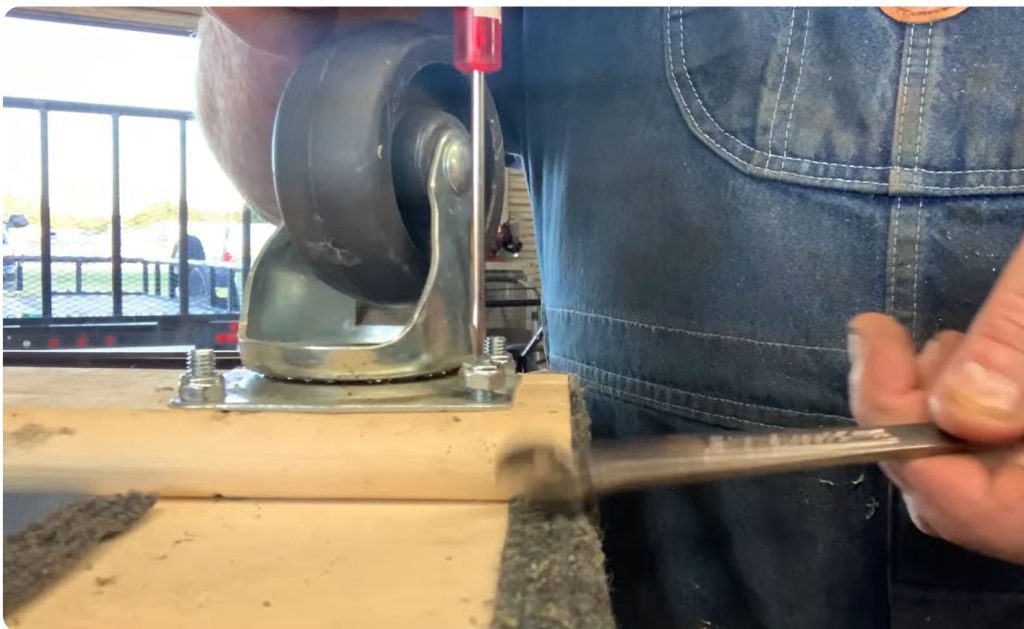
- Testing Upward Pressure: Try to wedge a flathead screwdriver under the bolt head while turning it counter-clockwise. If it starts to “catch” and back out, the threads are only partially damaged.
- Checking Bolt Head Condition: Ensure the spinning isn’t just your tool slipping. A rounded bolt head can feel like spinning threads.
- Identifying Nut-and-Bolt Setups: Look behind the metal. Is there a nut on the other side? If so, the bolt is spinning because the nut isn’t being held by a wrench. This is a “fake” stripped thread.
- Confirming Access from Rear Side: Check if you can reach the back of the hole. If you can, you can often solve the problem by using a longer bolt and adding a nut and washer to the back.
How to Tighten a Bolt That Keeps Spinning
These techniques are designed to help a partially stripped bolt “catch” enough thread to either tighten temporarily or, more commonly, to back the bolt out so it can be replaced.
Method 1 – Apply Upward Pressure While Turning
If the bolt is spinning, it has likely cleared a “dead zone” in the threads.
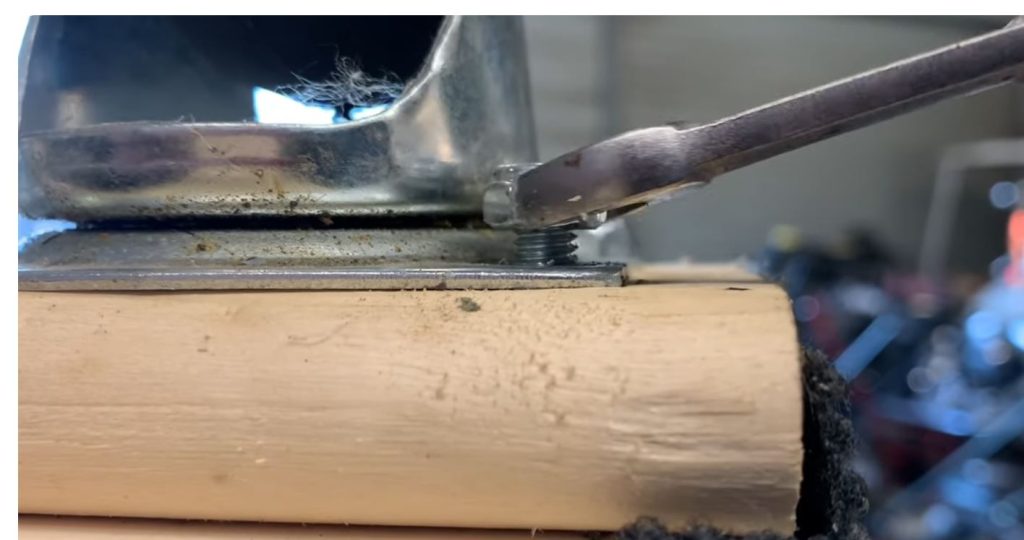
- Using a Pry Bar or Screwdriver: Wedge a flathead screwdriver or a small pry bar under the head of the bolt. As you turn the bolt counter-clockwise with a wrench, apply firm outward pressure.
- Increasing Engagement: This force pushes the remaining healthy threads of the bolt against the remaining healthy threads of the hole, allowing them to interlock and “walk” the bolt out.
Method 2 – Use Locking Pliers on Bolt Head
When a bolt is spinning because the head is rounded or the internal nut has broken loose:
- Holding Stripped Heads: Clamp a pair of locking pliers (Vise-Grips) onto the bolt head as tightly as possible.
- Preventing Free Rotation: This provides the maximum grip possible to turn the fastener or to hold it steady while you attempt to cut it off or use a different extraction tool.
Method 3 – Add Friction to Threads
- Thread Tape Method (PTFE): Wrapping the bolt in several layers of plumber’s tape can sometimes “bulk up” the diameter of the bolt just enough to grab the remaining metal in a stripped hole.
- Temporary Solutions: In non-critical, low-load situations, inserting a small piece of soft copper wire or a specialized “thread-restoring” shim into the hole can provide the friction needed for the bolt to snug down.
Fixing a Spinning Screw in Metal
If the metal threads are completely gone, you must either create new threads or use a mechanical insert to restore the original size.
Using a Thread Repair Insert (Helicoil)
This is the “gold standard” for professional repairs, especially in automotive engine blocks.
- Overview: A Helicoil is a stainless steel wire coil that looks like a spring. It acts as a new set of high-strength threads.
- Sizing: You must buy a kit specific to your bolt size (e.g., M8 x 1.25).
- Installation:
- Drill: Use the specific bit included in the kit to clear out the old threads.
- Tap: Use the provided STI (Screw Thread Insert) tap to cut new, larger threads.
- Insert: Thread the coil into the hole. Once it’s in, it provides a permanent, steel-threaded hole for your original bolt.
Using a Larger Screw or Bolt (Oversizing)
The simplest permanent fix is to move up to the next available size.
- Upsizing Logic: If an M6 bolt is spinning, you may be able to move up to an M8.
- Drill and Tap: You will need to drill the hole slightly larger using a drill bit chart, then use a Tap and Die set to cut fresh threads. This is only possible if there is enough surrounding metal (“meat”) to support a larger hole.
Using Thread-Locking Compounds
For bolts that are loose but not completely stripped, chemical lockers can help.
Medium (Blue) vs. High (Red): Use Blue if you want to be able to remove the bolt later with hand tools. Use Red if the bolt should never come out again (requires high heat to remove).
Use Limits: These are not “liquid metal.” They are designed to prevent vibration from loosening a bolt; they cannot bridge a massive gap in a totally stripped hole.
Cure Time: Most compounds require 24 hours to reach full strength. Do not put the part under load until it has fully cured.
| Method | Strength | Reusability | Best Use Case |
| Screwdriver Pry | Low | No | Extracting a stuck bolt |
| Upsizing | High | Yes | Structural repairs in thick metal |
| Helicoil | Very High | Yes | Critical engine or machine parts |
| Thread Locker | Medium | Variable | Preventing vibration loosening |
When a bolt spins without tightening or loosening, it has lost the mechanical “grip” required to move along the thread pitch. At this stage, you must transition from standard wrenching to extraction techniques that rely on artificial tension.
How to Remove a Spinning Bolt That Will Not Tighten
Creating Tension to Remove the Bolt
The bolt is likely sitting in a “dead zone” where the threads are sheared. To get it out, you must force the remaining bolt threads to contact the remaining hole threads.
- Pull-and-Turn Technique: While turning the bolt counter-clockwise with a wrench, use a pair of pliers or your fingers to pull the bolt head away from the surface.
- Wedge Placement: Insert a flathead screwdriver or a small pry bar between the bolt head and the workpiece. Apply constant outward pressure as you turn the bolt. This tension acts as “temporary threads” to help the bolt walk out.
Using Vice Grips or Locking Tools
If the head is damaged or the bolt is spinning too fast to catch, locking tools are essential.
- Grip Positioning: Clamp locking pliers (Vice-Grips) onto the bolt head as tightly as possible.
- Preventing Rounding: Ensure the pliers are perpendicular to the head. This allows you to pull outward with maximum force while rotating, which is often enough to overcome stripped sections.
Cutting or Splitting the Bolt
If tension methods fail, you must physically destroy the fastener.
Dremel Slot Method: Use a rotary tool (Dremel) with a cutoff wheel to cut a deep slot across the bolt head. This allows you to use a large flathead screwdriver for better torque, or you can cut the head off entirely to remove the component and grab the remaining stud with pliers.
Nut Splitter Option: If the bolt is spinning inside a nut, a nut splitter can be used to crack the nut in half without damaging the bolt’s threads, allowing the bolt to drop free.
How to Unscrew a Bolt That Keeps Spinning
- Counter-Pressure Method: If the bolt is spinning because the internal threads are gone, use a “hammer and screwdriver” approach. Lightly tap a thin wedge under the bolt head to create extreme friction, then turn slowly.
- Backside Nut Stabilization: Often, a bolt spins because the hidden nut on the back has broken its weld. You must find a way to reach the back sometimes requiring the removal of other panels to hold the nut with a wrench.
How to Loosen a Bolt That Spins Without Backing Out
- Using Washers to Add Resistance: If you manage to get the bolt out slightly but it starts spinning again, slide a U-shaped washer or a “fork” under the head. This maintains the outward tension so you don’t have to hold a pry bar constantly.
- Thread Binding Technique: Occasionally, inserting a very thin piece of wire or even a strand of steel wool into the gap can bind the threads just enough to create the friction needed for the bolt to back out.
Fixing a Screw That Keeps Spinning in Thin Metal
In sheet metal, there isn’t enough material to “retap.” You need to add new material.
- Rivnut (Rivet Nut) Solution: A Rivnut is a threaded insert that is “compressed” into a hole, much like a pop rivet. It provides permanent, high-strength machine threads in thin metal.
- Nutsert Installation: Similar to Rivnuts, these are ideal for frames or body panels where you cannot reach the backside to place a nut.
- Backing Plate Method: If aesthetics don’t matter, you can slide a small piece of thicker scrap metal (a “backing plate”) behind the thin metal and screw into that for a much stronger grip.
When Retapping Threads Is Required
Retapping is the process of cutting new, clean threads into a damaged hole.
- Thread Damage Indicators: If you see “silver glitter” or curled metal shavings coming out of the hole, the threads are likely gone and need retapping.
- Tap Size Selection: * Chase: Use a “thread chaser” if the threads are just dirty or slightly nicked.
- Oversize: If the hole is stripped, you must move up to the next size (e.g., from M6 to M8).
- Cutting Oil Use: Never tap metal dry. Use cutting oil or WD-40 to lubricate the tap. This prevents the tool from snapping and ensures the new threads are smooth.
- Retap Depth Control: Turn the tap two half-turns forward, then one half-turn back. This “breaks the chip” and prevents the hole from clogging with metal waste as you cut deeper.
Common Mistakes During Spinning Bolt Repairs
- Using Excessive Force: Applying more torque to a spinning bolt will not make it “grab.” Instead, it generates heat and friction that further grinds away the remaining metal, making the hole even larger and harder to repair.
- Skipping Thread Inspection: Failing to check if the damage is on the bolt or in the hole is a frequent error. If you put a new bolt into a stripped hole, you will strip the new bolt immediately.
- Wrong Tool Selection: Using a standard wrench on a spinning bolt is often useless. You need tools that provide axial tension (pulling) while rotating, such as locking pliers or pry bars.
- Ignoring Metal Thickness: Trying to tap new threads into thin sheet metal is a common mistake. If the metal is thin, there isn’t enough “meat” for a tap to work; you must use an insert like a Rivnut.
Preventing Bolts and Screws From Spinning Again
The best way to fix a spinning bolt is to ensure it never strips in the first place through proper installation habits.
Correct Torque Use: Always use a torque wrench. Most bolts strip because they were “tightened by feel,” which almost always leads to over-stretching the metal.
Matching Bolt Grade: Ensure you aren’t using a soft Grade 2 bolt in an application that requires a Grade 8 high-strength fastener.
Thread Lubrication Rules: Remember that “wet” (lubricated) threads require less torque than “dry” threads. Applying dry torque specs to a greased bolt is a fast way to strip the hole.
Washer and Lock Washer Use: Washers distribute the clamping pressure over a larger surface area, reducing the stress on the threads themselves.
Safety Tips During Bolt and Screw Repairs
- Hand Placement: When prying a spinning bolt, ensure your hands are positioned so that if the tool slips, you won’t smash your knuckles into sharp metal edges.
- Eye Protection: Drilling out old threads or using a Dremel to cut a bolt head creates high-speed metal shards. Safety glasses are mandatory.
- Tool Slip Risks: Spinning bolts often have rounded heads. Use 6-point sockets rather than 12-point sockets to get the maximum possible grip and prevent the tool from jumping off.
- Cutting Tool Control: If you must use a grinder or a drill, keep the tool at a low speed to maintain control and prevent the bit from “walking” across the surface and damaging the surrounding area.
Frequently Asked Questions
Can thread locker fix stripped threads?
No. Thread lockers (like Loctite) are designed to prevent vibration from loosening a good connection. They do not have the structural strength to replace missing metal threads.
Temporary fix vs. permanent repair?
A temporary fix (like thread tape or shims) is only for getting a machine back to a shop. For safety-critical items like brakes, suspension, or engine internals, a permanent repair (Helicoil or retapping) is the only acceptable solution.
What is the best solution for aluminum threads?
Since aluminum is soft, the best fix is a stainless steel thread insert (Helicoil). This actually makes the hole stronger than it was originally because the steel threads won’t strip as easily as the aluminum did.
Should I reuse damaged bolts?
Never. If a bolt has spun, the threads have likely been stretched or “galled.” Even if they look okay, the structural integrity is compromised. Always replace the fastener with a new one of the same grade.
Final Repair Checklist
Before considering the job finished, verify the following:
- [ ] Thread Condition Confirmed: Both the bolt and the internal hole have been inspected for “glitter” or flattening.
- [ ] Fastener Seated Correctly: The bolt head is sitting perfectly flush against the surface without any gaps.
- [ ] Torque Applied Correctly: The bolt reached its target torque without feeling “mushy” or starting to spin again.
- [ ] Long-term Holding Check: For critical repairs, mark the bolt head with a “paint pen” or marker. Check it after a few days of use to ensure the mark hasn’t moved, indicating the bolt is holding firm.

- Best Bug And Bird Poop Remover For Cars 2026 - September 15, 2026
- Can Vaseline Work As Wd-40? - September 15, 2026
- Best Bug Remover For Bumper 2026 - September 15, 2026