12 Types of Belt Systems in Cars: Uses, Differences, and Failure Signs

A car engine can have several belts, but each one has a specific job. Some belts control the engine’s internal timing, while others transfer power from the crankshaft to accessories such as the alternator, air-conditioning compressor, water pump, or power steering pump.
The confusing part is that people often use names such as fan belt, alternator belt, drive belt, and serpentine belt as if they mean completely different things. Sometimes they do. Sometimes they describe the component being driven rather than the actual belt design.
For example, a modern car may use one serpentine belt to drive the alternator, A/C compressor, and power steering pump. An older vehicle may use separate V-belts for those same accessories.
So, when discussing the types of belt systems in cars, it helps to look at both the belt’s design and the job it performs.
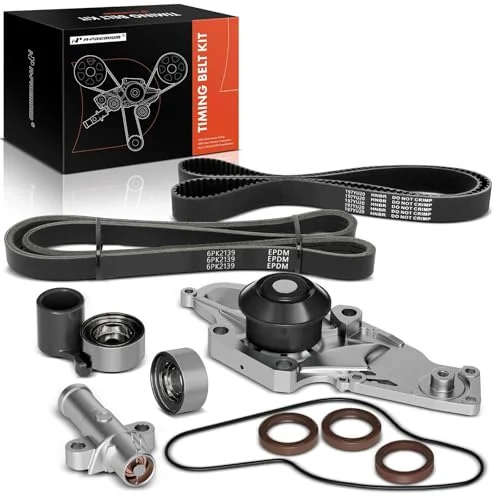
1. Timing Belt System
The timing belt is responsible for one of the engine’s most precise jobs: keeping the crankshaft and camshaft synchronized.
It is a toothed belt that runs around toothed sprockets. As the crankshaft turns, the timing belt rotates the camshaft at the correct speed so the engine valves open and close at the proper time.
A typical timing belt system can include:
- Timing belt
- Crankshaft sprocket
- Camshaft sprocket
- Belt tensioner
- Idler pulleys
- Water pump on some engines
The timing belt is normally hidden behind a protective cover, so you cannot inspect it as easily as a serpentine belt.
What happens if a timing belt fails?
The answer depends on the engine design. On an interference engine, a broken timing belt can allow the pistons and valves to occupy the same space at the wrong time, potentially causing serious internal engine damage.
That is why timing-belt replacement should follow the vehicle manufacturer’s recommended service schedule rather than waiting for visible belt damage.
2. Serpentine Belt System
The serpentine belt is probably the belt most people picture when they hear “engine belt.”
It is a long, flexible, ribbed belt that travels around several pulleys. One belt can power multiple accessories instead of requiring a separate belt for each component.
Depending on the vehicle, the serpentine belt may drive:
- Alternator
- A/C compressor
- Power steering pump
- Water pump
- Other accessories
The exact arrangement varies between engines.
Why is it called a serpentine belt?
Because the belt can wind through the engine compartment in a long, snake-like path around several pulleys.
The advantage is a relatively compact accessory-drive system. The downside is that one belt can affect several accessories if it fails.
3. V-Belt System
The traditional V-belt has a trapezoidal cross-section that fits inside a V-shaped pulley groove.
V-belts were extremely common in older cars. Instead of one long belt driving several accessories, an engine might have multiple V-belts, with each belt responsible for one or two components.
For example, separate belts could be used for the:
- Alternator
- Water pump
- Power steering pump
- A/C compressor
Why are V-belts still important?
You will still encounter them on older vehicles, classic cars, some specialty applications, and various non-automotive machines.
Their simple construction also makes them relatively easy to understand and inspect.
4. Ribbed V-Belt or Poly-V Belt
A ribbed V-belt, commonly called a Poly-V belt, has several longitudinal ribs running along its inner surface.
Those ribs increase the belt’s contact area with the pulley and allow the belt to transfer power while remaining flexible.
This belt construction is commonly associated with modern accessory-drive systems.
The important distinction is that “ribbed V-belt” describes the belt’s construction, while “serpentine belt” usually describes its routing and application.
In many modern vehicles, the serpentine belt itself is a multi-ribbed or Poly-V belt.
5. Fan Belt System
“Fan belt” is an older automotive term that is still widely used.
Traditionally, a fan belt transferred engine power to a mechanical cooling fan and often to other components such as the water pump or alternator.
Modern cars are different. Many use electric cooling fans, while a serpentine belt handles accessory drive duties.
So, if someone says their car has a “fan belt,” it is important to check the actual vehicle design rather than assuming it is a separate belt.
What happens if a fan belt fails?
If the belt also drives the water pump or other cooling components, engine temperature can rise quickly.
That is why a belt problem can sometimes become an overheating problem.
6. Alternator Belt System
The alternator needs mechanical power from the engine to generate electricity and recharge the battery.
Older vehicles may use a dedicated alternator belt. On many newer vehicles, the alternator is driven by the serpentine belt.
If the alternator belt or the belt driving the alternator fails, the alternator may stop charging the battery.
You may then notice:
- Battery warning light
- Dimming electrical equipment
- Electrical system problems
- A vehicle that eventually stops after the battery is discharged
A charging warning does not automatically mean the alternator itself is bad. The belt, tensioner, pulley, wiring, and battery should also be considered.
7. A/C Compressor Belt System
Your vehicle’s air-conditioning compressor requires mechanical power to operate.
On some older vehicles, a dedicated belt drives the compressor. On many modern cars, the compressor is one of the accessories driven by the serpentine belt.
A slipping belt may produce a squealing noise, particularly when the A/C compressor engages.
However, replacing the belt without checking the compressor and pulley can be a mistake. A seized or damaged accessory can cause a new belt to fail again.
A/C belt warning signs
Watch for:
- Squealing when A/C is switched on
- Visible belt damage
- Belt slipping
- A/C performance problems
- Unusual pulley noise
8. Power Steering Belt System
Older hydraulic power-steering systems use an engine-driven pump to create hydraulic pressure.
Some vehicles use a dedicated belt to drive this pump, while others use the serpentine belt. Many newer cars use electric power steering, so there may be no belt-driven steering pump at all.
If a belt-driven power-steering pump loses its drive, steering assistance can be reduced or lost.
A squealing sound while turning the steering wheel can sometimes point toward a belt or pulley problem, although low power-steering fluid, a worn pump, or another mechanical problem can produce similar symptoms.
9. Water Pump Belt System
The water pump circulates coolant through the engine and cooling system.
What makes the water pump interesting from a belt-system perspective is that different engines drive it in different ways.
A water pump may be driven by:
- Timing belt
- Serpentine belt
- V-belt
- Another engine-specific belt arrangement
- An electric motor on some modern applications
If a belt-driven water pump stops operating, coolant circulation can be affected and the engine may overheat.
On engines where the water pump is driven by the timing belt, the pump is sometimes replaced during timing-belt service. Whether this is appropriate depends on the engine and manufacturer’s service procedure.
10. Supercharger Belt System
A belt-driven supercharger uses mechanical power from the engine to compress intake air.
Because the supercharger is driven mechanically, it requires a belt and pulley system capable of handling substantial loads and high rotational speeds.
Some supercharged engines use a dedicated supercharger belt, while others use a different accessory-drive arrangement.
A worn or slipping supercharger belt can reduce supercharger performance and may produce squealing or other belt-drive noises.
Supercharger belt vs serpentine belt
A supercharger belt is identified by what it drives, while serpentine refers primarily to a belt’s routing through multiple pulleys.
Therefore, a supercharger belt can be a separate belt or part of a broader accessory-drive system, depending on the engine.
11. Accessory Drive Belt System
“Accessory drive belt” is a broad term rather than a single belt construction.
It refers to a belt system that transfers crankshaft power to engine accessories.
A modern accessory-drive system may contain:
- Serpentine belt
- Automatic tensioner
- Idler pulleys
- Alternator
- A/C compressor
- Power steering pump
- Water pump
This is why replacing only the belt does not always solve an accessory-drive problem.
A damaged tensioner or seized pulley can destroy a new belt surprisingly quickly.
12. Multiple-Belt System
Some vehicles use more than one belt because of engine layout, accessory requirements, or design limitations.
For example, an engine could have:
- A timing belt for engine synchronization
- A serpentine belt for accessories
- A separate belt for another high-load accessory
Older vehicles are especially likely to have several individual V-belts.
There is nothing inherently wrong with a multiple-belt arrangement. The important thing is knowing which belt drives each component and following the correct maintenance procedure.
Car Belt Types vs Belt Applications
This is where many belt guides become confusing.
A timing belt, V-belt, and ribbed belt describe belt designs or construction, while terms such as alternator belt, A/C belt, and water-pump belt describe the component being driven.
The same accessory can therefore be driven by different belt types on different vehicles.
| Belt/system name | Primary function | Common application |
|---|---|---|
| Timing belt | Synchronizes crankshaft and camshaft | Engine timing |
| Serpentine belt | Drives multiple accessories | Modern engines |
| V-belt | Transfers power to individual accessories | Older vehicles |
| Ribbed/Poly-V belt | Transfers accessory power efficiently | Modern accessory drives |
| Fan belt | Historically drives cooling fan/accessories | Older vehicles |
| Alternator belt | Drives alternator | Older and some specific designs |
| A/C belt | Drives A/C compressor | Dedicated or accessory drive |
| Power steering belt | Drives hydraulic steering pump | Hydraulic steering systems |
| Water pump belt | Drives coolant pump | Engine-specific |
| Supercharger belt | Drives supercharger | Supercharged engines |
| Accessory drive belt | General accessory power transfer | Many engine designs |
| Multiple-belt system | Uses separate belts for different loads | Older/specialized designs |
What Is the Difference Between a Timing Belt and a Serpentine Belt?
The easiest way to remember the difference is this:
Timing belt = engine synchronization.
Serpentine belt = accessory power.
The timing belt connects the crankshaft and camshaft timing system. It controls when the valves operate in relation to piston movement.
The serpentine belt runs outside the engine and normally powers accessories.
They also look different. A timing belt has teeth that engage with toothed sprockets, while a serpentine belt normally has longitudinal ribs that grip smooth or grooved accessory pulleys.
Their failure consequences are also different. A serpentine belt failure can disable accessories, while timing-belt failure can potentially cause internal engine damage.
What Are the Signs of a Bad Car Belt?
A failing belt can sometimes give you clues before it breaks.
Squealing
A high-pitched squeal can indicate belt slip, incorrect tension, contamination, pulley problems, or another accessory-drive issue.
Chirping
A repetitive chirping sound can sometimes be associated with pulley misalignment, belt wear, or contamination.
Cracks and Fraying
Look for damaged ribs, cracks, missing pieces, exposed reinforcement, or frayed edges.
Glazed Surface
A shiny or unusually smooth belt surface can indicate slipping or excessive heat.
Belt Flapping
A belt that moves excessively or visibly flaps may have a tension, routing, or pulley problem.
Warning Lights
If the belt drives the alternator, a failure can trigger a battery or charging-system warning.
Overheating
If the belt drives the water pump, a failure can affect coolant circulation and cause the engine temperature to rise.
What Causes Car Belts to Wear Out?
Belt wear is not caused by mileage alone.
Common causes include:
- Normal aging
- High engine temperature
- Oil contamination
- Coolant contamination
- Incorrect tension
- Pulley misalignment
- Worn tensioner
- Damaged idler pulley
- Seized accessory
- Incorrect installation
- Excessive accessory load
One of the most common mistakes is blaming the belt without checking the components around it.
For example, if an idler pulley bearing begins to seize, the belt may squeal or overheat. Installing another belt without repairing the pulley can simply repeat the problem.
How Should You Inspect a Car Belt?
Start with the engine switched off and safely parked.
Look for:
- Cracks or missing material
- Frayed edges
- Damaged or missing ribs
- Oil or coolant contamination
- Excessive glazing
- Incorrect belt routing
- Damaged pulleys
- A weak or damaged tensioner
Do not put your hands near a moving belt.
For a serpentine system, it is also useful to compare the belt routing with the vehicle’s routing diagram. An incorrectly routed belt can create abnormal tension and cause accessory problems.
Timing belts require a different inspection and service procedure because they are usually enclosed.
How Often Should Car Belts Be Replaced?
There is no single replacement interval that applies to every belt and every vehicle.
This is especially important for timing belts. Some manufacturers specify a time-and-mileage replacement interval, while the recommended interval varies considerably between engines.
Accessory belts also have different service requirements.
Instead of relying on a universal number such as “replace every 60,000 miles,” check the:
- Owner’s manual
- Manufacturer maintenance schedule
- Vehicle-specific service information
- Belt condition
- Related pulley and tensioner condition
A belt can require attention because of damage or contamination even when it has not reached a particular mileage.
Can a Bad Pulley Damage a New Belt?
Yes.
This is one of the most overlooked parts of belt maintenance.
A serpentine belt operates around several pulleys and tensioning components. If one pulley becomes rough, misaligned, or partially seized, it can place abnormal stress on the belt.
A faulty automatic tensioner can also cause belt vibration, noise, or poor belt contact.
That is why a complete belt inspection should consider the belt and the entire drive system.
Can I Replace a Car Belt Myself?
Some accessory belt replacements are manageable DIY jobs if you have the correct tools and vehicle-specific instructions.
A serpentine belt may only require releasing the tensioner, removing the old belt, checking the pulleys, and installing the new belt according to the correct routing.
Other vehicles have limited access and more complicated routing.
Timing-belt replacement is considerably more demanding because precise crankshaft and camshaft positioning is critical. Some engines also require special locking or tensioning tools.
If you are not confident about engine timing procedures, professional service is the safer option.
What Happens If a Belt Breaks While Driving?
The consequences depend on the belt.
If a serpentine belt breaks, the alternator may stop charging, the A/C may stop working, power steering assistance may be affected, or the water pump may stop circulating coolant—depending on the vehicle.
If an individual alternator belt breaks, the battery may gradually discharge.
If a belt-driven water pump stops, the engine may overheat.
A broken timing belt can be considerably more serious because it can interrupt valve timing and, on some engines, cause piston-to-valve contact.
If a belt breaks while driving, continuing to operate the vehicle can turn a relatively simple belt problem into a much larger repair.
Final Takeaway
There is no single “car belt.” Modern and older vehicles can use several different belt designs and drive arrangements.
The timing belt controls engine synchronization, while serpentine and V-belt systems generally transfer engine power to accessories. Terms such as alternator belt, fan belt, A/C belt, and water-pump belt often describe the component being driven rather than a completely separate belt design.
That distinction is useful when diagnosing a problem.
If you hear a new squealing or chirping sound, see damaged belt ribs, notice abnormal belt movement, or experience charging, cooling, A/C, or steering problems, inspect the complete belt-drive system.
And before buying a replacement belt, verify the exact year, make, model, engine, belt routing, and manufacturer’s specification. A belt that looks almost identical may not be the correct belt for your engine.

- Top 10 Best Helmet For Skating 2026 - October 1, 2026
- Top 10 Best Helmet For Supermoto 2026 - October 1, 2026
- Top 10 Best Helmet For Surron 2026 - October 1, 2026