What Is Faster: Ferrari LaFerrari or Mercedes-AMG One?

When two of the world’s most advanced hypercars go head-to-head, enthusiasts naturally want to know which one is faster. The Ferrari LaFerrari and the Mercedes-AMG One represent two very different approaches to performance engineering. Ferrari focused on creating an emotional, naturally aspirated V12-powered hybrid hypercar, while Mercedes-AMG built a road-legal machine heavily inspired by Formula 1 technology.
At first glance, both vehicles seem equally impressive. They feature hybrid powertrains, advanced aerodynamics, and performance figures that place them among the fastest production cars ever built. However, when acceleration, top speed, track performance, and technology are compared side by side, significant differences begin to emerge.
The short answer is that the Mercedes-AMG One is generally faster on a race track thanks to its Formula 1-derived engineering and record-breaking lap times. However, the Ferrari LaFerrari remains one of the most exciting and iconic hypercars ever produced, offering a unique combination of power, sound, and driving engagement.
In this comparison, we’ll break down their specifications, performance figures, technology, and real-world capabilities to determine which hypercar truly deserves the crown.
Ferrari LaFerrari vs Mercedes-AMG One: Quick Comparison
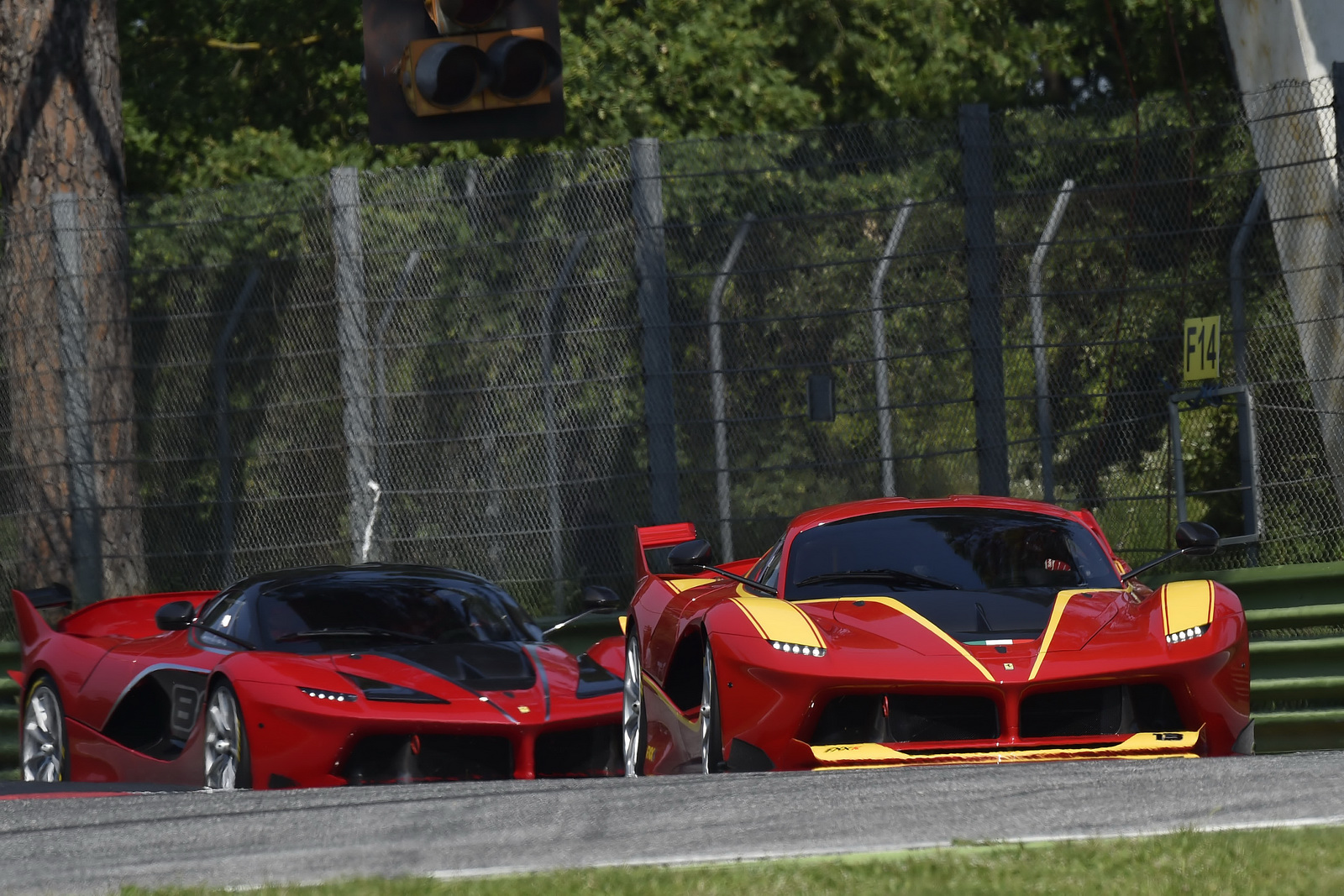
Both hypercars were designed to showcase the peak of automotive innovation during their respective eras. While they share hybrid technology, their goals and engineering philosophies are quite different.
Key Specifications at a Glance
| Specification | Ferrari LaFerrari | Mercedes-AMG One |
|---|---|---|
| Powertrain | 6.3L V12 Hybrid | 1.6L Turbo V6 Hybrid |
| Horsepower | 950 hp | 1,063 hp |
| Torque | 663 lb-ft | 738 lb-ft (approx.) |
| Drivetrain | Rear-Wheel Drive | All-Wheel Drive |
| Transmission | 7-Speed Dual-Clutch | 7-Speed Automated Manual |
| 0–60 mph | Under 3.0 sec | Around 2.9 sec |
| Top Speed | 217+ mph | 219+ mph |
| Production | 499 Coupes | 275 Units |
Looking at the numbers alone, the Mercedes-AMG One appears to have an advantage in horsepower, torque, and overall technological sophistication. However, specifications tell only part of the story.
Engine and Hybrid System
One of the biggest differences between these cars lies beneath the bodywork.
The Ferrari LaFerrari uses a massive naturally aspirated 6.3-liter V12 engine paired with Ferrari’s HY-KERS hybrid system. This setup was developed to improve performance rather than fuel economy. The electric motor fills torque gaps and enhances acceleration while allowing the V12 to remain the centerpiece of the driving experience.
The result is an engine that delivers instant throttle response, a screaming exhaust note, and a driving sensation that many enthusiasts consider unmatched.
Mercedes-AMG took a completely different approach. Instead of using a large displacement engine, the AMG One employs a highly advanced 1.6-liter turbocharged V6 derived directly from Mercedes’ championship-winning Formula 1 power unit.
This engine works alongside multiple electric motors to create a sophisticated hybrid system capable of delivering exceptional power and efficiency. The setup is significantly more complex than Ferrari’s solution and represents one of the closest examples of Formula 1 technology ever fitted to a road car.
Horsepower and Torque
Power output is often the first statistic enthusiasts compare.
The Ferrari LaFerrari produces approximately 950 horsepower from its combined gasoline and electric systems. When it debuted, this figure placed it among the most powerful production cars in the world.
The Mercedes-AMG One raises the bar even higher with approximately 1,063 horsepower. While the difference may seem modest on paper, the AMG’s power delivery benefits from all-wheel drive and advanced hybrid torque management systems.
In practical terms, the AMG One can deploy its power more effectively under a wider range of driving conditions.
Top Speed and Acceleration
Straight-line performance remains an important benchmark for hypercars.
Ferrari claims the LaFerrari can accelerate from 0 to 60 mph in less than three seconds and reach a top speed exceeding 217 mph. These figures remain incredibly impressive even by modern standards.
The Mercedes-AMG One delivers similar acceleration numbers while slightly exceeding the Ferrari’s top speed. Depending on testing conditions, it can achieve approximately 219 mph.
Although the top-speed difference is relatively small, the AMG One’s advanced aerodynamics and all-wheel-drive system often give it an advantage in overall performance metrics.
Ferrari LaFerrari Overview
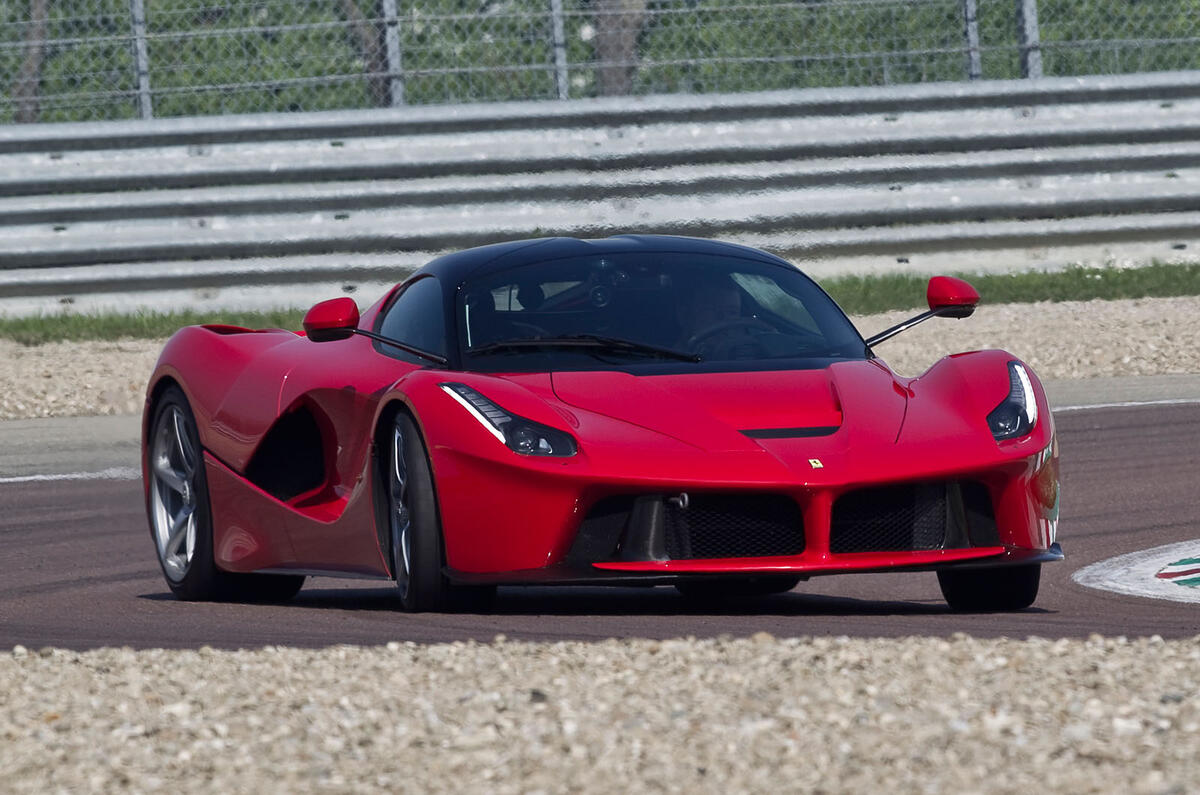
The LaFerrari occupies a special place in automotive history. Introduced as Ferrari’s flagship hypercar, it was designed to showcase the company’s engineering expertise while maintaining the emotional characteristics that define the Ferrari brand.
Even years after production ended, many enthusiasts still consider it one of the greatest Ferraris ever built.
Engine and Hybrid Technology
At the heart of the LaFerrari is a naturally aspirated 6.3-liter V12 engine. Unlike many modern performance cars that rely heavily on turbocharging, Ferrari chose to preserve the responsiveness and sound of a high-revving V12.
The engine alone produces the majority of the car’s power, while an electric motor provides additional performance assistance through Ferrari’s HY-KERS system.
This hybrid setup was inspired by Ferrari’s Formula 1 experience but tuned specifically for driver engagement rather than maximum efficiency.
Benefits of the HY-KERS system include:
- Instant torque delivery
- Improved acceleration
- Enhanced throttle response
- Reduced energy loss during braking
- Seamless power integration
Unlike some hybrid vehicles, the electric motor is not intended to create a quiet electric driving mode. Instead, every component exists to make the car faster.
Power Output and Performance Figures
The LaFerrari’s combined output reaches approximately 950 horsepower, making it one of the most powerful road cars Ferrari has ever produced.
Performance highlights include:
- 950 horsepower
- 663 lb-ft of torque
- 0–60 mph in under 3 seconds
- 0–124 mph in under 7 seconds
- Top speed above 217 mph
These numbers remain competitive even against many modern hypercars released years later.
More importantly, the LaFerrari delivers its performance with a dramatic soundtrack and naturally aspirated character that many newer vehicles cannot replicate.
Design and Aerodynamics
Ferrari designed the LaFerrari with both beauty and functionality in mind.
Every body panel contributes to aerodynamic efficiency while maintaining the aggressive styling expected from a flagship Ferrari. Active aerodynamic elements continuously adjust airflow to maximize stability at high speeds and improve cornering performance.
Key aerodynamic features include:
- Active rear spoiler
- Aerodynamic underbody
- Adjustable diffusers
- Advanced cooling channels
- Lightweight carbon-fiber construction
The result is a vehicle that remains stable at speeds exceeding 200 mph while retaining the visual drama expected from a Ferrari hypercar.
Strengths and Limitations
Like every hypercar, the Ferrari LaFerrari has areas where it excels and areas where newer technology has surpassed it.
Strengths
The biggest strength of the LaFerrari is its driving experience. Ferrari engineered the car to create an emotional connection between the driver and machine. The naturally aspirated V12 delivers immediate throttle response and a sound that many enthusiasts consider one of the greatest ever produced by a road car.
Other advantages include:
- Legendary Ferrari V12 soundtrack
- Instant hybrid-assisted acceleration
- Lightweight carbon-fiber construction
- Exceptional handling balance
- Highly collectible status
- Timeless design
Many owners and automotive journalists describe the LaFerrari as one of the most engaging hypercars ever built because it combines raw performance with traditional Ferrari character.
Limitations
Although the LaFerrari remains incredibly fast, automotive technology has advanced significantly since its debut.
Some limitations include:
- Rear-wheel drive only
- Less advanced hybrid technology than newer hypercars
- Lower overall power output than modern competitors
- Fewer active aerodynamic systems
- Limited electronic performance management
These factors don’t make the LaFerrari slow by any means, but they do highlight how quickly hypercar engineering evolves.
For pure driving emotion, the Ferrari remains difficult to beat. For outright technological sophistication, newer hypercars such as the Mercedes-AMG One have moved the benchmark forward.
Mercedes-AMG One Overview
The Mercedes-AMG One is unlike any production car that came before it. Rather than adapting Formula 1 ideas for road use, Mercedes attempted to bring actual Formula 1 technology to public roads.
The result is a hypercar that blurs the line between race car and street-legal vehicle.
Developing the AMG One proved extremely challenging because Formula 1 engines are designed for racing environments, not daily driving. Engineers spent years modifying the powertrain to meet emissions regulations and reliability requirements while preserving its performance advantages.
The final product became one of the most technically advanced road cars ever produced.
Formula 1-Derived Powertrain
The AMG One’s most remarkable feature is its engine.
At the heart of the car sits a turbocharged 1.6-liter V6 closely related to the power unit used by Mercedes Formula 1 race cars. While modifications were necessary for road use, the basic architecture remains astonishingly similar to a Grand Prix engine.
Unlike conventional supercars that rely on large-displacement engines, the AMG One achieves incredible performance through advanced hybrid technology and high engine speeds.
The system includes:
- 1.6-liter turbocharged V6 engine
- Four electric motors
- Formula 1-inspired energy recovery systems
- High-performance battery pack
- Electrically driven turbocharger
Together, these components create a highly sophisticated powertrain capable of delivering extraordinary performance.
One electric motor assists the turbocharger, helping eliminate lag and improve throttle response. Additional electric motors drive the front wheels, creating an advanced all-wheel-drive system that enhances traction and cornering ability.
This setup allows the AMG One to deploy power with incredible precision, especially when accelerating out of corners.
Power Output and Performance Figures
The AMG One produces approximately 1,063 horsepower, making it one of the most powerful road-legal vehicles ever developed by Mercedes-AMG.
Performance figures include:
- 1,063 horsepower
- Advanced all-wheel drive
- 0–60 mph in approximately 2.9 seconds
- Top speed exceeding 219 mph
- Formula 1-inspired hybrid system
Although its acceleration numbers are similar to many elite hypercars, the AMG One’s true strength appears on a race track.
Its combination of power, grip, downforce, and advanced electronics enables it to maintain incredible speed through corners, where lap times are often won or lost.
The AMG One wasn’t built simply to achieve impressive straight-line numbers. It was engineered to dominate complete circuits.
Active Aerodynamics and Downforce
Aerodynamics play a crucial role in modern hypercar performance.
While the Ferrari LaFerrari utilizes active aerodynamic elements, the AMG One takes aerodynamic technology to another level.
The vehicle features a sophisticated system that continuously adjusts various components to optimize airflow and generate downforce.
Key aerodynamic features include:
- Active rear wing
- Adjustable front aerodynamic elements
- Large rear diffuser
- Formula 1-inspired underbody design
- Dynamic airflow management
These systems work together to push the vehicle into the road surface at high speeds, increasing tire grip and improving stability.
The result is exceptional cornering performance that allows the AMG One to carry significantly more speed through turns than many traditional hypercars.
Why Downforce Matters
Many people focus exclusively on horsepower when comparing hypercars, but aerodynamic downforce is often just as important.
Downforce helps a vehicle:
- Corner faster
- Brake more effectively
- Improve stability
- Increase driver confidence
- Achieve faster lap times
This is one reason why the AMG One performs so impressively on race circuits. It doesn’t simply produce more power—it uses aerodynamics to maximize that power’s effectiveness.
Which Car Has More Horsepower?
Horsepower is one of the easiest performance statistics to compare, making it a common topic in hypercar debates.
While horsepower doesn’t tell the entire story, it remains an important indicator of a vehicle’s performance potential.
Ferrari LaFerrari Horsepower
The Ferrari LaFerrari combines its naturally aspirated V12 engine with an electric motor to produce approximately 950 horsepower.
When it launched, this figure represented a major milestone for Ferrari and established the LaFerrari as one of the most powerful road cars in the company’s history.
The power delivery is especially impressive because much of it comes from a naturally aspirated engine rather than relying heavily on turbocharging.
Benefits of the LaFerrari’s powertrain include:
- Immediate throttle response
- Smooth power delivery
- High-revving performance
- Iconic engine sound
- Strong acceleration
The experience feels raw, engaging, and highly emotional.
Mercedes-AMG One Horsepower
The Mercedes-AMG One generates approximately 1,063 horsepower from its Formula 1-inspired hybrid system.
This gives the AMG One a significant power advantage over the LaFerrari.
Its hybrid technology allows multiple electric motors to work alongside the turbocharged V6 engine, creating remarkable performance while maintaining impressive efficiency for a hypercar.
Advantages include:
- Higher total horsepower
- Advanced energy recovery systems
- Enhanced traction through all-wheel drive
- Superior power management
- Track-focused performance
On paper, the AMG One clearly wins the horsepower battle.
Power-to-Weight Comparison
Horsepower alone does not determine speed. Weight also plays a major role.
A vehicle with less power but significantly lower weight can often compete with a more powerful rival.
Both hypercars utilize carbon-fiber construction and advanced lightweight materials to maximize performance. However, the AMG One’s combination of higher power output and advanced hybrid systems helps it achieve an exceptional power-to-weight ratio.
This advantage becomes especially noticeable during high-speed acceleration and track driving.
Real-World Impact of Horsepower
In real-world driving situations, the difference between 950 horsepower and 1,063 horsepower may not feel dramatic during casual use.
However, on a race track or during maximum-performance testing, the AMG One’s additional power contributes to:
- Faster acceleration out of corners
- Improved lap times
- Higher overall performance potential
- Better power delivery through all-wheel drive
While the Ferrari LaFerrari remains astonishingly quick, the Mercedes-AMG One takes the horsepower crown and uses that advantage to support its track-focused mission.
Which Car Accelerates Faster?
Acceleration is often the first performance metric enthusiasts look at when comparing hypercars. While horsepower plays a major role, factors such as traction, drivetrain layout, weight distribution, and hybrid power delivery can significantly influence real-world acceleration.
Both the Ferrari LaFerrari and Mercedes-AMG One deliver breathtaking acceleration, but they achieve it in very different ways.
0–60 mph Comparison
The Ferrari LaFerrari was one of the quickest production cars of its era, capable of sprinting from 0 to 60 mph in less than three seconds.
Performance figures include:
- 0–60 mph: Approximately 2.6–2.9 seconds
- 0–124 mph: Under 7 seconds
- Instant hybrid-assisted torque
- Rear-wheel-drive configuration
The LaFerrari’s naturally aspirated V12 and electric motor work together seamlessly to deliver explosive acceleration with almost no delay.
The Mercedes-AMG One produces similar 0–60 mph figures, generally around 2.9 seconds depending on testing conditions.
Performance highlights include:
- 0–60 mph: Around 2.9 seconds
- Advanced launch control systems
- Formula 1-inspired hybrid technology
- All-wheel-drive traction
While the acceleration numbers appear nearly identical, the AMG One benefits from superior traction thanks to its all-wheel-drive system.
Quarter-Mile Performance
Quarter-mile testing provides a broader picture of acceleration because it measures how effectively a vehicle maintains speed after launch.
The Ferrari LaFerrari continues to impress with remarkable acceleration throughout the power band thanks to its naturally aspirated V12 and lightweight construction.
However, the AMG One’s additional horsepower and sophisticated hybrid management systems allow it to remain highly competitive as speeds increase.
Both hypercars are capable of completing the quarter mile in approximately 9 to 10 seconds under ideal conditions.
At this level of performance, driver skill, road conditions, and testing equipment can influence results significantly.
Launch Control Technology
Modern hypercars rely heavily on advanced launch-control systems.
Ferrari engineered the LaFerrari to deliver maximum performance while maintaining driver involvement. Its hybrid system assists acceleration without making the experience feel artificial.
Mercedes-AMG takes a more technology-focused approach.
The AMG One’s launch-control system coordinates:
- Electric motors
- Turbocharger response
- Traction control
- Torque distribution
- Gear changes
This allows the vehicle to optimize acceleration with extraordinary precision.
As a result, the AMG One can consistently deliver impressive launches with minimal wheelspin.
Winner in Straight-Line Acceleration
The difference between these two hypercars is surprisingly small when measuring pure acceleration.
The Ferrari LaFerrari remains one of the fastest accelerating vehicles Ferrari has ever built, delivering a dramatic and emotional experience.
The Mercedes-AMG One offers similarly impressive acceleration but benefits from superior traction and more advanced power management.
Acceleration Verdict: Slight Advantage Mercedes-AMG One
The AMG One’s all-wheel-drive system and advanced hybrid technology give it a small edge in consistency and overall acceleration efficiency, though the difference is far from dramatic.
Which Car Has the Higher Top Speed?
Top speed remains one of the most iconic performance benchmarks in the automotive world.
Although modern hypercars are often designed with track performance in mind, achieving extreme speeds still represents a significant engineering achievement.
Ferrari LaFerrari Top Speed
The Ferrari LaFerrari has an officially claimed top speed exceeding 217 mph (350 km/h).
Several factors contribute to this performance:
- Powerful V12 engine
- Lightweight carbon-fiber structure
- Efficient aerodynamics
- High-speed stability systems
Even years after its release, the LaFerrari remains among the fastest Ferraris ever produced.
Its ability to exceed 217 mph demonstrates the effectiveness of Ferrari’s engineering philosophy.
Mercedes-AMG One Top Speed
The Mercedes-AMG One achieves a top speed exceeding 219 mph (352 km/h).
While the numerical advantage over the LaFerrari is relatively small, the AMG One reaches these speeds using a significantly smaller engine supplemented by advanced hybrid technology.
Contributing factors include:
- Formula 1-derived powertrain
- Advanced energy recovery systems
- Active aerodynamics
- Sophisticated power management
This combination allows the AMG One to maintain exceptional performance throughout its speed range.
Speed-Limited vs Actual Capability
It is important to understand that top-speed figures can vary based on:
- Weather conditions
- Tire limitations
- Road surface
- Vehicle setup
- Electronic restrictions
In many cases, manufacturers prioritize stability and reliability over absolute maximum speed.
As a result, real-world top-speed testing may produce slightly different figures from official manufacturer claims.
Top Speed Winner
The Mercedes-AMG One holds a slight advantage in outright top speed.
However, the difference between approximately 217 mph and 219 mph is unlikely to be noticeable outside controlled testing environments.
Top Speed Verdict: Mercedes-AMG One
The AMG One technically wins the top-speed battle, though the margin is extremely small.
Track Performance Comparison
While acceleration and top speed generate headlines, true hypercar performance is often measured on a race track.
Track testing evaluates every aspect of a vehicle, including:
- Acceleration
- Cornering ability
- Braking performance
- Aerodynamic efficiency
- Driver confidence
This is where the Mercedes-AMG One begins to separate itself from the LaFerrari.
Nürburgring Lap Time Results
The Nürburgring Nordschleife is widely regarded as one of the most demanding race circuits in the world.
With its long straights, rapid elevation changes, and technical corners, it serves as a benchmark for measuring performance.
The Mercedes-AMG One achieved a record-breaking production-car lap time at the Nürburgring, demonstrating the effectiveness of its Formula 1-derived engineering.
The car’s ability to generate enormous downforce and maintain speed through corners helped it establish itself among the fastest production vehicles ever to lap the circuit.
The Ferrari LaFerrari was never developed with the same level of track-focused intent.
Although incredibly capable, it does not possess the same aerodynamic sophistication or race-derived technology as the AMG One.
Cornering and Braking Performance
Cornering performance depends on much more than horsepower.
Key factors include:
- Tire grip
- Suspension setup
- Weight distribution
- Aerodynamic downforce
- Electronic control systems
The Ferrari LaFerrari offers exceptional handling and balance. Its lightweight construction and responsive steering make it highly engaging on technical roads and race tracks.
However, the AMG One operates on another level.
Its Formula 1-inspired suspension, advanced electronics, and active aerodynamics enable it to carry remarkable speed through corners.
Braking performance also favors the AMG One thanks to:
- Advanced regenerative braking systems
- High-performance carbon-ceramic brakes
- Superior aerodynamic stability
These technologies allow later braking points and greater confidence during aggressive driving.
Aerodynamic Advantage
Aerodynamics represent one of the most significant differences between these hypercars.
The Ferrari LaFerrari employs active aerodynamic systems designed to improve stability and efficiency.
Features include:
- Active rear spoiler
- Adjustable aerodynamic surfaces
- Carbon-fiber underbody management
These systems help optimize performance without compromising the car’s elegant design.
The AMG One takes aerodynamic technology much further.
Its Formula 1-inspired package includes:
- Large active rear wing
- Adjustable front aero elements
- Advanced diffuser system
- Extreme downforce generation
- Dynamic airflow management
The result is substantially more aerodynamic grip at high speeds.
This allows the AMG One to:
- Corner faster
- Brake later
- Accelerate earlier out of turns
- Produce quicker lap times
Track Performance Winner
When evaluating overall circuit performance, the Mercedes-AMG One has a clear advantage.
Its Formula 1-derived engineering, advanced aerodynamics, and record-setting Nürburgring performance make it one of the most capable track-focused production cars ever built.
Track Performance Verdict: Mercedes-AMG One
While the Ferrari LaFerrari remains an extraordinary hypercar with exceptional handling and speed, the AMG One was specifically engineered to maximize lap-time performance and currently represents the benchmark for road-legal track-focused hypercars.
Technology and Engineering Differences
Although both the Ferrari LaFerrari and Mercedes-AMG One are hybrid hypercars, they were created with very different engineering goals. Ferrari focused on delivering an emotional driving experience with cutting-edge performance, while Mercedes-AMG aimed to bring Formula 1 technology to the road as directly as possible.
Ferrari’s HY-KERS System
The LaFerrari introduced Ferrari’s HY-KERS (Hybrid Kinetic Energy Recovery System), which was inspired by the company’s Formula 1 experience.
Unlike traditional hybrids designed to improve fuel economy, HY-KERS exists primarily to enhance performance.
Key benefits include:
- Instant torque assistance
- Faster acceleration
- Improved throttle response
- Energy recovery during braking
- Seamless integration with the V12 engine
Ferrari used the system to complement the naturally aspirated V12 rather than replace its character. As a result, the LaFerrari feels like a traditional Ferrari with an added performance boost.
Mercedes-AMG Formula 1 Hybrid System
The AMG One’s hybrid system is significantly more advanced and far closer to an actual Formula 1 power unit.
Its setup includes:
- Turbocharged 1.6-liter V6 engine
- Four electric motors
- Electrically assisted turbocharger
- Formula 1-style energy recovery systems
- High-performance battery technology
This sophisticated configuration allows the AMG One to maximize efficiency, power delivery, and traction simultaneously.
The engineering complexity involved is unlike anything seen in most production vehicles.
Active Suspension and Aerodynamics
Another major difference lies in how each car manages grip and stability.
The LaFerrari utilizes active aerodynamic elements to improve high-speed performance while maintaining beautiful styling.
The AMG One takes things much further with:
- Formula 1-inspired suspension tuning
- Advanced aerodynamic management
- Dynamic ride-height adjustments
- Massive downforce generation
- Extensive track-focused calibration
These systems help the AMG One achieve incredible lap times and cornering performance.
Innovation Comparison
Both vehicles represent engineering milestones.
The Ferrari LaFerrari demonstrated how hybrid technology could enhance a traditional supercar experience.
The Mercedes-AMG One proved that Formula 1 technology could be adapted for road use.
Technology Winner: Mercedes-AMG One
While Ferrari’s HY-KERS system was groundbreaking, the AMG One’s Formula 1-derived engineering makes it one of the most technologically advanced road cars ever built.
Driving Experience Comparison
Performance statistics only tell part of the story. Driving experience often determines which hypercar enthusiasts remember most.
Ferrari LaFerrari Driving Character
The LaFerrari is designed to engage the driver’s senses.
Its naturally aspirated V12 delivers:
- Immediate throttle response
- A thrilling exhaust note
- Linear power delivery
- High-revving excitement
- Strong emotional connection
Many enthusiasts consider the LaFerrari one of the greatest driver’s cars ever produced because it combines extreme performance with traditional Ferrari character.
Every acceleration run is accompanied by the unmistakable sound of a naturally aspirated V12 approaching redline.
Mercedes-AMG One Driving Character
The AMG One feels much closer to a race car.
Its Formula 1-inspired powertrain delivers:
- Instant electric torque
- Aggressive acceleration
- Incredible grip
- Advanced electronic control
- Extreme track capability
The experience is highly technical and intensely focused.
Rather than overwhelming the driver with sound and drama, the AMG One impresses through precision and capability.
Road Use vs Track Use
The LaFerrari feels more approachable for spirited road driving.
Its power delivery and overall character make it enjoyable even outside a race track environment.
The AMG One shines brightest on a circuit where its aerodynamics, suspension, and hybrid systems can operate at their full potential.
For many drivers:
- LaFerrari = Emotional road and track experience
- AMG One = Ultimate track-focused performance
Which Is More Exciting to Drive?
The answer depends on what you value most.
If you want:
- V12 sound
- Driver engagement
- Emotional excitement
- Ferrari heritage
The LaFerrari may be the more rewarding experience.
If you prioritize:
- Precision
- Technology
- Cornering performance
- Formula 1 engineering
The AMG One is difficult to surpass.
Driving Experience Winner: Subjective
The LaFerrari wins on emotion, while the AMG One wins on technical performance.
Rarity, Value, and Collectability
Both hypercars are exceptionally rare and highly desirable among collectors.
Production Numbers
Limited production increases exclusivity and long-term value.
Production totals include:
Ferrari LaFerrari
- 499 coupe models initially produced
- Additional limited special editions
- Instantly became a collector favorite
Mercedes-AMG One
- Only 275 units produced
- Highly restricted availability
- One of AMG’s rarest road cars
Both vehicles are unlikely to become common sights anywhere in the world.
Original Pricing
When new, both hypercars commanded premium prices.
Approximate launch prices:
- Ferrari LaFerrari: Around $1.4 million
- Mercedes-AMG One: Around $2.7 million
However, demand quickly exceeded supply.
Current Market Value
Because of rarity and demand, values have increased significantly.
Factors influencing value include:
- Production numbers
- Mileage
- Ownership history
- Market demand
- Historical significance
Both vehicles regularly sell for several million dollars in the collector market.
Future Collectability
The LaFerrari represents the end of an era for naturally aspirated Ferrari flagship hypercars.
The AMG One represents the closest road-going interpretation of a Formula 1 car ever produced.
These factors make both vehicles highly desirable long-term investments.
Collectability Winner: Tie
Each hypercar occupies a unique and important place in automotive history.
Ferrari LaFerrari vs Mercedes-AMG One: Which Is Faster?
After comparing horsepower, acceleration, top speed, track performance, and technology, a clear picture emerges.
Fastest in a Straight Line
Both hypercars deliver astonishing acceleration and top-speed performance.
However, the AMG One benefits from:
- More horsepower
- All-wheel drive
- Superior power management
Winner: Mercedes-AMG One
Fastest Around a Race Track
Track performance is where the AMG One truly excels.
Its Formula 1-inspired engineering provides:
- Greater downforce
- Better cornering speeds
- Superior braking performance
- Record-breaking Nürburgring pace
Winner: Mercedes-AMG One
Best Overall Hypercar Performance
When judged purely by measurable performance, the AMG One holds the advantage.
It combines:
- More power
- Better aerodynamics
- Advanced hybrid technology
- Superior lap-time capability
Winner: Mercedes-AMG One
Final Verdict
If the question is simply, “Which car is faster?”
The answer is Mercedes-AMG One.
Its Formula 1-derived technology, greater horsepower, advanced aerodynamics, and proven track performance make it the faster vehicle overall.
However, speed isn’t the only reason people love hypercars.
The Ferrari LaFerrari remains one of the most iconic performance cars ever created. Its naturally aspirated V12, stunning design, and emotional driving experience continue to captivate enthusiasts worldwide.
For pure speed and technology, choose the AMG One.
For emotion, sound, and Ferrari heritage, the LaFerrari remains a masterpiece.
Frequently Asked Questions
Is the Mercedes-AMG One faster than the Ferrari LaFerrari?
Yes. The Mercedes-AMG One is generally faster overall, particularly on race tracks where its Formula 1-inspired aerodynamics and hybrid technology provide significant advantages.
Which car has more horsepower?
The Mercedes-AMG One produces approximately 1,063 horsepower, while the Ferrari LaFerrari produces around 950 horsepower.
Which hypercar has the faster Nürburgring lap time?
The Mercedes-AMG One holds a significantly faster Nürburgring lap time and has set production-car records on the famous circuit.
Is the Ferrari LaFerrari still fast by modern standards?
Absolutely. Despite being older than many current hypercars, the LaFerrari remains one of the fastest and most capable performance cars ever produced.
Which car is more expensive today?
Both vehicles command multi-million-dollar values, though market prices vary based on condition, mileage, and collector demand.
Can the Mercedes-AMG One be driven daily?
Technically yes, but it was primarily designed as a track-focused hypercar. Its Formula 1-derived technology makes it less practical than many conventional supercars.
Conclusion
The Ferrari LaFerrari and Mercedes-AMG One represent two of the most impressive hypercars ever created. Both showcase extraordinary engineering, hybrid technology, and performance capabilities that push the limits of what road cars can achieve.
The LaFerrari delivers an unforgettable combination of V12 power, Ferrari heritage, and emotional driving engagement. It remains one of the most desirable hypercars in automotive history.
The Mercedes-AMG One, however, takes performance to another level. With Formula 1-derived technology, over 1,000 horsepower, advanced aerodynamics, and record-breaking track performance, it stands as the faster and more technologically advanced machine.
If your goal is ultimate speed and lap-time performance, the Mercedes-AMG One is the clear winner.
If your goal is to experience one of the greatest naturally aspirated Ferrari hypercars ever built, the LaFerrari remains a legend that few vehicles can match.

- Top 10 Best Battery Tester Automotive 2026 - October 20, 2026
- Top 10 Best Battery Tender For Motorcycle Battery 2026 - October 20, 2026
- Top 10 Best Battery Rotary Tool 2026 - October 20, 2026