10 Most Comfortable Racing Bike Saddles (Complete Comfort Guide)

It is a common misconception that a comfortable saddle should feel like a sofa. In reality, racing bike saddles feel uncomfortable initially because they are designed for a specific posture.
Racing vs. Casual Bike Saddles
Casual bike saddles are built for an upright riding position, where most of your weight around 80–90% rests on your glutes. In contrast, racing saddles are designed for a more aggressive, forward-leaning posture. In this aerodynamic tuck, your weight is shared between your feet on the pedals, your hands on the handlebars, and your sit bones, allowing for greater efficiency on the bike.
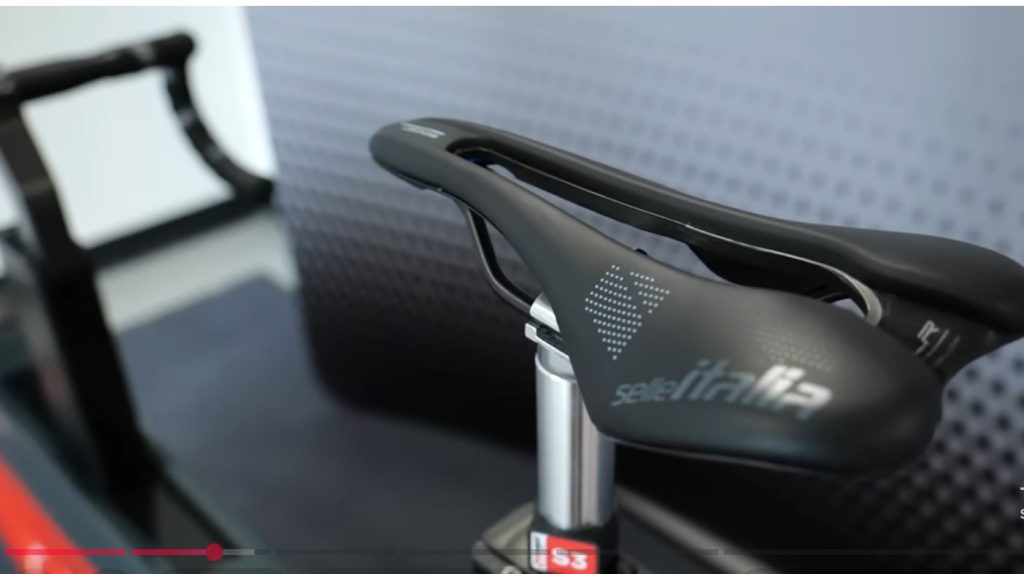
Choosing the right saddle isn’t just about avoiding discomfort it directly impacts performance. A properly fitted saddle helps stabilize your pelvis, providing a solid platform for power transfer through the pedals. Too much padding, as found in casual saddles, can lead to soft tissue bunching and chafing, causing friction and saddle sores over long rides. With the right racing saddle, you spend less time constantly adjusting your position and more energy on endurance, speed, and enjoying the ride.
2. What Makes a Racing Bike Saddle Comfortable?
In the world of racing, comfort is a byproduct of support, not softness. Here are the engineering factors that dictate how a saddle feels after four hours in the drops.
Shape and Pressure Distribution
Saddles generally fall into three profiles:
- Flat: Best for riders who move around a lot on the bike (climbing vs. tucking).
- Curved/Waved: Ideal for riders who stay in one position and want a “cradle” to lock their pelvis into.
- Short-Nose (Snub-nose): A modern trend that reduces pressure on the “perineum” (soft tissue) when riding in an aggressive aero position.
Padding vs. Performance Balance
More padding is not better. Over long distances, thick foam compresses and puts pressure on the soft tissues between your sit bones. High-end racing saddles use high-density, closed-cell foam or 3D-printed liquid polymer structures that support the bones without collapsing.
The Cut-Out Debate
Many modern saddles feature a “relief channel” or a full hole in the center. This is designed to eliminate pressure on the pudendal nerve and blood vessels. Whether you need a cut-out depends entirely on your personal anatomy and how much you rotate your pelvis forward.
Materials and Rails
- Carbon Fiber: The lightest and stiffest option. Carbon rails also provide a natural “damping” effect, vibrating less than metal.
- Titanium/Steel: Durable and slightly more flexible, making them a favorite for gravel and endurance riders who face rougher terrain.
3. Types of Bike Saddles Explained
When searching for a saddle, it’s vital to distinguish between disciplines. While a “saddle” is a broad term, in a cycling context, we are strictly looking at high-performance bicycle seats.
Road Racing Saddles
These are the most minimalist. They are narrow to allow for high-cadence pedaling without the thighs rubbing against the sides. They prioritize low weight and an aerodynamic profile.
Endurance Road Saddles
Designed for “Century” rides (100 miles), these often have slightly more vibration-damping material and a shape that accommodates a slightly more upright (but still sporty) position.
Gravel Bike Saddles
Gravel riding involves constant vibration. Gravel-specific saddles often feature “tuned flex” in the shell and more robust cover materials to withstand mud, grit, and the occasional tip-over.
MTB vs. Road Saddles
While similar, MTB saddles often have rounded edges so the rider can easily slide off the back during steep descents without their shorts getting snagged. They are also built to withstand the much higher “impact” forces of trail riding.
Note on Search Intent: When looking for “racing saddles,” ensure you are looking at cycling-specific gear. In some contexts, this term can refer to equestrian (horse) or motorsport seats, which serve entirely different ergonomic purposes!
4. How to Choose the Right Saddle Size
The most expensive carbon saddle in the world will feel like a brick if it is the wrong size. Size in the cycling world is determined by Sit Bone Width, not pants size.
Sit Bone Width Explained
Your “Ischial Tuberosities” (sit bones) are the two points of your pelvis meant to bear your weight.
The Measurement: Most bike shops have a “butt-o-meter” a gel pad you sit on to measure the distance between your sit bone impressions.
The Result: If your sit bones are 110mm apart, you likely need a saddle around 130–140mm wide. If they are 130mm apart, you’ll look for a 150mm+ saddle.
The Danger of “Too Narrow”: If the saddle is too narrow, your sit bones “hang off” the edges, causing your weight to fall entirely on your soft tissue. This leads to numbness and long-term nerve issues.
Men’s vs. Women’s Saddles
While many saddles are now “unisex,” biological differences often dictate different shapes:
- Women’s Saddles: Generally wider (to accommodate wider pelvic structures) and often feature larger cut-outs or specialized “mimic” padding to support soft tissue without causing pressure.
- Men’s Saddles: Usually narrower with a longer nose, though the trend is shifting toward shorter, wider “power” shapes for both genders.
Common Mistakes Riders Make
Assuming Softer is Better: As mentioned, “mushy” saddles cause chafing and nerve compression over long distances.
Ignoring Saddle Angle: Even a perfect saddle will hurt if the “nose” is pointed too far up or down. A level saddle is the standard starting point.
Buying for Weight Only: Saving 50 grams with a full-carbon unpadded saddle is a poor trade-off if it prevents you from riding for more than an hour.
5. Bike Saddle Height & Position: Comfort Optimization
You can buy the most advanced 3D-printed carbon saddle on the market, but if it’s positioned incorrectly, it will still be a source of agony. Saddle height and fore-aft position are the “foundation” of your bike fit. Even a 5mm discrepancy can be the difference between a personal best and a repetitive strain injury.
Saddle Height Basics
Getting your saddle height right is a balance between aerodynamics, power output, and joint health. If the seat is too low, you’ll experience anterior (front) knee pain and lose leverage. If it’s too high, your hips will rock, leading to lower back pain and saddle sores from excessive friction.
The “Heel-to-Pedal” Quick Check
Before diving into math, the fastest way to get in the ballpark is the heel method:
- Sit on the bike (wear your cycling shoes) and hold onto a wall for balance.
- Place your heel on the pedal and rotate it to the lowest point (6 o’clock position).
- Your leg should be completely straight without you having to tilt your pelvis.
- When you move your foot to the correct riding position (ball of the foot on the pedal), you will have a perfect 25–35° bend in the knee.
Saddle Height Formulas Explained
Pro riders and fitters often use more precise mathematical methods:
- The Hamley Method: Measure your inseam (from floor to crotch) and multiply by 1.09. This gives you the distance from the pedal axle to the top of the saddle.
- The LeMond Method: Named after Greg LeMond, this uses Inseam x 0.883. This figure represents the distance from the center of the bottom bracket (the hole the cranks spin through) to the top of the saddle.
Bicycle Seat Height Chart (General Guidance)
Note: These are estimates. Individual limb length and shoe/pedal stack height vary.
| Inseam (cm/in) | Estimated Saddle Height (BB to Top) |
| 71 cm (28″) | 62.7 cm |
| 76 cm (30″) | 67.1 cm |
| 81 cm (32″) | 71.5 cm |
| 86 cm (34″) | 75.9 cm |
| 91 cm (36″) | 80.3 cm |
Saddle Position Adjustments
Height is only one axis of the comfort equation. You also need to consider where the saddle sits horizontally (fore-aft) and its angle.
Adjusting Seat Fore-Aft: The KOPS Method
KOPS stands for Knee Over Pedal Spindle.
- With your pedals at the 3 o’clock and 9 o’clock positions, a plumb line dropped from the bony bit just below your kneecap should pass through the center of the pedal axle.
- If your knee is too far forward, slide the saddle back.
- If your knee is too far back, slide the saddle forward.
- This ensures your weight is balanced between the wheels and your muscles are firing at the optimal angle.
How Saddle Angle Affects Comfort
Most riders should start with a perfectly level saddle.
- Nose Down: If you feel like you are sliding forward and putting too much pressure on your wrists, your nose is too low.
- Nose Up: This is a recipe for numbness and soft-tissue damage.
- Pro Tip: Modern “short-nose” saddles are often designed to be run with a 1–2° downward tilt to accommodate the aggressive pelvic rotation of racing.
Correct Height for Bike Seat and Handlebars (The “Drop”)
The relationship between your seat and bars defines your “stack.”
- Racing: The saddle is often 5–10cm higher than the handlebars to create a flat, aero back.
- Endurance: The saddle and bars are closer to level to reduce neck and back strain.
Seat Height Differences: Road vs. Gravel vs. MTB
While the physics of the human body don’t change, the terrain does. You should subtly adjust your height based on what you’re riding:
Road Bike Position
- Priority: Efficiency and Aerodynamics.
- Adjustment: This is usually the highest your saddle will ever be. It’s optimized for a consistent, high-cadence stroke on smooth pavement.
Gravel Bike Position
- Priority: Stability and Vibration Damping.
- Adjustment: Many riders drop their saddle by 2–5mm compared to their road bike. This lower center of gravity helps with stability on loose descents and allows the legs to act as “shocks” when hitting bumps.
Mountain Bike (MTB) Position
Priority: Technical Maneuverability.
Adjustment: On modern MTBs, the Dropper Post is king.
For climbing, the seat is at full height (similar to a road bike).
For descending, the seat is dropped 150–200mm out of the way so the rider can move the bike freely beneath them.
If you don’t have a dropper, most trail riders run their seat slightly lower than a road setup to ensure they don’t get “bucked” by the saddle on technical terrain.
Summary: The “Living” Bike Fit
Your ideal saddle position is not static. As you become more flexible or as you age, your “perfect” height will move.
10 Most Comfortable Racing Bike Saddles (Main List)
Finding the right racing saddle is a deeply personal process. Comfort in a racing saddle isn’t just about softness it’s the result of a careful balance between weight, stiffness, pressure relief, and long-distance support. The best saddles allow you to stay powerful in aggressive riding positions while protecting soft tissue and reducing fatigue over long hours in the saddle.
Below are the top-rated racing bike saddles for 2026, trusted by endurance riders, racers, and performance-focused cyclists across road, gravel, and trail disciplines.
1. Brooks England Cambium C17 All-Weather
Why this saddle stands out
The Cambium C17 All-Weather is designed for riders who want race-ready performance without sacrificing comfort in changing conditions. Unlike traditional leather saddles, it performs consistently in rain, heat, and cold making it ideal for year-round riding.
Best For:
Endurance road racing, gravel riding, and all-season commuting.
Design & Construction:
- Vulcanized natural rubber top
- Waterproof nylon cover
- Flexible steel rails
This construction allows controlled flex without stretching or sagging over time.
Comfort & Ride Feel:
The saddle delivers an immediate hammock-like feel, absorbing road vibration and surface imperfections. There’s no break-in period, yet it still adapts subtly to your riding style, reducing lower-back and sit-bone fatigue on long rides.
2. Brooks England Cambium C17 (Original / Cotton)
Why riders choose the original C17
For cyclists who appreciate a classic look with modern engineering, the original cotton-topped C17 offers a more “natural” ride feel while maintaining race-level durability.
Best For:
Long-distance road racing, endurance events, and riders who value traditional aesthetics.
Design & Construction:
- Organic cotton top bonded to a rubber base
- Same flexible Cambium platform as the All-Weather version
- Slightly more breathable surface
Comfort & Ride Feel:
Over time, the cotton and rubber combination subtly molds to your anatomy. This creates a progressive comfort curve, making it especially appealing for riders who log long hours in the saddle and prefer a more organic sensation than fully synthetic saddles.
3. Selle Italia Women’s Diva Gel Superflow
Built specifically for female racing anatomy
The Diva Gel Superflow is engineered to support women who ride aggressively but still demand all-day comfort during training and competition.
Best For:
Competitive female road cyclists and endurance racers.
Design & Construction:
- 152mm wide rear platform for better sit-bone support
- Large “Superflow” central cut-out
- Lightweight racing shell with gel inserts
Comfort & Ride Feel:
The oversized cut-out dramatically reduces soft-tissue pressure, while targeted gel padding cushions impact without feeling bulky. The result is a saddle that stays comfortable during high-cadence efforts and long climbs, even in forward-leaning race positions.
4. Ergon Women’s SM Sport Gel
Designed for aggressive positioning
The SM Sport Gel focuses on maintaining comfort when the rider is rotated forward—common in racing, climbing, and aerodynamic riding styles.
Best For:
Aggressive road riding, XC mountain biking, and endurance racing.
Design & Construction:
- Anatomically sculpted relief channel
- Orthopedic foam with gel inserts
- Slightly raised rear for pelvic support
Comfort & Ride Feel:
This saddle excels at preventing numbness and pressure build-up during extended efforts in the drops or aero position. The ergonomic shaping helps stabilize the pelvis, allowing more efficient power transfer without discomfort.
5. Ergon Men’s SM Enduro Comp
A performance-focused saddle for demanding terrain
The SM Enduro Comp is built for riders who push hard on technical terrain but still need reliable comfort for long sessions.
Best For:
Endurance trail riding, aggressive XC, and long-distance mountain racing.
Design & Construction:
- Flat, slim profile for easy movement
- 360-degree edge padding
- Pressure-optimized shape for male anatomy
Comfort & Ride Feel:
The saddle effectively reduces pressure on the male perineum during high-intensity pedaling. Edge padding protects inner thighs during technical maneuvers, while the firm platform ensures stability and control on climbs and descents alike.
6. Serfas E-Gel Cruiser (Contextual Recommendation)
Not every rider is chasing marginal gains or aggressive race positioning. For cyclists prioritizing recovery, comfort, or sheer ride enjoyment, a saddle designed to minimize pressure can make the difference between riding consistently and dreading the bike
Best For:
Recreational riders, recovery rides, commuters, or high-volume cyclists dealing with sit-bone sensitivity or post-injury discomfort.
Design:
The Serfas E-Gel Cruiser uses a dynamic gel layer that moves independently from the saddle shell. Unlike static padding that compresses and stays compressed, this friction-free gel redistributes pressure as you shift, helping to reduce hot spots.
Comfort Profile:
While labeled a “Cruiser” saddle, many recreational road riders opt for the narrower E-Gel variants. These models maintain adequate pedaling clearance while delivering exceptional plushness—especially useful for riders experiencing extreme sit-bone pain, saddle sores, or recovery fatigue.
7. Additional Top Picks
Modern saddle design spans a wide spectrum from cutting-edge 3D-printed materials to refined budget racing options. The following saddles stand out for addressing specific comfort challenges while maintaining performance credibility
Specialized Power Pro with Mirror
This saddle represents the leading edge of comfort technology. Its 3D-printed liquid polymer structure creates near-infinite density zones, supporting sit bones while relieving pressure in sensitive areas. Ideal for riders who struggle to find a “just right” saddle feel.
Fizik Tempo Argo R3
Designed specifically for endurance riders, the Tempo Argo R3 combines a short-nose profile with a large central cut-out. This shape supports stable pelvic rotation over long distances while minimizing perineal pressure, making it a favorite for gran fondos and all-day rides.
Prologo Akero
A standout budget-friendly racing saddle, the Akero uses a flat profile and a smoothly flexing shell to provide comfort without excess padding. It’s a strong option for riders who want race geometry at a lower cost, or for those unsure about investing heavily upfront.
SQlab 611 Infinergy Ergowave
Known for its distinctive stepped “Ergowave” shape, this saddle focuses load directly onto the sit bones. The design actively reduces soft-tissue contact, making it particularly effective for riders prone to numbness or nerve compression on longer rides.
7. Comfortable Bike Saddles vs. Racing Saddles
One of the most misunderstood aspects of saddle comfort is the difference between what feels good in the shop versus what works on the road. Comfort is not just softness it’s support, pressure distribution, and biomechanical efficiency.
The Trade-Off:
Racing saddles sacrifice initial plushness for long-term stability and power transfer. They may feel firm at first, but they support the skeletal structure rather than compressing soft tissue.
Why Softer Isn’t Better:
Excessively soft saddles allow sit bones to sink too deeply. This causes the center of the saddle to press upward into soft tissue, restricting blood flow and often leading to numbness or tingling.
Efficiency Advantage:
Firm saddles ensure that pedaling energy is transferred directly into the drivetrain rather than absorbed by foam compression especially noticeable during longer rides or high-cadence efforts.
8. Common Saddle Comfort Problems & Fixes
Most saddle discomfort isn’t caused by the saddle itself—but by poor fit, positioning, or sizing. Understanding the root cause can often solve the issue without buying new gear
Numbness
Cause: Saddle too narrow or nose tilted upward, forcing weight onto soft tissue.
Fix: Measure sit-bone width and ensure the saddle is level. Even a 1–2° nose adjustment can make a major difference.
Chafing
Cause: Saddle nose too wide or seat height too high, leading to excessive hip rocking.
Fix: Try a narrower-nose saddle and lower the seat by 2–3mm to stabilize the pelvis.
Lower Back Discomfort
Cause: Saddle positioned too far back, increasing reach and spinal strain.
Fix: Slide the saddle slightly forward on the rails to reduce reach and improve posture.
9. Saddle Care & Longevity
A saddle is a wear item, but proper care can significantly extend its lifespan and preserve comfort. Different materials require different maintenance approaches
Oiling (Leather Saddles):
For leather saddles like the Brooks B17, apply Proofide or a dedicated leather conditioner sparingly. Avoid over-oiling, which can soften the leather excessively. Never oil Cambium or synthetic saddlesthis can degrade rubber and nylon components.
Weather Protection:
Use a saddle cover when leaving your bike outdoors. For Brooks Cambium models, UV exposure is the primary concern. After wet rides, a simple wipe-down is sufficient.
Replacement Timeline:
Most performance saddles last 2–4 years or ~10,000 miles. Signs it’s time to replace include shell sagging, permanently compressed foam, or loss of rebound and support.
10. Final Buying Guide
| Best For… | Recommended Model |
| Long-Distance Racing | Fizik Tempo Argo R3 |
| Beginners | Specialized Bridge Comp (with MIMIC) |
| Women Racers | Selle Italia Diva Gel Superflow |
| Endurance Racing | Brooks Cambium C17 All-Weather |
| Value-for-Money | Prologo Akero |
What is the most comfortable racing bike saddle?
The most comfortable racing bike saddle depends on sit bone width, riding position, flexibility, and ride duration. Popular comfort-focused racing saddles use a narrow profile, firm padding, and pressure-relief channels. Brands often design models for aggressive posture rather than soft cushioning. A professional bike fit gives the most accurate result.
Are gel saddles good for racing bikes?
Gel saddles are usually unsuitable for racing bikes. Gel increases movement and friction during high-cadence pedaling. Racing setups benefit from firm foam or minimal padding that keeps the rider stable and efficient during long rides.
How do I know my bike saddle height is correct?
Correct saddle height allows a slight knee bend at the bottom of the pedal stroke. Hips stay level without rocking, and pedaling feels smooth without strain. A common method sets saddle height at roughly 109% of inseam length, measured from pedal axle to saddle top.
Should a racing saddle have a cut-out?
A cut-out helps reduce pressure on soft tissue and improves blood flow for many riders. Riders with numbness or discomfort often benefit from a central cut-out. Some riders prefer a solid saddle, so personal testing remains essential.
Can a wrong saddle cause knee or back pain?
Yes. An incorrect saddle height, width, or tilt can shift body alignment and overload joints. Knee pain often comes from saddle height errors. Lower back pain may result from excessive reach or poor pelvic support. Proper saddle selection and positioning reduce these risks.

- Best Bug And Bird Poop Remover For Cars 2026 - September 15, 2026
- Can Vaseline Work As Wd-40? - September 15, 2026
- Best Bug Remover For Bumper 2026 - September 15, 2026