21 Diesel Engine Types in Cars (Functions, Benefits & Technology)

Diesel engines have powered the automotive world for well over a century. From compact city runabouts to heavy-duty trucks crossing continents, diesel powertrains are celebrated for their torque, fuel efficiency, and extraordinary longevity. Yet not all diesel engines are the same. The technology inside a modern quad-turbo common rail diesel bears almost no resemblance to an old naturally aspirated pre-chamber engine from the 1970s.
In this comprehensive guide, we cover 21 types of diesel engines found in cars and commercial vehicles, breaking down how each works, where it is used, and what makes it stand apart. Whether you are buying a new car, studying automotive engineering, or simply curious about what powers your vehicle, this guide gives you everything you need to know.
What Is a Diesel Engine?
Before diving into the 21 types, it helps to understand what makes a diesel engine fundamentally different from a petrol engine. Unlike petrol engines that rely on spark plugs to ignite the fuel-air mixture, diesel engines use the heat generated by extreme air compression to trigger combustion spontaneously — a process known as compression ignition. This single difference drives all the advantages diesel is famous for: better fuel economy, stronger low-end torque, and longer engine life.
The four-stroke diesel cycle works as follows:
- Intake — The piston descends, drawing pure air into the cylinder.
- Compression — The piston rises, compressing air to a ratio between 14:1 and 25:1, generating intense heat.
- Power — Diesel fuel is injected and ignites spontaneously from the heat of compression, driving the piston down.
- Exhaust — The piston rises, pushing burned gases out of the cylinder.
This elegant cycle, applied across 21 distinct diesel engine types, produces an extraordinary range of performance, efficiency, and engineering sophistication.
21 Types of Diesel Engine in Car
Understanding these 21 diesel engine types helps you appreciate what is under the bonnet of your car and why it behaves the way it does. Each type below represents a different engineering philosophy, optimised for a specific purpose, whether that is simplicity, outright power, fuel economy, or emissions compliance. Let us explore every one of them.
1. Naturally Aspirated Diesel Engine
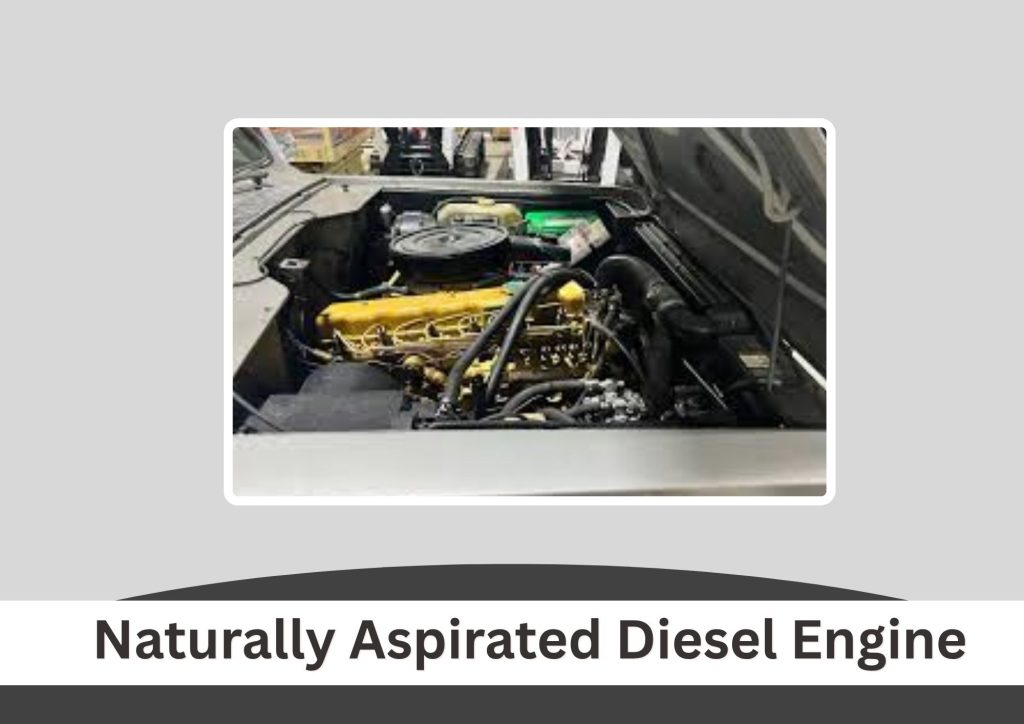
The naturally aspirated diesel draws air into the cylinder using only atmospheric pressure, with no turbocharger or supercharger assist. It is the most mechanically simple diesel design and the foundation from which all other types evolved.
- Relies entirely on high compression ratios (18:1 to 22:1) to generate the heat needed for ignition
- No forced induction means fewer components, dramatically lower maintenance requirements, and outstanding reliability
- Produces strong low-end pulling power but modest peak power output compared to turbocharged designs
- Extremely durable over very high mileages — the engine of choice for agricultural and heavy industrial use
- Found in classic Land Rover Defenders, vintage Mercedes-Benz OM601/OM602 engines, and older diesel trucks
2. Turbocharged Diesel Engine
The turbocharged diesel is the most widespread diesel engine type in the world today. By using exhaust gases to spin a turbine that forces compressed air into the cylinders, it generates far more power from a smaller displacement than any naturally aspirated diesel could achieve.
- Exhaust gases spin a turbine wheel, which drives a compressor that forces dense pressurised air into the intake manifold
- Higher air mass per stroke allows proportionally more fuel injection, producing significantly greater torque output
- Delivers far better fuel economy than an equivalent naturally aspirated engine at the same power level
- Reduces harmful emissions by improving combustion completeness across all load conditions
- Found in Volkswagen TDI, BMW d-series, Ford Duratorq, Toyota D-4D, Peugeot HDi — virtually all modern diesel cars
3. Common Rail Direct Injection (CRDI) Diesel Engine
Common rail direct injection is the defining technology of the modern diesel era. Fuel is stored at extreme pressure up to 2,500 bar in the latest systems in a shared high-pressure rail and then delivered to each cylinder by electronically controlled injectors with extraordinary precision.
- A high-pressure pump maintains fuel pressure in the rail at all times, independently of individual injection events
- Solenoid or piezoelectric injectors open for microsecond-precise durations under full ECU control
- Multiple injection events per combustion cycle — pilot, main, and post injections — smooth combustion and reduce noise dramatically
- Simultaneously lowers diesel knock, particulate emissions, and fuel consumption compared to older injection systems
- Found in virtually every diesel passenger car built after 2000, from economy hatchbacks to flagship luxury saloons
4. Twin-Turbocharged Diesel Engine
The twin-turbo diesel goes beyond a single turbocharger, using two units to deliver boost across a broader RPM range. Whether arranged in parallel or sequentially, twin turbos allow diesel engines to generate both strong low-end torque and impressive high-RPM power without compromise.
- Parallel twin-turbo: Both turbos spool simultaneously, each handling one bank of cylinders on a V-engine layout
- Sequential twin-turbo: A small turbo delivers fast low-RPM response while a larger turbo takes over at higher speeds
- Parallel setups prioritise peak power output; sequential setups prioritise drivability and low-RPM throttle response
- Produces a broad, flat torque curve that makes the car feel powerfully effortless across all driving speeds
- Found in BMW 730d (sequential inline-6), Mercedes E400d (biturbo V6), and Jaguar XF D300
5. Variable Geometry Turbo (VGT) Diesel Engine
The variable geometry turbocharger is one of the most important innovations in modern diesel engineering. Adjustable vanes inside the turbine housing allow a single unit to behave like a small responsive turbo at low RPM and a large high-flow turbo at high RPM — eliminating the traditional trade-off between turbo response and peak power.
- Moveable stator vanes surround the turbine wheel, controlled precisely by an electronic or vacuum actuator
- At low RPM the vanes close, accelerating exhaust gas velocity and spooling the turbo very rapidly
- At high RPM the vanes open wide, allowing maximum exhaust flow without over-boosting the intake
- Effectively eliminates turbo lag while delivering a wide, flat torque band across the entire engine rev range
- Found in Volkswagen Group TDI engines, Porsche Cayenne Diesel, BMW xDrive35d, and Ford PowerStroke trucks
6. Intercooled Diesel Engine
Intercooling is a critical enhancement applied to virtually all modern turbocharged diesel engines. After the turbocharger compresses intake air — raising its temperature significantly — the intercooler cools it before it enters the cylinders, increasing air density and protecting the engine from thermal stress.
- Compressed turbo air can reach 150–200°C; the intercooler reduces this dramatically toward ambient temperature
- Cooler, denser air contains more oxygen molecules per unit volume, directly increasing combustion efficiency
- Air-to-air intercoolers use ambient airflow through a front-mounted core; air-to-water units use a coolant circuit for compact packaging
- Lowers peak combustion temperatures, reducing NOx emissions and internal heat stress simultaneously
- Standard on every modern turbocharged diesel passenger car, from entry-level hatchbacks to flagship SUVs
7. Direct Injection Diesel Engine
Direct injection means fuel is sprayed straight into the main combustion chamber directly above the piston rather than into any pre-chamber or swirl chamber. This is now the universal standard for all modern diesel passenger cars, delivering superior efficiency and power compared to the indirect designs it replaced.
- Injector is mounted centrally or near the top of the combustion chamber for an optimal multi-hole spray pattern
- Piston crown features a carefully shaped bowl or cavity to promote air-fuel mixing without any pre-chamber energy loss
- No energy is wasted forcing combustion gases through a narrow connecting passage between chambers
- Higher injection pressures (up to 2,500 bar in CRDI systems) ensure fine fuel atomisation and highly complete combustion
- Found in all modern diesel passenger cars — this design replaced indirect injection across all segments by the mid-1990s
8. Indirect Injection (IDI) Diesel Engine
Indirect injection diesel engines inject fuel into a small pre-chamber connected to the main cylinder by a narrow passage. Combustion begins in the pre-chamber and propagates into the main combustion space. While no longer used in new passenger cars, IDI engines dominated the diesel market for decades and remain in widespread use in older vehicles worldwide.
- Fuel is injected at relatively low pressure into a heated pre-chamber containing a glow plug for cold starting
- Combustion begins in the pre-chamber and forces burning gases through a narrow passage into the main cylinder
- The passage creates turbulence that aids mixing but also wastes energy, reducing overall thermal efficiency
- Notably quieter and smoother in operation than early direct injection — less diesel knock and vibration at idle
- Found in classic Mercedes-Benz 200D/300D, older VW Golf diesel, Peugeot XUD engines, and older Isuzu pickups
9. Swirl Chamber Diesel Engine
The swirl chamber engine is a refined variant of indirect injection that uses a precisely shaped spherical or cylindrical chamber to create intense rotational airflow before combustion. This swirl dramatically improves air-fuel mixing compared to a basic precombustion chamber design, producing smoother and more complete combustion.
- Compression stroke forces air through a tangential passage into the swirl chamber, creating high-speed rotation
- Fuel injected into this swirling air mixes rapidly and uniformly, producing more complete combustion than a simple pre-chamber
- Lower injection pressure requirements make the fuel system mechanically simpler and more tolerant of fuel quality variation
- Energy loss through the swirl passage still limits thermal efficiency compared to modern high-pressure direct injection
- Found in Ricardo Comet swirl chamber engines, older Mercedes-Benz and Peugeot diesel passenger cars
10. Inline Diesel Engine
The inline diesel engine arranges all its cylinders in a single straight row along one crankshaft. It is the most common diesel layout in passenger cars globally, available in configurations from the compact inline-3 to the supremely refined inline-6.
- All cylinders share one cylinder head, one camshaft assembly, and one exhaust manifold — simplifying build and servicing significantly
- Inline-4 is the dominant layout in diesel passenger cars, balancing compactness with adequate displacement for efficiency
- Inline-6 is inherently balanced — equal 120° firing intervals eliminate primary and secondary vibration completely without balance shafts
- The inline-6 diesel is widely considered the gold standard of diesel refinement — smooth, powerful, and characterful
- Found in BMW 320d (B47 inline-4), BMW 730d (B57 inline-6), Mercedes C220d (OM654), and Volvo D4/D5
11. V-Configuration Diesel Engine
The V-configuration diesel arranges its cylinders in two angled banks sharing a common crankshaft, allowing a greater number of cylinders in a shorter overall engine length. V6, V8, and V10 diesel layouts are common in premium SUVs, trucks, and performance-oriented diesel vehicles.
- Two cylinder banks meet at the crankshaft at angles typically between 60° and 90°, depending on the balance requirements
- Shorter overall physical length than an equivalent inline engine — critical for fitting large-displacement units in modern engine bays
- Higher cylinder counts deliver more power strokes per crankshaft revolution for smoother and more powerful output
- Each bank typically feeds its own dedicated turbocharger in twin-turbo applications, simplifying exhaust routing
- Found in Audi Q7 3.0 TDI (V6), Mercedes GLE 400d (V6), RAM 1500 EcoDiesel (V6), and Duramax 6.6L V8 in trucks
12. Biturbo (Parallel Twin-Turbo) Diesel Engine
The biturbo diesel uses two identically sized turbochargers working simultaneously in parallel both spooling at the same time to share the engine’s total airflow. This approach is particularly well-suited to V-configuration engines where each cylinder bank naturally produces its own exhaust stream.
- One turbocharger is assigned to each cylinder bank, with both units active and spooling simultaneously at all times
- Smaller individual turbos spool faster than a single large unit, reducing lag noticeably through the mid-RPM range
- Both turbos reach peak efficiency at the same moment, delivering a broad and powerful sustained torque plateau
- Parallel setup involves simpler control logic than sequential arrangements — no bypass valves between turbo stages required
- Found in Mercedes-Benz E400d, Jaguar XF D300 AWD, and BMW 550d xDrive as part of its multi-stage system
13. Sequential Twin-Turbo Diesel Engine
The sequential twin-turbo diesel uses two different-sized turbochargers working in stages rather than simultaneously. A small turbo handles low-RPM response while a larger unit takes over for high-RPM power bridging the gap between immediate throttle response and maximum top-end performance.
- A small turbo spools rapidly from idle; bypass valves then divert exhaust to the large turbo as engine speed rises
- Electronic wastegates control the transition between stages with precision measured in milliseconds
- Produces a driving experience combining the immediate response of a small turbo with the sustained power of a large one
- More complex plumbing and valve management required compared to simpler parallel biturbo configurations
- Found in older BMW 635d and 730d models, Volvo D5 twin-turbo, and Peugeot 3.0 HDi V6 diesel
14. Tri-Turbo Diesel Engine
The tri-turbo diesel deploys three turbochargers of progressively increasing size to provide virtually lag-free torque from idle all the way to the redline. It is one of the most sophisticated diesel forced induction systems ever fitted to a production passenger car.
- A very small turbo delivers near-instant response from idle and very low RPM with almost zero lag
- A medium turbo takes over seamlessly through the mid-range, maintaining strong and progressive acceleration
- A large turbo delivers maximum airflow and peak power at high engine speeds for outstanding top-end performance
- All three units are orchestrated by electronically controlled wastegates and bypass valves managed by the engine ECU
- Found in BMW’s legendary N57 tri-turbo inline-6 diesel, used in the BMW M550d xDrive and BMW 750d
15. Quad-Turbo Diesel Engine
Four turbochargers on a single diesel engine represent the absolute pinnacle of diesel forced induction technology. The quad-turbo setup eliminates lag so completely that power delivery feels almost electric smooth, instant, and relentless across the entire operating range.
- Two small turbos manage very low RPM boost; two large turbos take over progressively through mid and high RPM
- All four units are individually managed by the engine ECU through separate wastegate and bypass valve control signals
- Produces torque curves so flat and powerful that acceleration feels effortless and completely linear at any engine speed
- The engineering, packaging, and thermal management complexity is extraordinary — a genuine modern automotive achievement
- Found in BMW’s B57 quad-turbo inline-6 diesel in the flagship BMW M760d and 730d xDrive models
16. Diesel Hybrid Engine
The diesel hybrid combines a conventional diesel combustion engine with an electric motor and battery system. Together they deliver exceptional fuel economy, strong performance, and meaningfully reduced local emissions particularly in urban environments where conventional diesel engines are at their least efficient.
- Electric motor provides instant torque from standstill, complementing the diesel engine’s strong low-end output perfectly
- Regenerative braking recovers kinetic energy during every deceleration event, recharging the battery automatically
- At low speeds the vehicle can operate on electric power alone — silently and with zero local tailpipe emissions
- The diesel engine operates predominantly in its most thermally efficient load range, avoiding light-load inefficiency
- Found in Peugeot 508 RXH Hybrid4, Volvo V60 D6 PHEV, and older Citroën DS5 Hybrid4
17. Mild Hybrid Diesel Engine (MHEV)
The mild hybrid diesel uses a 48-volt integrated starter-generator alongside a conventional diesel engine. It cannot propel the vehicle independently, but meaningfully reduces fuel consumption and improves smoothness for a fraction of the cost of a full hybrid system making it the most commercially accessible form of diesel electrification.
- The ISG replaces both the conventional alternator and starter motor with a single belt-driven or crankshaft-mounted unit
- During braking and coasting the ISG generates electricity and stores it in a compact 48V lithium-ion battery pack
- Stored energy is deployed during acceleration to reduce engine load, cutting real-world fuel consumption by 5–15%
- Enables smoother, faster stop-start operation and significantly reduced vibration and noise during engine restarts
- Found in Mercedes-Benz 220d EQ Boost, Audi A6 40 TDI, Volvo D4 MHEV, and Ford Ranger EcoBlue MHEV
18. Variable Compression Ratio Diesel Engine
A variable compression ratio diesel engine can dynamically change its compression ratio during operation. This allows the engine to simultaneously optimise efficiency at light loads and maximise power under heavy loads eliminating the fixed-ratio compromise inherent in every conventional diesel engine design.
- At light loads a higher compression ratio maximises thermal efficiency and minimises fuel consumption
- Under heavy load or high turbo boost a lower ratio prevents excessive combustion pressure and engine damage
- Achieved through multi-link crankshaft mechanisms, variable-height piston designs, or advanced valve timing strategies
- Allows significant displacement reductions while fully maintaining heavy-load performance capability
- Currently in advanced development for commercial truck and marine diesel applications; the concept is proven in Infiniti’s petrol VC-Turbo
19. Two-Stroke Diesel Engine
In a two-stroke diesel engine, the complete combustion cycle is accomplished in just one crankshaft revolution — every downward piston stroke is a power stroke. This dramatically increases power output per unit of displacement and eliminates the need for dedicated intake and exhaust valves in many designs.
- Intake scavenging and exhaust expulsion happen simultaneously through ports uncovered by the piston near BDC
- A blower or scavenging pump forces fresh air through the cylinder to displace burned exhaust gases completely
- Every downstroke generates power, delivering twice the combustion pulses per revolution of a four-stroke engine
- Better suited to large displacements where achieving efficient scavenging is more manageable at scale
- Found in historic Detroit Diesel two-stroke truck engines, EMD locomotive diesels, and large marine applications — not in modern passenger cars
20. Opposed-Piston Diesel Engine
The opposed-piston diesel is a radical design in which two pistons share a single cylinder without any traditional cylinder head, moving toward each other on compression and away from each other on the power stroke. Combustion occurs in the central space between the two piston crowns, eliminating the largest source of heat loss in conventional engine design.
- Each cylinder contains two pistons driven by opposing crankshafts, compressing air between them at the cylinder centre
- Fuel is injected centrally between the pistons and ignites in the space they create at maximum compression
- The absence of a cylinder head eliminates substantial heat rejection to coolant, raising thermal efficiency dramatically
- Intake and exhaust ports are uncovered sequentially by each piston’s movement, enabling efficient loop scavenging
- Developed by Achates Power for military and commercial truck use; historically used in Junkers aircraft engines — not yet in mainstream passenger cars
21. Ceramic Diesel Engine
The ceramic diesel engine uses advanced ceramic materials — silicon nitride, zirconia, or silicon carbide — in key combustion components to create a partially or fully adiabatic (heat-insulating) engine. By retaining more combustion heat within the cylinder rather than losing it through the cooling system, ceramic diesels aim for dramatically higher thermal efficiency than any conventional metal engine can achieve.
- Ceramic components applied to pistons, cylinder liners, valve seats, and combustion chamber surfaces
- Dramatically reduced heat transfer from the combustion chamber to engine coolant conserves combustion energy within the working gas
- Retained heat increases gas temperature and pressure during expansion, converting significantly more energy into mechanical work
- Eliminates or greatly reduces the need for a conventional liquid cooling system, saving both weight and parasitic load
- Some ceramic components (valve seats, tappets) are already in production engines; fully ceramic combustion chambers remain in advanced research programs globally
21 Diesel Engine Types at a Glance
Understanding how each engine type compares makes it easier to identify which technology suits your specific needs. The table below summarises the essential characteristics of all 21 diesel engine types covered in this guide — from the simplest naturally aspirated unit to the most exotic experimental designs.
| Engine Type | Key Feature | Typical Application | Efficiency |
|---|---|---|---|
| Naturally Aspirated | No forced induction | Classic and vintage diesels | Moderate |
| Turbocharged | Exhaust-driven boost | All modern diesel cars | High |
| Common Rail (CRDI) | Ultra-high pressure injection | All modern diesel passenger cars | Very High |
| Twin-Turbocharged | Two turbos, parallel or sequential | V6/V8 premium and performance | High |
| Variable Geometry Turbo | Adjustable turbine vanes | Modern diesel performance cars | Very High |
| Intercooled Diesel | Cooled compressed intake charge | All modern turbodiesels | Very High |
| Direct Injection | Fuel directly into main chamber | All modern diesel cars | Very High |
| Indirect Injection | Fuel into pre-chamber | Classic and vintage diesel cars | Moderate |
| Swirl Chamber | Rotating pre-chamber mixing | Older European diesel cars | Moderate |
| Inline Diesel | Single-row cylinder layout | Economy to luxury passenger cars | High |
| V-Configuration Diesel | Two-bank angled layout | Trucks, SUVs, premium cars | High |
| Biturbo (Parallel) | Two simultaneous turbos | Performance and premium diesel | High |
| Sequential Twin-Turbo | Staged small and large turbo | Performance luxury diesel cars | Very High |
| Tri-Turbo Diesel | Three staged turbochargers | BMW high-performance diesel | Excellent |
| Quad-Turbo Diesel | Four staged turbochargers | BMW flagship diesel models | Exceptional |
| Diesel Hybrid | Diesel engine plus electric motor | Eco-performance passenger cars | Excellent |
| Mild Hybrid Diesel MHEV | 48V integrated starter-generator | Mainstream modern diesel cars | Very High |
| Variable Compression | Dynamic compression ratio | Advanced research and trucks | Exceptional |
| Two-Stroke Diesel | Full cycle in two piston strokes | Industrial, marine, and trucks | Moderate |
| Opposed-Piston Diesel | Two pistons per cylinder | Military and advanced research | Exceptional |
| Ceramic Diesel | Ceramic combustion components | Experimental and research | Exceptional |
How to Choose the Right Diesel Engine
Choosing the right diesel engine type is not just about headline power figures it is about matching the engineering precisely to your real-world requirements. The 21 types covered in this guide span an enormous range of purposes, and the best engine for a long-distance motorway commuter looks very different from the best choice for a performance driver, a commercial fleet operator, or someone in a region with limited fuel quality and maintenance access.
- For everyday commuting and economy: A modern CRDI turbocharged inline-4 diesel with a variable geometry turbocharger is the ideal choice — the VW Passat TDI, BMW 318d, and Toyota Avensis diesel offer outstanding real-world fuel economy and proven reliability
- For towing and heavy loads: A V6 or inline-6 twin-turbo diesel delivers the torque density needed to pull heavy trailers confidently — the BMW 730d, Mercedes GLE 400d, and Land Rover Discovery TDV6 are benchmark examples
- For performance driving: Sequential twin-turbo or tri-turbo diesel engines — particularly BMW’s line-up — deliver sports car performance with diesel running costs; the BMW M550d xDrive tri-turbo remains a class reference
- For maximum urban efficiency: A diesel hybrid or 48V mild hybrid diesel system delivers the best real-world savings in stop-start city driving, where conventional diesel engines lose much of their efficiency advantage over petrol
- For demanding conditions and longevity: Naturally aspirated or simply turbocharged inline-4 diesels with proven injection systems are the most mechanically robust over very high mileages, especially where fuel quality or maintenance access may be limited
The Future of Diesel Engines
The diesel engine story is far from over. Despite growing competition from electric vehicles and increasingly strict emissions legislation, diesel technology continues to advance in several important directions at once — and its role in global transportation remains indispensable for the foreseeable future.
- Euro 6d and beyond: SCR (selective catalytic reduction), DPF (diesel particulate filters), and advanced EGR systems now enable diesel engines to meet the world’s strictest emissions standards, delivering near-zero real-world NOx and particulate output
- Synthetic e-diesel: Power-to-liquid technology produces carbon-neutral synthetic diesel from renewable electricity, water, and atmospheric CO₂ — e-diesel runs in existing engines without modification, offering a viable carbon-neutral pathway for the existing fleet
- Hydrogen-diesel dual fuel: Research programmes are testing engines where a small diesel pilot injection ignites a much larger hydrogen charge, combining diesel’s reliable ignition characteristics with hydrogen’s near-zero carbon combustion products
- 48V mild hybrid proliferation: Virtually every new diesel passenger car now incorporates mild hybrid technology as standard equipment, improving real-world efficiency and smoothing the diesel engine’s characteristic low-RPM behaviour at minimal cost
- Diesel in commercial transport: While passenger car diesel faces growing pressure from battery electric alternatives, diesel remains irreplaceable in long-haul trucking, shipping, agriculture, mining, and construction — sectors that will sustain diesel engineering investment for decades
Conclusion
From the elegant simplicity of a naturally aspirated classic diesel to the extraordinary sophistication of a quad-turbo mild-hybrid common rail engine, the 21 types of diesel engines covered in this guide represent over a century of relentless engineering innovation. Each type exists for a specific purpose — whether that purpose is long-term mechanical reliability, ultra-low emissions, maximum pulling power, or pushing the absolute limits of what internal combustion can achieve.
Understanding these differences empowers you to choose the right vehicle with genuine confidence, maintain it correctly throughout its life, and appreciate the remarkable precision engineering that sits beneath the bonnet of every diesel-powered car on the road today. As fuel technology, emissions regulations, and electrification continue to reshape the automotive industry, diesel engines will keep adapting and evolving — remaining a critical pillar of global transportation well into the future.

- 10 Best Jack For F250 Review (October 2026) - October 12, 2026
- 10 Best Jack For F150 Review (October 2026) - October 12, 2026
- 10 Best Electric Hydraulic Jack For Car Review (October 2026) - October 12, 2026