15 Types of Petrol Engine in Car: Complete Guide

Petrol engines have powered the automotive world for over a century, evolving from simple single-cylinder units into complex, high-performance machines. Whether you are a car enthusiast, a first-time buyer, or an engineering student, understanding the different types of petrol engines helps you make smarter decisions about the vehicle you drive. In this comprehensive guide, we explore 15 types of petrol engines found in modern and classic cars, explaining how each works, where it is used, and what makes it unique.
What Is a Petrol Engine?
A petrol engine also called a gasoline engine is an internal combustion engine that burns a mixture of air and petrol (gasoline) to produce mechanical energy. This energy rotates the crankshaft, which ultimately drives the wheels of a vehicle. Petrol engines operate on either a four-stroke or two-stroke cycle, with the vast majority of modern cars using the four-stroke design.
The key strokes in a four-stroke petrol engine are:
- Intake – The piston moves down, drawing in an air-fuel mixture.
- Compression – The piston moves up, compressing the mixture.
- Power (Combustion) – The spark plug ignites the mixture, pushing the piston down.
- Exhaust – The piston rises again, pushing burned gases out.
This elegant cycle repeats thousands of times per minute, and across 15 distinct engine configurations, it manifests in remarkably different ways.
1. Inline (Straight) Engine
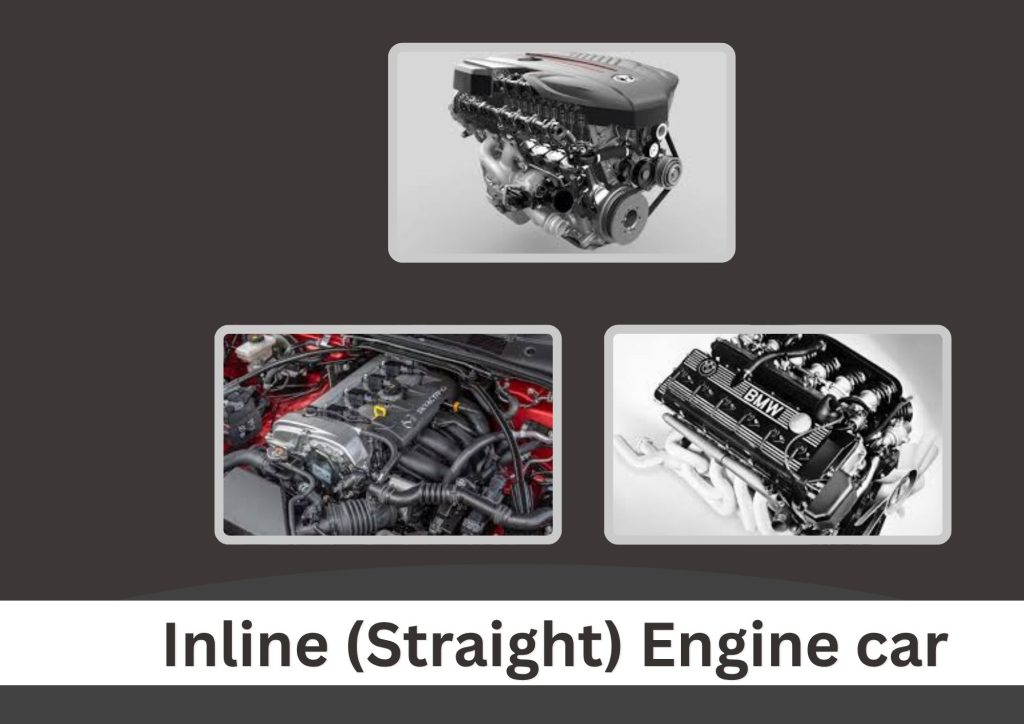
The inline engine arranges all its cylinders in a single straight row along the crankshaft. It is the most common engine layout in the world and serves as the benchmark against which all other configurations are compared.
How It Works
Each cylinder fires in a timed sequence, sharing one cylinder head and one camshaft (or two in DOHC versions). The firing order is carefully engineered to balance vibration and maximize smooth power delivery. Because all cylinders share the same bank, manufacturing is simplified and maintenance is easier.
Common Variants
- Inline-3 (I3): Found in small city cars and mild-hybrid vehicles. The three-cylinder layout is compact and lightweight but can produce mild vibration. Examples include the Ford EcoBoost 1.0L and BMW’s B38 engine.
- Inline-4 (I4): The world’s most popular engine layout. Used in everything from economy hatchbacks to sports cars. Delivers a solid balance of power, efficiency, and cost.
- Inline-6 (I6): Known for its natural balance and silky smoothness. BMW’s legendary straight-six engines are a benchmark of refinement.
Pros and Cons
Pros: Simple construction, easy to service, cost-effective, compact cross-section. Cons: Long physical length can limit packaging in some vehicles; inline-6 adds length.
Where You’ll Find It
Toyota Corolla, Honda Civic, BMW 3 Series, Hyundai i10.
2. V Engine
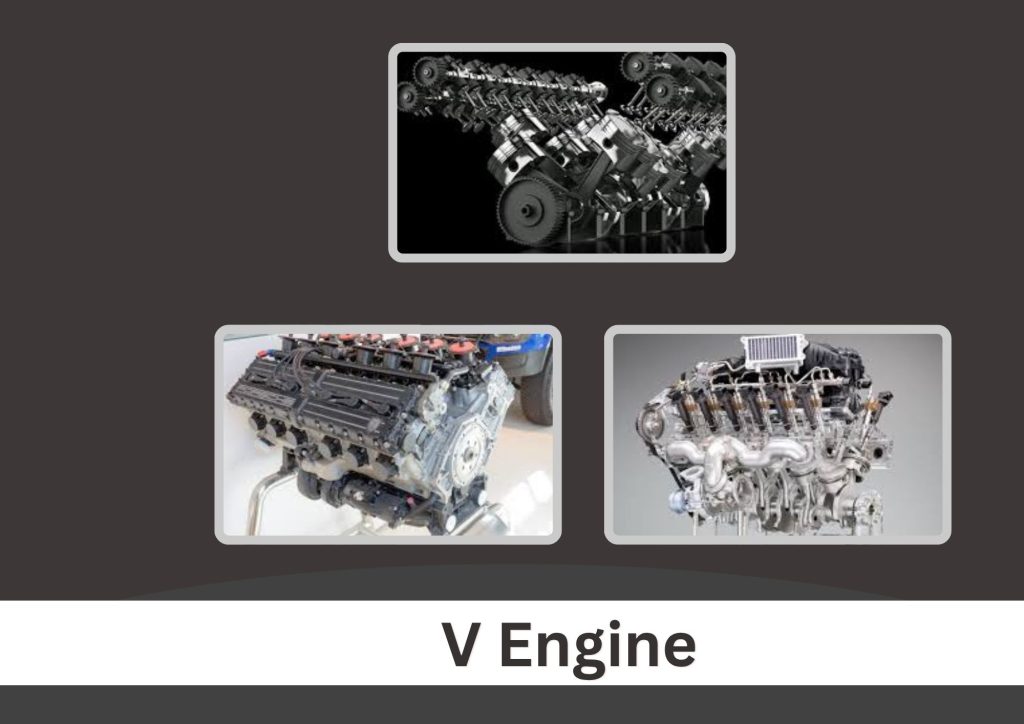
The V engine arranges its cylinders in two banks set at an angle to each other, forming a “V” shape when viewed from the front. This configuration allows more cylinders to fit in a shorter engine bay compared to an inline layout.
How It Works
The two banks of cylinders share a common crankshaft. The angle between the banks (commonly 60°, 90°, or 45°) affects balance, vibration characteristics, and the engine’s overall width. A wider angle generally means better balance but a physically wider engine.
Common Variants
- V6: A popular choice for mid-size cars and SUVs. Balances performance and fuel economy well.
- V8: The iconic American muscle car engine. Delivers powerful, smooth torque and a distinctive exhaust sound.
- V10: Used in high-performance and supercar applications.
- V12: The pinnacle of automotive luxury and smoothness. Found in Ferrari, Lamborghini, and Rolls-Royce vehicles.
Pros and Cons
Pros: Shorter length than inline equivalent, high power potential, broad RPM range. Cons: More complex than inline, wider footprint, higher manufacturing cost.
Where You’ll Find It
Ford Mustang GT (V8), Audi Q7 (V6), Lamborghini Huracán (V10), Ferrari 812 (V12).
3. Flat (Boxer) Engine
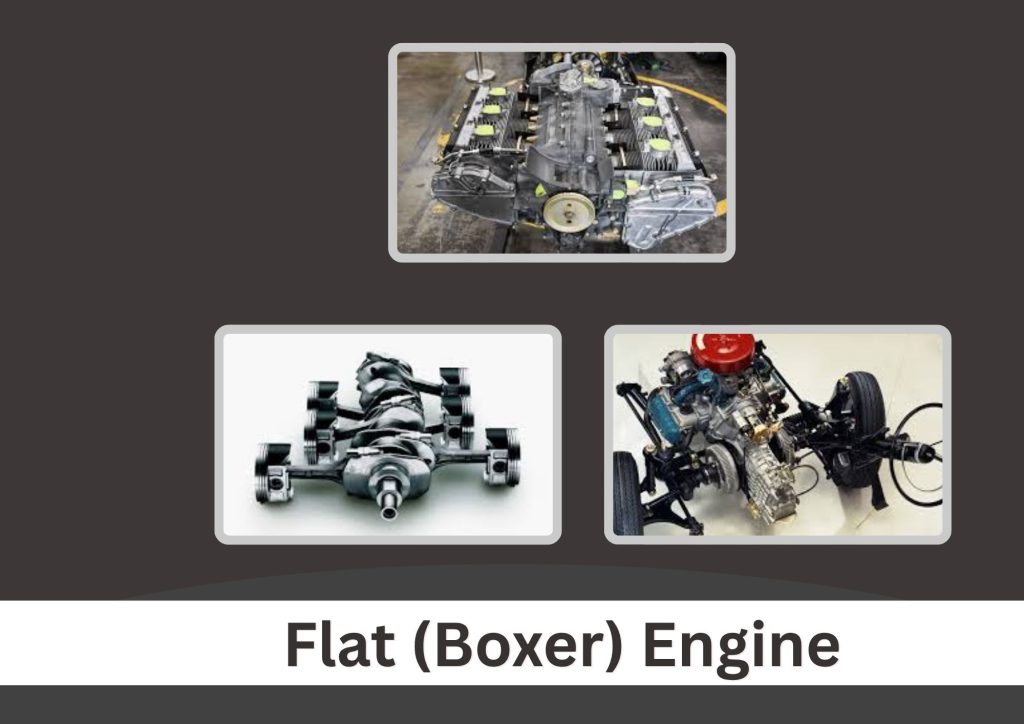
Also called a horizontally-opposed engine, the flat or boxer engine positions its cylinder banks 180° apart, lying flat on either side of the crankshaft. The pistons move horizontally inward and outward, resembling a boxer’s punching motion hence the name.
How It Works
Because the pistons oppose each other, their movements cancel out much of the vibration inherently present in other layouts. This results in one of the smoothest-running engine designs available. The engine also sits very low in the chassis, improving the vehicle’s centre of gravity.
Common Variants
- Flat-4 (Boxer 4): Used by Subaru in nearly all of its vehicles. Also found in older Volkswagen Beetles and Porsches.
- Flat-6 (Boxer 6): The signature engine of Porsche’s iconic 911 series. Renowned for its high-revving character and distinctive sound.
Pros and Cons
Pros: Low centre of gravity enhances handling, excellent natural balance, compact height. Cons: Wide footprint, complex oil system, higher maintenance cost, oil consumption in some designs.
Where You’ll Find It
Subaru Impreza, Subaru Forester, Porsche 911, older VW Beetles.
4. W Engine
The W engine is an unusual configuration that arranges cylinders in three or four banks, creating a “W” shape. It is essentially two narrow-angle V engines joined at the crankshaft. Volkswagen Group developed this design to pack an enormous number of cylinders into a very compact space.
How It Works
By compressing multiple cylinder banks into a single tight configuration, the W engine achieves a very short overall length while still delivering huge power outputs. Cylinders in each bank are staggered slightly to share journal pins on the crankshaft.
Common Variants
- W8: Used in the Volkswagen Passat W8, offering the power of a V8 in a smaller package.
- W12: Found in the Bentley Continental GT and Volkswagen Phaeton. Smooth and enormously powerful.
- W16: The legendary engine in the Bugatti Veyron and Chiron 16 cylinders, 4 turbochargers, up to 1,500 horsepower.
Pros and Cons
Pros: Incredible power density, shorter than equivalent V engine, exotic engineering. Cons: Extremely complex, very high maintenance cost, difficult to service.
Where You’ll Find It
Bugatti Chiron (W16), Bentley Continental GT (W12), Volkswagen Phaeton (W12).
5. Rotary (Wankel) Engine
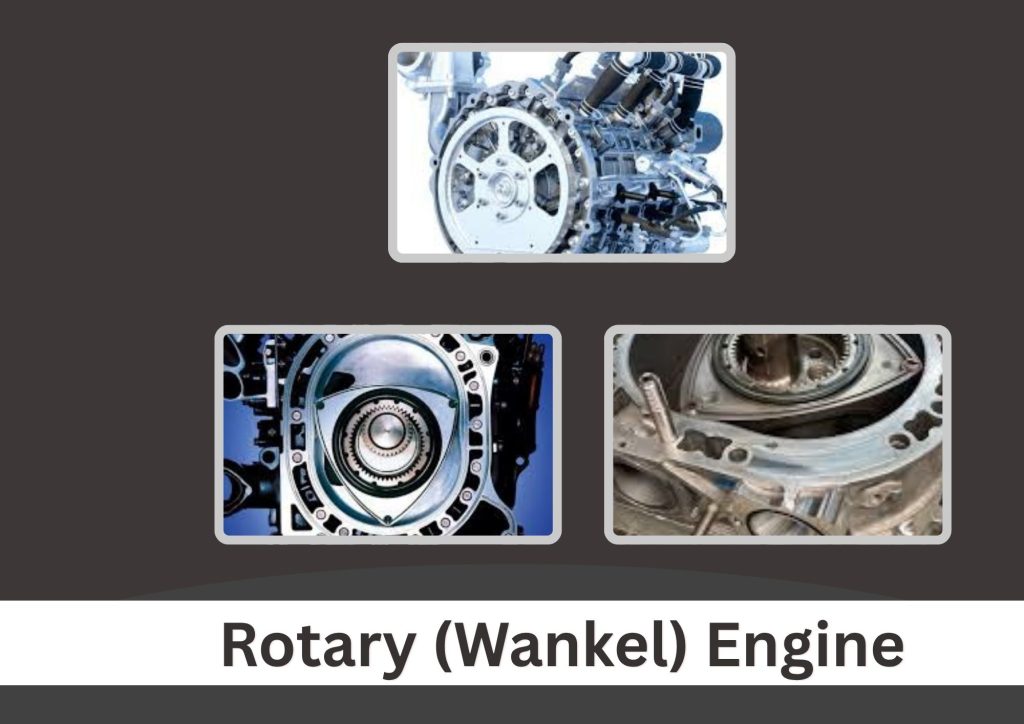
The rotary engine invented by Felix Wankel is a radical departure from piston-based designs. Instead of reciprocating pistons, it uses a triangular rotor spinning inside an oval-shaped housing to create the four stages of combustion in a continuous rotational motion.
How It Works
As the eccentric rotor spins, it creates three separate combustion chambers that expand and contract. Each face of the triangle undergoes intake, compression, combustion, and exhaust in sequence. The result is a continuous rotation with three power pulses per revolution of the rotor — compared to one per two revolutions in a four-stroke piston engine.
Pros and Cons
Pros: Extremely compact and lightweight, very high RPM capability, smooth power delivery, almost no vibration. Cons: Poor fuel efficiency, high emissions, apex seal wear, short engine lifespan without careful maintenance.
Where You’ll Find It
Mazda RX-7, Mazda RX-8. Mazda has also explored rotary engines as range extenders in electric vehicles (Mazda MX-30 R-EV).
6. Two-Stroke Petrol Engine
In a two-stroke engine, the entire combustion cycle intake, compression, combustion, and exhaust is completed in just two strokes of the piston (one full crankshaft rotation), compared to four strokes in conventional engines.
How It Works
The two-stroke cycle eliminates dedicated intake and exhaust strokes by using ports in the cylinder wall that open and close as the piston moves. This makes the engine simpler and lighter, but it also means fresh charge can mix with exhaust gases, reducing efficiency.
Pros and Cons
Pros: High power-to-weight ratio, mechanically simple, low manufacturing cost. Cons: Poor fuel efficiency, high emissions (exhaust and unburnt fuel exit together), not suitable for modern passenger cars.
Where You’ll Find It
Historically in small cars like the old DKW and early Trabant. Today found mainly in motorcycles, mopeds, chainsaws, and small engines.
7. Turbocharged Petrol Engine
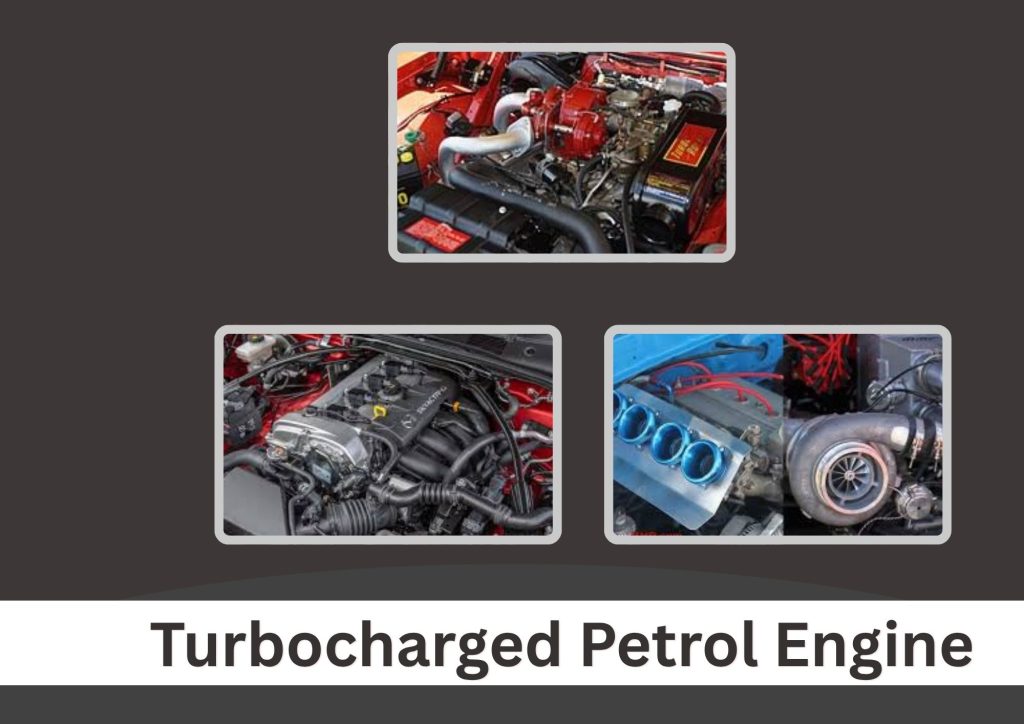
A turbocharged petrol engine uses a turbocharger driven by exhaust gases to force more air into the combustion chamber, allowing more fuel to be burned and generating significantly more power than a naturally aspirated engine of the same displacement.
Exhaust gases spin a turbine, which in turn spins a compressor wheel on the same shaft. The compressor forces pressurized air into the intake manifold. This “forced induction” dramatically increases the engine’s volumetric efficiency. Modern turbocharged engines also use an intercooler to cool the compressed air before it enters the cylinders, increasing its density further.
Pros and Cons
Pros: Much more power from a small engine, improved fuel economy at part throttle, reduced emissions. Cons: Turbo lag (delayed power response), higher complexity, heat management challenges.
Where You’ll Find It
Ford EcoBoost range, Volkswagen TSI/TFSI engines, BMW TwinPower Turbo, nearly all modern performance cars.
8. Supercharged Petrol Engine
Like the turbocharger, a supercharger forces additional air into the engine. The critical difference is that a supercharger is driven mechanically by the engine’s crankshaft via a belt or chain, not by exhaust gases.
How It Works
Because it is mechanically driven, the supercharger delivers boost pressure immediately — there is no lag. Power is available from virtually zero RPM, making supercharged engines feel especially muscular at low speeds and during overtaking manoeuvres.
Common Types
- Roots-type supercharger: Classic design, large and sits atop the engine (V8 muscle cars).
- Twin-screw supercharger: More efficient compression.
- Centrifugal supercharger: Compact, delivers boost at higher RPMs.
Pros and Cons
Pros: Instant boost, linear power delivery, no turbo lag. Cons: Parasitic power loss (engine drives the supercharger), less fuel-efficient than a turbo.
Where You’ll Find It
Jaguar F-Type, Land Rover Range Rover Sport SVR, older Mercedes-AMG models, Dodge Challenger Hellcat.
9. Twin-Turbocharged Petrol Engine
A twin-turbo (biturbo) setup uses two turbochargers rather than one. This can be achieved in various ways two turbos of the same size working in parallel, or a sequential arrangement where a small turbo handles low-RPM boost and a larger one takes over at high RPM.
How It Works
Parallel twin-turbo: Both turbos work simultaneously, each handling half the engine’s cylinders. Common on V6 and V8 engines, with one turbo per cylinder bank. Sequential twin-turbo: The small turbo spools quickly at low RPM, then the large turbo takes over for maximum top-end power. Used famously in Mazda’s twin-turbo RX-7 and BMW’s older M5.
Pros and Cons
Pros: Very high power output, reduced turbo lag vs. a single large turbo, broad powerband. Cons: Complex plumbing, expensive, more heat to manage.
Where You’ll Find It
BMW M3/M4 (S58 engine), Porsche 911 Turbo, Ferrari F8 Tributo, Ford GT.
10. Atkinson Cycle Engine
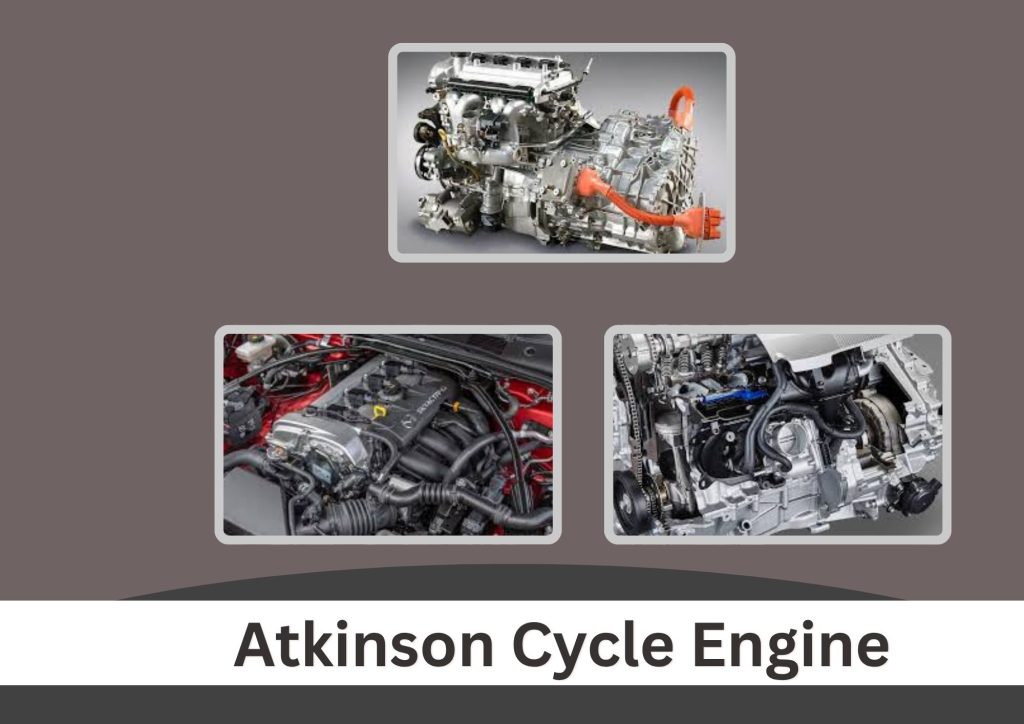
The Atkinson cycle engine is a modified petrol engine where the intake valve stays open longer into the compression stroke, effectively reducing the compression ratio while maintaining a longer expansion stroke. This makes it more thermally efficient than a conventional Otto cycle engine.
How It Works
By holding the intake valve open slightly into the compression stroke, some of the air-fuel mixture is pushed back out before compression begins. This “effective compression” is lower than the “effective expansion,” which is the hallmark of the Atkinson cycle. The result is more energy extracted from each combustion event.
Pros and Cons
Pros: Exceptional thermal efficiency, lower fuel consumption, ideal for hybrid applications. Cons: Lower peak power output compared to Otto cycle engine of same displacement, requires electric motor assistance to compensate for power deficit.
Where You’ll Find It
Toyota Prius, Toyota Camry Hybrid, Lexus ES 300h, Honda Insight almost all full hybrid vehicles use Atkinson cycle engines.
11. Miller Cycle Engine
The Miller cycle is a further evolution of the Atkinson cycle, developed by Ralph Miller. Like Atkinson, it uses a longer expansion stroke than compression stroke, but achieves this by closing the intake valve early (rather than late), trapping a smaller charge at a lower pressure.
How It Works
By closing the intake valve before the piston completes its downward intake stroke, the engine traps less mixture but compresses it from a lower effective starting point. A supercharger is often used alongside a Miller cycle engine to compensate for the reduced charge volume, restoring lost power while keeping efficiency high.
Pros and Cons
Pros: High efficiency, reduced pumping losses, lower NOx emissions. Cons: Requires supercharger to maintain adequate power, complex valve timing management.
Where You’ll Find It
Mazda Skyactiv-X engine, Volvo Drive-E engines, some Subaru engines with variable valve timing.
12. Variable Displacement Engine
A variable displacement engine can deactivate some of its cylinders under light load conditions such as highway cruising effectively turning a V8 into a V4, or a V6 into a V3. When full power is needed, all cylinders reactivate instantly.
How It Works
Special solenoid-controlled valve deactivation mechanisms close both the intake and exhaust valves of selected cylinders and cut their fuel supply. The deactivated cylinders still move up and down but do no work, reducing friction slightly, while the engine’s fuel consumption drops dramatically. Transition between modes happens in milliseconds.
Pros and Cons
Pros: Significant real-world fuel savings, no compromise in full-power performance. Cons: Can cause vibration in some implementations, complex engine management, higher initial cost.
Where You’ll Find It
General Motors’ AFM/DFM technology (Chevrolet Silverado, Corvette), Honda’s VCM system (Odyssey, Pilot), Chrysler’s MDS system (Dodge Ram 1500).
13. HCCI Engine (Homogeneous Charge Compression Ignition)
HCCI is an advanced combustion concept that blends the best of petrol and diesel engines. Like a diesel, it ignites the fuel-air mixture through compression rather than a spark plug, but uses a homogeneous (evenly mixed) petrol charge like a conventional petrol engine.
How It Works
The air-fuel mixture is carefully prepared so that it is extremely lean (much more air than fuel) and uniformly distributed. Under the right temperature and pressure conditions, the entire charge auto-ignites simultaneously across the combustion chamber. This “bulk” ignition is more complete and efficient than spark-initiated combustion, producing less NOx and CO₂.
Pros and Cons
Pros: Dramatically improved fuel efficiency, very low NOx emissions, excellent thermal efficiency. Cons: Very narrow operating range, difficult to control across temperature extremes, challenging to implement in production vehicles.
Where You’ll Find It
Mazda’s Skyactiv-X engine is the closest production implementation, calling its version SPCCI (Spark Controlled Compression Ignition). Still largely a research and development technology in most of the industry.
14. Naturally Aspirated (NA) Engine
A naturally aspirated engine relies entirely on atmospheric pressure to draw air into the cylinders during the intake stroke. There is no forced induction no turbocharger, no supercharger. The engine breathes freely on its own.
How It Works
The engine depends on precise engineering of its intake ports, cam profiles, and exhaust system to maximize the volume of air entering the cylinders. High-performance naturally aspirated engines achieve this through high compression ratios, large valves, optimized intake runners, and high-revving designs that generate power through RPM rather than boost pressure.
Pros and Cons
Pros: Highly linear throttle response, reliability, simpler design, distinctive high-revving character, no turbo lag. Cons: Lower power density than forced induction engines, must be physically large to make big power.
Where You’ll Find It
Honda S2000 (F20C, 240hp from 2.0L remarkable for an NA engine), Ferrari 458 Italia (4.5L V8), Porsche GT3 models, Toyota 86/GR86.
15. Mild Hybrid Petrol Engine (MHEV)
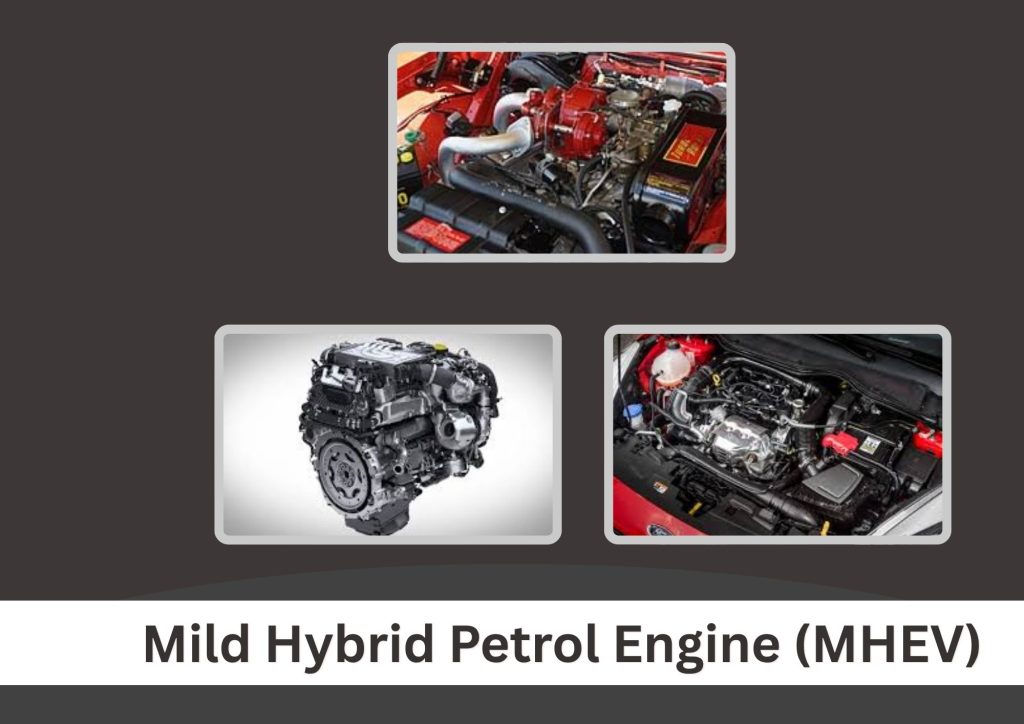
A mild hybrid petrol engine integrates a small electric motor-generator (typically 48V) with a conventional petrol engine. Unlike a full hybrid, the electric motor cannot power the car on its own it assists the petrol engine, reducing load and improving efficiency.
How It Works
The integrated starter-generator (ISG) captures energy during braking (regenerative braking) and stores it in a small lithium-ion battery pack. This energy is then deployed to assist the petrol engine during acceleration, reducing the amount of fuel required. The system also enables smoother, faster stop-start functionality and can eliminate the traditional alternator, recovering further efficiency.
Pros and Cons
Pros: Noticeable fuel savings (5–15%), smoother stop-start, lower CO₂ emissions, affordable upgrade over conventional engines. Cons: Cannot run on electricity alone, smaller benefit than full hybrid, adds cost and complexity.
Where You’ll Find It
Mercedes-Benz EQ Boost range, Suzuki SHVS system (Swift, Vitara), Audi mild-hybrid quattro models, Volvo T5 and T6 mild-hybrid variants, Ford EcoBlue MHEV.
15 Petrol Engine Types at a Glance
| Engine Type | Key Feature | Typical Use | Efficiency |
|---|---|---|---|
| Inline Engine | Simple, single-row cylinders | Economy to sports cars | Good |
| V Engine | Two-bank V layout | Mid-size to supercars | Good–High |
| Flat/Boxer Engine | Horizontal layout, low CG | Subaru, Porsche | Good |
| W Engine | Multi-bank, ultra-compact | Bugatti, Bentley | Moderate |
| Rotary (Wankel) | Spinning rotor, no pistons | Sports cars | Poor |
| Two-Stroke | Full cycle in 2 strokes | Old/small vehicles | Poor |
| Turbocharged | Exhaust-driven forced induction | Modern performance | Very Good |
| Supercharged | Belt-driven forced induction | Muscle, luxury | Moderate |
| Twin-Turbocharged | Two turbos, massive power | Supercars, sports | Good |
| Atkinson Cycle | Long expansion stroke | Hybrids | Excellent |
| Miller Cycle | Early valve closure | Eco/hybrid engines | Excellent |
| Variable Displacement | Cylinder deactivation | SUVs, trucks | Good |
| HCCI | Compression ignition for petrol | Experimental | Excellent |
| Naturally Aspirated | No forced induction | Sports purity | Moderate |
| Mild Hybrid MHEV | 48V electric assist | Modern mainstream | Very Good |
How to Choose the Right Petrol Engine for Your Needs
Understanding these engine types empowers you to make smarter choices:
For daily city driving: An inline-3 or inline-4 turbocharged engine offers the best blend of fuel economy, cost, and adequate performance. Modern small turbos (like the Ford 1.0 EcoBoost or VW 1.5 TSI) punch well above their displacement.
For performance: Consider naturally aspirated engines if you value linear response and driving purity. Choose a turbocharged or twin-turbo V8/V6 if outright power is the priority.
For fuel savings: An Atkinson cycle engine in a hybrid powertrain (like the Toyota Prius system) delivers extraordinary real-world efficiency that turbocharged engines cannot match at low speeds.
For ultimate power: W16, V12, and V8 turbocharged engines are in a class of their own for sheer performance, found in the world’s most exotic cars.
For the future: Mild hybrid petrol engines are fast becoming the industry standard even in mainstream vehicles. Their improved efficiency and lower emissions make them the logical evolution of the conventional petrol engine as the industry transitions toward electrification.
The Future of Petrol Engines
Despite the rapid growth of electric vehicles, petrol engines are far from obsolete. Manufacturers are investing heavily in technologies like:
- E-fuels (synthetic fuels): Carbon-neutral synthetic petrol that could allow existing petrol engines to run with near-zero net emissions.
- Hydrogen combustion: Internal combustion engines running on hydrogen instead of petrol, producing only water vapor.
- 48V mild hybrid integration: Widespread adoption of mild-hybrid systems across all segments.
- Variable compression ratio engines: Nissan’s VC-Turbo engine dynamically changes its compression ratio to optimize efficiency and power across all conditions.
- Over-expanded cycles: Continued refinement of Atkinson and Miller cycles to push thermal efficiency beyond 50% in future hybrid applications.
The petrol engine has proved its adaptability over more than a century, and its evolution shows no sign of stopping.
Conclusion
From the simple elegance of a naturally aspirated inline-four to the extraordinary complexity of a W16 quad-turbocharged hypercar engine, the world of petrol engines is rich, diverse, and endlessly fascinating. Each of the 15 types of petrol engine discussed in this guide has been developed for a purpose — whether that purpose is maximum efficiency, outright power, compact packaging, or driving purity.
Understanding these differences does not just satisfy curiosity — it helps you select the right vehicle, maintain it properly, and appreciate the extraordinary engineering that goes into every drive. As the automotive world evolves, these petrol engine types will continue to adapt, hybridize, and innovate, ensuring the internal combustion engine remains relevant well into the future.

- 10 Best Jack For Ford Raptor Review (October 2026) - October 12, 2026
- 10 Best Jack For Ford Ranger Review (October 2026) - October 12, 2026
- 10 Best Jack For F350 Review (October 2026) - October 12, 2026