Can I Safely Use 245 Tires Instead of 225? Key Considerations

Choosing the right tire size can significantly impact your vehicle’s performance and safety. If you’re considering switching from 225 tires to 245 tires, you might wonder if it’s a suitable option for your car. Understanding the implications of this change is essential.
Yes, you can use 245 tires instead of 225, but consider wheel width, speedometer accuracy, and handling characteristics. Check your vehicle’s specifications and consult a professional for advice on potential effects on fuel efficiency and ride comfort.
Tire Sizing Basics
Tire sizing is a critical aspect of vehicle performance and safety. It involves understanding the numbers and letters printed on the tire’s sidewall, which indicate its dimensions and capabilities. The size of a tire affects everything from handling and stability to fuel efficiency and ride comfort.
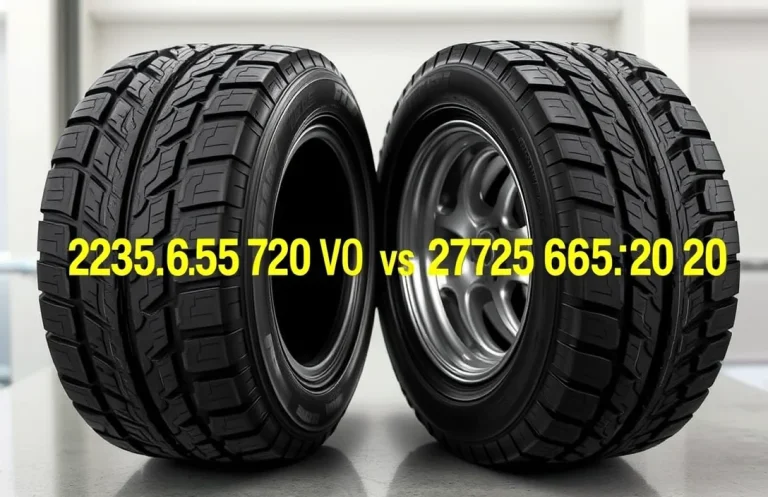
When considering whether to use 245 tires instead of 225, it’s essential to understand the implications of changing tire sizes. The first number refers to the tire’s width in millimeters, while the second number indicates the aspect ratio, which is the height of the sidewall as a percentage of the width. This change in width can have various effects on your vehicle’s performance, including how it handles corners, its grip on the road, and even its speedometer accuracy.
Ultimately, choosing the correct tire size is not just about aesthetics but also about ensuring that your vehicle operates safely and efficiently. Any modification in tire size should be considered carefully and preferably discussed with a tire professional or mechanic.
Understanding Tire Width
Tire width significantly impacts vehicle performance and compatibility with your car’s systems. Understanding how the width affects handling, ride comfort, and safety is crucial when considering switching from 225 to 245 tires.
- Handling and Grip: Wider tires, such as 245s, provide a larger contact patch with the road, improving grip during cornering and braking. This can enhance handling performance, especially in sporty driving conditions.
- Ride Comfort: A wider tire may offer a different ride quality. While it can improve stability, it may also transmit more road imperfections into the cabin, potentially affecting comfort.
- Fuel Efficiency: Wider tires can increase rolling resistance, which may lead to reduced fuel efficiency. Consider this trade-off if fuel economy is a priority.
- Clearance and Fitment: Ensure that the 245 tires fit within your vehicle’s wheel wells without rubbing against suspension components or bodywork. This aspect is critical for maintaining proper alignment and avoiding premature wear.
- Aesthetic Appeal: Wider tires can give your vehicle a more aggressive look, which some drivers prefer. However, aesthetic changes should not compromise safety or performance.
Impact on Vehicle Dynamics
Changing tire width from 225mm to 245mm can significantly affect vehicle dynamics, particularly in handling and stability. Wider tires offer increased contact with the road surface, which can enhance traction but also alter the vehicle’s performance characteristics.
- Handling: Wider tires can provide improved cornering stability due to a larger contact patch. This can result in better grip during sharp turns, allowing for more precise steering response.
- Ride Quality: A wider tire may lead to a stiffer ride, as the sidewall height often decreases with increased width. This can result in a harsher driving experience on uneven surfaces.
- Understeer/Oversteer Balance: The change in tire width can shift the handling balance of the vehicle. Wider front tires may reduce understeer, while wider rear tires can increase oversteer, affecting the vehicle’s predictability during aggressive driving.
- Stability: Wider tires can improve straight-line stability, especially at higher speeds. However, they may also increase the likelihood of hydroplaning in wet conditions, as the larger footprint can channel water differently.
- Fuel Efficiency: Wider tires typically have higher rolling resistance, which can lead to decreased fuel economy. This is an important consideration for daily drivers.
Legal and Safety Considerations
Changing tire sizes can have significant legal and safety implications. Understanding the regulations governing tire modifications is crucial, as failing to comply can result in penalties or void warranties. Additionally, safety concerns arise from altering tire dimensions that may affect vehicle handling and performance.
Most jurisdictions have specific laws regarding tire sizes that are permissible for vehicles. Check the guidelines provided by your local Department of Motor Vehicles (DMV) or equivalent authority to ensure that the tire size change complies with regulations. Installing tires that exceed the manufacturer’s recommended size can lead to issues during inspections or when seeking insurance coverage.
From a safety perspective, larger tires, such as 245s compared to 225s, may alter the vehicle’s braking distance, traction, and stability. Wider tires can increase grip but may also create more road noise and affect ride comfort. Ensure that the change does not interfere with the vehicle’s suspension, wheel wells, or steering components, as this can lead to premature wear or failure.
Performing adequate research and consulting with professionals can mitigate potential legal and safety risks associated with changing tire sizes. Always prioritize compliance and safety to maintain optimal vehicle performance and avoid accidents.
Installation and Compatibility Checks
Ensuring that 245 tires fit properly on your vehicle requires a thorough assessment. This involves checking several key factors to confirm that the larger tire size will work without compromising safety or performance.
Start by examining the vehicle’s wheel well clearance. Measure the distance between the current tires and the suspension components, as well as the body of the vehicle. There should be sufficient space to prevent rubbing during turns or when the suspension compresses.
Next, review the vehicle’s specifications. Consult the owner’s manual or the manufacturer’s website for tire size recommendations. Also, take note of the rim width; a 245 tire may require a wider rim than what is currently installed.
Check the load index and speed rating of the new tires to ensure they meet or exceed the requirements of your vehicle. This is crucial for maintaining safe handling and performance.
Finally, consider consulting a professional mechanic or tire specialist. They can provide insights into compatibility and safety, as well as assist with installation if needed.
Real-World Experience: 225 vs. 245
This section examines real-world case studies of vehicle owners who switched from 225 to 245 tires. These insights provide practical examples of the effects of changing tire sizes, including handling, comfort, and fuel efficiency.
Many drivers have reported varying experiences when switching to 245 tires. For instance, a Honda Accord owner noticed improved grip and a sportier feel when upgrading to 245s. Despite slightly reduced fuel efficiency, the enhanced cornering stability during aggressive driving was deemed worth the trade-off.
Conversely, a Toyota Camry owner experienced an unexpected increase in road noise and a rougher ride quality after making the switch. This driver highlighted the importance of considering personal driving habits and preferences when evaluating tire size changes.
Additionally, a local mechanic shared insights from multiple customers who switched tire sizes. Most found that while 245 tires offered superior traction, they also required adjustments to alignment and suspension settings to optimize performance. This underscores the necessity of professional consultation before making such changes.
These experiences suggest that while switching to 245 tires can enhance performance, drivers should carefully assess their specific vehicle dynamics and driving needs before deciding.
Comparative Performance Analysis
This section analyzes the performance differences between 225 and 245 tires, focusing on aspects such as handling, fuel efficiency, ride comfort, and tread wear. Understanding these differences can provide clarity on whether switching to 245 tires is a viable option for your vehicle.
Handling is one of the most noticeable differences. Wider 245 tires typically offer improved grip and cornering stability, especially in high-performance scenarios. However, this might come at the expense of steering responsiveness, as a wider tire can feel heavier during maneuvers. Fuel efficiency can also be affected; 245 tires generally create more rolling resistance, which may lead to slightly reduced fuel economy compared to 225 tires.
Ride comfort may vary as well. Wider tires can absorb road imperfections differently, potentially leading to a firmer ride. On the other hand, the increased surface area of 245 tires can provide better traction in wet conditions, enhancing safety. Lastly, tread wear is influenced by width; 245 tires may wear out quicker if not properly aligned or if the vehicle is not designed for such width, resulting in uneven wear patterns.
Ultimately, the decision to switch from 225 to 245 tires should consider these performance trade-offs, along with compatibility with your vehicle and driving preferences.
Quick Summary
- 245 tires are wider than 225 tires, providing increased traction and handling.
- Wider tires may lead to improved cornering stability and performance.
- Using 245 tires instead of 225 may affect fuel efficiency due to increased rolling resistance.
- Check your vehicle’s specifications and wheel well clearance before making a size change.
- Wider tires can alter the speedometer accuracy and affect the overall driving experience.
- Consider consulting with a tire professional to ensure compatibility and safety.
- Replacing with wider tires may require adjustments to suspension or alignment settings.
Frequently Asked Questions
Can I use 245 tires instead of 225 tires?
Yes, you can use 245 tires instead of 225 tires, but it’s important to ensure that your vehicle’s wheels can accommodate the wider tires. Additionally, you should check for adequate clearance in the wheel wells to avoid rubbing during turns or when going over bumps.
Will changing from 225 to 245 tires affect my vehicle’s performance?
Changing to wider tires may improve traction and handling due to a larger contact patch with the road. However, it may also impact fuel efficiency and speedometer accuracy, so it’s essential to consider these factors before making the switch.
What are the potential downsides of using 245 tires?
One downside of using 245 tires is the potential for decreased fuel efficiency, as wider tires can create more rolling resistance. Additionally, they may lead to a rougher ride if the tires are stiffer or if your vehicle’s suspension is not optimized for wider tires.
Do I need to adjust my wheel alignment when changing tire sizes?
It’s advisable to have your wheel alignment checked after changing tire sizes, especially if the new tires are significantly wider. Proper alignment ensures that your tires wear evenly and that your vehicle handles correctly.
How can I determine if 245 tires are suitable for my vehicle?
To determine if 245 tires are suitable, check your vehicle’s owner’s manual or the tire placard located on the driver’s side door jamb for recommended tire sizes. Additionally, consult a tire professional to assess compatibility based on your vehicle’s specifications and intended use.

- 10 Best Jack For F350 Review (October 2026) - October 12, 2026
- 10 Best Jack For F250 Review (October 2026) - October 12, 2026
- 10 Best Jack For F150 Review (October 2026) - October 12, 2026