Can You Drive With A P2096 Code?

P2096 is an OBD-II trouble code for a post-catalyst fuel-trim problem on Bank 1. You can often drive short distances with it, but treat it as a “get it checked soon” issue rather than a harmless warning light. If the engine runs smoothly and the check engine light stays steady, drive only as far as needed to reach a mechanic. If you have misfires, rough running, reduced power, stalling, or a flashing check engine light, stop driving and tow the vehicle.
P2096 means the car’s sensors are detecting an air-fuel mixture problem after the catalytic converter on Bank 1. You may be able to drive briefly if symptoms are mild, but extended driving can worsen drivability, fuel economy, and emissions-system wear. Severe symptoms raise the risk of catalytic-converter damage.
Key Takeaways
- You can drive briefly. If the engine runs normally, limited short-distance driving is usually reasonable while you arrange service.
- Do not push through symptoms. Rough idle, stalling, misfires, or reduced power mean you should stop driving.
- Clearing the code is temporary. If P2096 returns, the underlying mixture problem is still present.
- Several systems may be involved. Common causes include oxygen sensors, exhaust leaks, and air or fuel delivery problems.
- Road testing helps diagnosis. Mechanics often need to check sensor behavior under load instead of relying only on freeze-frame data.
- Towing is the safe choice in serious cases. Tow the car if the check engine light is flashing or the vehicle feels unsafe.
Can You Drive With a P2096 Code?
You can drive with a P2096 code only in limited situations. If the engine starts promptly, idles smoothly, and has normal power, short trips to a repair shop are usually reasonable while you schedule a diagnosis.
Stop driving if you notice worsening drivability, strong vibrations, repeated stalling, or a flashing check engine light. Those signs increase the likelihood of an active misfire or a more serious emissions or fuel-control problem. Continuing to drive can turn a manageable repair into catalytic-converter damage or a larger drivability issue.
What Does P2096 Mean on an OBD-II Scan?
P2096 means the engine computer has detected a post-catalyst fuel-trim problem on Bank 1. In practical terms, the computer sees an air-fuel balance that does not match its expected target after the catalytic converter and cannot correct it cleanly.
Modern engines use upstream and downstream oxygen sensors, along with fuel-trim data, to control emissions and mixture strength. P2096 can appear when the downstream sensor readings suggest that conditions near the catalytic converter do not match what the ECU expects, even when the engine seems to run mostly normally.
P2096 does not identify one failed part. It is a result code, so the repair depends on finding what caused the fuel-trim correction to drift. Possible causes include an inaccurate oxygen sensor, an exhaust leak near the exhaust manifold or flex sections, an intake air leak, or a fuel-delivery problem.
What Symptoms Might You Notice With P2096?
Many drivers notice nothing beyond the check engine light, particularly when the fault is intermittent. When symptoms appear, they usually involve mixture control and may show up as hesitation during acceleration or a less responsive throttle.
Common symptoms include:
- Rough or uneven idle
- Hesitation or jerking during acceleration
- Reduced fuel economy
- Exhaust odor
- Fuel smell or unusual smoke in more severe cases
Misfires, strong shaking, or reduced power that puts the car into limp mode suggest a more serious problem than a mild fuel-trim drift. Driving longer distances in that condition is risky because misfires can damage the catalytic converter and cause harder starts and progressively worse running.
How Urgent Is P2096 Compared With Other Codes?
P2096 is usually less urgent than a code indicating a complete loss of sensor signal, but it is not a code to ignore for months. The engine may still operate within a degraded but drivable range, especially when the check engine light is steady and the car feels normal.
Urgency increases when P2096 appears with other problems. Misfire codes, catalyst-efficiency codes, oxygen-sensor codes, or a flashing check engine light indicate that the emissions system or drivability may be deteriorating.
My practical rule is simple: if the car runs normally, schedule service soon – within days, not weeks. If it runs poorly, stop driving and tow it. That approach reduces the chance of replacing unnecessary parts or damaging the catalytic converter while you wait.
Can You Drive With P2096 If It Clears?
The car may run normally after you clear P2096, but clearing the code does not repair the underlying problem. The code can return when the ECU completes its test cycle and the sensors again report out-of-range fuel-trim behavior.
If P2096 stays away for a while, the cause may be intermittent. Possibilities include a sensor connector that fails only when hot, an exhaust leak that changes with engine temperature or vibration, or temporary fuel-system pressure instability.
A code that returns quickly means the ECU is still detecting the same condition. Record when it returned and under what conditions, then have a mechanic check live data, inspect for exhaust leaks, and monitor sensor behavior instead of repeatedly clearing the code.
When Should You Stop Driving and Tow?
Stop driving and tow the vehicle if P2096 appears with any of these symptoms:
- The check engine light is flashing
- The engine stalls repeatedly
- Hesitation, misfires, or rough running are severe or getting worse
- The car enters limp mode or remains in reduced-power mode
- You smell strong fuel, see heavy smoke, or hear a loud exhaust leak
A flashing check engine light often indicates active misfires. Misfires can overheat the catalytic converter, and once that damage begins, repair costs can rise quickly.
Tow the car if it feels unsafe, even without obvious bad sounds. Reduced braking stability, extreme vibration, or a sudden change in engine behavior all justify stopping. Arriving by tow truck is better than turning a minor diagnostic problem into a larger repair.
How Do Mechanics Diagnose P2096 After Road Testing?
Mechanics usually begin by confirming that the code is P2096 for Bank 1 and checking for related oxygen-sensor, fuel-trim, exhaust-leak, catalyst-efficiency, and misfire codes. They then inspect obvious problem areas such as loose connectors, damaged wiring, and split or disconnected intake hoses.
Live data and a road test often reveal more than a scan alone. A technician may monitor oxygen-sensor response, fuel trims, and the ECU’s corrections during steady cruising and under load, such as moderate acceleration. Fuel-trim swings or persistent downstream-sensor readings can help separate an upstream mixture problem from an exhaust leak or sensor fault.
Common diagnostic steps include:
- Checking for exhaust leaks with the engine running through visual inspection and targeted leak tests
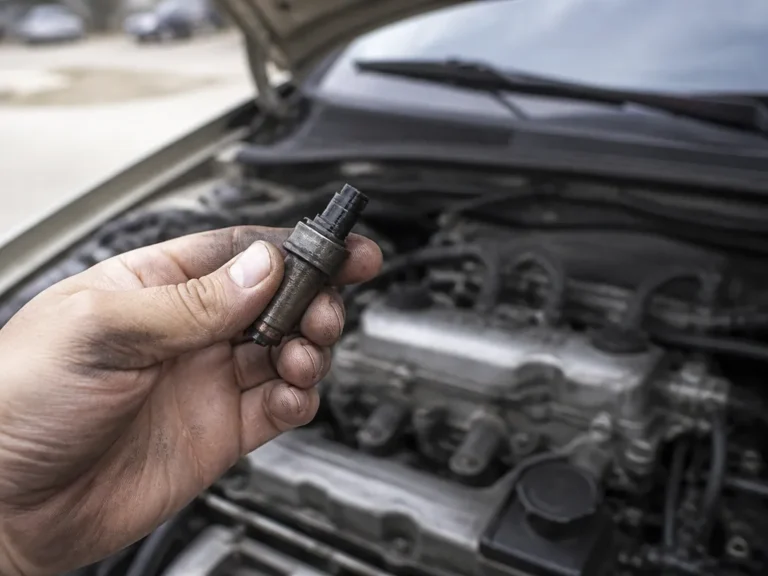
- Inspecting and testing the oxygen sensors, especially the downstream sensor
- Verifying fuel pressure and fuel delivery under load
- Looking for intake air leaks or vacuum leaks that can skew the mixture
- Inspecting intake and exhaust gaskets around common leak points
Road testing matters because some faults depend on heat or vibration. A sensor or exhaust leak may behave normally in the driveway but fail on the road, which allows a scan-only diagnosis to miss the actual cause.
FAQ
Can You Drive With a P2096 Code?
The decision depends on whether the engine runs normally and the check engine light is steady. Clearing the code may make it disappear briefly, but it often returns when the ECU completes its checks.
What Is the Cost to Fix P2096?
Repair cost varies because P2096 is a result code tied to fuel-trim behavior. The final cost depends on what the diagnosis finds, including a faulty oxygen sensor, an exhaust leak, damaged wiring or connectors, or a fuel-system problem. A proper diagnosis typically starts with an inspection and live-data checks before moving to tests that match the fault.
How Long Can You Wait to Repair P2096?
Arrange service soon rather than waiting weeks. A problem that returns immediately after clearing or causes poor drivability requires faster diagnosis.
What Common Mistake Causes People to Waste Time With P2096?
Clearing the code and assuming it was fixed is a common mistake, especially when P2096 returns quickly. Replacing parts based only on the code is another. A technician should check fuel trims, sensor-switching behavior, and possible exhaust leaks before condemning a component. Live data and targeted tests usually provide a faster path to the actual cause.
Is P2096 Related to the Catalytic Converter?
P2096 involves post-catalyst fuel-trim behavior, so it is related to what the ECU detects after the catalytic converter. That does not automatically mean the converter has failed. Upstream mixture problems, exhaust leaks, sensor faults, or conditions that prevent the system from meeting expected efficiency and emissions targets can all trigger the code.

- Top 10 Best Helmet For Xtreme 125r 2026 - October 5, 2026
- Top 10 Best Helmet For Xpulse 200 2026 - October 5, 2026
- Top 10 Best Helmet For Xsr 155 2026 - October 5, 2026