Car Shaking And Smells Like Burning Rubber?

Car shaking plus a burning-rubber smell can signal an overheating brake, slipping belt, fluid leak, or engine misfire. Treat it as a possible fire risk until you identify the source. If you see smoke, smell burning near a wheel, or the check engine light is flashing, stop driving and have the car towed.
The fastest way to narrow it down is to locate the smell. A wheel-area odor points toward dragging brakes or a stuck parking brake. A smell under the hood points toward belts, hoses, leaks, or a misfire overheating the exhaust.
The Fastest Way to Triage It
- Treat it as urgent. Stop immediately if you see smoke, lose power, or the smell intensifies.
- Check for brake drag. One wheel that feels much hotter than the others after a short drive suggests a stuck caliper or parking brake problem.
- Look for misfire clues. A misfire can cause rough running and overheat the catalytic converter.
- Inspect belts and hoses. A loose or slipping belt can smell like burning rubber and make the engine shake.
- Use feel and sound. Vibration at idle, steering pull, brake pulsing, and RPM changes can separate likely causes without tools.
- Verify the repair. Recheck idle quality and road behavior before returning to normal driving.
What It Means
Car shaking with a burning-rubber odor usually means something is overheating from friction, slipping, or mechanical failure. A slipping belt, a leaking hose that drips onto a hot surface, or dragging brakes can all produce the smell.
The shaking usually comes from one of three areas: the engine running rough because of a misfire or air/fuel problem, failing engine or drivetrain mounts, or the wheels and brakes. Friction heat from brakes or a belt usually has a clear location, while a misfire can make the exhaust and catalytic converter extremely hot.
Is It a Misfire, Loose Motor Mount, or Brake Problem?
A misfire usually causes a rough idle, a stumble under acceleration, and symptoms that change with RPM. You may feel rhythmic shaking, reduced power, hesitation, or a flashing check engine light.
Loose motor mounts create a more mechanical vibration. The shaking is often worse at idle or when shifting into drive or reverse. The entire car may wobble rather than feel as if one cylinder is cutting out. You may also see excessive engine movement with the hood open, but only observe this if you can do so safely.
Dragging brakes usually create a burning smell that is strongest at one wheel. They may also cause shaking during braking or while driving straight if one wheel has uneven resistance. Uneven brake dust, a hot caliper area, or a car that pulls to one side adds weight to the brake diagnosis.
Use this shortcut:
- Roughness that follows RPM changes points toward a misfire.
- Shaking that worsens at idle or during shifting points toward motor mounts.
- A burning smell localized to one wheel, especially with unusual heat, points toward brake drag.
How to Check for Engine Misfire Causes Without Tools
Misfires often follow a pattern. Note whether the shaking occurs only at idle, during acceleration, in a particular gear, or while the engine is cold.
If the car shakes badly at idle but smooths out as RPM rises, look first at fuel, air, and ignition problems that affect low-speed combustion. If the shaking gets worse under load, consider an intake leak, fuel-delivery problem, or spark issue that appears when the cylinders need more power.
Listen for intermittent skipping or uneven power. Also notice whether the exhaust smells different or seems unusually hot. Repeated misfires can overheat the catalytic converter, adding a burnt odor even when the original problem is an ignition or fuel issue.
Run these no-tools checks in order:
- Check for obvious vacuum or intake leaks. Look for cracked hoses or disconnected lines around the intake.
- Think about what changed. A recent fuel-cap replacement, recent repair, rough fill-up, or drive through water may line up with the problem.
- Check engine-temperature behavior. If the engine began overheating first, poor combustion can follow.
- Watch for condition-specific clues. If the shaking reliably starts when you turn on the AC, for example, the problem may involve a particular accessory or load rather than general engine wear.
If the check engine light flashes at any point, stop driving. A flashing light often indicates an active misfire under load, which can damage the catalytic converter quickly.
What Usually Causes the Burning-Rubber Smell
The smell usually comes from a part overheating through friction or contacting a hot surface. Common causes include a slipping serpentine belt, brake components overheating from drag, or coolant, power steering fluid, brake fluid, or oil leaking onto the exhaust or engine.
A slipping belt often produces squealing or chirping. The odor may get stronger when you switch on accessories such as the AC or headlights. Uneven belt load can also create vibration. If the shaking worsens as the engine works harder, belt slip becomes more likely.
Brake drag produces a more localized smell. You may notice it after driving, after parking, or during slow-speed turns. A stuck caliper, seized slide pin, worn pads with uneven wear, or a parking brake problem can make one wheel much hotter than the others.
Fluid leaks add their own clues. Coolant may smell sweet, while oil or brake fluid tends to smell sharper or more acrid. Wet spots, dripping, or crusty residue around hoses, under the hood, or near a wheel point toward a leak inspection rather than ignition troubleshooting.
When to Stop Driving and Get It Towed
Stop driving and call for a tow if you see smoke or flames, or if the burning smell becomes stronger within minutes. A flashing check engine light is also a stop-now warning because an active misfire can overheat the catalytic converter quickly.
Stop if the car pulls hard to one side while braking, the brake pedal feels unusually soft, or the stopping distance suddenly doubles. Fluid loss or a mechanical seizure can turn a brake problem into brake failure.
Have the car towed if you notice any of these conditions:
- Burning smell near the wheels plus one wheel that is much hotter than the others. Do not touch the brake or wheel metal.
- Vibration severe enough to make the steering feel unstable.
- Noticeable power loss, a misfire with heavy vibration, or repeated stalling.
If the car is safe to move out of traffic, do so and then shut it off. A stationary inspection is safer and more useful than continuing to drive while the problem creates more heat.
Step-by-Step Checks for Hoses, Belts, Brakes, and Tires
Start with components that can create fire risk or wheel-level heat, then check the parts that commonly cause vibration.
With the engine off, inspect the belts around the pulleys. Look for fraying, glazing, cracking, or poor alignment. Even with a belt cover installed, you may be able to inspect part of the belt through an opening. A belt that is off-track or badly worn is a strong suspect when you have both a burning-rubber smell and vibration.
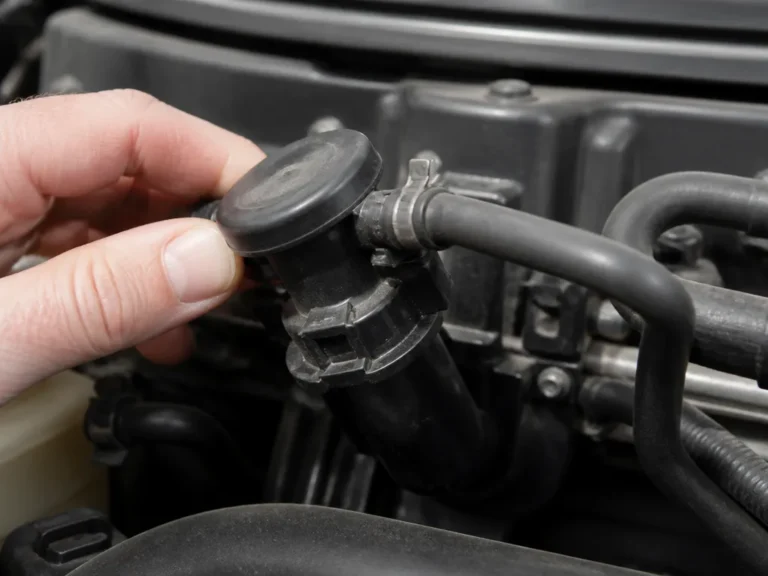
Next, inspect hoses and look for leaks. Check coolant hoses, clamps, connections, wet residue, and crusty buildup. Fluid near the belt can make it slip, smoke, or deteriorate, so repair that leak before replacing unrelated parts.
Then inspect the brakes. Look at all four wheels for uneven brake dust, signs of a pad dragging, or other differences from one corner to another. After driving, compare wheel temperatures carefully without touching the brake rotor, caliper, or other metal parts. A single unusually hot wheel supports a brake-drag diagnosis.
Finally, inspect the tires and wheels. Uneven tread wear, a bulge, low tire pressure, or other tire damage can cause shaking. Wheel imbalance or damage can also create vibration even when the burning smell comes from a belt or brake.
Use this checklist to connect the clues:
- Hot wheel plus burning smell = dragging brake or caliper problem.
- Belt wear or fluid near the belt path plus burning smell = belt slip.
- Rough idle that changes with RPM and no wheel heat = misfire is more likely.
| Steering shake plus tire damage or uneven wear = tire or wheel problem. | Suspected source | What you will notice first | Most common burning-rubber connection |
|---|---|---|---|
| Brakes, dragging | One hot wheel, smell near one corner, worse after stopping | Friction overheats pads and rotors | |
| Serpentine belt slip | Squeal or chirp, smell under the hood, vibration that increases with accessories | Belt friction overheats the rubber | |
| Misfire | Rough idle, stumble under load, symptoms that vary with RPM | Misfire overheats the exhaust or catalytic converter | |
| Motor mounts | Vibration at idle or during shifting, noticeable engine movement | Usually not a direct source of burning smell, but it can occur with another fault | |
| Tires and wheels | Steering-wheel shake, vibration at speed, uneven tire wear | An indirect connection that can coexist with belt or brake heat |
How to Verify the Repair
Verify the repair in two stages: inspect everything with the engine off, then take a controlled test drive. A symptom can disappear temporarily while the underlying problem remains.
First, confirm that hoses are reconnected and clamped and that the belt routing is correct. If you replaced a belt or hose, make sure the area around the belt is clean and dry. After brake work, confirm that the pad clips and calipers are seated correctly, the wheel nuts are torqued according to your manual, and the parking brake works normally.
Let the engine idle in Park for 2 to 3 minutes. Watch for shaking, then note whether the vibration changes when you turn on the AC, headlights, or other electrical loads. That pattern can point toward a belt-driven accessory or a remaining misfire.
Take a gentle road test at low speeds, then stop lightly at least once. Pay attention to brake pulsing, steering pull, and any return of the burning smell. For the first few minutes, check whether the odor is coming from a wheel or the engine bay.
After the test, compare wheel temperatures carefully without touching hot brake metal. If one wheel is hot again, the brake-drag problem remains. If the smell returns under the hood when the engine is under load, belt slip or a leak onto a hot part remains likely.
If the car runs smoothly and the smell does not return, recheck it after a day of driving. Some brake and leak problems appear only after repeated heat cycles.
FAQ
What should I do first if my car is shaking and smells like burning rubber?
Reduce the risk immediately. If the smell is strong or you see smoke, move to a safe location if possible, turn the car off, and stay out of traffic. Check whether the check engine light is flashing. If it is flashing, or if the smell is intense and localized near a wheel, have the car towed.
Can a misfire alone cause a burning-rubber smell?
Yes, indirectly. A misfire can overheat the exhaust system, especially the catalytic converter, and create a burnt odor. If the smell is strongest under the hood or around one wheel, a belt, fluid leak, or brake problem is more likely than an ignition misfire alone.
Is it safe to drive if the brake smell is strong?
No. A strong brake smell or suspected dragging brake means the pads and rotors may be overheating. Continued driving can damage the brake components and may lead to loss of braking ability. Have the car towed if one wheel is much hotter than the others or vibration increases during braking.
How long does it take to diagnose this without tools?
You can often narrow down the likely source in 15 to 30 minutes by noting when the shaking occurs, locating the strongest part of the smell, and checking for unusual wheel heat after a short, safe drive. If the problem worsens immediately, stop testing and arrange a tow.
What is the most common mistake people make with this symptom?
They keep driving to see whether the smell goes away. A slipping belt or dragging brake usually creates more heat and damage the longer it runs. Another common mistake is replacing ignition parts while overlooking obvious brake heat, tire damage, or belt wear.
A shaking car that smells like burning rubber may have a straightforward repair, but driving through the symptom can turn it into a safety problem. First identify whether the smell is strongest near a wheel or under the hood. Then inspect the wheels, belt, hoses, and tires before deciding whether the car needs an at-home repair or a tow.

- 10 Best Jack For Ford Transit Review (October 2026) - October 12, 2026
- 10 Best Jack For Ford Raptor Review (October 2026) - October 12, 2026
- 10 Best Jack For Ford Ranger Review (October 2026) - October 12, 2026