10 Types of Car Tire Valves: PSI Ratings, Rim Sizes

Most drivers never think about tire valves until a tire goes flat. But choosing the wrong valve type can cause slow air leaks, sensor failures, wheel corrosion, and even blowouts at high speed. This guide covers all 10 types of car tire valves, with real PSI data, rim hole sizes, pros and cons, and a full comparison table so you can make the right choice for your vehicle.
What Is a Tire Valve ?
A tire valve is a one-way sealing device fitted to your wheel rim that controls the flow of air into and out of the tire. It has three main components: the valve body (rubber or metal housing), the valve core (the internal spring-loaded seal), and the valve cap (protective cover). Together, these parts maintain correct tire pressure, which directly affects fuel efficiency, handling, tire lifespan, and road safety.
There are three material families rubber, metal, and TPMS-integrated and within those, at least 10 distinct valve types engineered for different pressure ratings, rim sizes, vehicle speeds, and smart sensor requirements.
10 Types of Car Tire Valves Explained
1. Tubeless Rubber Snap-In Tire Valve
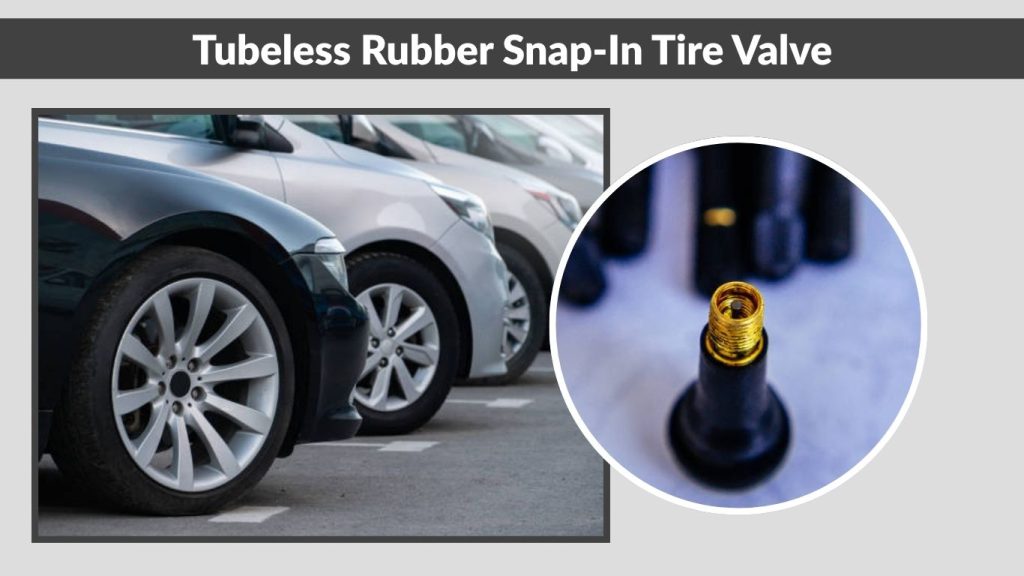
The most common valve in the world. This rubber snap-in valve is used on the majority of passenger cars, light trucks, and light-duty trailers. It mounts by snapping through a hole in the rim no tools or nuts required. Its rubber body flexes with the wheel, absorbing road vibration and reducing stress at the mounting point.
- Maximum cold inflation pressure: 65 psi
- Rim hole sizes: 0.453″ or 0.625″
- Stem length range: 0.7″ to 2.5″
- Best for: passenger cars, light trucks, autocross competitions
2. High-Pressure Rubber Snap-In Tire Valve
Built for applications where standard rubber snap-in valves cannot handle the load. These valves share the same snap-in installation method but feature a thicker rubber base and a reinforced metal barrel to withstand higher pressure. They are the standard choice for medium-duty and heavy-duty trucks, buses, and trailers carrying significant weight.
- Maximum cold inflation pressure: 80–100 psi
- Rim hole sizes: 0.453″ (80 psi) / 0.625″ (100 psi)
- Stem length range: 1.25″ to 2″
- Best for: medium/heavy trucks, trailers, steel wheels
3. High-Pressure Metal Clamp-In Tire Valve
The go-to valve for racing, performance, and any vehicle exceeding 130 mph. Instead of snapping in, this valve is secured by a rubber grommet and a retaining nut that clamps against the inside of the rim. Available in straight and bent styles to accommodate unique wheel designs, and the nut can be positioned inside or outside the rim based on preference.
- Maximum cold inflation pressure: 200 psi
- Rim hole sizes: 0.236″, 0.315″, 0.453″, 0.625″
- Best for: racing vehicles, high-speed cars (130+ mph), performance applications
- Note: Nut placement — inside (hidden, aesthetic) or outside (easier tightening)
4. Schrader Valve
The Schrader valve is the global standard for automotive tires. It operates via a spring-loaded pin inside the valve body pressing down the pin allows air in or out. It is compatible with virtually all air compressors and tire pressure gauges available worldwide, making it the most practical and accessible valve type for everyday drivers.
Key facts about the Schrader valve:
- Spring-loaded internal pin requires a pin depressor tool or compressor chuck to activate
- Found on cars, motorcycles, trucks, SUVs, and most pneumatic equipment globally
- Named after August Schrader, who invented it in 1844 still the dominant standard today
- Compatible with all standard air pumps, gauges, and inflation equipment
- Available in both rubber snap-in and metal clamp-in versions
- Maximum operating pressure: approximately 100 psi in standard rubber form
5. Presta Valve
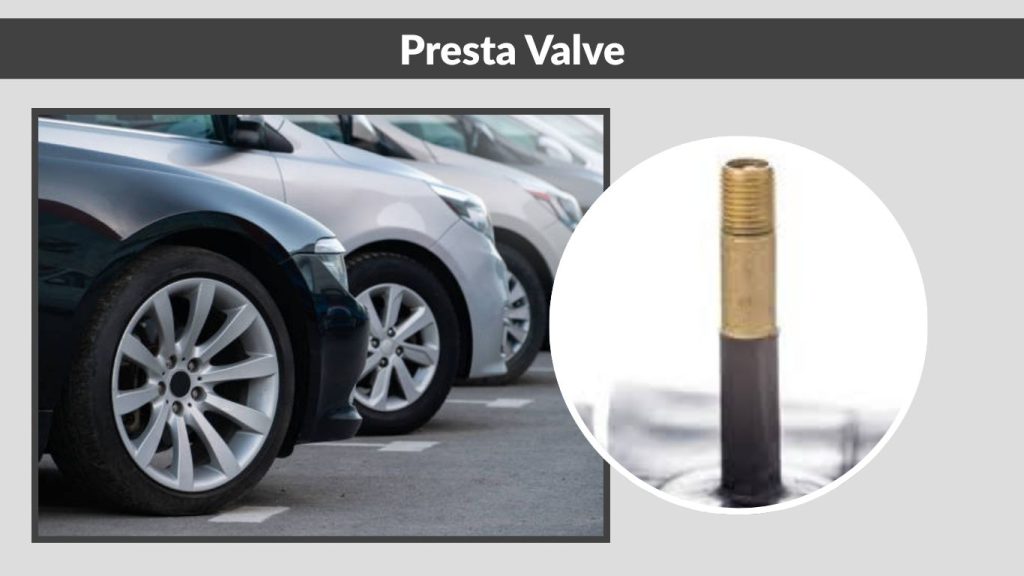
Narrower and lighter than the Schrader, the Presta valve is the standard on road bicycles and is also found on some high-performance automotive applications. It has no spring mechanism the valve core is tightened and loosened manually by a brass nut at the top. This design allows higher pressures and more precise inflation control, making it the preferred choice for performance-critical tire setups.
- Rim hole size: 0.236″ (narrower than Schrader)
- Handles pressures exceeding 200 psi
- Requires a Presta-compatible pump or adapter
- Best for: road bicycles, high-performance and track-day tires
6. Bovair / Dunlop Valve
The Bovair valve (also called the Dunlop or Woods valve in some markets) is engineered for heavy-duty industrial and agricultural applications. It is built to withstand the extreme pressures and load conditions found in large trucks, forklifts, agricultural tractors, and industrial machinery. Less common on passenger vehicles but essential in industrial fleet management.
- Handles high load pressures beyond standard rubber valve capabilities
- Common in: agricultural tractors, forklifts, trailers, industrial vehicles
- Robust construction for extreme operating environments
- Less widely available than Schrader or Presta at standard tire shops
7. TPMS Clamp-In Valve Stem
This is the metal clamp-in valve with a Tire Pressure Monitoring System sensor integrated near the valve core, inside the tire. The sensor transmits real-time pressure and temperature data wirelessly to your vehicle’s dashboard. A critical maintenance rule: always use a nickel-plated valve core — never brass — in any TPMS valve with an aluminum barrel, as brass causes galvanic corrosion that can silently damage your alloy wheels over time.
- Maximum pressure: 200 psi
- Sensor placement: internally integrated near valve core
- Transmits: tire pressure + temperature in real time
- Required core type: nickel-plated only (not brass)
- Best for: OEM TPMS vehicles, performance and luxury cars
8. TPMS Rubber Snap-In Valve Stem
Functionally identical to the TPMS clamp-in version, but uses a rubber snap-in body instead of metal. Common on factory-fitted TPMS systems in sedans and SUVs. The sensor compatibility is critical not all TPMS sensors fit all rubber snap-in valve bodies. Using a mismatched combination will result in pressure readings errors or complete loss of TPMS function.
- Maximum pressure: approximately 65 psi
- Must be compatible with your vehicle’s specific TPMS sensor model
- Best for: OEM TPMS sedans, SUVs, and family vehicles
- Requires professional installation and sensor calibration
9. Nitrogen Valve (Green Cap Valve)
Nitrogen valves are not structurally different from standard valves — the key identifier is the green valve cap, which serves as the universal indicator that the tire is filled with nitrogen rather than compressed air. Nitrogen molecules are larger than oxygen molecules and escape through rubber more slowly, resulting in more stable pressure over time. The green cap alerts technicians not to top up with regular air, which would dilute the nitrogen fill.
- Identified by: green valve cap — universally standardized
- Benefits: slower pressure loss, more stable inflation, reduced oxidation inside tire
- Common in: performance cars, aircraft, racing, some fleet vehicles
- Maintenance note: top up only with nitrogen to preserve purity
10. Valve Stem with Extension
Not a standalone valve type, but an accessory that works with any of the above. Valve extensions available in nylon or metal, ranging from 0.5″ to 2″ are fitted when wheel covers, deep dish rims, or other hardware makes access to the valve difficult. Metal extensions are strongly preferred over nylon, as road vibration and weather conditions can damage cheaper nylon units, leading to air loss.
- Available lengths: 0.5″ to 2″
- Materials: nylon (budget) or metal (recommended)
- Best for: vehicles with wheel covers, deep-dish or custom rims
- Warning: always choose metal nylon extensions are prone to vibration damage
Full Comparison Table: All 10 Tire Valve Types
Use this table to quickly match the correct valve to your vehicle, rim, and pressure requirements.
| # | Valve Type | Max PSI | Rim Hole Size | Best Application | Cost Level |
|---|---|---|---|---|---|
| 1 | Tubeless Rubber Snap-In | 65 psi | 0.453″ / 0.625″ | Passenger cars, light trucks | Low |
| 2 | High-Pressure Rubber Snap-In | 80–100 psi | 0.453″ / 0.625″ | Medium/heavy trucks, trailers | Low |
| 3 | Metal Clamp-In (Standard) | 200 psi | 0.236″–0.625″ | Racing, 130+ mph vehicles | Medium |
| 4 | Schrader Valve | ~100 psi | Standard | Cars, motorcycles, trucks globally | Low |
| 5 | Presta Valve | 200+ psi | 0.236″ | Bicycles, high-performance tires | Low |
| 6 | Bovair / Dunlop Valve | High | Varies | Agricultural, industrial, forklifts | Low |
| 7 | TPMS Clamp-In | 200 psi | 0.453″ / 0.625″ | OEM TPMS, performance/luxury cars | High |
| 8 | TPMS Rubber Snap-In | ~65 psi | 0.453″ / 0.625″ | OEM TPMS, sedans, SUVs | High |
| 9 | Nitrogen Valve (Green Cap) | Varies | Standard | Nitrogen-filled tire systems | Low |
| 10 | Valve Stem with Extension | Varies | Fits most stems | Wheel covers, deep-dish rims | Low |
How to Choose the Right Tire Valve: 8 Key Factors
Getting the valve selection wrong is one of the most overlooked causes of slow leaks, TPMS errors, and premature tire failure. Before purchasing, confirm these eight factors:
- Rim hole diameter — most rims use 0.453″ or 0.625″; racing rims may need 0.236″ or 0.315″
- Maximum tire pressure — standard rubber caps at 65 psi; high-pressure rubber reaches 100 psi; metal clamp-in handles 200 psi
- Vehicle speed rating — any vehicle exceeding 130 mph requires a metal clamp-in valve, no exceptions
- TPMS compatibility — the valve must match your car’s specific sensor protocol, frequency, and brand
- Valve core material — use nickel-plated cores with all aluminum TPMS barrels to prevent galvanic corrosion
- Stem length — low-profile rims (up to 0.9″) need a 1.5″ stem; 1.3–1.7″ rims need 2.3″; anything deeper needs at least 3.1″
- Operating environment — heat, chemicals, UV, and off-road conditions favor metal over rubber
- Replacement schedule — replace rubber valves every 3–5 years or with every new tire set; inspect metal valves annually
Tire Valve Maintenance Tips
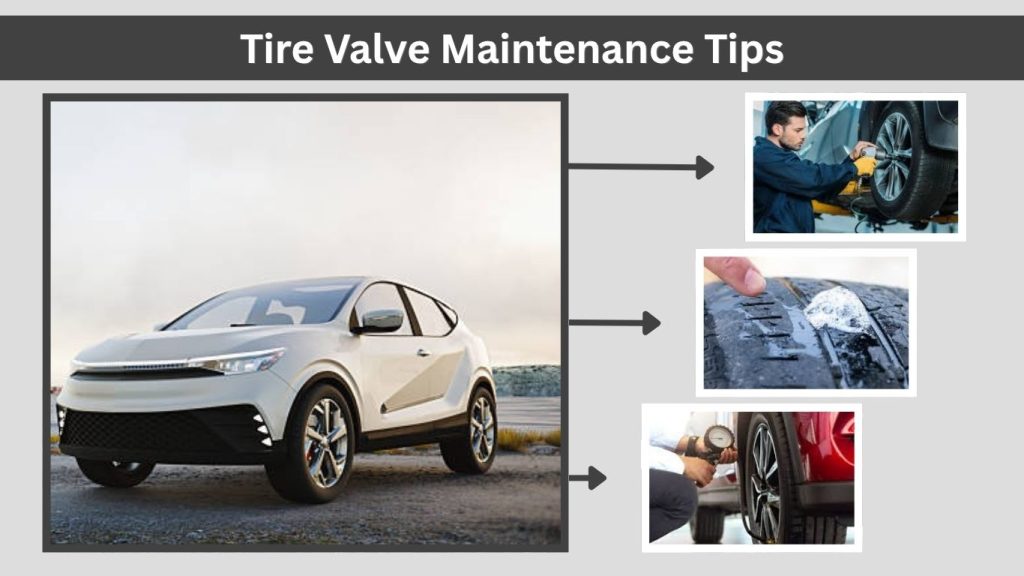
Even the highest-quality valve fails prematurely without basic care. Follow these maintenance practices to extend valve life and prevent unexpected pressure loss:
- Inspect at every tire rotation look for cracks, corrosion, bent stems, and damaged caps
- Use the soapy water test — spray soapy water around the valve while the tire is inflated; bubbles confirm a leak
- Always fit a valve cap it acts as a second seal and keeps moisture, sand, and dirt away from the valve core
- Replace rubber valves regularly UV, ozone, and heat cause rubber to harden and crack; don’t wait for a leak to appear
- Check TPMS sensors annually sensor battery life is typically 5–7 years; a dead sensor gives false or no pressure readings
- Never use brass cores in aluminum TPMS barrels galvanic corrosion silently damages the wheel over time
Frequently Asked Questions
What is the most common type of car tire valve?
The Schrader valve is the most widely used globally. It is the standard on virtually all passenger cars, trucks, motorcycles, and most pneumatic equipment worldwide.
What is the maximum PSI a rubber snap-in valve can handle?
Standard rubber snap-in valves are rated to 65 psi. High-pressure rubber snap-in valves extend this to 80–100 psi depending on rim hole size.
Should I replace my tire valve when fitting new tires?
Yes. Replacing rubber valves at every tire change is strongly recommended by manufacturers. Old rubber valves harden and crack, causing slow leaks even when the tire itself is new.
What does a green valve cap mean on a tire?
A green cap is the universal indicator that the tire is filled with nitrogen rather than standard air. It signals to technicians that the tire should be topped up with nitrogen only, not regular compressed air.
Can I use a brass valve core with a TPMS valve stem?
No. Brass valve cores must never be used with aluminum TPMS barrels. Brass causes galvanic corrosion that transfers to the aluminum barrel and wheel over time, causing irreversible damage. Always use nickel-plated valve cores with TPMS stems.
What valve type do racing cars use?
High-pressure metal clamp-in valves rated to 200 psi. These are mandatory for any vehicle exceeding 130 mph, as standard rubber valves cannot maintain a safe seal at high rotational speeds.
How do I find the correct valve stem length for my rim?
Measure your rim depth. A rim up to 0.9″ deep needs a 1.5″ valve stem. A 1.3–1.7″ rim needs a 2.3″ stem. Rims deeper than 1.9″ require a stem of at least 3.1″ to allow full pump access.
What is a Presta valve used for on cars?
Presta valves are primarily used on road bicycles, but appear on some high-performance automotive tires where precise, high-pressure inflation is required and the narrower 0.236″ rim hole is preferred for structural reasons.
How long do rubber tire valves last?
Rubber tire valves typically last 3–5 years under normal driving conditions. Heat, UV exposure, ozone, and road chemicals accelerate rubber degradation, so earlier replacement is recommended in harsh climates.
What is the difference between a clamp-in and a snap-in tire valve?
A snap-in valve is made of rubber and is pushed through the rim hole without any fastener — the rubber tension holds it in place. A clamp-in valve is made of metal, passes through the rim hole, and is secured with a retaining nut and rubber grommet. Clamp-in valves handle much higher pressures and speeds.
Conclusion
Tire valves are one of the smallest components on your vehicle and one of the most consequential. Choosing the wrong type undersized for the pressure, incompatible with your TPMS sensor, or left unchanged through multiple tire sets leads to slow leaks, failed sensors, corroded wheels, and in the worst case, a high-speed blowout.
Now that you understand all 10 types of car tire valves, the right choice comes down to four variables: your rim hole size, your maximum operating pressure, whether your vehicle uses TPMS, and your vehicle’s top speed. Get those four right, and your tires will hold pressure reliably through the life of the tread.
If you are replacing valves alongside new tires, always opt for new rubber valves at minimum they cost almost nothing and prevent the most common source of slow pressure loss on freshly fitted tires. For TPMS vehicles, have sensors tested and valves professionally replaced to ensure your pressure monitoring system continues to function accurately.

- Top 10 Best Helmet For Xpulse 210 Blue Colour 2026 - October 5, 2026
- Top 10 Best Helmet For Xtreme 125r 2026 - October 5, 2026
- Top 10 Best Helmet For Xpulse 200 2026 - October 5, 2026


One Comment