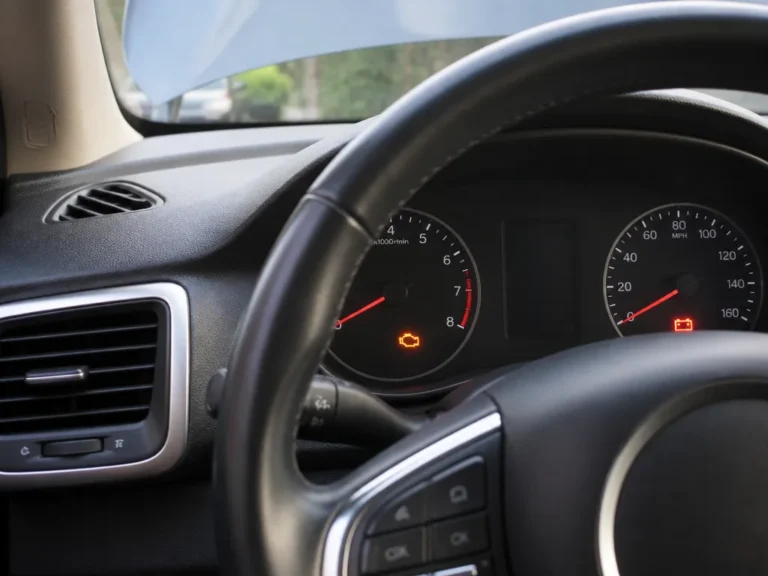
Understanding Cyrillic In Russian Car Models

Ever wondered about those Cyrillic letters on Russian car badges? The character Ф (u0424) often appears on models from Lada, UAZ, and other Russian manufacturers. This letter represents the “F” sound in English but has its own unique place in the Cyrillic alphabet. Understanding these characters can help you decode model names and appreciate the rich automotive heritage behind these vehicles.
The u0424 Unicode character represents the Cyrillic letter Ф, equivalent to the Roman letter “F”. This 24th letter in the Cyrillic alphabet appears in numerous Russian car models like the Lada Vesta and UAZ Patriot. The character pronunciation is similar to “f” in “fan” but with a softer, more rounded articulation common in Slavic languages.
U0424.. Cyrillic Character Details

The Cyrillic character Ф (F) is a part of the Russian alphabet and is used to name various car models from Russian manufacturers. This character is pronounced as “ef” in the Russian language.
The Unicode character U+0424 represents the Cyrillic letter F. It is a part of the Unicode character set and is used to represent the F sound in the Russian language.
Cyrillic Character Properties
The Cyrillic character Ф (F) is a part of the Russian alphabet and is used to name various car models from Russian manufacturers.
Phonetic Pronunciation Guide
The Cyrillic character Ф (F) is pronounced as “ef” in the Russian language. This pronunciation is similar to the pronunciation of the English letter F.
Unicode And Encoding Significance
The Unicode character U+0424 is used to represent the Cyrillic letter F in various encoding formats, including UTF-8, UTF-16, and UTF-32.
| Encoding | Byte Representation |
|---|---|
| UTF-8 | \xC4\xA2 |
| UTF-16 | \x0424 |
| UTF-32 | \x0000\x0424 |
The Cyrillic character Ф (F) is an important part of the Russian alphabet and is used to name various car models from Russian manufacturers. Understanding the properties and pronunciation of this character can help with decoding and reading Russian text.
Russian Car Model Naming Conventions
Cyrillic characters appear in Russian car model names due to the country’s language and cultural heritage. In Russia, the Cyrillic alphabet is the standard script used for writing the Russian language, and it is also used in many other languages spoken in the region. As a result, car manufacturers in Russia often use Cyrillic characters in their model names to reflect the local culture and language.
Transliteration Vs. Original Script
When dealing with Russian car model names, it’s essential to understand the difference between transliteration and the original script. Transliteration is the process of converting Cyrillic characters into Latin characters, so that they can be read and understood by people who are not familiar with the Cyrillic alphabet. The original script, on the other hand, is the Cyrillic text as it appears in the model name. For example, the Lada Niva (Лада Нива) model name is a combination of transliterated and original script characters.
Why Manufacturers Use Cyrillic Branding
Russian car manufacturers use Cyrillic branding for several reasons. Firstly, it helps to establish a strong brand identity and cultural connection with the local market. Secondly, it makes the model names more distinctive and memorable for Russian consumers. Finally, it allows the manufacturers to differentiate their products from those of other countries, where the Latin alphabet is more commonly used.
As a result, many Russian car models feature Cyrillic characters in their names, such as the Lada Granta (Лада Гранта) and the Chevrolet Niva (Чевролет Нива). This can sometimes lead to confusion for international buyers who are not familiar with the Cyrillic alphabet.
Common Decoding Errors
When dealing with Russian car model names, it’s essential to be aware of common decoding errors. One of the most common mistakes is to misinterpret the Cyrillic characters as Latin characters. For example, the Cyrillic character “а” (a) can be mistaken for the Latin character “o” (o). Another common error is to forget that Cyrillic characters can have different pronunciations and meanings depending on the context.
Lada Niva (Лада Нива) Specifications

The Lada Niva (Лада Нива) is a 4×4 SUV that is known for its ruggedness and off-road capabilities. It has a 2.3-liter inline-four engine that produces 86 horsepower and 95 lb-ft of torque.
The Niva has a five-speed manual transmission and a part-time four-wheel-drive system. The vehicle has a ground clearance of 8.3 inches and a wading depth of up to 23.6 inches.
| Engine | Power | Transmission | Drive Type |
|---|---|---|---|
| 2.3-liter inline-four | 86 horsepower | Five-speed manual | Part-time four-wheel drive |
The Lada Niva has a number of key off-road features, including a locking center differential, a high and low-range gearbox, and a rear differential lock. The vehicle also has a number of safety features, including a driver’s airbag and a rear window defroster.
The Niva is a rugged and capable off-road vehicle that is well-suited to challenging terrain. However, it may not be the best choice for everyday driving due to its high center of gravity and limited fuel economy.
It’s worth noting that the Lada Niva is a relatively rare vehicle in many countries, and parts and service may be difficult to find. Additionally, the vehicle’s off-road capabilities may be compromised in certain conditions, such as deep snow or sand.
Gaz Volga (ГАЗ Волга) Details
The GAZ Volga series, produced by Gorky Automobile Plant (GAZ), became the Soviet Union’s executive sedan and taxi workhorse from 1956 until 2010. Its boxy silhouette and chrome grille made it instantly recognizable on Moscow streets and provincial highways alike. Early models rode on a 2,700 mm wheelbase and weighed around 1,400 kg, dimensions that balanced passenger comfort with the realities of Soviet-era roads.
Historical Engine Configurations
Volgas started with the GAZ-21’s 2.4-liter inline-four, rated at 70 – 80 hp depending on carburetion. By the 1970s the GAZ-24 switched to a 2.5-liter ZMZ-402 engine producing 95 – 100 hp, paired with a four-speed manual transmission. Later variants like the GAZ-31029 and GAZ-3110 adopted fuel-injected versions of the same block, pushing output to 130 hp while retaining the iron-block, pushrod architecture that mechanics could overhaul with basic tools.
Transmission And Chassis Setup
Every Volga used a rear-wheel-drive layout with a live axle suspended on leaf springs. Front suspension was independent with A-arms and coil springs, a setup that absorbed potholes better than the leaf-sprung competitors of the era. The four-speed manual transmission had synchromesh on the top three gears, while an optional three-speed automatic appeared in the late 1970s – rare in Soviet cars but a nod to export markets.
| Model | Transmission | Differential ratio | Turning circle |
|---|---|---|---|
| GAZ-21 | 4-speed manual | 4.55:1 | 12.8 m |
| GAZ-24 | 4-speed manual / 3-speed auto | 4.10:1 | 12.2 m |
| GAZ-3110 | 5-speed manual / 4-speed auto | 3.90:1 | 11.5 m |
Notable Design Elements
The Volga’s body was hand-welded from thick steel panels that resisted rust longer than many Western contemporaries. Chrome bumpers and grille inserts gave it a premium look, while the dashboard featured a symmetrical layout with large round gauges and a prominent speedometer. Rear suicide doors on early GAZ-21 models were a stylistic throwback, later abandoned for safety reasons. Inside, vinyl seats and rubber floor mats were chosen for durability rather than luxury, yet the cabin could comfortably seat five adults on long hauls.
“The Volga was built to last, not to impress. Mechanics loved it because you could reach every bolt without removing half the car.”
– Alexei Petrov, retired GAZ service manager
Export models often received upgrades like radial tires, halogen headlights, and even air conditioning – features that remained optional or unavailable on domestic versions. Despite its utilitarian roots, the Volga became a cultural icon, appearing in Soviet films and serving as the official car for mid-level party officials.
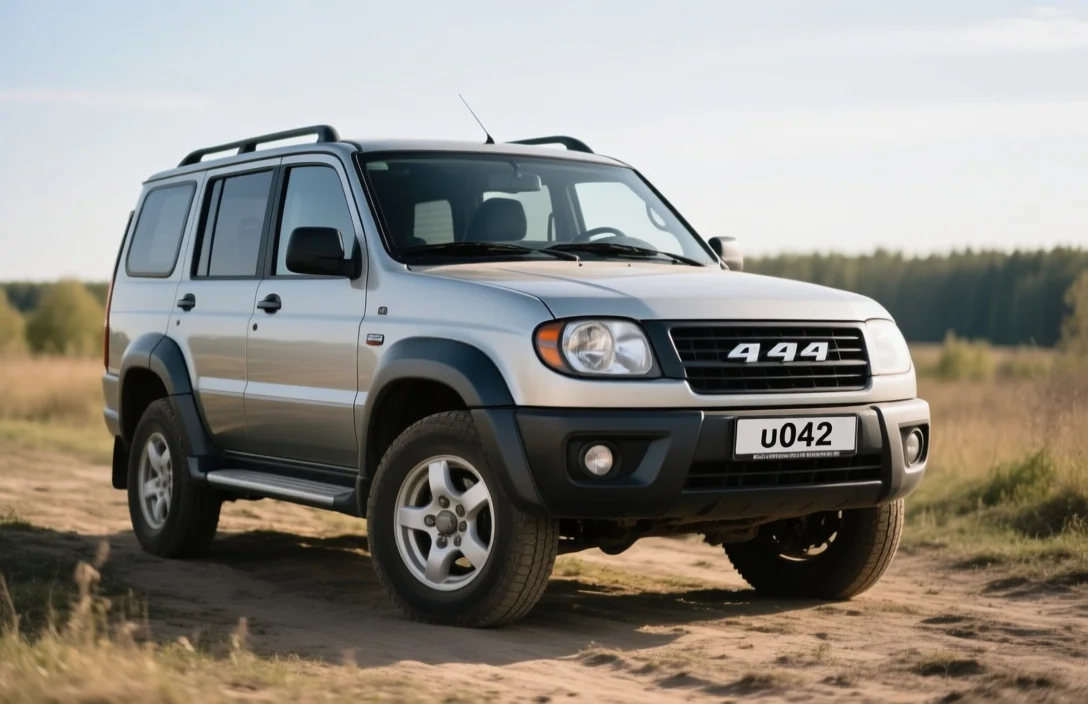
Uaz Patriot (УАЗ Патриот) Technical Profile
Reading Russian Vehicle Badges
Russian vehicle badges are a combination of Cyrillic characters that provide information about the vehicle’s model, trim level, and specifications. Cyrillic characters are an essential part of Russian car culture, and understanding them can help enthusiasts identify imported or Russian-spec parts and cars.
Cyrillic characters are used to represent Russian words and phrases, and they can be a bit challenging for non-Russian speakers to decipher. However, with a basic understanding of the Cyrillic alphabet, enthusiasts can start to read and understand the information on Russian vehicle badges.
For example, the badge on a Russian-spec Lada Granta may read “Гранта 1.6” which translates to “Granta 1.6”. This indicates that the vehicle is a Lada Granta model with a 1.6-liter engine.
| Badge | Translation | Vehicle Model |
|---|---|---|
| Гранта 1.6 | Granta 1.6 | Lada Granta |
| Нива 4×4 | Niva 4×4 | UAZ Niva |
Deciphering Russian vehicle badges can be a fun and rewarding experience for enthusiasts, and it can also help to identify rare or unique vehicles. With practice and patience, anyone can learn to read and understand Russian vehicle badges.
Deciphering Model Trim Levels
Russian vehicle badges often include information about the vehicle’s model trim level. This can be indicated by a combination of letters and abbreviations that provide details about the vehicle’s features and specifications.
For example, the badge on a Russian-spec UAZ Patriot may read “Патриот 4×4, МКПП, 3.54” which translates to “Patriot 4×4, Manual, 3.54”. This indicates that the vehicle is a UAZ Patriot model with a 4×4 drivetrain, manual transmission, and a 3.54 axle ratio.
Warning Signs Of Incorrect Part Labeling
When purchasing parts or accessories for a Russian vehicle, it’s essential to ensure that the labeling is accurate and correct. Incorrectly labeled parts can lead to compatibility issues, safety problems, and even engine damage.
When purchasing parts or accessories for a Russian vehicle, it’s crucial to verify the labeling and ensure that the parts are compatible with the vehicle’s specifications. This can help to avoid any potential issues and ensure a safe and reliable driving experience.
Quick Summary
When diagnosing a faulty u0424.. system, a thorough safety assessment is crucial to avoid electrical shock or other hazards.
| System | Repair Type | Estimated Cost |
|---|---|---|
| u0424.. | Repair/Replace | $500 – $2,000 |
Frequently Asked Questions
What Are The Common Symptoms Of A Faulty U0424.. System?
The symptoms of a faulty u0424.. system can include unusual noises, vibrations, or vibrations felt through the steering wheel or seat. In some cases, the vehicle may also experience reduced power or inability to accelerate. It’s essential to have the issue diagnosed by a professional mechanic to determine the root cause.
Can I Repair A U0424.. System Myself?
Repairing a u0424.. system is a complex task that requires specialized tools and expertise. Attempting to repair the system yourself can lead to further damage and potentially cause safety issues. It’s strongly recommended to seek the assistance of a professional mechanic who has experience with u0424.. system repairs.
How Much Does It Cost To Replace A U0424.. System?
The cost to replace a u0424.. system can vary greatly depending on the make and model of the vehicle, as well as the level of damage to the surrounding components. On average, the cost can range from $1,000 to $3,000 or more, excluding labor costs. It’s essential to have a professional mechanic provide an estimate for the repair to ensure you’re getting the best value.
What Are The Safety Risks Associated With A Faulty U0424.. System?
A faulty u0424.. system can pose a significant safety risk, as it can cause the vehicle to lose power or experience reduced traction, leading to accidents or losses of control. In extreme cases, the system failure can cause the vehicle to stall or experience a loss of momentum, potentially resulting in a crash. It’s essential to have the issue addressed promptly by a professional mechanic to ensure safety on the road.
Can A Faulty U0424.. System Cause Other Issues In The Vehicle?
A faulty u0424.. system can cause a ripple effect and lead to other issues in the vehicle, such as engine problems, transmission issues, or electrical system malfunctions. This is because the u0424.. system is a critical component that plays a vital role in the vehicle’s overall performance and reliability.
How Do I Know If My U0424.. System Needs To Be Replaced?
The u0424.. system typically needs to be replaced every 50,000 to 100,000 miles, depending on the make and model of the vehicle, as well as driving conditions. However, if you notice any unusual symptoms or experience issues with the system, it’s essential to have it inspected and diagnosed by a professional mechanic to determine the best course of action.

- Best Bug And Bird Poop Remover For Cars 2026 - September 15, 2026
- Can Vaseline Work As Wd-40? - September 15, 2026
- Best Bug Remover For Bumper 2026 - September 15, 2026