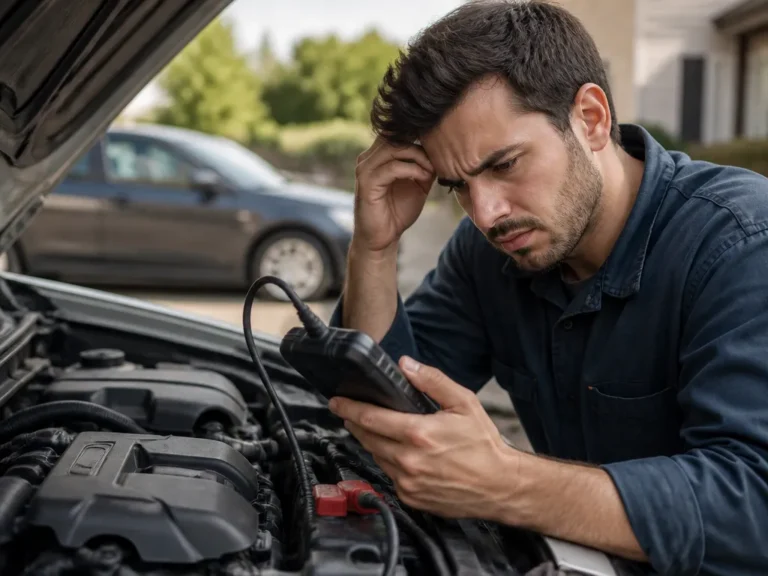
Can You Add Coolant To A Hot Engine?

Do not open a radiator cap on a hot engine, especially if you see steam or the cap area is very hot. The cooling system is pressurized, and opening the wrong cap can release boiling coolant as scalding steam and spray. If you need to add coolant, wait for the engine to cool and use the overflow reservoir when possible.
Adding coolant to a hot engine is risky because heat and pressure can make coolant flash into steam when the cap opens. If the engine is overheating or you see steam, shut it off, move away from the front of the vehicle, and wait. Add coolant only after the temperature drops and the fill point is safe to approach.
Quick Safety Rules
- Keep hot caps closed. Opening a pressurized radiator cap can release boiling coolant.
- Treat steam as a stop sign. Keep the cap closed and let the engine cool longer.
- Use the overflow reservoir first. It is usually safer than opening the radiator cap.
- Wait for a real cooldown. The engine should be warm to the touch at most, not hot.
- Use the correct fluid. Follow the vehicle’s coolant specification, or use distilled water only as a temporary emergency measure.
- Check the level correctly. Use the cold fill line on the reservoir or radiator when the engine is fully cool.
Can You Add Coolant to a Hot Engine Safely?
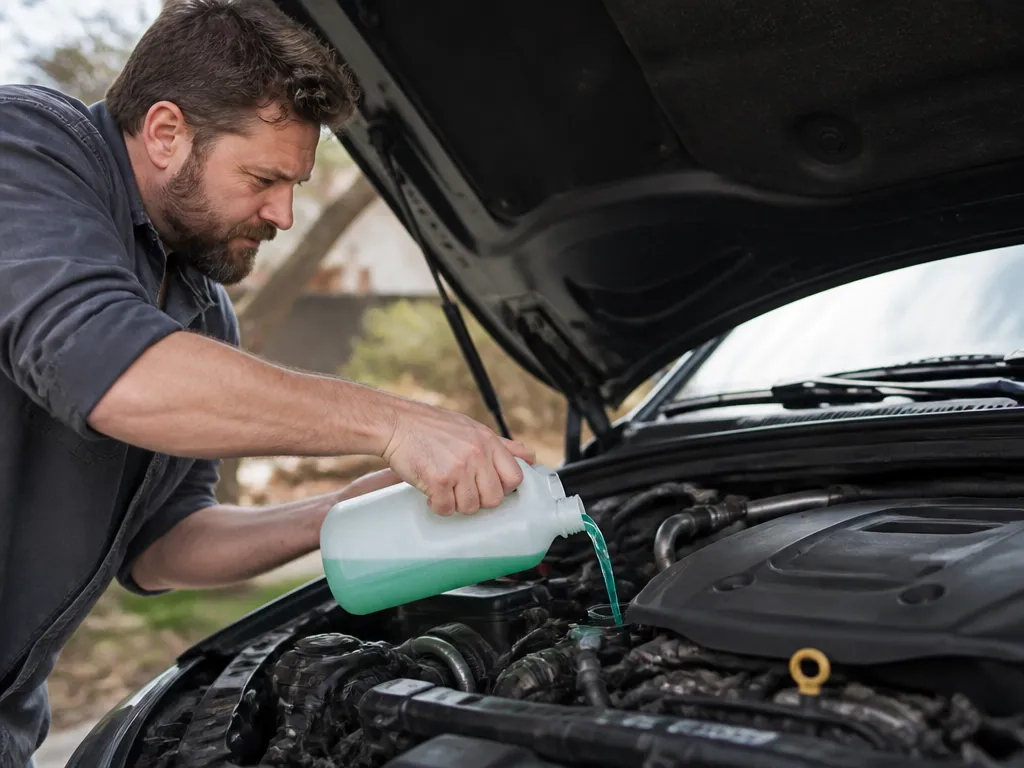
No – not safely in most real-world situations. A cooling system runs under pressure, and the pressure cap keeps coolant from boiling at a lower temperature. When the system is hot, that pressure and heat can make opening the cap dangerous.
If you need to act immediately, assess whether the overflow reservoir is accessible without approaching a steaming or actively venting area. The radiator cap should remain closed.
For an overheating vehicle, shut off the engine, move away from the front of the vehicle, and allow the system to cool before checking the level.
How Engine Temperature Changes the Risk
Engine temperature determines whether a coolant top-off is merely inconvenient or dangerous. Hot coolant can be near its boiling point, and lowering system pressure suddenly can turn it into steam.
An engine that is simply hot after normal driving still may not be safe to handle. An overheating engine presents a greater risk because the coolant system may be close to its pressure and temperature limits. Disturbing the cap in that condition can release hot liquid and steam.
Use the area around the cap as a practical warning sign. If the radiator area still feels hot and you would hesitate to approach it, treat the system as unsafe to open. If the area is only warm, no steam is present, and the engine has had time to cool, the overflow reservoir may be safe to check. Do not place your hand on the radiator, cap, hoses, or other engine parts to test them.
When You Can Top Off the Reservoir
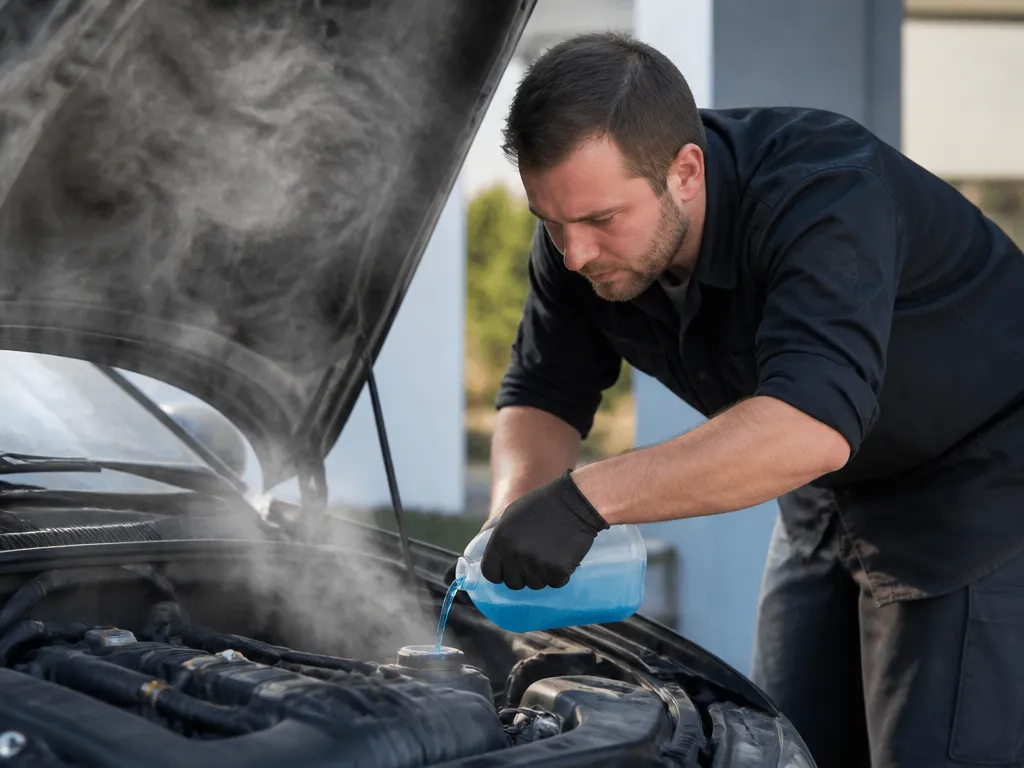
You can usually add coolant while the engine is cooling only if the pressure cap stays closed. The engine must be off, the vehicle must not be steaming or actively venting, and the overflow reservoir must be accessible without reaching near a dangerously hot cap or hose.
A low reservoir may result from a leak, or the level may have changed as the coolant expanded and contracted. Adding fluid can help temporarily, but it will not repair a leak or another cooling-system problem.
Proceed only when all of these conditions are true:
- No steam is coming from the radiator area
- The engine is off and the car has cooled for a bit
- The reservoir is below the cold “MIN” mark
- You can add liquid without opening the radiator cap
If any condition is missing, wait longer or call for help. Saving a few minutes is not worth a serious burn.
When You Must Wait
Wait if the cooling system is venting or if you cannot safely approach the cap area. Steam signals active high-temperature boiling or pressure release, so keep your hands and face away and leave the cap closed.
The system also needs more time if the radiator cap or surrounding metal and plastic are still hot enough to make you hesitate before touching them. The cap area can remain dangerously hot even after the engine appears to have cooled.
Wait longer if:
- The temperature gauge is in the red
- You hear hissing, see bubbling, or smell a strong coolant odor
- Steam is coming from the radiator or cap area
- The engine is still clearly running hot after you shut it off
If you are stranded, call roadside assistance. An overheating engine can worsen quickly, and opening the coolant cap too soon creates an avoidable burn risk.
How to Check the Coolant Level
Check the coolant level with the engine off and the correct indicator in view. Most vehicles have an overflow reservoir marked “MIN” and “MAX.” The reservoir is usually the safest place to check when the engine has cooled enough to approach it safely.
Follow the owner’s manual if it says to check the level only when cold. Cold readings are more consistent because coolant expands as it warms. A hot reading can make a normal level appear too high or too low.
Use this process:
- Shut off the engine and wait until the engine bay stops steaming.
- Inspect the overflow reservoir without opening the radiator cap.
- Use the cold marks for the most accurate reading.
- Add fluid only if the level is below the cold MIN line, and use the approved coolant type.
If your vehicle does not have an overflow reservoir and the radiator is the only fill point, wait until the engine is fully cool. Opening a radiator cap without a reservoir is especially risky because you must access the pressurized part of the system directly.
How to Add Coolant Without Getting Burned
Use the overflow reservoir whenever your vehicle has one. This avoids opening the pressurized radiator cap while the system is hot.
First, shut off the engine and move away from the front of the vehicle. Wait until the steam stops and the cap area is no longer dangerously hot. Then:
- Wait until no steam is present.
- Check the overflow reservoir and confirm that the level is below the cold MIN mark.
- Add coolant slowly to the reservoir to prevent splashing.
- Use the correct coolant if you have it, or distilled water only as a temporary emergency add if you are stuck.
- Recheck after a short cooldown period if the level appears to drop as the system equalizes.
If your vehicle has no reservoir and you must open the radiator cap, wait until the engine is cool and the cap area is no longer hot to the touch. Open the cap slowly, keep your face and hands away from the opening, and step back if you hear pressure escaping. For most drivers, using the reservoir avoids this risk.
What to Do If You Added Coolant Too Soon
Stop immediately if the system begins venting or spraying, or if you see steam near the fill point. Shut off the engine if it is still running, move away from the vehicle’s front, and let everything cool again.
If you topped off only the overflow reservoir while the engine was shutting down and the radiator cap stayed closed, the risk is usually lower. The level may look different briefly as the system cools and equalizes.
If you opened the radiator cap while the engine was hot and coolant sprayed or vented:
- Do not reopen the cap to “fix the level.”
- Let the engine cool fully before checking anything else.
Once the engine is cool, check the level again. A recurring low level can indicate a leak, a stuck thermostat, or air trapped in the system. If you need to add coolant repeatedly over a short time, have the vehicle inspected instead of continuing to top it off.
If someone is burned, cool the area with cool running water and follow local first aid guidance. Radiator coolant can cling to skin and cause more than a superficial burn.
FAQ
Can you add coolant to a hot engine if the car just overheated?
Do not open the radiator cap if the car is overheating or producing steam. Shut off the engine and wait until the steam stops and the cap area is no longer hot to the touch. If the vehicle has an overflow reservoir, you can often add coolant there once it is safe to approach, using the cold MIN/MAX marks as a guide.
How long should you wait before adding coolant?
Wait until the engine bay is no longer steaming and the temperature gauge has dropped well below the red. After a typical overheating event, wait at least 30 minutes before checking the overflow reservoir, if the vehicle has one. If the radiator cap area still feels very hot, wait longer.
What coolant should you add if you don’t know the type?
Use the coolant specified in the owner’s manual whenever possible. If you are stuck and need a temporary top-off, distilled water is usually safer than an unknown coolant mix. Once the immediate problem is under control, refill the system with the correct coolant mixture at the correct concentration.
Can adding coolant fix an overheating car right away?
Sometimes. If the only problem is a low coolant level, adding fluid may prevent further overheating temporarily. If the vehicle is losing coolant, adding more only masks the problem and the engine may overheat again quickly. If the temperature returns to the red after topping off, stop driving and have the cooling system checked.
What is the most common mistake when topping off coolant?
Opening the radiator cap while the system is still pressurized and very hot is the most common mistake. The engine may look safely shut off while the coolant remains near its boiling temperature under pressure. Use the overflow reservoir and cold marks, and open the radiator cap only after the engine is fully cool and there is no sign of steam.

- Top 10 Best Helmet For Xpulse 200 2026 - October 5, 2026
- Top 10 Best Helmet For Xsr 155 2026 - October 5, 2026
- Top 10 Best Helmet For Xc Mtb 2026 - October 5, 2026