What are the components of a battery cooling system?

Battery cooling systems are essential in modern vehicles especially electric vehicles (EVs) and hybrid cars. Batteries generate heat during charging, discharging, and high-load operation. If this heat is not controlled, it can reduce battery efficiency, shorten lifespan, and even cause safety issues.
To manage temperature, manufacturers use dedicated battery cooling systems made up of several key components working together.
Part 1: Battery Pack
The battery pack is the most important part of any electric or hybrid vehicle, and it is also the primary source of heat. Understanding its role helps explain why an efficient cooling system is necessary.
The battery pack consists of multiple battery cells grouped into modules. During charging, discharging, and high-performance driving, these cells generate heat.
If the temperature is not controlled, it can lead to reduced efficiency, faster degradation, and potential safety risks.
A well-designed cooling system focuses on maintaining a uniform temperature across the entire battery pack to ensure long battery life and consistent performance.
Coolant (Liquid or Air)
Coolant is the medium responsible for carrying heat away from the battery pack. The type of coolant used greatly affects the efficiency of the battery cooling system.
There are two main types of battery cooling methods: liquid cooling and air cooling. Liquid cooling systems typically use a water-glycol mixture because it absorbs and transfers heat more effectively.
Air cooling relies on airflow but is less efficient and harder to control.
Most modern electric vehicles use liquid coolant systems because they provide better temperature stability, especially during fast charging and long drives.
Cooling Plates or Channels
Cooling plates and channels are the physical pathways that allow heat to be transferred away from the battery cells.
These components are placed directly under or between battery cells to allow coolant to flow close to heat-producing areas. Made from highly conductive materials like aluminum, cooling plates help distribute temperature evenly and prevent hot spots.
Properly designed cooling channels improve overall system efficiency and protect the battery from thermal stress.
Coolant Pump
The coolant pump is responsible for moving the coolant throughout the battery cooling system.
The pump ensures continuous circulation of coolant through the battery pack, cooling plates, and heat exchanger. In electric vehicles, electric coolant pumps are commonly used because they allow precise control based on real-time temperature data.
By adjusting flow rates, the pump helps maintain optimal battery temperature under different driving and charging conditions.
Heat Exchanger or Radiator
Once heat is absorbed by the coolant, it must be released efficiently to prevent overheating. This is where the heat exchanger or radiator plays a key role.
The heat exchanger transfers heat from the coolant to the surrounding air, functioning similarly to a traditional engine radiator.
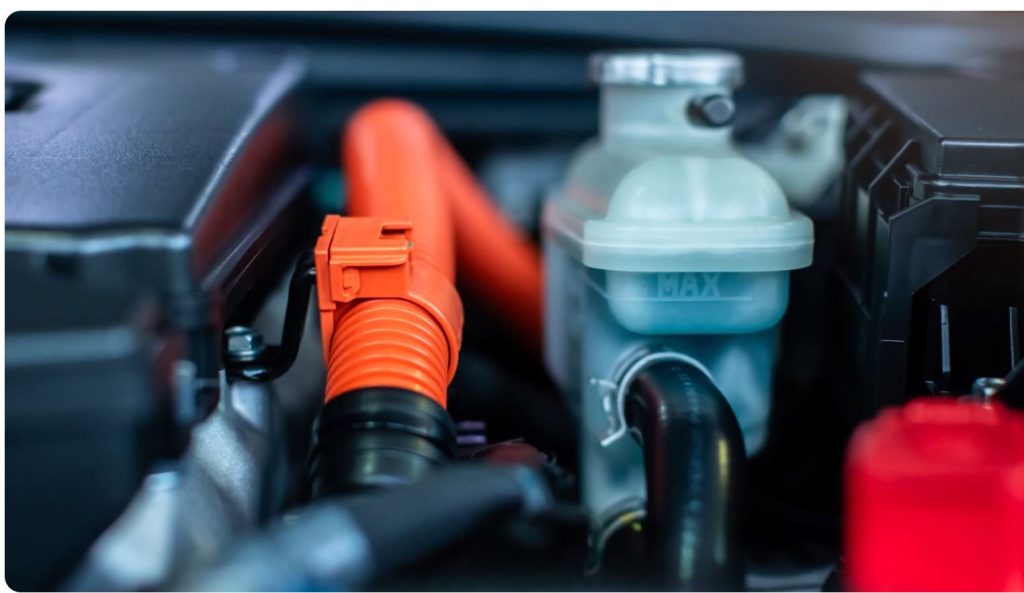
It is often integrated with other vehicle thermal systems to improve efficiency.
In some systems, the heat exchanger can also help warm the battery in cold conditions, ensuring optimal performance in all climates.
Temperature Sensors
Temperature sensors play a critical role in maintaining battery safety by continuously monitoring heat levels within the battery system.
Temperature sensors are placed at strategic points inside the battery pack and cooling system to measure real-time temperatures of battery cells and coolant. These sensors provide accurate data to the Battery Management System (BMS), allowing it to respond immediately to temperature changes.
If temperatures rise beyond safe limits, the system can increase coolant flow, activate additional cooling, or reduce battery output to prevent damage. Without reliable temperature sensors, overheating risks increase significantly, making them essential for battery protection and performance optimization.
Battery Management System (BMS)
The Battery Management System (BMS) is the central control unit that manages and protects the battery and its cooling system.
The BMS processes data from temperature sensors, voltage monitors, and current sensors to determine the optimal operating conditions for the battery.
It controls the coolant pump, valves, and cooling strategies to keep the battery within a safe temperature range.
In addition to thermal management, the BMS balances battery cells, prevents overcharging or deep discharging, and enhances overall battery lifespan. A well-designed BMS ensures both efficiency and safety in electric and hybrid vehicles.
Valves and Flow Control Components
Valves and flow control components regulate how coolant moves through the battery cooling system.
These components direct coolant to specific areas of the battery pack based on temperature demands. When certain sections of the battery become hotter than others, valves adjust coolant flow to provide targeted cooling.
Modern battery cooling systems often integrate electronically controlled valves to improve precision and efficiency. Proper flow control helps reduce energy consumption while maintaining stable battery temperatures under varying driving conditions.
Thermal Insulation and Protective Barriers
Thermal insulation and protective barriers help shield the battery from external temperature extremes and environmental influences.
Insulation materials are used around the battery pack to minimize heat loss in cold climates and prevent excessive heat absorption in hot environments. Thermal barriers also protect the battery from heat generated by nearby vehicle components, such as motors or power electronics.
By stabilizing internal battery temperatures, insulation improves energy efficiency, driving range, and long-term reliability.
Cooling System Integration and Control Software
Modern battery cooling systems rely on advanced control software to integrate all components into a single, efficient thermal management system.
Control software coordinates the operation of sensors, pumps, valves, and heat exchangers to respond dynamically to driving and charging conditions. It continuously adjusts cooling strategies based on real-time data, ambient temperature, and vehicle load.
This intelligent integration ensures optimal battery performance, enhances safety, and supports fast charging capabilities. As electric vehicle technology advances, software-driven thermal management will become even more important.
Frequently Asked Questions (FAQ)
1. What is the main purpose of a battery cooling system?
The main purpose of a battery cooling system is to maintain the battery within a safe operating temperature range. Proper cooling prevents overheating, improves performance, extends battery lifespan, and enhances overall vehicle safety.
2. Why do electric vehicle batteries need cooling?
Electric vehicle batteries generate heat during charging, discharging, and high-load driving. Without cooling, excessive heat can reduce efficiency, cause faster battery degradation, and increase the risk of thermal runaway.
3. Which type of battery cooling system is best: air or liquid?
Liquid cooling systems are generally more efficient than air cooling. They provide better heat transfer, more precise temperature control, and improved performance during fast charging and extreme weather conditions.
4. How does a battery cooling system work?
A battery cooling system works by absorbing heat from the battery using a coolant, circulating it through cooling plates or channels, and then releasing the heat through a radiator or heat exchanger. Sensors and control software continuously adjust the system to maintain optimal temperature.
5. What happens if a battery cooling system fails?
If the cooling system fails, the battery may overheat, leading to reduced power output, limited charging speed, shortened battery life, or in severe cases, safety risks such as thermal damage.
6. Does a battery cooling system work in cold weather?
Yes, many battery cooling systems also support heating functions. They help warm the battery in cold conditions to ensure efficient charging, better range, and stable performance.
7. How does the Battery Management System (BMS) help with cooling?
The BMS monitors battery temperature through sensors and controls the cooling system components, such as pumps and valves. It ensures the battery operates safely and efficiently under all driving conditions.
8. Can battery cooling systems improve vehicle range?
Yes, maintaining an optimal battery temperature improves efficiency and reduces energy loss, which can help increase driving range and overall vehicle performance.
9. Are battery cooling systems used in hybrid vehicles?
Yes, both hybrid and electric vehicles use battery cooling systems, although the design and complexity may vary depending on battery size and power requirements.
10. How often does a battery cooling system need maintenance?
Battery cooling systems generally require minimal maintenance. However, periodic checks of coolant levels, sensors, and system performance are recommended according to the manufacturer’s service guidelines.
Conclusion
A battery cooling system is made up of multiple components working together to keep the battery within a safe and efficient temperature range. Key components include the battery pack, coolant, cooling plates, pump, heat exchanger, sensors, BMS, valves, and insulation.
As electric and automated vehicles continue to evolve, advanced battery cooling systems will remain crucial for performance, safety, and long-term reliability.

- 10 Best Electric Hydraulic Jack For Car Review (October 2026) - October 12, 2026
- 10 Best Electric Jack For Car Review (October 2026) - October 12, 2026
- 10 Best Jack For Electric Vehicle Review (October 2026) - October 12, 2026