What Is Stronger Than Wd-40?

WD-40 is a water-displacing spray that provides light lubrication. It works well for stopping squeaks, loosening mildly stuck parts, and pushing moisture away from metal. It is not a grease, degreaser, or true penetrating oil.
“Stronger” depends on the job. For rusted, seized hardware, use a penetrating oil. For greasy buildup, use a degreaser. For long-term lubrication, use grease. For recurring outdoor rust, use a dedicated corrosion protectant. The right product matters more than choosing the most aggressive one.
Key Takeaways
- “Stronger” depends on the problem: rust, grease, squeaks, friction, or corrosion.
- Penetrating oil works best on hardware stuck by rust and corrosion.
- A degreaser beats WD-40 on oily grime because it removes oil instead of mainly displacing water.
- Grease lasts longer than a light spray on moving parts under load.
- Corrosion prevention matters when metal will stay outdoors or in damp conditions.
- Test unfamiliar products first to avoid damaging finishes, plastics, or rubber.
Why WD-40 Is Not Always the Strongest Choice
WD-40 is designed to displace water and provide light lubrication. It can temporarily improve movement, but it cannot replace a dedicated penetrant, degreaser, grease, or corrosion inhibitor.
Which WD-40 Alternative Fits the Job?
The best substitute matches the failure mode. Penetrating oils creep into tight gaps, degreasers dissolve and lift oil, and grease stays in place under friction and load.
| Product type (what to buy) | Best for | Typical outcome vs WD-40 |
|---|---|---|
| Penetrating oil (creep oil) | Rusted, stuck bolts, hinges, valve stems | Better at freeing seized joints because it targets the tight interface |
| Degreaser/cleaner | Oily grime, chain gunk, brake dust residue | Cleans more effectively so fresh lubricant can reach the surface |
| Lithium grease or silicone grease | Bearings, rails, sliding mechanisms | Provides longer-lasting lubrication than a light spray |
| Rust inhibitor / corrosion protectant | Tools left outside, metal surfaces outdoors | Reduces flash-rusting more effectively than a water-displacing spray |
![WD-40 Specialist Penetrant, Smart Straw, Fast-Acting, 11 OZ [1-Pack]](https://m.media-amazon.com/images/I/41MCRFryiiL._SL500_.jpg)
Helpful pick
WD-40 Specialist Penetrant, Smart Straw, Fast-Acting, 11 OZ [1-Pack]
This fast-acting penetrating oil is specifically engineered to creep into tight gaps, making it the ideal solution for freeing seized hardware.
How to Use a Stronger Alternative Correctly
Clean the area around the part before spraying. Dirt and thick grease can block penetration, leaving the product unable to reach the seam where rust is binding the joint.
For stuck hardware, flood the seam with penetrating oil, wait, and reapply. Stubborn parts may need several applications. Dwell time often matters more than the product’s “strength” because the oil needs time to work into the gap.
For greasy areas, degrease first. WD-40 may quiet a dirty chain or sliding track for a short time, but it can mix with old oil and contaminants, creating a messy abrasive paste. A degreaser removes the buildup so the correct lubricant can work on a clean surface.
What You Gain by Switching From WD-40
Penetrating oil is better at freeing rust-bonded parts because it is formulated to creep into tight joints and work over time. Degreaser removes the buildup that makes parts bind and wear faster.
Grease is the bigger upgrade when lubrication needs to last. A light spray can evaporate or run off, especially on vertical surfaces. Grease stays where it is applied and handles repeated movement, friction, and load more effectively.
Corrosion protectants address the rust cycle itself. Outdoor tools, lawn equipment, trailer hardware, and metal exposed to salt air need a barrier that keeps water and oxygen away from the surface. Freeing a rusty part solves today’s problem; protecting it helps prevent the next one.
Choosing the Right Product for Common Problems
Use the following conditions to select the appropriate product.
- If it is stuck from rust or corrosion: use a penetrating oil. Look for products marketed as “penetrating” or “rust release” oils, often described as creep lubricants.
- If it is covered in grease, grime, or chain gunk: use a degreaser or heavy-duty cleaner, then dry the part and apply the correct lubricant.
- If it squeaks under load: use grease or a lubricant formulated for the surface, such as metal-on-metal parts, chains, or sliding mechanisms.
- If it keeps rusting after cleaning: use a corrosion protectant or rust inhibitor, especially for storage and outdoor exposure.
![WD-40 Specialist Penetrant, New Bigger Can, 13.3 OZ [1-Pack]](https://m.media-amazon.com/images/I/31SXjUsquVL._SL500_.jpg)
Helpful pick
WD-40 Specialist Penetrant, New Bigger Can, 13.3 OZ [1-Pack]
Specifically marketed for rust release, this penetrating oil is the most effective tool to use when dealing with stubborn, corroded fasteners.
Practical Advice for Safer, Longer-Lasting Repairs
Use the mildest product that solves the problem, then step up only when necessary. Aggressive penetrants or heavy cleaners cannot help if dirt and old grease prevent them from reaching the joint.
For a stuck fastener, clean the outside, apply penetrating oil to the joint, wait, and try again gently. Forcing the part too soon can snap a rusted bolt or twist a hinge pin. Patience is often cheaper than replacing broken hardware.
Match the lubricant to the type of friction. Light sprays suit occasional, low-load movement. Grease is better for repeated friction in sliding or loaded metal interfaces. Corrosion protectants are especially useful when equipment will sit in wet or humid conditions, such as tools stored in a garage during winter.
Test any unfamiliar cleaner or solvent on an inconspicuous spot before using it on painted surfaces, plastics, or rubber. Some stronger products can soften finishes, stain plastic, or swell certain rubbers.
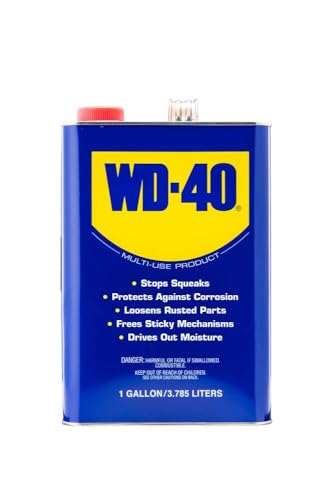
Helpful pick
WD-40 100102 Heavy Duty Gallon Can (Pack of 1)
For heavy-duty repairs where precision is required, this gallon-sized formula allows you to apply the necessary amount to reach deep into joints.
Examples from real users
A rusted garden-gate hinge that squeaks and barely moves may respond briefly to WD-40, but penetrating oil applied to the hinge seam is more likely to restore movement. Once the hinge moves freely, apply grease or another suitable lubricant so it stays lubricated instead of drying out.
For a sticky bicycle chain, the stronger move is not more WD-40. Start with a degreaser or chain cleaner, wipe away the residue, dry the chain fully, and apply chain-specific lubricant. This keeps old grime from mixing with fresh oil and forming abrasive sludge.
A trailer hitch receiver that keeps developing rust needs more than a one-time dose of penetrating oil. Penetrating oil can free the hitch, but a corrosion protectant helps prevent the problem from returning. Wipe the surfaces before storage, especially after rain or humid weather.
A common misconception is that WD-40 is always the right first step. On an oily part, it can spread grime. On aggressively rusted hardware, it may reduce surface stickiness temporarily but will not reliably penetrate like a dedicated penetrant.
FAQ
What is stronger than WD-40 for rusted bolts?
Penetrating oil is usually stronger for rusted, stuck bolts because it is made to creep into tight gaps. Apply it around the bolt head and threads, wait, and reapply. Heavily corroded hardware may need several cycles before it turns safely.
Can I use WD-40 and penetrating oil together?
Yes, but use them in the right sequence. Clean loose dirt first if possible, then apply penetrating oil and give it time to work. WD-40 can help displace lingering moisture afterward, but penetration time usually does more for a stuck joint than adding more spray.
What is stronger than WD-40 for greasy parts?
A degreaser is stronger than WD-40 for greasy parts because it removes oil and grime instead of mainly displacing water. Dry the part after degreasing, then apply a lubricant suited to the surface. Otherwise, fresh lubricant can combine with leftover grime and form sticky sludge.
Is lithium grease stronger than WD-40 for hinges and sliders?
Yes. Lithium grease generally lasts longer on hinges and sliders because it stays in place and handles more friction and load. WD-40 is better for quick, light lubrication and water displacement; grease is better for repeated motion over time.
What is the most common mistake when using WD-40 instead of the right product?
The most common mistake is spraying WD-40 onto a dirty, oily, or heavily rusted joint and treating the problem as solved. Stuck hardware needs penetrating oil and dwell time. Sticky buildup needs degreasing first so the lubricant does not mix with grime.

- Best Bug And Bird Poop Remover For Cars 2026 - September 15, 2026
- Can Vaseline Work As Wd-40? - September 15, 2026
- Best Bug Remover For Bumper 2026 - September 15, 2026