Can I Use Baby Oil Instead Of Wd-40?

Baby oil can loosen sticking parts, but it is not a true substitute for WD-40 in most real-world jobs. WD-40 is designed to loosen parts, displace moisture, and help protect metal, so its chemistry and intended performance matter. If you are asking, “Can I use baby oil instead of WD-40?” the short answer is yes, sometimes – but only for specific, low-risk uses where oily residue is acceptable.
Baby oil can work as a light lubricant for tiny, non-critical squeaks or temporarily loosen stuck items. It does not replace WD-40 for rust prevention or moisture displacement. For tasks involving metal, outdoor exposure, or anything that might contact brakes, wheels, or food surfaces, use WD-40 or another product designed for that job.
Baby Oil vs. WD-40
- Yes, for light jobs. Baby oil can reduce friction on some non-critical squeaks.
- Avoid it for rust work. Baby oil is not a proven rust inhibitor like WD-40-type products.
- Expect residue. Baby oil is sticky and can attract dust and grime over time.
- Do not use it on brakes. Oil can reduce traction, which is dangerous on braking surfaces.
- Choose a proper substitute when needed. Use lithium grease or dry lube for moving parts, and penetrating oil for stuck hardware.
- Test first. Try baby oil on a hidden spot, then wipe off excess after the squeak stops.
How Baby Oil Compares With WD-40
Baby oil is a petroleum-based oil, often with fragrance, so it can act as a thin lubricant. It may quiet a squeak or help a mechanism move again. It also leaves an oily residue that can collect dust, especially outdoors or in garages.
WD-40 is a specific product blend intended to loosen parts, displace moisture, and help protect against corrosion. Because baby oil is not formulated for those tasks, its initial slippery effect may fade without solving the underlying problem. If your goal is to stop a squeak today, baby oil may work. If your goal is to prevent corrosion or free a seized metal part, baby oil is usually the wrong tool.
When Baby Oil Is the Wrong Choice
Baby oil is reasonable only when you need basic lubrication and can tolerate residue. Use something else when moisture, corrosion, dirt, or safety-critical friction is involved.
- Metal exposed to moisture: Use a product intended for rust protection and water displacement.
- Dust, sand, or overspray: Baby oil residue can make the area harder to clean.
- Safety-critical friction: Do not use oil on brakes, clutch pads, or tire-tread surfaces.
Most jobs associated with WD-40 fall into one of three categories: freeing stuck hardware, protecting outdoor metal from corrosion, or stopping squeaks. Each calls for a different product. Penetrating oil helps with seized hardware, rust protectants help with exposed metal, and the right lubricant works better for squeaks without leaving unnecessary buildup.
How to Apply Baby Oil Without Creating a Mess
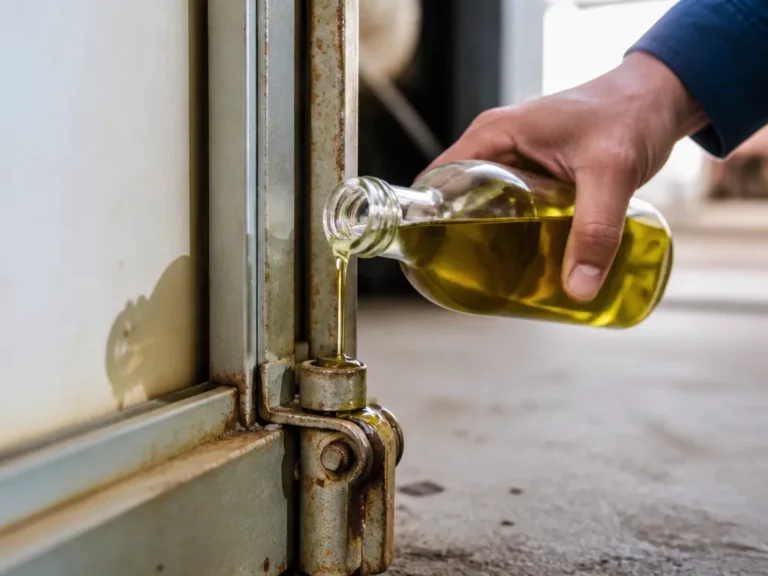
Use baby oil like any household oil: apply very little, control where it goes, and do not leave a thick coating behind. A quick application followed by wiping usually works better than soaking the part.
- Clean first. Wipe away grease and grime so the oil does not simply spread dirt.
- Use a tiny amount. Apply a drop to the contact area rather than a wet coating.
- Work the part. Move the mechanism several times to spread the oil.
- Wipe off excess. After 5-10 minutes, remove oil sitting on the surface.
- Reapply only if needed. If the squeak returns quickly, switch products instead of repeatedly adding more oil.
For furniture hinges, door latches, or drawer slides, a residue-free lubricant or a small amount of the correct grease usually lasts longer. For outdoor locks or metal-on-metal parts exposed to rain, baby oil will likely underperform compared with a corrosion-focused spray.

Helpful pick
Johnson’s Baby Oil, Hypoallergenic, 3 fl oz
This smaller, hypoallergenic bottle is ideal for controlled, precise applications to avoid making a mess.
Where Baby Oil Can Be Useful
Baby oil has a few legitimate advantages. It is easy to find in many U.S. households, and it can provide quick friction reduction on non-critical indoor parts. If you need to quiet a small squeak temporarily, it may work until you can buy the right lubricant.
It also creates less pressure and is less likely to blast dust around than some spray lubricants. That can help with small mechanisms inside cabinets or in places where overspray would be a problem. The trade-off is residue: baby oil can build up and attract grime, so its main benefit is convenience and immediate lubrication, not long-term protection.

Helpful pick
Johnson’s Baby Oil, Pure Mineral Oil, Original Scent, 20 fl. oz
A classic mineral oil option that is easy to find for quick, temporary indoor lubrication needs.
Better Substitutes for Specific Jobs
Choose a replacement based on whether you need penetration, lubrication, low residue, or corrosion protection.
| Replacement product | Best for | Key spec / behavior to look for | Best for small teams or DIY? |
|---|---|---|---|
| Penetrating oil (like 3-in-1 or similar) | Stuck screws, rusty bolts | Capillary penetration, loosens seized hardware | Yes, for one-off fixes |
| Silicone spray (dry-ish feel) | Squeaky plastic or general indoor squeaks | Leaves less tack than oils | Yes, for clean surfaces |
| White lithium grease | Metal-on-metal sliding and hinges | Thick lubricant, stays put under load | Yes, for longer-lasting smoothness |
| Dry PTFE lubricant | Squeaks with dust exposure | Low residue, less grime attraction | Yes, if you hate buildup |
| WD-40-type multi-use spray | Moisture displacement and light corrosion issues | Designed for rust help and water displacement | Yes, when you want one can |
The Safest Rule for Using Baby Oil
Keep oil away from surfaces that need friction. If it migrates onto brake pads, tire-contact areas, or clutch surfaces, it can create a safety problem. It can also cause reliability problems if it reaches electronics or switches that need to remain clean and dry.
Baby Oil in Common Repair Situations
A clean indoor cabinet hinge is a reasonable place to try baby oil. Apply a tiny amount and wipe off the excess. The hinge may feel smoother immediately, and the noise may drop for a while. If the hinge starts collecting dust or the squeak returns in days, switch to a hinge-specific lubricant or a light silicone spray.
An outdoor metal gate latch is a poor candidate. Rain can mix with the residue, dirt can stick to it, and corrosion may continue despite the oily coating. A WD-40-type rust-help product or penetrating oil followed by a protective spray makes more sense.
For a stuck screw in a rusty hinge, baby oil may provide only temporary help. Penetrating oil is designed to creep into threads and reduce binding where the problem usually occurs. If the screw still resists, forcing it can snap the head, damage the threads, or strip the fastener, making the repair more difficult and expensive.

Helpful pick
Amazon Basics Baby Oil, Mild & Gentle, Dermatologist Tested, Prevents Moisture Loss, Dry Skin Relief, 14 fl oz, 4-Pack (Previously Solimo)
A convenient multi-pack of baby oil perfect for keeping on hand for minor household squeaks.
FAQ
Can I use baby oil instead of WD-40 on squeaky door hinges?
You can try it on indoor hinges if you apply a tiny amount and wipe off the excess after it settles. Baby oil can reduce friction temporarily, but it may attract dust and grime. If the hinge is exposed to rain or is a metal-on-metal hinge outdoors, use a spray made for rust and moisture instead.
Will baby oil prevent rust like WD-40?
No. Baby oil is not formulated for corrosion prevention in the way WD-40-type products are. For outdoor metal that gets wet, use a product meant to displace moisture and help protect against rust.
How long does baby oil last compared with WD-40?
Baby oil’s effectiveness depends largely on how dusty and dirty the environment is. In a clean indoor spot, it may work for a while. In garages and outdoors, its residue can collect grime, and the problem may return faster than it would with a purpose-made lubricant or corrosion spray.
Is it safe to use baby oil on surfaces that get touched often?
It is safer on non-friction parts than on anything where traction matters. Avoid oil on brake surfaces, clutch-related friction areas, and tire-contact areas. On frequently touched surfaces, baby oil can leave a slick residue that transfers to skin and clothing.
What common mistake do people make when using baby oil instead of WD-40?
They apply too much. A heavy layer spreads beyond the moving part, mixes with dust, and becomes sticky. Use a drop, work the mechanism, and wipe off excess so you get the lubrication benefit without turning the area into a dirt trap.

- Can Vaseline Work As Wd-40? - September 15, 2026
- Best Bug Remover For Bumper 2026 - September 15, 2026
- Fix Vw Tiguan U042900 Error Code - September 15, 2026