Which Oil Penetrates The Deepest?

Jojoba oil is the strongest general choice for skin, while coconut oil is the common pick for penetrating the hair shaft. Jojoba resembles natural sebum, so it blends readily with the skin’s surface lipids. Coconut oil’s fatty acids allow it to move into hair strands instead of sitting only on the surface.
“Deepest” depends on the target and the application. Product quality, molecular size, composition, and the condition of your skin or hair all affect how deeply an oil seems to penetrate.
Key Takeaways
- Smaller often penetrates more easily: Oils with smaller molecules generally move into tighter spaces more readily.
- Composition matters: Oils that resemble the natural oils in skin or hair tend to mix more easily than oils with a very different makeup.
- Unsaturated oils can help: Unsaturated oils generally penetrate lipid layers more readily than saturated oils in common skincare guidance.
- Use less than you think: Oils are concentrated. Apply a small amount, and layer them correctly over water-based hydration when needed.
Which Oil Penetrates the Deepest?
The right choice also depends on whether you want hydration, softness, or conditioning. Oils work best when they can mingle with existing lipids in the skin barrier or hair strand instead of remaining as a film that quickly rubs off.
What “deep penetration” means
In skincare, deep penetration usually means an oil moves beyond the outer film and interacts with the surface layers where skin lipids are found. In hair care, it means the oil moves into the hair shaft and improves internal softness rather than adding only surface shine.
Lipid compatibility is the common factor. Oils that are chemically and physically similar to the material already in your skin or hair tend to spread, mix, and absorb more effectively.
How Oil Composition Affects Penetration
Molecular size and composition are the two most useful factors when comparing oils. Smaller molecules generally move into tighter spaces more easily, while an oil that resembles natural skin or hair lipids can blend more readily with them. Saturation also plays a role because unsaturated oils are often easier to incorporate into lipid layers.
My practical rule is simple: choose an oil that suits the target and use only enough to spread over it.
| Oil | Molecular Size | Composition vs skin/natural oils (general) | Notes you’ll feel in use |
|---|---|---|---|
| Jojoba | Small | Similar (fits sebum) | Often best for all skin types in common guidance |
| Argan | Medium | Similar overall profile | Frequently chosen for dry skin nourishment |
| Rosehip | Small | Different, but widely used | Often aimed at aging-focused routines |
| Almond | Medium | Similar overall profile | Common choice for sensitive skin |
| Avocado | Large | Different | Often used for deeper dry-skin conditioning |
How to Apply Oil for Better Penetration
Application affects how deeply an oil seems to work. The same product can feel absorbed when applied in a thin layer to slightly damp skin, yet greasy when spread over dry skin in excess.
On skin, start with clean, slightly damp skin so the oil spreads into the barrier instead of beading on top. Use a small amount. Adding more usually creates a thicker surface film rather than deeper absorption.
Skin application
Apply jojoba after cleansing and patting your face dry, while leaving a light moisture film. Massage it in for 30 to 60 seconds, then stop adding product. If you have oily skin, use a thinner layer and avoid stacking several heavy oils.
Oils generally penetrate better when they can spread and mix with the skin barrier. Piling on a thick layer does not force an oil deeper and can leave residue that rubs off.
Hair application
Coconut oil works best when applied where damage and dryness are concentrated. Start with the mid-lengths and ends, use a small amount, and distribute it thoroughly. Heat may help an oil spread, but it also increases the risk of overdoing the treatment, particularly when hair is already fragile.
A simple option is a light pre-wash treatment. Apply coconut oil to dry hair, let it sit briefly, then shampoo and condition normally. This gives the oil time to work into the strands without leaving the hair excessively heavy or greasy.

Helpful pick
PB Blaster Penetrating Oil Spray, 11 oz Aerosol Cans (2-Pack) – Rust Remover & Bolt Loosener for Stuck Nuts, Bolts & Rusted Parts – Penetrating Catalyst for Automotive & Mechanical Use
A professional-grade penetrating catalyst perfect for loosening stuck nuts and bolts in automotive or mechanical applications.
What Deep-Penetrating Oils Can Do
An oil that penetrates rather than sitting on the surface can provide longer-lasting softness than a quick surface sheen. When it mixes with natural lipids, skin may feel smoother for longer, and hair may feel less dry because the strand receives conditioning beyond its outer surface.
What you may notice
On skin, a penetrating oil may reduce tightness and an ashy feel, especially after washing. On hair, it may reduce tangling and smooth rough ends because the strand receives more than a glossy coating.
No oil works the same way for everyone. Product quality, the condition of the skin or hair, and individual tolerance all affect the result.
Choosing an Oil for Skin or Hair
There is no single oil that penetrates deepest in every situation. Match the oil to the area you are treating and the result you want, such as less dryness, support for sensitive skin, or a hair-conditioning treatment.
For skin, these are the most practical options:
- Jojoba oil: A sebum-mimicking choice for a deep-moisturizing feel across many skin types.
- Rosehip oil: Often used in aging-skin routines and listed as having a small molecular size in common comparisons.
- Almond oil: Frequently chosen for sensitive-skin routines.
- Avocado oil: Often used for dry-skin conditioning, although common comparison tables list it as having a larger molecular size.
- Argan oil: Commonly used for dry skin support and listed as having a medium molecular size.
Quick decision guide
- If your skin is oily, use less product and favor a thinner layer. Even a well-suited oil can feel greasy when over-applied.
Layering and Safety Considerations
The best results come from matching the oil to the material it is treating, using a controlled amount, and applying it in the right order. Oils can help seal in moisture, but they do not replace water-based hydration.
Apply a water-based product first, such as a lightweight moisturizer or another hydrating layer. Follow with oil to help seal in that hydration and mix with the skin barrier. Stacking several heavy oils can create a surface coating without improving absorption.
Hair follows a similar principle. Shampooing and conditioning remove buildup and prepare the strand for an oil treatment. If hair is coated with styling products, oil may have more difficulty spreading into the shaft.
Safety notes
Patch test any oil if you have sensitive skin, especially rosehip or other oils used in active skincare routines. Some oil-based routines may increase sun sensitivity depending on the oil and your individual reaction, so use broad-spectrum sunscreen during the day.
If your scalp is prone to buildup, avoid using too much coconut oil. An oil can penetrate the hair and still leave an unwanted heavy residue on the scalp or strands.
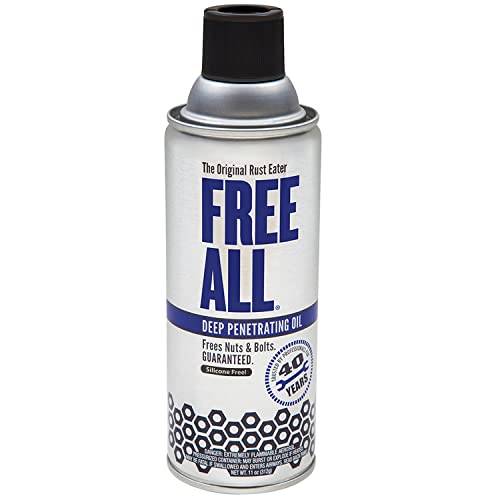
Helpful pick
Free All Rust Eater Deep Penetrating Oil, 11 oz Aerosol – Loosens Rusted Bolts, Nuts, Pipe Connections & Locks – Industrial-Grade Rust Remover, Silicone-Free Lubricant, Safe on Paint, Plastic Surfaces
This silicone-free formula is safe for various surfaces, ensuring you can effectively loosen rusted connections without damaging surrounding paint or plastic.
Practical Oil Choices for Common Problems
Rosehip oil is often selected for aging-focused skincare routines because common oil comparisons list it for that use and describe it as having a small molecular size. Start with a small amount, watch for dryness or irritation, and adjust the frequency if needed. Penetration is useful only when your skin tolerates the product.
If you have oily skin, focus on a light application. Jojoba or rosehip oil may work better than a heavier option when used sparingly, but even a lighter oil can feel greasy if over-applied.
FAQ
Which oil penetrates the deepest into skin?
Smaller molecular size generally helps oils move through skin layers more easily. Apply a thin layer to slightly damp skin for easier spreading and absorption.
Which oil penetrates the deepest into hair?
Hair penetration also depends on how easily the oil spreads through the strand and how compatible it is with hair lipids, so application matters as much as the oil itself. Use a modest amount on the mid-lengths and ends, then shampoo it out thoroughly.
How long should I leave a penetrating oil on my skin or hair?
For skin, apply the oil, massage it in, and leave it on as your moisturizing layer. For hair, use a short pre-wash treatment, then shampoo and condition normally. If you notice residue or irritation, reduce the amount and shorten the treatment time.
Is the deepest-penetrating oil always the safest?
No. Deep penetration does not automatically make an oil suitable for every person. Irritation depends on your skin or scalp sensitivity. Patch test first, particularly with oils used in active skincare routines such as rosehip. Stop or reduce use if you notice redness, itching, or increased breakouts.
What common mistake prevents deep penetration?
Over-application. Too much oil can bead, coat the surface, and rub off instead of blending into the skin barrier or hair shaft. Use a few drops, spread them well, and apply water-based hydration before oil when layering products.

- Best Bug And Bird Poop Remover For Cars 2026 - September 15, 2026
- Can Vaseline Work As Wd-40? - September 15, 2026
- Best Bug Remover For Bumper 2026 - September 15, 2026