Can A Bad Catalytic Converter Cause Overheating?

A bad catalytic converter can cause overheating, but usually indirectly. A clogged converter restricts exhaust flow, raises backpressure, and makes the exhaust manifold run hotter. That extra heat can overwhelm a marginal cooling system, especially under load.
Catalytic converters normally run hot, so a scorching converter does not always mean the engine is overheating. A rising temperature gauge, steam, or smoke points to a more urgent problem. If you see steam or smoke, stop driving immediately and check for coolant or exhaust leaks.
Key Takeaways
- Yes, it can. A clogged catalytic converter restricts exhaust flow and raises exhaust backpressure.
- Exhaust heat rises first. The exhaust manifold may get hotter before the engine coolant temperature changes.
- Watch for combined symptoms. Loss of power, misfires, and a check-engine light often accompany converter problems.
- Fix the root cause. Replacing only the converter without correcting fueling, ignition, or sensor problems can damage the replacement.
Can a Bad Catalytic Converter Cause Overheating?
Yes, a bad catalytic converter can contribute to overheating, but it usually causes a chain reaction rather than making the engine boil directly.
When a catalytic converter clogs internally, exhaust gases cannot leave the engine easily. The resulting backpressure forces the engine to work harder to expel exhaust, raising heat in the combustion process and around the exhaust manifold. If the cooling system is already marginal because of low coolant, a weak fan, or a failing thermostat, that extra heat can push the engine temperature into the danger zone.
Separate engine overheating from a hot exhaust system. Catalytic converters run at high temperatures even when they are working properly, so the converter can be extremely hot while the engine coolant stays at a normal temperature. Check the dash temperature gauge instead of judging by the heat you feel under the vehicle.
How Exhaust Backpressure Affects Engine Temperature
Exhaust backpressure is the pressure the engine must overcome to push burned gases through the exhaust. A clogged catalytic converter is one possible cause, and the effect becomes more noticeable under load, such as during hill climbs or hard acceleration.
When backpressure rises, the engine cannot evacuate exhaust gases efficiently. That increases heat around the exhaust manifold and can raise overall engine temperature because combustion and exhaust flow no longer operate as designed. The first driving symptoms are often reduced power, sluggish acceleration, or a temperature gauge that creeps upward when you demand more from the engine.
Backpressure can also worsen problems elsewhere. An ignition fault, rich fuel mixture, or exhaust leak may already be making the engine or converter run hot. Treat converter restriction as one possible cause, not the entire diagnosis, especially when the cooling system has not been checked.
Signs Your Catalytic Converter May Be Causing Overheating
A rising temperature gauge combined with catalytic-converter symptoms is the clearest pattern that the converter could be involved.
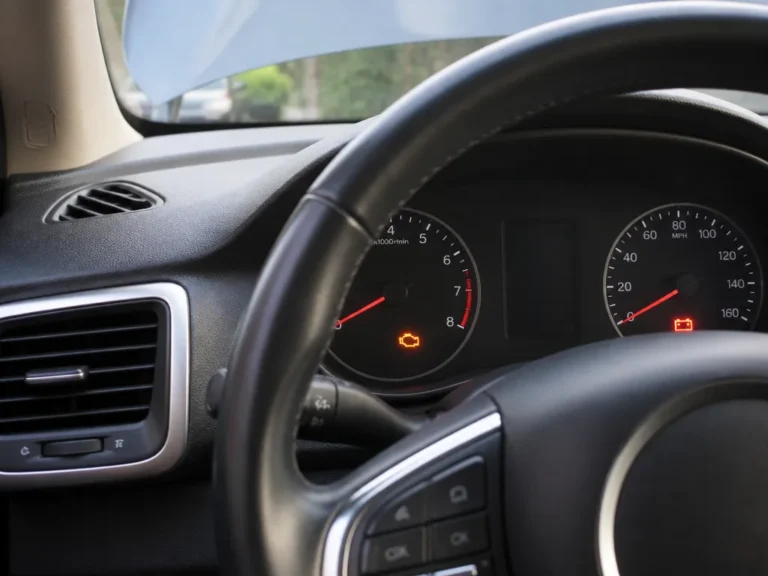
A clogged or damaged converter often triggers a check-engine light and causes drivability problems. Loss of power is common because the engine cannot expel exhaust efficiently. Reduced fuel economy, rough running, and misfires may appear as well.
| Symptom | Possible Implication | Recommended Action |
|---|---|---|
| Temperature gauge rising | Engine overheating | Check coolant level and inspect the catalytic converter |
| Steam or smoke | Severe overheating, possible engine damage | Stop the vehicle immediately and check for leaks |
| Unusual exhaust noises | Exhaust blockage or leaks | Inspect the exhaust system for damage |
| Loss of power | Engine struggling to expel exhaust | Evaluate catalytic converter condition |
| Frequent misfires | Fuel and air mixture issues | Check the ignition system and catalytic converter |
If the gauge stays normal but the area around the converter is scorching, the problem may be an overheated exhaust system caused by a misfire or excess fuel rather than a cooling-system failure.
What Causes a Catalytic Converter to Overheat?
A catalytic converter overheats most often when unburned fuel reaches it, oxygen-sensor feedback is incorrect, or an exhaust leak or restriction disrupts normal operation.
Unburned fuel can enter the exhaust stream because of misfires, worn spark plugs, failing ignition components, or fueling problems. The converter then has to burn off that extra fuel instead of processing normal exhaust gases, driving its temperature higher.
Faulty oxygen sensors can create a similar problem. If the sensors report incorrect oxygen levels, the engine may run rich or fail to correct the mixture properly. That sends excess fuel into the exhaust and makes the converter work harder, even when the rest of the exhaust system appears intact.
Exhaust leaks can also contribute. A leak before the converter can alter oxygen readings and let hot exhaust escape into areas that were not designed to handle it. External damage or internal restriction from an aging converter further increases heat by reducing flow through the catalyst substrate.
Catalytic converters normally operate between 400°C and 800°C. Once temperatures exceed 1,000°C, the ceramic substrate can melt, crack, or collapse. At that point, the converter may suffer permanent damage and create an even more serious exhaust restriction.
How to Check If the Catalytic Converter Is Faulty
Start with the warning lights and driving symptoms, then use a scan tool and targeted inspections. Smell alone cannot confirm a bad converter.
Look for the combined pattern: a check-engine light, emissions-related codes, reduced power, rough running, or frequent misfires. If you have an OBD-II scanner, retrieve the stored codes and write them down. Catalyst-efficiency codes such as P0420 or P0430 are useful clues, but they do not prove that the converter itself is the original problem. A misfire, rich mixture, or faulty sensor can trigger the same type of converter failure.
Inspect the exhaust system for physical damage, loose connections, and leaks around the exhaust manifold, downpipe, and converter. A leak can distort sensor readings and release hot exhaust where it should not be.
You can also perform a cautious temperature and restriction check after a short drive. Keep your hands away from hot components and look for unusual heat differences between the converter and nearby exhaust pipes. A converter that is exceptionally hot along with noticeable power loss is more likely to have an internal failure or restriction.
If the dash temperature gauge is rising, check the cooling system before condemning the converter. Verify the coolant level and inspect the thermostat, fan, hoses, and radiator. A clogged converter can add heat, but an engine that reaches the danger zone usually has a cooling-system problem that must be corrected as well.
How to Fix an Overheating Catalytic Converter
Fix the condition that is overheating the converter rather than replacing the converter alone.
Common causes include restricted exhaust flow, unburned fuel, faulty oxygen sensors, spark or ignition problems, and exhaust leaks. If a misfire or rich condition remains after you install a new converter, the replacement can overheat and fail again.
Use this repair order:
- Check the cooling system if the temperature gauge rises. Inspect the coolant level and basic cooling-system operation. You may have both added exhaust heat and a weak cooling system.
- Repair misfire and ignition problems. Fix worn spark plugs, failing ignition coils, and related faults so unburned fuel stops reaching the exhaust.
- Correct sensor and mixture problems. Repair oxygen-sensor or fuel-control faults so the converter operates within its expected temperature range.
- Repair exhaust leaks. Fix leaks before replacing the converter to prevent false sensor readings and continued heat problems.
- Replace the catalytic converter only after confirming failure. Use the trouble codes, physical inspection, and appropriate testing to verify that the converter is restricted or damaged.
Repair costs depend on the cause and the parts involved. Minor engine repairs, including sensors, plugs, and leaks, are listed as $150-$500. Cleaning with additives costs $25-$50, universal converters cost $200-$800, and OEM converters cost $1,000-$2,500+. Vehicle and regional pricing can change the final bill, but these ranges help separate root-cause repairs from converter replacement.
Can Overheating Damage the Engine?
Yes. If the engine temperature rises high enough, overheating can cause serious mechanical damage even when an exhaust problem started the chain reaction.
A clogged converter can increase heat and engine strain, but the cooling system still determines whether coolant temperature remains under control. Prolonged high temperatures can warp exhaust components and stress cylinder-head surfaces and head-gasket integrity, especially when the engine repeatedly runs hot.
The original cause can create secondary damage too. If misfires or unburned fuel are overheating the converter, those problems can damage the converter further and affect other components through soot loading, oil contamination, or repeated misfire events.
FAQ
Can a bad catalytic converter cause my temperature gauge to rise?
Yes. A clogged converter can raise exhaust backpressure and manifold temperature, and that extra heat may push the cooling system beyond its limits.
How do I tell if it is the catalytic converter or the cooling system?
Start with the cooling system when the temperature gauge rises. If the gauge stays normal but the converter area is extremely hot and the vehicle has reduced power or an emissions-related check-engine light, converter restriction becomes more likely.
What are the common signs of catalytic converter overheating?
Common signs include a check-engine light, loss of power, unusual exhaust noises, and excessive heat near the converter. You may also smell strong sulfur or see dark smoke when unburned fuel is causing the converter to overheat.
How much does it cost to fix an overheating catalytic converter?
The cost depends on whether you need root-cause repairs, a converter, or both. Typical ranges include $150-$500 for minor engine repairs such as sensors, plugs, and leaks; $25-$50 for cleaning with additives; $200-$800 for a universal converter; and $1,000-$2,500+ for an OEM converter.
Will replacing the catalytic converter solve overheating if I keep driving?
Usually not if the underlying problem remains. A misfire, rich mixture, faulty oxygen sensor, or exhaust leak can overheat a replacement converter. Correct the root cause before replacing the converter.

- Top 10 Best Helmet For Xpulse 200 2026 - October 5, 2026
- Top 10 Best Helmet For Xsr 155 2026 - October 5, 2026
- Top 10 Best Helmet For Xc Mtb 2026 - October 5, 2026