Can You Open Coolant Reservoir When Hot?

You generally should not open a coolant reservoir while the engine is hot. The cooling system runs under pressure, so opening the reservoir or radiator cap can release scalding coolant and steam within seconds.
Wait until the engine cools, typically 30 to 60 minutes, and open the cap only when the system is at or near ambient temperature. If the reservoir is marked “HOT,” follow that label. If you see steam or hear hissing, step back and wait longer. Pressurized coolant can spray even when the liquid looks calm.
Safe Coolant-Checking Rules
- Usually, the answer is no. A hot engine can leave the reservoir pressurized and capable of spraying coolant.
- Wait 30-60 minutes. The coolant needs time to cool and the pressure needs time to drop.
- Treat steam as a stop signal. If you see steam or hear hissing, do not approach the cap.
- Park on level ground. A flat surface gives you a more accurate coolant-level reading.
- Use the correct fill mark. Add coolant slowly and stop at the “COLD” line unless your owner’s manual says otherwise.
- Investigate repeat problems. Frequent low coolant, overheat warnings, and sweet smells indicate a possible leak or cooling-system fault.
Can You Open the Coolant Reservoir When Hot?
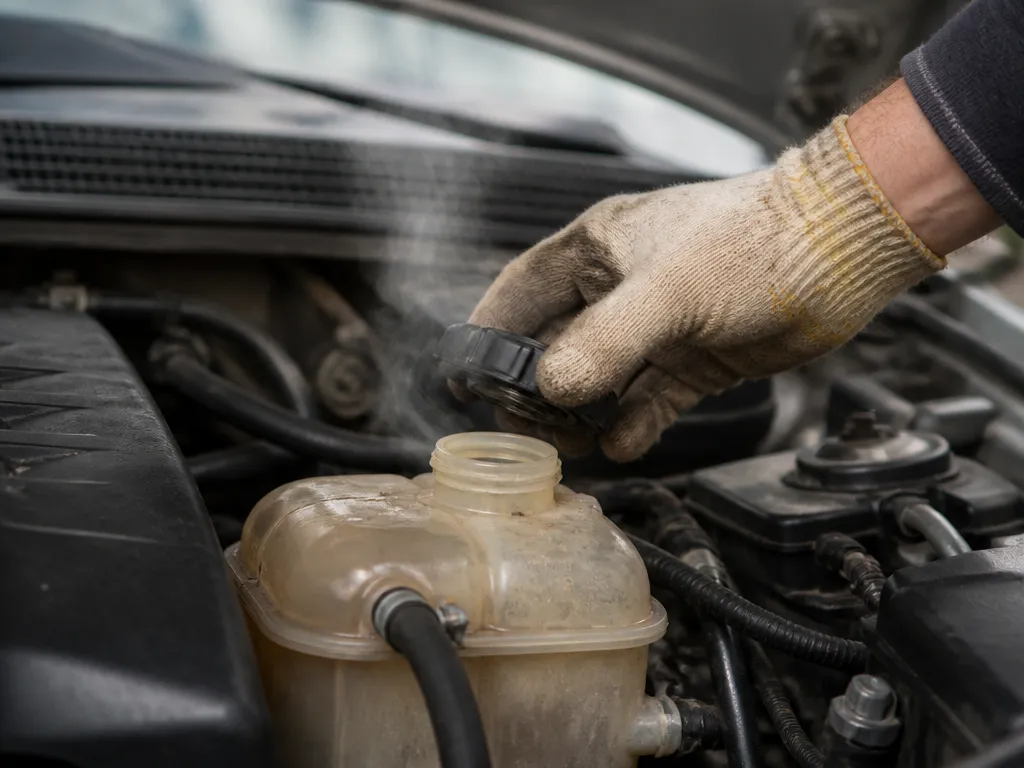
Coolant is stored under pressure, and that pressure raises its boiling point. When the cap opens, the pressure can drop suddenly, causing the coolant to flash into steam and spray outward.
If you want to top off a low reservoir, use the appropriate fill mark rather than treating it like an open container. A reservoir that looks calm can still release hot liquid when you loosen the cap.
As a practical check, if you cannot comfortably touch the upper radiator hose or the area around the reservoir without flinching, the system is still too hot to open. Steam or hissing means you should wait longer.
Why a Hot Coolant Reservoir Can Burn You
Hot coolant can cause serious burns because it may reach temperatures above normal boiling while the system is pressurized. Opening the cap removes that pressure instantly, allowing the fluid to erupt as a hot mist or spray.
The spray can reach your skin and eyes, as well as nearby belts, wiring, and exhaust components. Even loosening the cap slightly can release enough pressure to cause an injury.
Opening the system at the wrong time can also introduce air into the cooling system. Air pockets can reduce cooling performance and contribute to another overheating event after you have tried to correct the original problem.
What Happens When Pressure Drops
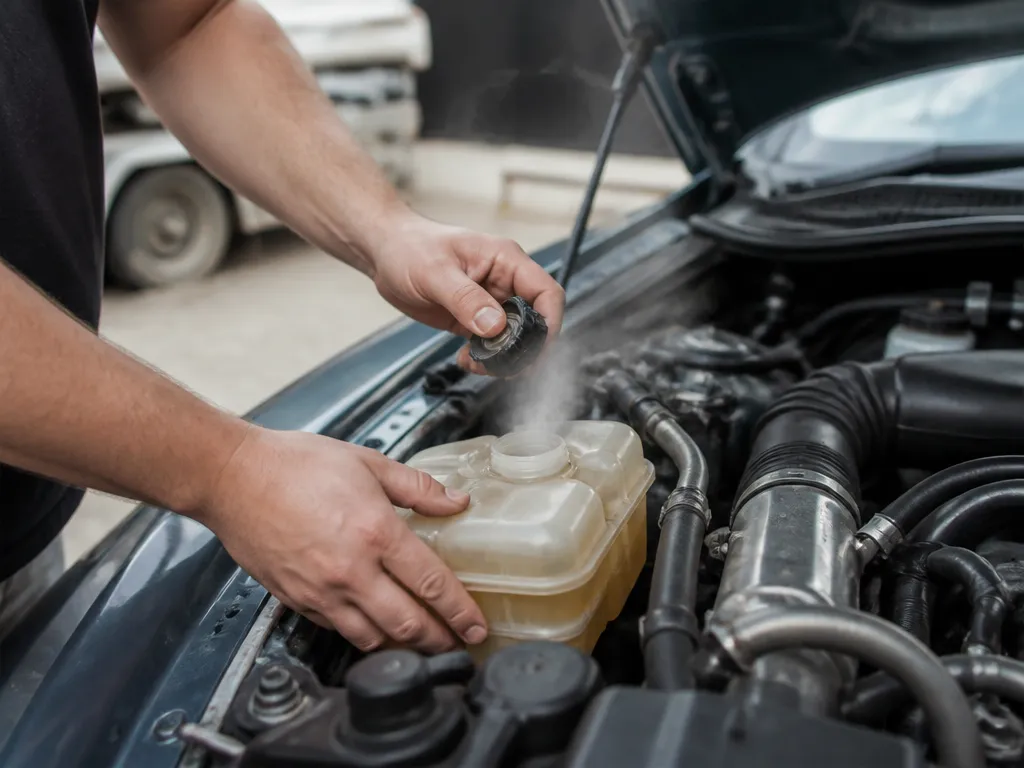
The cooling system stays pressurized during operation to keep coolant from boiling inside the engine and radiator. Pressure is part of the system’s normal design, not a sign that something is automatically wrong.
When you open a hot cap, the pressure drops before the coolant has time to cool. The fluid may then boil at the lower pressure, creating steam that pushes liquid upward through the opening. That is why a hot reservoir can spray suddenly instead of releasing a gentle dribble.
A simple way to picture it: pressure acts like a lid that keeps hot coolant from turning into steam. Removing that lid while the engine is still hot allows the coolant to vent and boil rapidly.
How Long to Wait Before Opening the Reservoir
If the car overheated, wait toward the longer end of the usual range. An overheating engine and cooling system may retain heat and pressure longer than a vehicle that has simply finished a normal drive.
How to Check the Coolant Level Safely
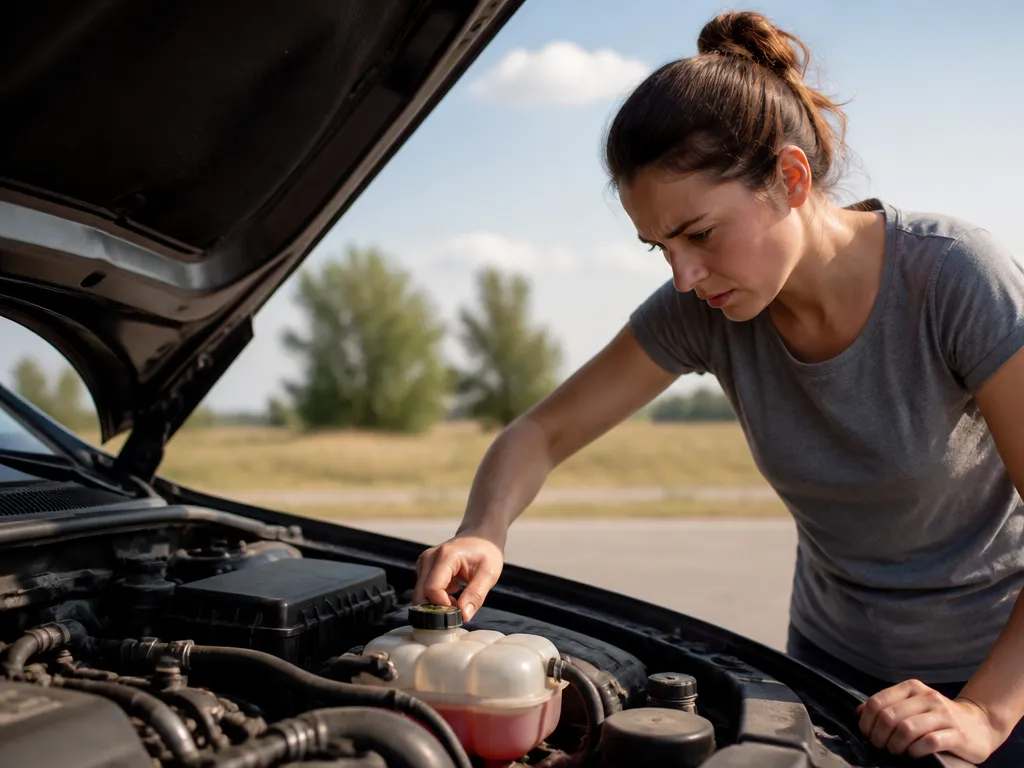
Park on level ground and find the “COLD” and “HOT” markings on the container.
Open the cap slowly only when you are ready to confirm the level or add coolant. Some caps are spring-loaded and may release pressure with an initial “crack,” so loosen the cap gradually and keep your face and hands away from the opening.
Add the coolant to the “COLD” line unless your owner’s manual specifically directs you to use another mark. Use the coolant type specified for your vehicle, which may require a particular color or chemistry. If the level was low enough for air to enter the system, the vehicle may need a proper service bleed afterward.
When the Reservoir May Still Be Unsafe to Open
Recent signs of trouble include a radiator fan that struggled, an “overheat” warning, or the smell of burning coolant.
Inspect the cap area without touching it if you see dried coolant crust, wet seams, or leaks around the reservoir and hoses. Opening the cap can worsen the mess and expose you to fresh spray. A leak also means the system may not hold pressure normally, so you should not assume it is safe simply because the vehicle has been sitting.
Use extra caution if the reservoir is completely empty. Parts of the cooling system may still be hotter than expected, and adding coolant may require a specific bleeding procedure. Follow the owner’s manual or have a mechanic handle it if you are unsure how to remove trapped air.
What to Do If Coolant Spills or Smells Hot
Treat spilled coolant as a burn hazard until it has cooled. Wipe it up carefully with a rag, avoid splashing, and keep the liquid away from moving parts and the exhaust system. Coolant can be slippery and irritating.
A hot, sweet smell often means coolant is leaking onto a hot surface. Do not keep driving in the hope that the smell will disappear. A continuing leak can cause another overheating event and leave the engine without enough coolant.
After the vehicle cools, inspect the reservoir seam, hose connections, radiator area, and water pump region for the source. If you cannot find the leak or the coolant level keeps dropping after you top it off, schedule service instead of relying on repeated refills.
FAQ
Can you open the coolant reservoir when hot if you do it slowly?
No. Loosening the cap slowly does not eliminate the pressure or prevent a hot mist from escaping.
How long should I wait after driving before checking coolant?
A typical wait is 30 to 60 minutes, but an overheating situation may require closer to 60 minutes or more. The system may retain heat and pressure after severe overheating.
What is the safest way to check coolant level?
Park on level ground and read the reservoir’s “COLD” and “HOT” marks. Add coolant to the “COLD” line unless your owner’s manual gives different instructions.
Is it okay to add coolant if the engine is still warm?
A warm system may still vent or boil under pressure. Follow the owner’s manual for the correct coolant type and filling procedure.
What is the most common mistake people make with coolant reservoirs?
Opening the reservoir or cap too soon is the most common mistake. People also confuse the “HOT” line with the correct “COLD” fill level, which can leave the system overfilled and cause a mess as the coolant expands.

- Top 10 Best Helmet For Xtreme 125r 2026 - October 5, 2026
- Top 10 Best Helmet For Xpulse 200 2026 - October 5, 2026
- Top 10 Best Helmet For Xsr 155 2026 - October 5, 2026