Car Battery Dead Doors Won’t Unlock: 4 Quick Fixes

A dead car battery can disable the power locks, even when the key fob lights up and the key turns normally. If the dash is dark and the interior lights barely glow, treat it as a low-voltage problem first. Jump-starting or charging the battery often restores lock function within minutes.
If the fob won’t work and the dome light is weak or dead, confirm vehicle power before replacing the fob or diagnosing a door actuator. The quickest safe sequence is: try the physical key, check the interior lights, then jump-start or call roadside assistance.
Quick Checks Before You Force the Door
- Check the power clues. A dark dash, weak headlights, or dim interior lights point to a dead or severely discharged battery.
- Test the fob battery. Replace it if the fob’s own LED does not light.
- Use the physical key. Many cars have a mechanical driver-door lock hidden beneath a small cover.
- Watch the dome light. No light usually points to low power, a fuse, or a battery connection problem.
- Jump-start carefully. Confirm polarity and stop if you see heavy arcing, smell burning, or find damaged terminals.
- Investigate repeat failures. A battery that dies again may be worn out, undercharged, or losing power through a parasitic drain.
Why a Dead Battery Stops the Door Locks
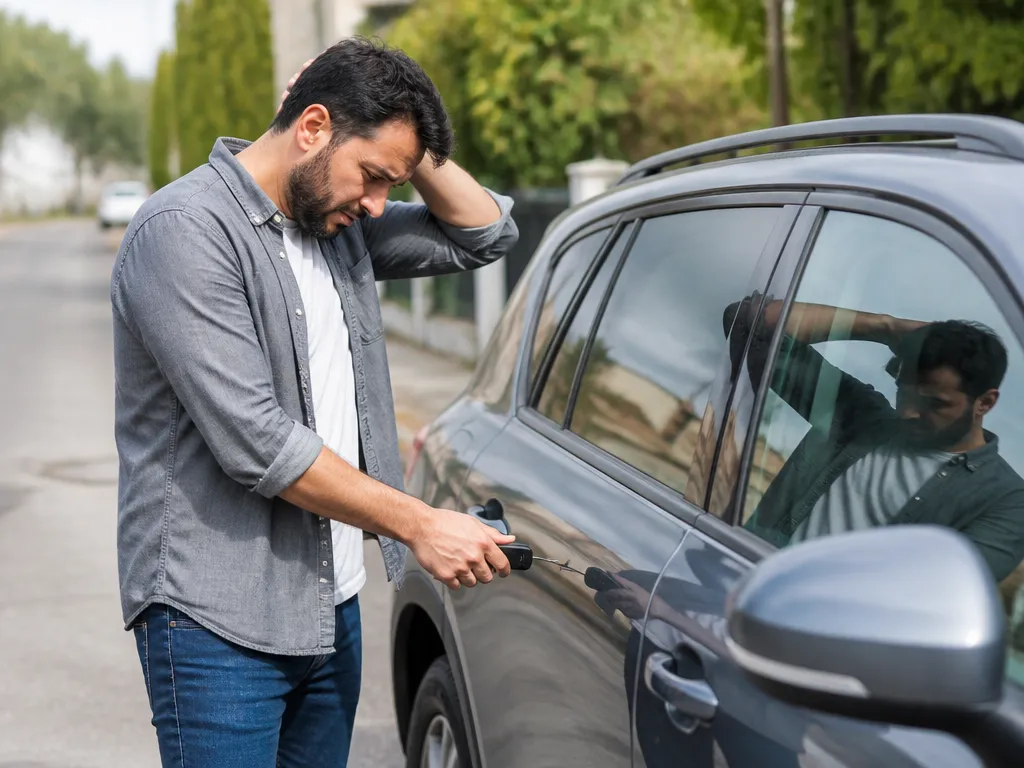
Power locks, remote keyless entry, and many alarm functions rely on the vehicle’s battery and body control module. When voltage drops too low, the module may ignore the fob and the lock motors may not move.
Other symptoms often appear at the same time: a dim dash, slow or no cranking, weak headlights, or dome lights that barely glow or stay off. The fob may still click or flash its LED, but that only proves the fob has some power. The car still needs enough battery voltage to receive the signal and operate the locks.
Check the Fob Battery and Keyless Entry
A weak fob battery can stop remote unlocking even when the car has enough power to start. If the dash, headlights, or interior lights show normal power, replace the fob battery before investigating the vehicle’s locks.
Press the unlock button and watch the fob’s LED. If it lights but the car does nothing, the vehicle battery could still be too weak for the receiver and lock system. If the LED does not light, replace the fob battery as a low-cost first test. Use the specified battery type; some newer keys use specialized batteries, and forcing in the wrong size can damage the fob.
Test any other entry feature your car has. Some vehicles unlock through a touch sensor on the handle or an approach-unlock system.
Use the Mechanical Key Before Forcing Anything
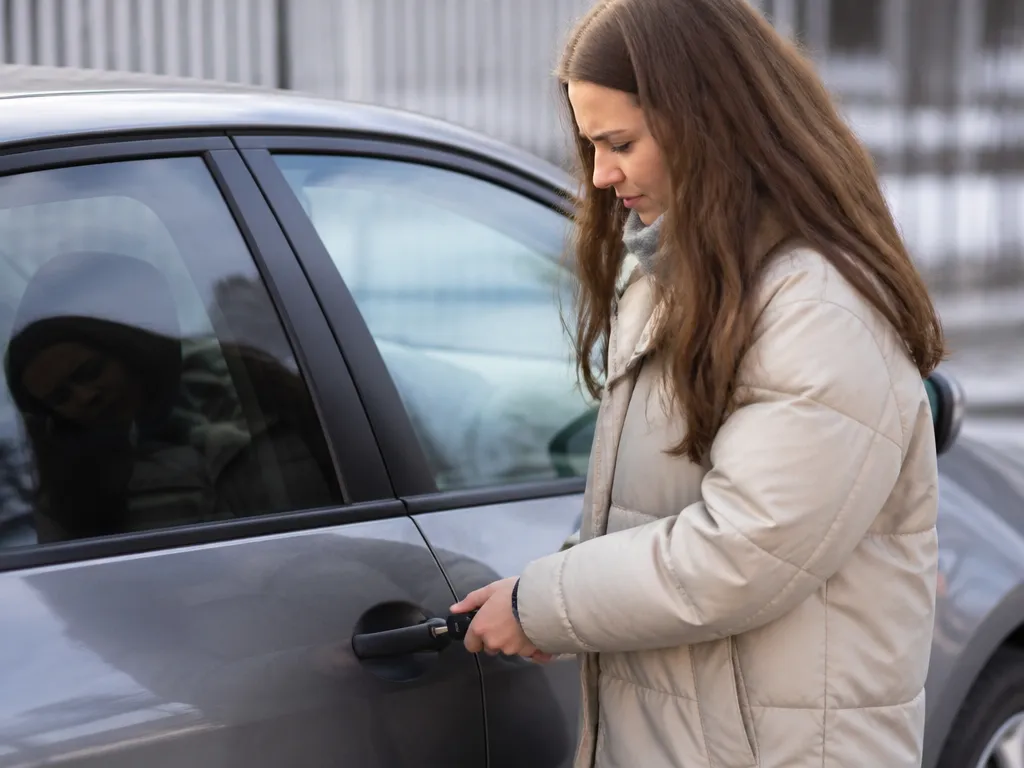
The physical key is usually the safest way into a car with dead power locks. Most vehicles have a key cylinder on the driver door, including many cars with push-button starts and keyless entry.
Look for a small cover over the cylinder. On some models, the key blade releases the cover; others allow removal with a small plastic pry tool. Insert the key and turn it to unlock the door.
If the door unlocks mechanically while the power locks remain dead, the latch works and the electrical system is the problem. Once inside, turn on the ignition or start the car to restore stable voltage. Then test the interior lock switch. If the locks still do not move after the vehicle has power, check the fuses before suspecting an actuator.
Some fobs have a hidden key blade that slides out. If you cannot find a key cylinder or emergency key, check the owner’s manual or the fob itself. Do not pry the door frame, force the handle, or strip the lock. Move to a jump-start or roadside assistance call instead.
Use the Dome Light to Confirm Vehicle Power
The dome light provides a quick indication of whether the car has usable battery power. Press the fob’s unlock button, pull the door handle, and watch the dome light and warning chimes.
- A completely dead dome light points to a battery that is too weak, a disconnected battery, or a power-supply problem.
- A flickering or very dim light also suggests low voltage.
- A normally bright dome light makes a dead battery less likely and shifts attention toward the fob, keyless receiver, lock switch, or fuse.
Check the hazards, radio, and USB power as well. Any normal electrical response means the battery may not be completely dead, although it can still be too weak to operate the locks.
If the dome light works normally but the locks do not, inspect the relevant fuse if you can do so safely. A blown fuse can disable the power locks while leaving other electronics operational.
Jump-Start the Car to Restore Lock Power
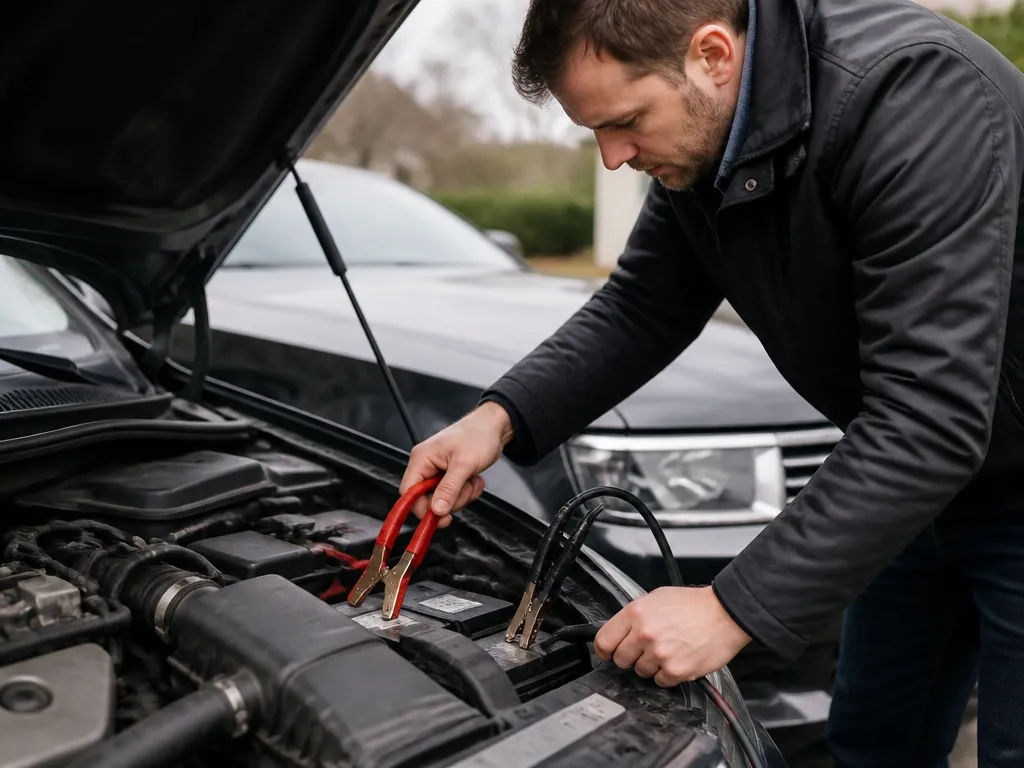
A jump-start can restore enough voltage for the body control module and lock actuators to work. Park in a safe location, set the parking brake, and place both vehicles in Park, or neutral if required by the vehicle. Turn off accessories in both cars, and keep the cables away from belts and fans.
Connect the cables in this order:
- Attach the red positive clamp to the dead battery’s positive terminal.
- Attach the other red positive clamp to the donor battery’s positive terminal.
- Attach the black negative clamp to the donor battery’s negative terminal.
- If the vehicle manual recommends it, attach the final black clamp to bare metal on the dead car’s chassis rather than the dead battery’s negative terminal. This can reduce sparking near the battery.
Use stable connection points and verify the polarity before starting either vehicle. Start the donor car and let it run for a few minutes, then try the door lock or unlock switch. If the door opens, keep the engine running or drive long enough to recharge the battery.
If the locks still do not respond after a few minutes, stop and reassess. The battery may be too far discharged, the clamps may not be making good contact, or another electrical fault may be present.
Disconnect and stop immediately if you see heavy arcing, smell burning, or find loose, badly corroded, leaking, or damaged battery connections. Incorrect polarity and damaged batteries can create a serious hazard. Call roadside assistance or a mechanic instead of continuing.
Find Out Why the Battery Died
If the battery dies again after a jump-start or proper charge, the dead battery is probably a symptom rather than the whole problem. The battery itself may be worn out, the alternator may not be charging it, or something may be draining power while the car sits.
Common sources of parasitic drain include a stuck relay, faulty door switch, aftermarket alarm, dashcam, or electronic accessory that never powers down. The timing provides a useful clue:
- If the battery dies after sitting for hours to a couple days, a drain is more likely.
- If it dies only after long storage, the battery may be old, weak, or undersized.
Start with simple checks. Make sure the interior lights are off, every door and the trunk are fully latched, and no accessory remains plugged in or switched on. If the car has aftermarket electronics, check whether they have an always-on mode.
Inspect the battery terminals for corrosion and looseness. A poor connection can cause voltage drop under load and mimic a failed battery. Clean and tighten the terminals only if you can do so safely. A cracked battery case or leaking fluid requires immediate professional inspection.
If the battery dies again after a proper charge, stop relying on repeated jump-starts. A battery shop or mechanic can test battery health and alternator output, then measure parasitic draw if needed.
Prevent Another Battery-Related Lockout
Keep a usable spare key somewhere separate from the car, such as at home or with a trusted person. Storing both keys inside a vehicle creates the same lockout problem twice.
While the car still has power, confirm that the physical key blade unlocks the driver door. Practice removing any cover over the key cylinder so you are not trying to figure it out during an emergency. Replace a weak spare-fob battery before the remote becomes unreliable.
Check the emergency services available for your vehicle. Some manufacturers include roadside unlocking coverage, while others offer app-based or account-based remote assistance. Those options are safer than prying the door, breaking a window, or using improvised lock-opening tools.
When parking for long periods, turn off accessories and unplug devices that can draw power. Dashcams, phone chargers, and aftermarket electronics can drain a battery while the car sits. If the vehicle is prone to battery problems, a battery maintainer or smart charger may cost less than repeated lockouts, but choose one compatible with the battery type and vehicle.
FAQ
Why did my car battery die and my doors won’t unlock?
A dead battery can drop below the voltage required by the body control module and power-lock motors. The key or fob may still appear to work, but the vehicle may ignore the unlock command. If the dome lights are also dead or extremely dim, low battery voltage is the most likely cause.
Can I unlock the door with a key fob if the battery is dead?
Usually not, although some vehicles may respond briefly if the battery is only weak. The fob communicates with a receiver and body control module that still need vehicle battery power. If the interior lights are off and the dash is dark, remote unlocking generally will not work until you charge or jump-start the battery.
How long should I try jump-starting before calling for help?
Try the jump-start for a short period, a few minutes, then test the unlock function. If the door still will not open, stop and reassess the battery, cable connections, and electrical system. Repeated attempts waste time and increase the risk of a problem with loose, corroded, or incorrectly connected cables.
What’s the safest way to get the door open without damage?
Use the physical key blade in the driver-door cylinder. If the cylinder is hidden, look for a removable cover and check the owner’s manual for the release method. Do not pry the trim or force the handle if you feel resistance. Call roadside assistance if the vehicle has no accessible mechanical lock or you cannot unlock it safely.
What should I check first if the battery keeps dying?
Check the battery terminals for looseness or corrosion and confirm that the battery holds a charge. Look for obvious always-on sources, such as aftermarket accessories, a trunk left ajar, or interior lights that remain on. If the battery dies quickly after sitting, have a mechanic test for parasitic drain along with battery health and alternator output.

- Top 10 Best Helmet For Xtreme 125r 2026 - October 5, 2026
- Top 10 Best Helmet For Xpulse 200 2026 - October 5, 2026
- Top 10 Best Helmet For Xsr 155 2026 - October 5, 2026