Car Ac Compressor Shooting Out Freon: Causes And Risks

Freon shooting out of your car’s AC usually means refrigerant is escaping fast, and that almost always comes with a sudden loss of cooling. If you’re in the United States, you also need to treat the leak as an emissions and safety issue, not a “top it off later” problem. This guide tells you what it means, how to confirm the leak location, and what to do immediately to protect yourself and the system.
Refrigerant “shooting” from a car’s AC is a serious leak, and it usually drains the system quickly, stopping cooling. Shut the AC off right away, keep your face away from the engine bay, and get the refrigerant recovered by a shop rather than venting or attempting to charge an unknown leak. Even small leaks can lead to compressor oil loss and eventual compressor failure.
Key Takeaways
- Stop using the AC. Turn it off immediately to avoid more refrigerant and oil loss.
- Do not vent refrigerant. Recovery is required for proper servicing, and venting is illegal in the U.S.
- Expect cooling loss fast. Refrigerant escapes, so pressure drops and the system can’t move heat.
- Look for oily residue. Leaks often leave oily film around fittings, hoses, and the compressor area.
- Get the leak pinpointed. A refrigerant sniffer can cost about $20 to $200 and helps locate where it’s coming from.
- Plan for the repair. Many “shooting out” events end with a recharge plus leak repair, or compressor replacement.
What It Means
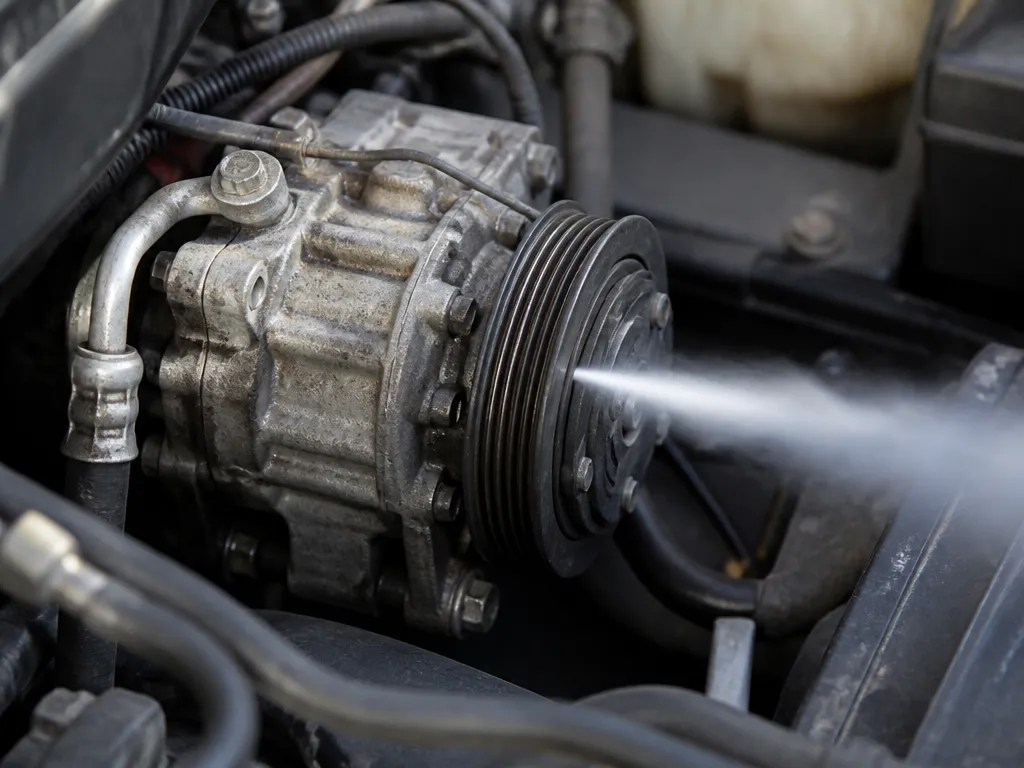
When refrigerant shoots out, your AC system is doing two things at once: dumping high-pressure refrigerant and losing the refrigerant oil that keeps the compressor’s internals lubricated. On many cars, the compressor is the pressure-making component, so leaks near the compressor, hoses, or service fittings can look dramatic.
The key detail is this, the symptom usually isn’t “the compressor itself suddenly exploding.” More often, a fitting or hose connection has failed, a seal has blown, or the system has been opened previously and reassembled poorly. Either way, you end up with low pressure and insufficient refrigerant to operate the evaporator and condenser correctly.
If this happened while driving, you may also notice the AC stops working almost instantly, then the engine compartment may show frost or oily wetness near the leak point. People describing “freon shot out from somewhere under the hood” often mean they saw a plume and then the air got warm fast.
Signs Your Compressor Is Leaking Refrigerant
The clearest sign is visible refrigerant discharge, usually accompanied by rapid cooling loss. Less dramatic leaks still show up as reduced cold air, higher vent temperatures, and sometimes cycling on and off because pressures fall below what the system needs to run.
You can also use “secondary leak clues.” Look for oily residue around the compressor body, clutch area, line fittings, and hose connections. Refrigerant leaks often leave behind an oily film, because AC systems circulate refrigerant with lubricating oil.
Here are practical signs that point toward a compressor-area or line leak:
- AC gets weak after running for a few minutes
- You smell a chemical odor in the engine bay (don’t stick your nose close)
- Frost forms on parts that shouldn’t frost up (often near leaking joints or restrictions)
- Audible hissing near the engine compartment when the system is on
- You see wetness, oily streaks, or debris collecting around a fitting
For example, if you notice the AC was fine, then you hear a sharp hiss and the air goes warm within minutes, treat that as an active refrigerant leak. Your next move should be to shut it down and verify the discharge location safely.
Why It Happens After the Compressor Runs
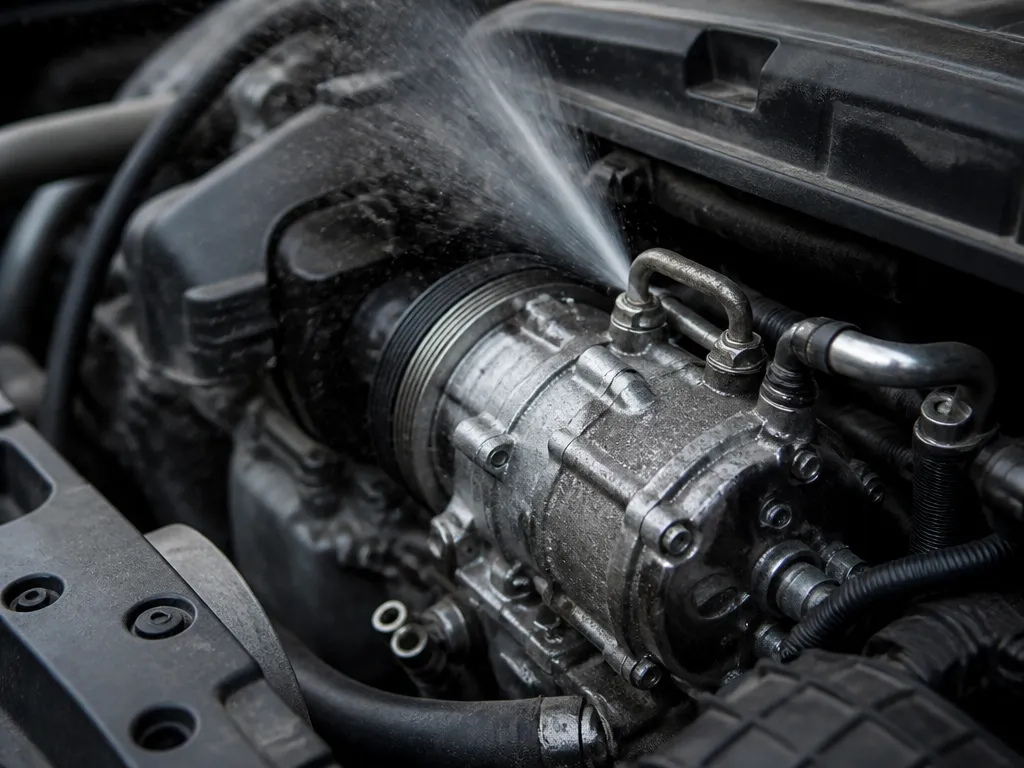
A “shooting out freon” event usually happens because refrigerant pressure builds when the compressor runs, then a weakened seal or connection can’t hold. When the compressor starts pumping, system pressure rises and pushes refrigerant out through the weakest path, often at a hose crimp, O-ring joint, or service port area.
That’s also why it can appear to start after driving, after idling, or after the AC has been on for a short time. As the system reaches operating pressure, the leak becomes severe enough to be visible or audible. If a connection is marginal, the first time it sees full load might be the time it fails.
There’s another pattern that matters if you’re troubleshooting: sometimes people connect wrong service gear or keep adding refrigerant when nothing moves through the system. In those situations, the “path” from the can to the low side is blocked, a self-sealing can adapter never opens, manifold valves are closed, or a Schrader core is stuck. That doesn’t create a leak by itself, but it can confuse diagnosis and waste refrigerant while the underlying issue remains.
So the real mechanism is pressure plus a failed containment point. The compressor turns pressure into motion, and the leak turns that pressure into a plume.
Is Shooting Freon Dangerous Health And Fire Risks?
Yes, refrigerant discharge can be dangerous. Freon-type refrigerants are not something you want in your breathing zone, and symptoms from inhaling leaked refrigerant can include dizziness and nausea. Also, if the leak is active, the plume can displace oxygen locally and irritate your eyes and lungs.
Fire risk is less about “it will ignite instantly” and more about what happens around hot engine components. Refrigerant discharges are typically not meant to burn, but an engine bay leak plus electrical components and hot surfaces is still a bad combination. Treat it as a hazard and keep people away from the engine compartment while the leak is occurring.
From a practical standpoint, the safest approach is boring and effective:
- Turn the AC off immediately (don’t keep it running to “see what happens”).
- Shut the car off if you see visible discharge or heavy hissing.
- Ventilate the area by moving away from the plume.
- Avoid ignition sources (don’t smoke, don’t run tools that could spark near the leak).
In the U.S., venting refrigerant is also illegal. Even if you think “it’s just a little,” the correct process is refrigerant recovery before repair, especially when the leak is unknown and could be severe.
Damage From A Freon Leak And Cooling Loss
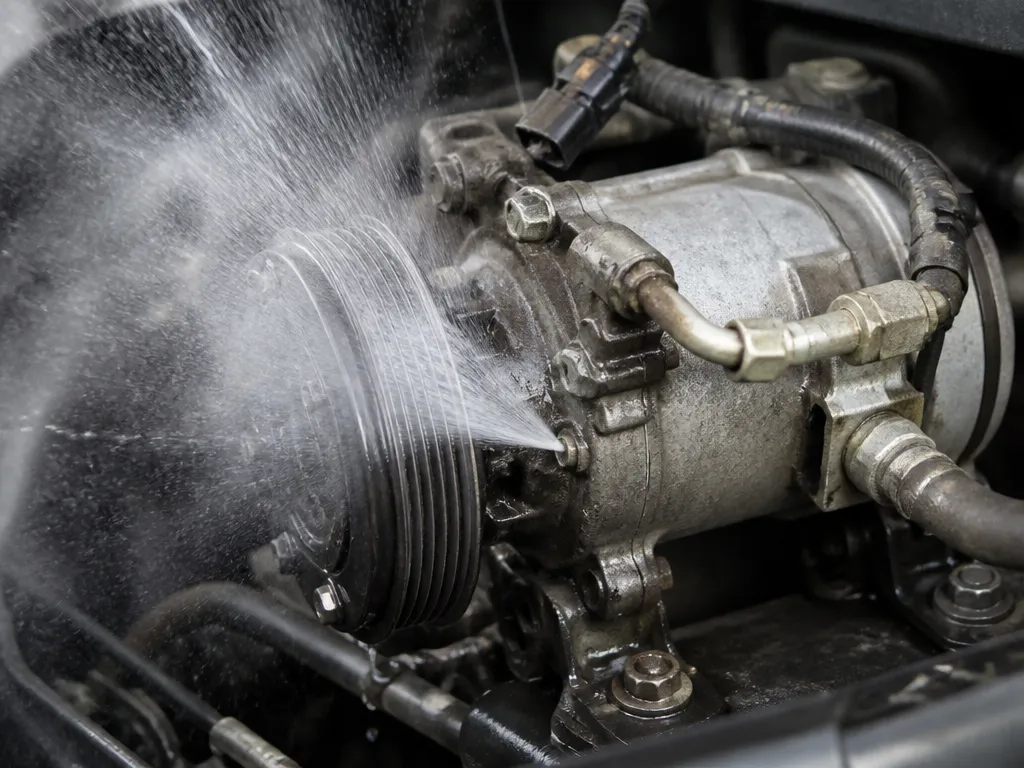
A refrigerant leak reduces system pressure, which stops the AC from absorbing heat properly. That’s why your cabin warms up and why you may feel weak airflow from the vents, even if the blower is working. The evaporator can’t do its job when refrigerant charge is low.
More expensive damage happens next if the compressor runs while the system is low. Refrigerant loss means the internal compressor lubrication oil circulates less, and the compressor can overheat and seize over time. In other words, a leak isn’t only “no cold air,” it can be “the compressor is next.”
There’s also a risk of contamination. If debris gets into the system through a leak or previous service error, you can end up with restriction at the orifice tube or expansion valve. That can look like an AC problem but the root cause is still the loss of refrigerant and system condition.
A common end-state after a major leak is:
- Refrigerant level drops
- Cooling stops quickly
- Compressor may fail if it was run too long
- You need leak repair plus system recharge, and sometimes replacement parts
If you want a quick sanity check for whether you may have already crossed into compressor damage, look for new symptoms after the event, such as loud AC noises, clutch cycling rapidly, or persistent AC failure even after the system is repaired. If the compressor was starved for oil, the leak repair alone may not bring the AC back.
Repair Options Compressor Replacement Vs System Recharge
You usually don’t “fix” a shooting-out leak by just adding refrigerant. If refrigerant is leaking that aggressively, the correct repair is to locate and repair the leak first, then recover and recharge the system properly.
The decision between compressor replacement versus system recharge depends on what failed:
- If the leak is clearly at a hose, fitting, condenser, evaporator, or service port and the compressor was not run long while low, you may only need leak repair plus recharge.
- If the compressor was noisy, overheated, or shows signs of internal failure after the leak event, replacement becomes likely.
A compressor that has been starved by low refrigerant can seize or fail. The symptom progression matters. If your AC stopped immediately when it discharged and the compressor didn’t continue running for long, you might get lucky. If it kept cycling or you continued driving with weak cooling, the odds shift toward compressor damage.
Here’s how to think about the most common cost-and-workflow outcomes in plain terms:
| Repair Path | What’s Actually Being Fixed | Best For | Typical Outcome |
|---|---|---|---|
| Leak repair + recharge | Replace/repair the leaking line, fitting, O-ring, or condenser component | Leaks at hoses/fittings, visible oily residue near a specific joint | AC returns normally after charge |
| Orifice/expansion + recharge (after leak) | Restore correct flow after restriction | Frosted/blocked metering indications after leak | Cooling improves if compressor is healthy |
| Compressor replacement + leak repair + recharge | Replace compressor and restore refrigerant + oil path | Compressor failed after low-charge running, abnormal noises, clutch problems | Most reliable fix after internal damage |
In practice, most shops will pressure-test or use detection methods to find the leak point, recover refrigerant, fix the failed components, evacuate the system, then recharge to spec. Doing recharge before confirming the leak is basically paying again for the same problem.
What To Do Immediately If Freon Is Spraying
Your first job is safety and damage prevention. Don’t try to “finish the drive” with the AC blasting. Don’t open the hood and hover over the plume. And do not attempt to vent refrigerant to “clear it out.”
Do this sequence:
- Turn the A/C switch off and set the fan to normal or low heat mode.
- Stop the car if you see visible spray or heavy hissing, then shut off the engine.
- Keep your distance from the engine bay, especially from the suspected leak area.
- Check for oily residue from a step back, without touching parts.
- Call for refrigerant recovery and diagnosis – a competent shop can find the source and repair it correctly.
If you need a way to help someone locate the leak safely (without DIY charging), a refrigerant sniffer can help detect leaking gas. Those devices are often priced around $20 to $200, and they can detect refrigerant vapor when used properly. Avoid relying on a hunch alone, because a visible plume can come from one component while the leak path involves another.
Also, if you’re tempted to use a DIY “add refrigerant” kit, don’t. Most add-and-go kits assume the system is intact and the leak is small. A “shooting out” event suggests a major loss path where charging without repair is just a fast way to waste money and risk further damage.
FAQ
Can a car AC compressor leak Freon and still cool for a while?
Yes. A compressor-area leak can start small and you may still get some cooling until refrigerant drops low enough. When the leak is severe enough to spray, cooling often stops quickly because pressure collapses and the system can’t move heat.
How long can I drive after I see Freon spraying?
Don’t drive with an active discharge. Turn the AC off immediately, and if refrigerant is spraying or hissing heavily, shut the car down and get help. Continuing to run can overheat the compressor and increase the chance you’ll need compressor replacement later.
Is it illegal to vent refrigerant from a car AC system in the U.S.?
Yes. Venting refrigerants is regulated in the United States, so the safe and legal approach is refrigerant recovery before repair. A shop should recover the refrigerant, fix the leak, evacuate the system, and recharge properly.
What should I tell the mechanic when refrigerant is spraying?
Tell them exactly when it happened (idling, after driving, after a repair, or after turning the AC on), whether cooling stopped immediately, and where you saw the plume. Mention whether you noticed oily residue or frost around hoses, fittings, the condenser, or the compressor area, and bring photos if you took any.
What’s the most common mistake people make in this situation?
Trying to top it off or recharge before finding and fixing the leak. If refrigerant is spraying, you need leak detection and repair first, otherwise the system will dump the new charge again and may run low enough to damage the compressor.
Your next step is simple: turn the AC off and get refrigerant recovery plus leak diagnosis, especially if you saw a plume. If you act fast and the leak is in a hose or fitting, you might avoid compressor replacement, but only if the leak is repaired and the system is recharged correctly.

- Top 10 Best Helmet For Xsr 155 2026 - October 5, 2026
- Top 10 Best Helmet For Xc Mtb 2026 - October 5, 2026
- Top 10 Best Helmet For Wakeboarding 2026 - October 5, 2026