Car Stuck In Reverse But Shifter Is In Park Explained

If your car lurches backward even though the shifter is in Park, treat it as a driveability and safety fault, not a quirk. The transmission is still physically or electronically selecting Reverse, usually because of a misadjusted shift linkage, incorrect shifter detent alignment, or a faulty transmission range sensor. Wiring and connector problems can create the same mismatch.
If the car moves on its own, keep your foot on the brake while securing it, but only attempt to control it from a safe position. Secure the vehicle before diagnosing anything.
What to Do First
- Stop driving immediately. If the car creeps in Reverse, secure it, chock the wheels, and limit troubleshooting to a stationary vehicle.
- Check the linkage or cable. A misadjusted shift linkage can leave the transmission selector in Reverse even when the cabin shifter indicates Park.
- Check shifter detents. Worn bushings, cables, or a misaligned shift gate can prevent the transmission from reaching true Park.
- Check the range sensor. A failed transmission range sensor can report the wrong gear to the ECU.
- Inspect wiring. Corroded connectors or broken wires can make gear-position readings intermittent.
- Call a mechanic if the car is unsafe. If you cannot confirm the selector position or the problem returns quickly, stop troubleshooting and have the vehicle inspected.
Car Stuck in Reverse but Shifter Is in Park
The timing also matters. A problem that appears only when the engine is cold, after a hard stop, or every time you park points toward different causes. A mechanical misalignment is often consistent. An electrical range or sensor fault is more likely to be intermittent or temperature-related.
What “Stuck in Reverse” Feels Like
“Stuck in reverse” usually produces one of three symptoms:
- The car creeps backward when you release the brake.
- Reverse engages abruptly as soon as you touch the shifter.
- The car remains in Reverse for a while after you move the shifter.
In each case, the transmission’s internal selector does not match the range you requested. A reverse creep may appear as the vehicle settles after shifting. A sudden engagement can feel like a clunk followed by immediate movement.
Warning lights or a mismatched PRND display point more strongly toward a sensor or control-input problem. Check for a check engine light, transmission warning light, or PRND indicator that shows a range different from the one selected.
Shift Linkage, Shifter, and Cable Problems
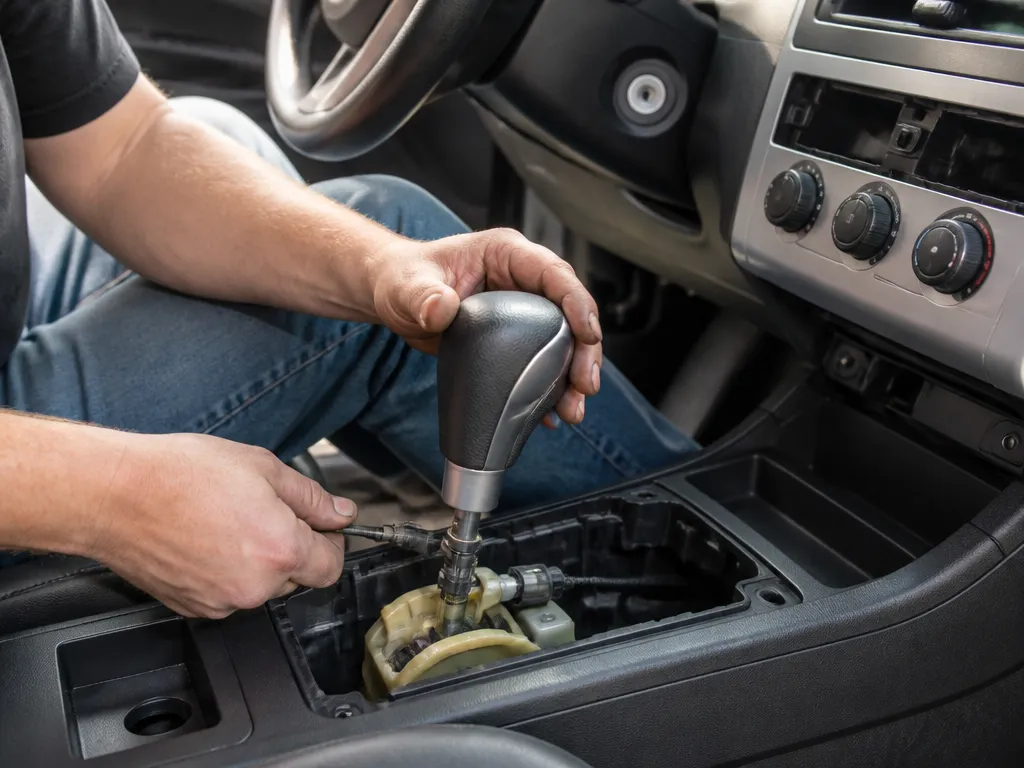
Most “shifter says Park, transmission says Reverse” problems begin in the mechanical path between your hand and the transmission selector. Depending on the vehicle, that path may use rigid shift rods, a shift cable, or a combination of mechanical and electronic components.
Linkage problems are common on vehicles with external rods and bushings. A worn bushing or bent rod can make the shifter feel as if it is in Park while the transmission lever remains in Reverse. Cable-operated shifters can develop stretched cables, frayed strands, or cable ends that slip in their brackets. A small difference in movement can prevent the transmission from reaching its detent.
With the engine off, move the shifter gently and note the following:
- Does it bottom out firmly in Park, or does it feel spongy?
- Do the PRND letters illuminate incorrectly or flicker as you move the lever?
- Can you jiggle the shifter and make the display appear to change gears?
These clues do not prove the cause, but they help separate mechanical misalignment from sensor misreporting. A loose or vague shifter points toward the linkage, cable, bushings, or shift-gate mechanism. A firm shifter with an incorrect or fluctuating display points more toward the range sensor or wiring.
Automatic Transmission Causes of a Reverse Lockout Problem
Some automatic transmissions prevent Reverse from engaging at certain speeds or throttle positions. Those protections reduce driveline shock; they do not correct a real mismatch between the shifter and the transmission selector. If Reverse remains active after you select Park, the control system may still be receiving a Reverse command, or the internal selector may be stuck there mechanically.
The transmission control module typically uses two types of information: the requested gear and the actual gear-position signal. A range sensor, also called a neutral safety switch on some vehicles, tells the ECU and other modules where the transmission selector is positioned. If that sensor reports Reverse while the module expects Park, the vehicle can behave unpredictably.
Internal transmission faults are less common than external linkage or sensor problems, but they can happen. Worn internal shift components, sticking valves, or damage at the transmission-side linkage can prevent the selector from reaching Park. If external adjustments are correct and the range sensor checks out, internal faults move higher on the list.
Diagnose the Shift Linkage and Shifter Detents
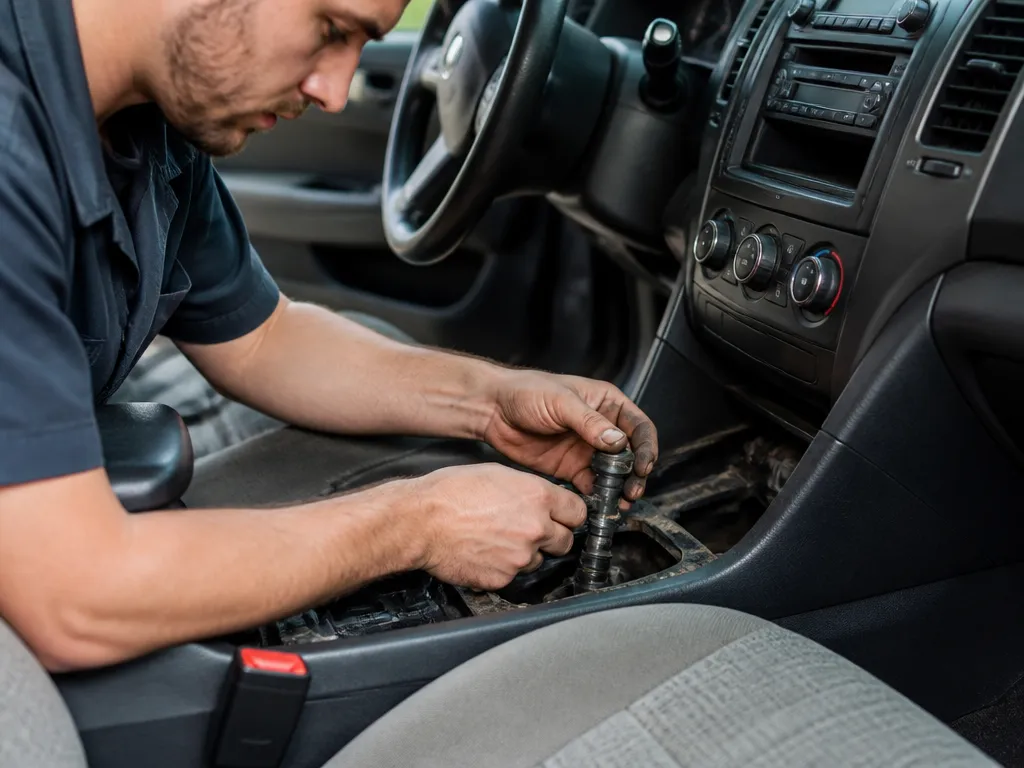
Inspect the accessible linkage points under the hood or beneath the vehicle. Look for a bent rod, disconnected lever, loose bolts, or excessive play in the bushings. On vehicles with shift cables, inspect both cable ends – the one at the shifter bracket and the one at the transmission selector. Looseness or slippage at either end can make the cabin shifter and transmission selector disagree.
Next, move the shifter slowly through Park, Reverse, Neutral, and Drive with the engine off. Pay attention to the detents rather than relying only on the PRND indicator. A worn gate mechanism or broken internal shifter stop can let the lever sit near Park without fully selecting it.
The most useful DIY check is comparing the cabin shifter position with the transmission selector position, if the selector is safely accessible. If you cannot reach it safely, check the range sensor’s electrical confirmation signals instead. Do not force the shifter against resistance. Forcing it can worsen a binding linkage or turn a minor misalignment into a larger repair.
Check the Transmission Range Sensor and Wiring
The transmission range sensor tells the ECU and often other vehicle modules which gear the transmission selector is in. If the sensor is out of specification, internally damaged, or affected by a wiring problem, the car can interpret the wrong range even when the physical selector is correctly positioned.
Start with the PRND display. Does it match the range you selected and the way the car behaves? If the display says Park while the car acts like it is in Reverse, the sensor may be sending incorrect information, or the wiring may be losing the signal intermittently. Use a scan tool to check for transmission-related codes if one is available. Many vehicles store range-sensor correlation or circuit faults.
Inspect the sensor connector and wiring harness for:
- Bent or corroded pins
- A loose connector fit
- Damaged insulation
- Wires rubbed against brackets
- Moisture intrusion
- Green corrosion on the terminals
A damaged connector can cause intermittent range readings. Avoid aggressive wiggle tests if you are not trained to perform them, since moving a fragile connector can damage it further.
A multimeter and the correct service manual can help you test the sensor’s expected resistance or voltage in each gear. The correct pins and readings vary by vehicle. Without the wiring diagram and pinouts for your specific model, random probing can damage a circuit or send you chasing the wrong fault. Verify the connector condition, confirm scan data when possible, and test only with vehicle-specific information.
When to Call a Mechanic
If you must reposition the vehicle, do so only when you can prevent it from rolling into traffic or another obstacle. Keep the parking brake engaged, chock the wheels, and use minimal engine power. If the car will not reliably stay in Park, do not keep shifting back and forth to make it work. Repeated shifting can worsen a binding linkage or make an intermittent electrical fault harder to diagnose.
Use this checklist:
- Secure the vehicle. Park on level ground, set the parking brake if reliable, and chock the wheels.
- Test with the engine off. Move the shifter through each range gently and feel for the detents.
- Inspect linkage and cable access points. Look for looseness, misalignment, disconnected ends, and worn bushings.
- Inspect the range sensor connector. Check for corrosion, looseness, and damaged wires.
- Use a scanner if available. Pull transmission-related codes and compare live-data gear position with the selected range.
A clearly broken connector, detached linkage, or bent linkage component may be repairable without opening the transmission. If those checks are normal and the vehicle still engages Reverse in Park, the problem may involve an internal transmission fault or a sensor issue requiring more precise diagnosis.
FAQ
Can I drive the car if it’s stuck in Reverse but the shifter is in Park?
No. If the car moves after you select Park, treat it as unsafe to drive. Chock the wheels, keep the engine off during checks, and move the vehicle only if you can prevent it from rolling.
What’s the most likely fix for a “Park but in Reverse” problem?
The correct repair depends on the fault identified during diagnosis. When the PRND display and the vehicle’s actual behavior disagree, a sensor-correlation problem is a frequent possibility.
How much does it cost to diagnose this in the US?
The cost varies by shop and vehicle, and reliable pricing cannot be quoted without those details. A mechanic may charge diagnostic time, but safety should take priority over minimizing the initial cost.
How do I tell whether it’s the linkage or the range sensor?
A linkage problem often creates a consistent mismatch between shifter feel, detent position, and vehicle behavior. You may also see misalignment or excessive play at the mechanism. A range-sensor problem is more likely to produce an incorrect PRND display, intermittent behavior, or scan data showing a gear-position correlation fault.
What common mistake causes people to ignore this problem?
Many drivers keep shifting back and forth to see whether the problem clears. That can worsen a sticking linkage or hide an intermittent wiring fault. If the transmission does not behave correctly the first time, stop forcing the shifter and secure the vehicle for inspection.
The Bottom Line
A car stuck in Reverse while the shifter is in Park has a mismatch between the transmission selector and the range the vehicle thinks you selected. Secure the vehicle first and avoid repeated shifting while the car can move.
If the car keeps engaging Reverse in Park or you cannot confidently verify the selector position, do not drive it. Call a mechanic.

- 10 Best Jack For Ford Transit Review (October 2026) - October 12, 2026
- 10 Best Jack For Ford Raptor Review (October 2026) - October 12, 2026
- 10 Best Jack For Ford Ranger Review (October 2026) - October 12, 2026