Car Making Clunking Noise When Driving: 5 Causes & Fixes

A clunking noise while driving usually means something is moving more than it should. Loose hardware, worn suspension joints, damaged bushings, and play in drivetrain components are the most common causes. The timing of the noise narrows the list quickly: clunks over bumps usually point to suspension parts, clunks during turns can indicate CV joints or steering components, and clunks during braking often involve engine or transmission mounts or rear suspension links.
The fastest diagnosis is to match the clunk to the driving condition, then inspect for loose bolts, torn boots, cracked bushings, and excessive movement. If the clunk gets worse, the ride or steering changes, or you find a torn boot or loose wheel, arrange an inspection soon.
Key Takeaways
- Match the pattern. Clunks over bumps point to suspension links or mounts, while clunks on turns often point to CV joints.
- Check for play. If you can move a wheel or component by hand and it clunks, you may have found the worn joint.
- Listen under load. A clunk during braking can implicate engine or transmission mounts or rear suspension links.
- Inspect boots and bushings. Torn CV boots and cracked rubber bushings are common, useful failure clues.
- Prioritize safety. If the wheel feels loose, steering pulls, or boots are leaking grease, avoid long drives.
- Plan for repair parts. Common repairs include bushings, ball joints, CV axles, and engine or transmission mounts.
Why a Car Clunks While Driving

A clunk is usually the sound of a gap closing, a worn joint taking up clearance, or metal contacting another component as the suspension or drivetrain moves. Common sources include suspension components such as bushings, ball joints, and strut mounts; drivetrain parts such as CV axles and transmission mounts; and loose hardware such as heat shields, subframe bolts, or control-arm fasteners.
The driving pattern helps identify the source. Suspension noise is associated with vertical movement, while drivetrain noise follows changes in throttle or gear selection.
Suspension noise often becomes easier to hear on uneven pavement at low speed. Drivetrain noise appears when the car loads or unloads the driveline – for example, when accelerating from a stop or lifting off the gas. Mixed symptoms are possible, but the pattern usually still points toward a particular corner of the car and either the suspension or drivetrain.
What the Clunk Means Over Bumps, During Turns, or Under Braking
Clunks over bumps most often come from worn suspension bushings, ball joints, strut mounts, or control-arm and sway-bar links. As the suspension compresses or rebounds, a worn joint allows extra movement before snapping back into position. That movement creates the clunk. Advanced wear may also cause loose steering, a vague ride, or uneven tire wear.
Clunks during turns can come from front-end geometry components or axle joints. Outer tie rods, inner tie-rod ends, ball joints, and CV axles may all make noise when the car is steered and loaded. CV axles deserve special attention when the clunk is most noticeable during slow turns or parking maneuvers because the joint is working through an angle while transferring torque to the driven wheels.
Clunks during braking often point to engine or transmission mounts or rear suspension links. Braking changes the load path through the drivetrain and suspension. A collapsed mount can let the engine or transmission shift forward and strike its clearance limits, producing a delayed knock. Worn trailing-arm bushings, sway-bar end links, and differential mounts can also clunk as the rear suspension takes up the braking load.
How to Separate Drivetrain Noise From Suspension Noise
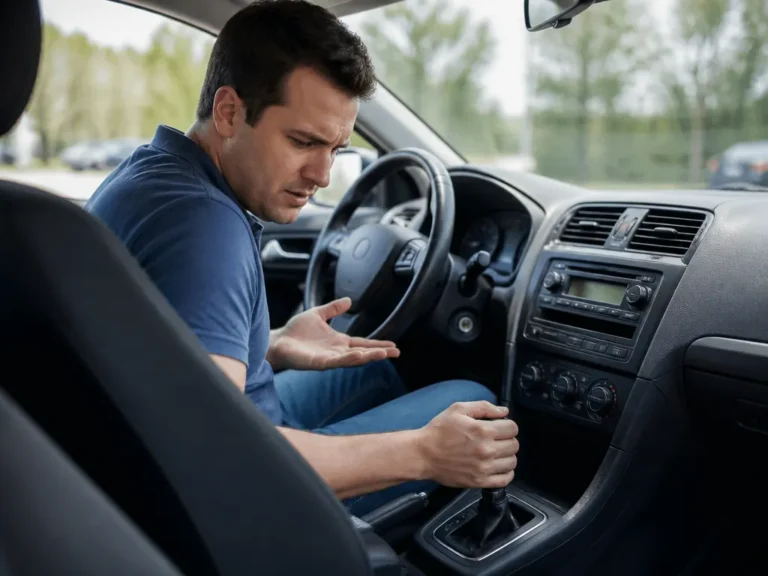
Separate wheel and suspension movement from engine and transmission movement. Suspension noise changes with steering angle and vertical motion, and it often gets louder on uneven pavement at low speed. Drivetrain noise changes with throttle and gear selection, especially when the car loads or unloads the driveline during acceleration, braking, or lifting off the gas.
With the engine off, rock the steering wheel slightly and watch or feel for free play near the front wheels. A clunk that seems to come from one wheel well is more likely to involve that corner’s suspension or axle joint. A noise that seems to come from the center of the car, near the engine or transmission, makes mounts and other drivetrain components more likely.
Do not place yourself under a vehicle with the engine running or rely on a gear-selection test unless the car is secured and the procedure is safe for that vehicle. A repair shop can safely load the drivetrain and observe movement during Drive/Reverse transitions. If the clunk occurs exactly when the transmission load changes, mounts, couplers, or axle joints become more likely than bushings alone.
Common Parts That Cause Driving Clunks
Worn rubber bushings are among the most common causes. Age and heat cycles can crack or separate the rubber, allowing a control arm or link to shift farther than designed. The resulting clearance produces a clunk as the part moves back and forth. A steering thump or vague wandering feel may accompany the noise.
CV axles are frequent culprits when the clunk occurs during turns or low-speed maneuvering. A worn outer CV joint can develop play, then clunk as it takes up angle and torque. Grease sling or a torn CV boot is a strong clue: the boot should keep grease inside the joint, and a tear allows lubricant out and contamination in.
Strut mounts and sway-bar end links can create classic bump clunks. A worn strut-mount bearing may delay or knock as the strut rotates during suspension travel. A loose sway-bar end link can clunk when the bar twists, particularly when one wheel crosses a driveway lip or speed bump.
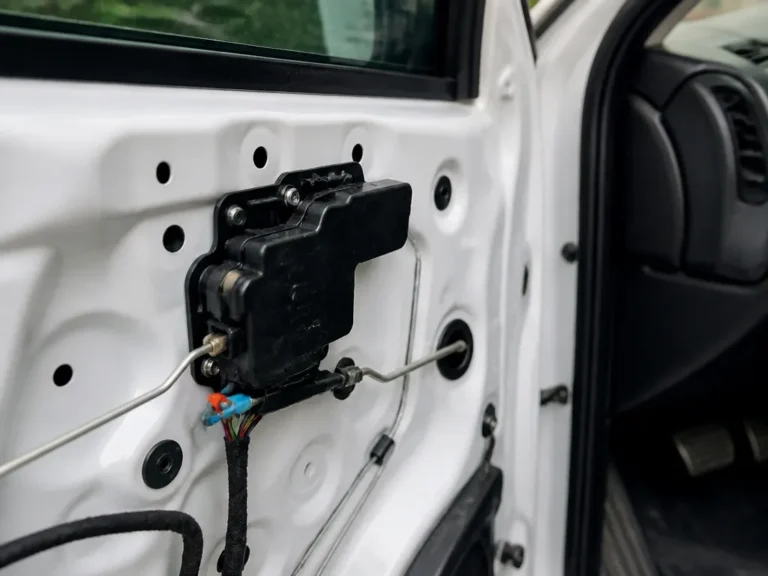
Loose hardware can also produce a convincing clunk. Check heat shields, brake hardware, subframe bolts, control-arm fasteners, and, on some cars, wheel-speed sensor brackets. These noises usually follow vibration or a specific load pattern rather than steering angle alone, but they can sound much like a worn suspension joint.
Engine and transmission mounts deserve attention when the noise appears during braking, shifting, or lifting off the throttle. A collapsed mount allows the driveline to shift and reach its clearance limits. Increased vibration at idle or a clunk during gear changes strengthens the case for a mount problem.
Under-Car Inspection for a Clunking Noise
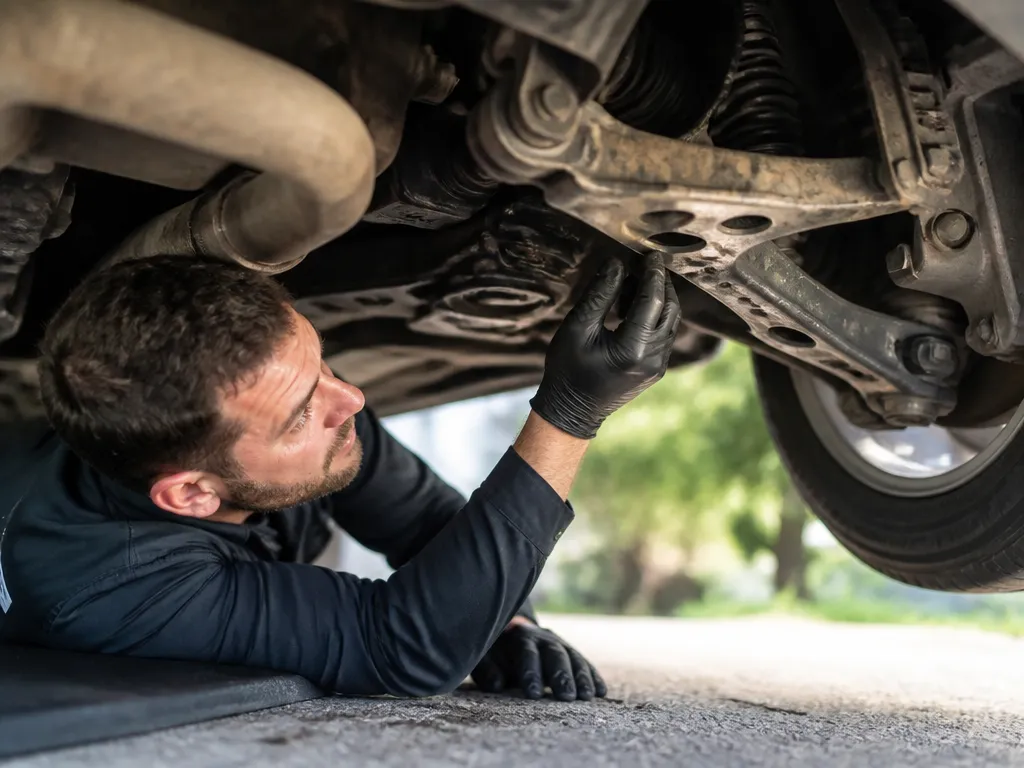
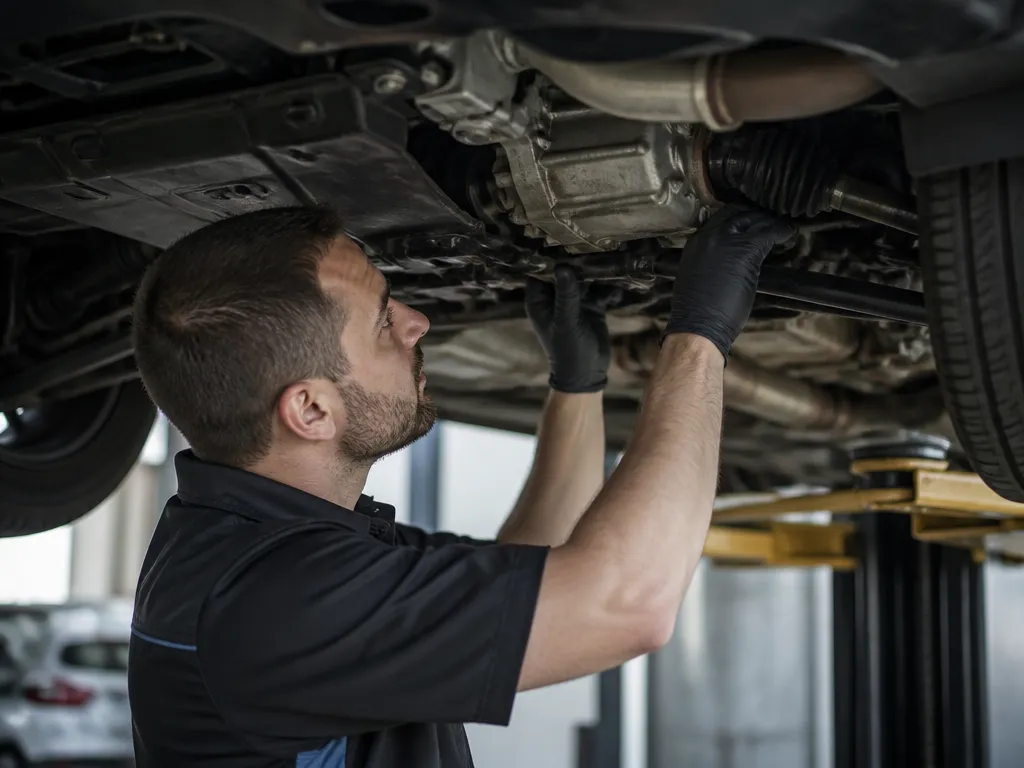
Park on level ground, set the parking brake, and inspect only what you can safely reach. Look for loose heat shields, exhaust brackets, and other undercarriage parts. Check for torn CV boots, missing fasteners, and fluid leaks near mounts, boots, or joints.
Scan the suspension around the corner where the noise seems loudest. Inspect control arms, ball-joint areas, and sway-bar links for cracked rubber, torn boots, or separation where metal meets rubber. Shiny wear spots, rust trails, and fresh movement marks can show where a loose component has been contacting another part.
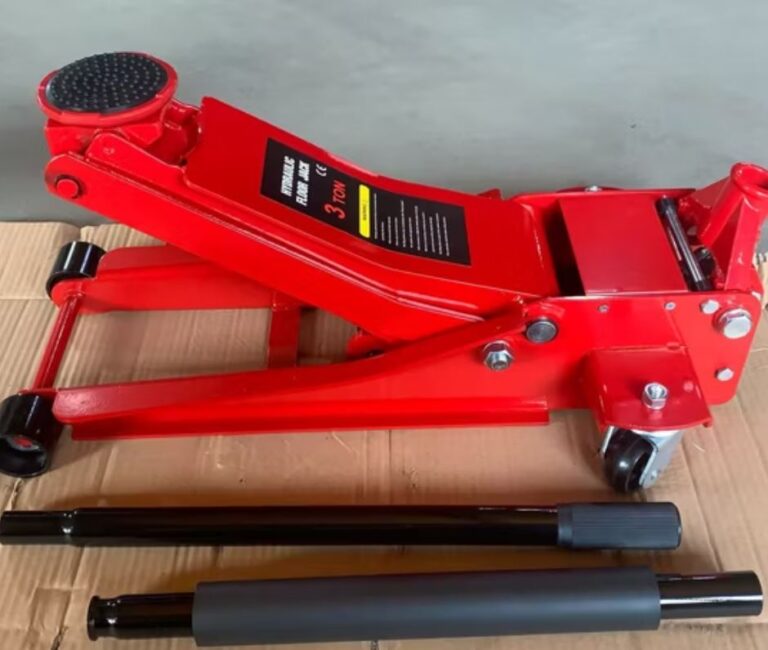
For a wheel or joint movement check, support the vehicle with jack stands – never rely on a jack alone. Move the wheel by hand at different points while watching for play in the ball joints or tie-rod ends. Apply force to suspension components and listen for a clunk, but remember that bushings may hide their movement without the vehicle’s weight and road forces acting on them.
Use these high-signal clues to prioritize the inspection:
- Torn CV boots or grease sling: A CV joint may be failing.
- Cracked control-arm bushings or missing rubber: Excess suspension clearance can cause the clunk.
- A loose strut-mount area or torn bearing dust: Bump-related noise may come from the strut mount.
- Gaps in exhaust heat shields: Vibration-related rattles can sound like clunks.
- Signs of mount collapse: A drivetrain clunk often traces back to an engine or transmission mount.
A visual inspection may not reveal the fault. Some worn parts look acceptable until tested for movement under load or checked with tools such as a pry bar and a dial indicator.
A Repeatable Test Drive to Locate the Noise
Start with a calm warm-up drive, then recreate the exact situation in which you first heard the clunk. If you cannot reproduce it immediately, note the speed range, road type, steering angle, and whether you were accelerating, braking, or turning.
- Drive over a small bump or driveway lip at low speed. Listen for one clunk or a repeated knock. Note whether it occurs as the suspension compresses, rebounds, or both. Strut mounts, ball joints, bushings, and links often reveal themselves here.
- Make slow turns left and right. Use an open area and keep the speed low. If the noise appears mainly in one direction, the loaded side may contain the worn CV joint or ball joint.
- Brake from a steady roll. Start with a gentle stop, then use a slightly harder stop if conditions are safe. Note whether the clunk occurs as the brakes first apply or near the end of the stop. A drivetrain shift from a worn mount often happens when the load first transfers.
- Test throttle transitions. Note whether the clunk appears when you lift off the gas or change throttle input. A noise tied to throttle changes points more toward mounts, couplers, or axle joints. If throttle changes do nothing but bumps and turns consistently reproduce the noise, suspect the suspension.
- Inspect the car again after the drive. Heat, splash marks, and fresh contact evidence may make the fault easier to see. If you found a torn CV boot, make it the top priority because continued driving can accelerate joint failure.
Repairs for the Part Causing the Clunk
The repair is usually replacement of the worn joint, bushing, mount, or axle that has developed excess clearance. If a bushing is cracked or collapsed, the fix may involve replacing the bushing alone or the entire control arm, depending on the vehicle design. Many modern cars use sealed control arms with bushings that are not sold separately, which changes the parts and labor involved.
Ball joints and tie rods are typically replaced as assemblies. A worn ball joint can clunk through suspension travel, while a worn tie rod can clunk during steering and affect alignment. Have the alignment checked after suspension work because worn components may have changed the alignment before they failed.
A failing CV axle is generally repaired by replacing the affected axle assembly. A torn boot lets grease escape and contamination enter, accelerating joint wear. Once grease sling or joint play is present, replacing the axle is usually a cleaner repair than installing a boot on a joint that is already damaged.
Mount-related clunks require replacement of the engine mounts, transmission mounts, or both. The work can be labor-heavy because the engine or drivetrain may need support during removal, but the repair is usually straightforward once the mount is confirmed as the source.
Loose hardware may require only a tightened fastener, replacement clip, or secured heat shield. Do not use that easy fix to dismiss a clunk that consistently follows turns, bumps, or braking. Repair the component creating the movement rather than silencing only the noise.
FAQ
What are the most common causes of a car clunking when driving?
The most common causes are worn suspension bushings, failing ball joints, worn strut mounts or sway-bar end links, and play in CV axles. Engine or transmission mounts can also clunk during braking or other load changes. Loose hardware such as heat shields can mimic a clunk, but that noise usually follows vibration rather than steering angle or braking load.
Is it safe to drive if my car is clunking?
If the clunk is mild and you see no warning signs, short drives to an inspection are usually reasonable. If the noise is getting worse, the steering feels loose, the car vibrates heavily, or you find torn CV boots or damaged suspension parts, stop making unnecessary trips and arrange an inspection promptly. A clunk paired with grinding, loss of control, or brake problems is a reason to stop driving.
How much does it typically cost to fix a clunking noise?
Repair cost varies by vehicle, location, failed part, and labor rate. Request a diagnosis estimate before approving repairs. A good shop should identify which component has play or a torn boot and explain how that finding matches the clunk’s timing. Because parts and labor prices vary by area, there is no useful single price for every clunking noise.
How can I diagnose clunking at home without special tools?
Perform a visual inspection for torn CV boots, cracked bushings, loose heat shields, and missing fasteners. You can also perform safe wheel and joint shake checks with the vehicle properly supported by jack stands. If the noise is repeatable, record the relevant driving conditions and use that information to decide what to inspect first.
What is a common mistake people make when chasing clunking noises?
Replacing parts at random is the most expensive mistake. Shocks or struts may get replaced even when the actual problem is a loose ball joint, worn bushing, or damaged mount. Ignoring CV boots and engine mounts because the noise “seems like suspension” causes another common delay. Confirm the component with a visual inspection or play check before buying parts.

- Top 10 Best Helmet For Xtreme 125r 2026 - October 5, 2026
- Top 10 Best Helmet For Xpulse 200 2026 - October 5, 2026
- Top 10 Best Helmet For Xsr 155 2026 - October 5, 2026