Car Is Whining When I Accelerate: Why Your Car Whines When

A car that whines when you accelerate usually has a worn, slipping, or poorly lubricated rotating component. The most common sources are the accessory drive – the serpentine belt, tensioner, or idler pulley – and drivetrain parts such as a wheel bearing, CV axle, or differential.
Use the sound’s behavior to narrow it down:

- The pitch rises with engine RPM: Check the serpentine belt, tensioner, idler pulley, and other engine-driven accessories first.
- The pitch changes with vehicle speed but not engine RPM: Suspect a wheel bearing or differential.
- The noise gets louder while turning: Check the wheel bearings and CV axles.
- The noise starts when you apply throttle: Look for belt slip, bearing drag, transmission problems, or differential wear.
- The car also shifts harshly or shudders: Check the transmission fluid and have the transmission inspected.
- The noise comes with vibration, grinding, or unstable steering: Stop driving except to move the car to safety and arrange an inspection or tow.
Key Takeaways
- Check the transmission: Low or failing transmission fluid can cause whining in some vehicles.
- Test before replacing parts: Use a visual belt inspection and controlled road checks to identify the likely source.
- Treat bearing noise seriously: A failing wheel bearing can worsen and affect handling, braking, and safety.
Car Is Whining When I Accelerate Causes
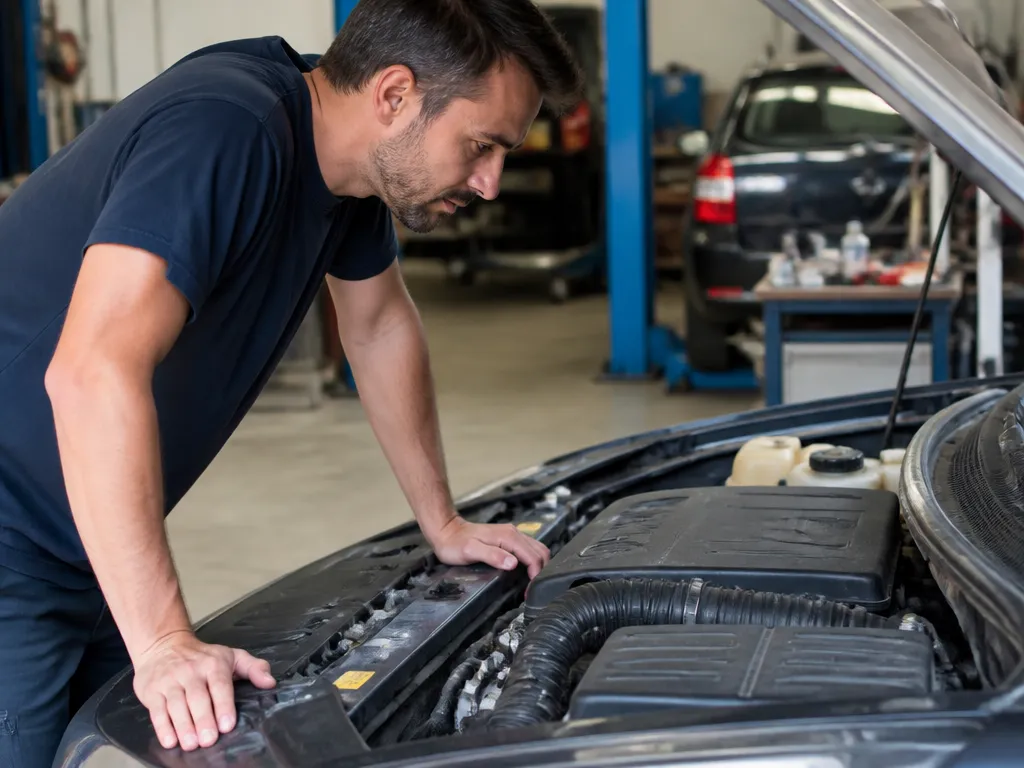
The most frequent causes are worn belt-drive components – the serpentine belt, tensioner, or idler pulley – and failing drivetrain bearings or joints, including wheel bearings, CV axles, and differentials. Acceleration raises engine speed and increases the load on parts connected to that rotation, so a worn component may become noisy at that moment.
Accessory-drive whines often sound thin, high-pitched, or metallic. They may be most noticeable when accelerating uphill, merging, or towing. Belt dust, slight squealing, visible belt wear, or a vibration through the steering column or dash can support this diagnosis.
Drivetrain whines can sound similar, but their behavior provides useful clues. A wheel-bearing noise usually follows vehicle speed and may become louder during turns. A CV axle problem is often more noticeable while turning under throttle because the joint changes angle while carrying engine torque.
A continuously variable transmission (CVT) or an automated/manual transmission with a dual-clutch system may also produce a normal drivetrain whine under certain conditions. A sound that appears suddenly or worsens quickly should still be treated as a fault until checked.
Does the Whine Pitch Change With Speed?
Yes. A pitch that changes with engine RPM or vehicle speed usually comes from a rotating part, which helps narrow the inspection.
If the whine rises smoothly as you hold the throttle open and accelerate, suspect the accessory drive or a rotating driveline component. If the pitch stays the same regardless of speed, consider airflow noise or body-panel resonance, although those are less common causes of a whine during acceleration.
A pitch that follows vehicle speed but not engine RPM points toward a wheel-speed component such as a wheel bearing or differential. A pitch that follows engine RPM even when the car is stationary – for example, while revving in neutral – points more strongly toward the accessory drive or another component in the engine bay.
Turning provides another useful clue. If the whine is louder while turning left than right, or vice versa, inspect the front wheel bearings and CV axles. Turning shifts the vehicle’s weight and changes the load on those parts.
How a Worn Serpentine Belt or Idler Pulley Whines
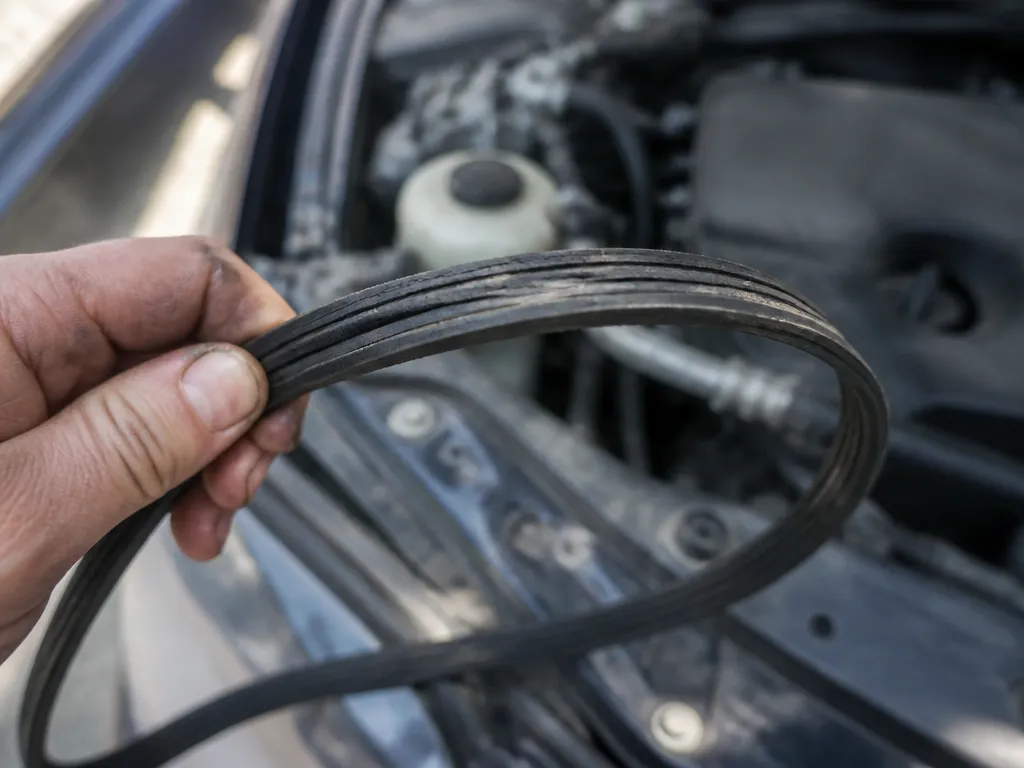
A worn serpentine belt, idler pulley, or tensioner is a common source because each part must spin smoothly under load. A glazed or stretched belt can lose grip and produce a high-pitched whine when you accelerate. A pulley bearing can also whine as its internal surfaces wear.
Idler pulleys and tensioners spin whenever the engine runs, making them frequent failure points. A failing pulley may produce a noise that rises with RPM, along with a faint growl near the front of the engine. The belt may show uneven edge wear, belt dust, fraying, cracks, missing ribs, or a glossy glazed surface.
With the engine off, inspect the belt and look for pulley misalignment. If access allows, rotate the idler pulley and check for roughness, grinding, binding, or wobble. Do not reach near the belt or pulleys while the engine is running.
Inspect the belt routing for anything rubbing or forcing the belt off its intended path. Loose engine mounts can contribute to alignment problems, so repeated belt failures call for an inspection of the mounts rather than another belt replacement alone.
Belt-related whines often come with visible belt wear or dust. If the sound clearly follows vehicle speed and changes during turns, shift your attention to the wheel bearings and axles instead of assuming the belt is responsible.
Transmission Fluid Low Symptoms and Fixes
Low transmission fluid can cause whining, but the symptoms depend on the transmission design. A low fluid level may also cause delayed engagement, harsh shifting, shuddering under load, or a strained feeling. Internal pumps and gears can become noisier when lubrication is inadequate, and a pump may cavitate when the fluid level is too low.
Check the fluid using the procedure specified for your vehicle. Some transmissions require the engine to be running and the fluid to be at operating temperature. Others use a different method or have no conventional dipstick. The wrong checking procedure can produce an incorrect level reading.
If the fluid is low, topping it off is not the complete repair. Look for a leak at the pan gasket, cooler lines, or a damaged seal. A level low enough to cause noise may also mean the transmission has been operating under stress.
Use the correct fluid specification and then monitor the noise. If the whine continues, especially alongside shifting problems, the transmission needs further diagnosis and an inspection of the fluid’s condition.
Avoid making an aggressive flush the first response to a noise problem. An older transmission with an unknown service history or internal wear may require a more specific service approach. Follow the vehicle’s service guidance or have a qualified shop inspect it.
Could a Failing Wheel Bearing Cause Whining?
Yes. A failing wheel bearing can produce a rising whine that follows vehicle speed and becomes louder when the vehicle loads that corner during a turn. The bearing supports the vehicle’s weight while allowing the wheel to rotate; damaged internal surfaces create noise and, later, looseness or vibration.
The typical pattern is a noise that grows louder as speed increases and changes character during turns. A front wheel bearing may become louder when turning in one direction because the vehicle’s weight shifts onto that side. Road surfaces can alter the sound, but the connection to vehicle speed is the stronger clue.
A worn bearing may also send subtle feedback through the steering wheel, seat, or floor. Vibration often appears at certain speeds and can become more noticeable as the damage progresses.
A careful inspection can include checking the wheel for play and comparing it with the opposite side, but worn suspension components can mimic bearing looseness. Rotating the wheel by hand may reveal roughness, although some damaged bearings remain quiet or feel normal when unloaded.
If the bearing feels rough, has noticeable play, or produces a confirmed noise, replace it – along with the hub assembly if the vehicle uses an integrated design. A bad wheel bearing can cause additional damage and create a safety risk, so this is a fix-soon problem rather than a wait-and-see repair.
Is It a Failing Differential or CV Axle?
Yes. A worn CV axle or differential component can whine, rumble, or click, but the conditions that trigger the sound help separate these problems.
CV joint wear often becomes more obvious while turning, particularly when you apply throttle. An outer CV joint commonly clicks during turns, while an inner joint may cause rumbling, vibration, or a noise that changes under acceleration. A torn CV boot is an important clue because it allows dirt into the joint and lets grease escape. Look for cracked rubber and grease sprayed around the inside of the wheel or suspension area.
Differential problems are less common than belt or wheel-bearing failures, but worn gears and bearings can produce a steady speed-related whine. Differential noise may change between acceleration and coasting because the gears carry different loads in those conditions.
Compare the sound while accelerating and then coasting. A noise that is much louder under acceleration and changes when you lift off the throttle points toward differential or drivetrain gear load. A noise that changes sharply with steering points first toward a CV joint or wheel bearing.
Metal shavings, severe vibration, or fluid leaks require prompt attention. Differential and driveline repairs can be labor-intensive, and continued driving can increase the damage.
Diagnostic Steps Before Replacing Parts
Use a structured check to match the noise to the system producing it:
- Inspect the engine bay with the engine off. Look for a loose serpentine belt, missing belt ribs, belt dust, and obvious pulley wobble.
- Check the belt and pulleys. Look for cracks, glazing, fraying, misalignment, roughness, or binding. Rotate accessible pulleys only with the engine off.
- Compare engine RPM and vehicle speed. Note whether the whine follows engine RPM in neutral or appears only when the car is moving.
- Check steering-load behavior. On a safe road, compare the sound during gentle left and right turns. A difference between turns points toward a wheel bearing or CV axle.
- Check the transmission fluid correctly. Follow the vehicle-specific procedure, use the correct fluid type, and look for leaks if the level is low.
- Inspect the CV boots. Look for tears, cracked rubber, and grease leakage, then listen for clicking or rumbling during gentle turns.
A useful belt clue is a change in the noise when accessory load changes. Turning on the headlights, switching on the A/C, or adding electrical load can alter belt operation and make a belt-drive problem more apparent. Do not place your hands or tools near a running belt system.
A strong wheel-bearing clue is roughness or play when you rotate the wheel and compare it with the opposite side. Safe jacking requires the right equipment and procedures. If you cannot secure the vehicle properly, have a mechanic perform the inspection.
For transmission noise, first rule out low fluid, a leak, and the wrong fluid type. If the level and condition are correct but the whine continues, the problem may require a scan, a road test, and internal transmission diagnosis.
FAQ
What are the most common causes of a car whining when I accelerate?
The most common causes are worn serpentine-belt components, especially the belt tensioner or idler pulley, and rotating drivetrain problems such as a failing wheel bearing or CV axle. A whine that rises with engine RPM points toward the accessory drive, while a noise that changes during turns points more toward a wheel bearing or axle.
Can low transmission fluid cause whining when accelerating?
Yes. Low transmission fluid can cause a whining or strained sound, along with delayed engagement, harsh shifts, or shuddering. Check the level using your vehicle’s exact procedure, confirm the correct fluid type, and find the source of any leak before treating the problem as fixed.
How fast should I fix a wheel bearing if it’s whining?
Treat a suspected wheel-bearing failure as a fix-soon issue. The noise can worsen with speed and heat, and a severely damaged bearing can affect wheel control and safety. If the noise is obvious and follows vehicle speed, arrange an inspection promptly and avoid long drives until it is checked.
Is it safe to drive if the car whines when I accelerate?
A short trip to a repair shop may be reasonable if the car drives normally and the noise is mild, but avoid extended driving if the sound is getting louder or you feel vibration or unstable steering. Grinding, severe vibration, steering changes, or fluid leaks are reasons to stop driving and arrange a tow.
Could a bad differential or CV axle be the cause instead of belts?
Yes. CV axle wear often appears during turns and may come with a torn boot or grease leak. Differential problems can create a steady, speed-related whine that changes between acceleration and coasting. If the noise changes sharply with steering, inspect the wheel bearings and CV axles before assuming the differential is at fault.
How to Narrow Down an Acceleration Whine
When the source remains unclear after these checks, avoid replacing parts based on sound alone. A professional road test and inspection can identify whether the noise comes from the belt system, wheel bearings, CV axles, differential, or transmission.

- Top 10 Best Helmet For Xtreme 125r 2026 - October 5, 2026
- Top 10 Best Helmet For Xpulse 200 2026 - October 5, 2026
- Top 10 Best Helmet For Xsr 155 2026 - October 5, 2026