Car Rolling backwards while in drive on hill Automatic

You’re sitting at a red light on a steep incline, foot hovering between the brake and the gas. The light turns green. You lift off the brake and instead of surging forward, your car slides backward. Your stomach drops. Your bumper creeps toward the car behind you. And you’re left thinking: shouldn’t my automatic transmission handle this?
You’re not alone. Millions of American drivers — from first-timers to seasoned commuters — experience this exact moment of panic every day on hills in cities like San Francisco, Pittsburgh, Seattle, Denver, and Asheville. And while it feels like something is catastrophically wrong with your car, the truth is more nuanced than you might expect.
This guide explains exactly why automatic cars roll back on hills in Drive, what causes it, how to prevent it, and when rolling back is a sign of a deeper transmission problem you should address immediately.
First, Let’s Understand How an Automatic Transmission Actually Works
To understand why rollback happens, you first need to understand what’s happening inside your transmission when the car is stationary in Drive (D).
Unlike a manual car — where a physical clutch disc either connects or fully disconnects the engine from the wheels — an automatic transmission uses a torque converter. The torque converter is a fluid coupling that sits between the engine and the transmission gears. It allows your engine to keep running even when the car is completely stopped, without stalling.
Here’s the key detail: when your car is in Drive and your foot is off the brake, the torque converter continuously sends a small amount of engine power to the wheels. This is called torque converter creep. It’s that gentle forward pull you feel when you release the brake in a parking lot. In flat conditions, this creep is usually enough to ease the car forward without any gas.
But on a steep hill, gravity is a powerful force working against that gentle creep. And on a steep enough incline, gravity wins.
That’s rollback — and it’s a fundamental characteristic of how traditional automatic transmissions behave, not necessarily a sign that anything is broken.
Why Does an Automatic Car Roll Back in Drive? The Real Reasons
1. The Hill Is Steeper Than the Creep Force Can Handle
The most common reason for rollback is simply physics. Torque converter creep provides a modest forward force — enough for flat ground or gentle slopes, but not enough to hold a heavy vehicle on a steep hill. The steeper the incline, the more gravitational force pulls the car backward. At some point, gravity exceeds the creep force, and the car rolls.
This isn’t a malfunction. It’s a limitation of how the system is designed. Even a perfectly functioning automatic will roll back on a steep enough hill.
2. Low RPM Means Insufficient Power to the Wheels
When you’re sitting still in Drive, your engine idles at roughly 600–900 RPM. At idle, the amount of torque being transmitted through the torque converter is minimal. Think of it this way: the torque converter functions like a pump — the more the engine spins, the more fluid pressure it creates, and the more power gets sent to the wheels.
At idle, there simply isn’t enough torque being pushed through to overcome gravity on a steep hill. This is actually similar to the situation a manual car driver faces — if they don’t give the engine enough revs before releasing the clutch on a hill, the car stalls or rolls back. Automatic cars don’t stall (because the torque converter absorbs the load), but they can still roll back for the same fundamental reason: insufficient power.
3. Dual-Clutch Transmissions (DCT) Behave More Like Manual Cars
This is one of the most misunderstood causes of rollback in modern vehicles. Many newer cars — from Ford to Volkswagen to Hyundai — use Dual-Clutch Transmissions (DCT), which are sometimes called “automated manuals.” These don’t use a torque converter at all. They use two clutch packs that physically engage and disengage gears.
Because of this, DCTs have very little or no creep force when stationary. They behave much more like a traditional manual transmission — and therefore roll back much more readily on hills than a traditional automatic. If you’ve switched from a conventional automatic to a car with a DCT and noticed increased rollback, that’s exactly why.
Popular DCT vehicles in the US include the Ford Bronco Sport (in certain trims), various Volkswagen models, and many performance-oriented vehicles.
4. Your Car Doesn’t Have Hill-Start Assist — Or It Has Expired
Hill-Start Assist (HSA), also called Hill-Hold Control, is a feature that automatically holds brake pressure for a brief moment after you release the brake pedal on a hill. This gives you time to move your foot from the brake to the gas pedal without the car rolling.
Many modern vehicles include HSA as standard. But here’s what most drivers don’t know: even in cars that do have hill-start assist, the feature typically only holds for 1–3 seconds. If you take longer than that to find the gas pedal, your car will still roll back.
Additionally, many older vehicles, entry-level trims, and certain truck configurations don’t include HSA at all. If you’re driving one of these, hill starts require active technique on your part — every time.
To find out if your car has HSA, check your owner’s manual or look for the feature in your instrument cluster when stopped on a hill. Some systems show an indicator light or message.
5. Low or Degraded Transmission Fluid
This is where rollback crosses from normal behavior into a warning sign. Your automatic transmission relies on transmission fluid to create hydraulic pressure, lubricate moving parts, and — critically — fill the torque converter to transmit power to the wheels.
If your transmission fluid is:
- Low (due to a leak)
- Burnt or degraded (dark brown or black color instead of red)
- Contaminated (foamy, smells burnt, or has a gritty texture)
…then the hydraulic pressure inside the torque converter drops. This means the creep force is reduced even further, making rollback more likely even on moderate hills that previously caused no issues.
If you’ve noticed that your car is rolling back on hills it used to handle fine, this is one of the first things to check.
6. Internal Transmission Wear or Slipping
Beyond fluid condition, a transmission with worn clutch packs, a damaged torque converter, or faulty solenoids may slip or fail to properly engage when you lift off the brake. This kind of rollback is accompanied by other symptoms: delayed shifts, shuddering when accelerating from a stop, a burning smell, or the transmission slipping out of gear while driving.
This is the serious end of the spectrum. If you’re seeing multiple symptoms together, the transmission needs professional attention.
Is It Dangerous? How Much Rollback Is “Normal”?
A small amount of rollback — a few inches — is completely normal in most automatic vehicles, especially on steep hills. For most drivers in most situations, this poses no danger as long as you’re prepared for it and the vehicle behind you has left adequate space.
What’s not normal:
- Rolling back more than a foot or two before you can get to the gas
- Rollback happening on moderate or gentle inclines that other vehicles handle without issue
- Rollback accompanied by slipping, shuddering, or delayed acceleration
- Rollback that has worsened over time compared to how the car previously behaved
If rollback is consistent and pronounced on moderate hills, it’s time to check your transmission fluid and — if fluid is fine — schedule a transmission inspection with a qualified mechanic.
Is rollback bad for the transmission? Minor, momentary rollback is not harmful. Extended rolling in Drive while the transmission is trying to move forward creates mechanical stress and heat, but brief rollback during a normal hill start is within what the system is designed to tolerate.
How to Stop an Automatic Car from Rolling Back on a Hill: 5 Proven Techniques
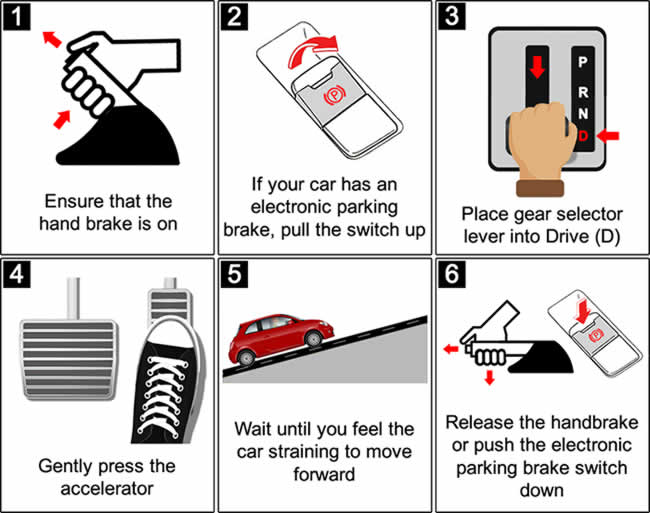
Now that you understand why rollback happens, let’s talk about how to prevent it — regardless of whether your car has hill-start assist.
Technique 1: Use the Handbrake (Parking Brake) — The Most Reliable Method
This is the technique manual car drivers have used for decades, and it works just as well in automatics.
Here’s how to execute it:
- Come to a full stop on the hill with your foot on the brake pedal.
- Engage the handbrake (pull the lever or press the electronic parking brake button).
- Move your foot from the brake pedal to the gas pedal.
- As you begin pressing the gas and feel the engine build revs, simultaneously release the handbrake.
- The car will move forward without rolling back.
The key is timing the handbrake release with the moment the engine has enough torque to hold and then move the car forward. With a little practice, this becomes smooth and natural.
In modern cars with an electronic parking brake (EPB), this process is even smoother — many EPB systems automatically release when they detect you pressing the accelerator.
Technique 2: Left-Foot Braking (Simultaneous Brake and Gas)
This method works well but takes practice and isn’t suitable for everyone:
- Keep your left foot on the brake pedal to prevent rollback.
- Slowly press the gas pedal with your right foot until you feel the car build enough torque to move forward.
- Gradually release the left foot from the brake as the car begins to move forward.
The challenge with this technique is that it’s easy to apply too much gas while still braking, which creates excessive heat and wear. Used correctly on a hill start, it’s fine. It should not be used as a regular driving habit.
Note: If you’re used to driving a manual car, left-foot braking may feel natural. Just be aware that in an automatic, you should never use your left foot on the brake while driving normally at speed — only for controlled hill-start situations.
Technique 3: Quick Pedal Transition (The Standard Method)
This is the default method most drivers use and the one that works well in cars with hill-start assist:
- Hold the brake pedal firmly.
- When ready to move, simultaneously release the brake and smoothly apply the gas in one quick motion.
- The goal is to minimize the gap between brake-off and gas-on so the car has no time to roll.
This technique requires practice to get the timing right. On steeper hills, the margin for error is smaller. Most cars with HSA will hold the brakes for 1–3 seconds to give you this window.
Technique 4: Apply More Throttle Before Moving
On particularly steep hills, one effective strategy is to press the gas pedal slightly before you release the brake entirely. The idea is to build RPMs — and therefore torque converter pressure — before removing the braking force.
- With your foot firmly on the brake, press the gas gently until you feel the engine “pull” slightly against the brakes.
- Once you feel that forward tension, release the brake.
- The car should move forward immediately with minimal or no rollback.
This takes some sensitivity to feel, but experienced drivers often do this instinctively on steep hills.
Technique 5: Downshift to a Lower Gear
In many automatics, using L (Low), 1, or 2 instead of Drive provides more engine braking and torque at low speeds. This increases the creep force and can reduce rollback on very steep inclines.
Some modern automatic vehicles also have a Sport mode that holds lower gears longer and provides more aggressive low-speed torque — this can also help on hills.
This technique is especially relevant for trucks and SUVs towing loads on steep grades.
Your Hill-Start Questions Answered
Why does my automatic car roll back in Drive?
Because the torque converter creep force — the gentle power sent to the wheels at idle — is not strong enough to overcome gravity on steep hills. This is normal in most automatic transmissions. It can be worsened by worn transmission fluid, a slipping transmission, or a dual-clutch transmission that has no creep force at all.
Should automatic cars roll back on a hill in Drive?
A small amount of rollback is within normal limits for most automatic vehicles. However, automatic cars should not roll back significantly on moderate inclines. If your car rolls back noticeably on hills that don’t seem particularly steep, that’s worth investigating.
How do I stop my automatic car from rolling back on a hill?
Use one of five techniques: engage the handbrake before releasing the foot brake, use the left-foot braking method, master a quick pedal transition, build engine RPMs slightly before releasing the brake, or shift to a lower gear for more torque.
What are the signs of a failing automatic transmission?
Warning signs include: delayed or rough gear shifts, slipping out of gear while driving, shuddering or jerking during acceleration, a burning smell, unusual noises (whining, clunking, humming), warning lights on your dashboard (usually a wrench or “TRANS” warning), excessive rollback on hills that previously posed no problem, and dark or burnt-smelling transmission fluid.
Are automatic cars not good for hills?
Traditional automatic cars handle hills well in most normal driving situations. The creep force from the torque converter is typically sufficient for everyday inclines. Where automatics struggle more than manuals is on extreme grades — steep mountain roads, off-road terrain, or towing heavy loads uphill. For very demanding hill driving, a manual transmission or a dedicated low-range transfer case (in trucks/SUVs) offers more control.
How do I know if my automatic gearbox is damaged?
Check for: slipping between gears, difficulty shifting, hesitation when accelerating from a stop, unusual vibration, fluid leaks (red fluid under the car), burnt or dark transmission fluid, and any dashboard warning lights. A professional transmission check involves a fluid analysis, a road test, and sometimes a scan of the transmission control module for fault codes.
Is it cheaper to fix a transmission or replace it?
It depends on the severity of the damage. Minor repairs — like a solenoid replacement or a fluid flush — might cost $150–$500. A full rebuild typically runs $1,500–$3,500. A full replacement with a remanufactured transmission can cost $3,000–$5,000+ depending on the vehicle. In general, rebuilding is preferred when the damage is limited to specific components. If the case, torque converter, and multiple internal parts are compromised, replacement may be more cost-effective.
What is the life expectancy of an automatic transmission?
With proper maintenance — primarily regular fluid changes — an automatic transmission can last 150,000 to 200,000 miles or more. Many transmissions fail prematurely due to neglected fluid, towing beyond the rated capacity, overheating, or deferred repairs of minor issues. The single most important maintenance task is changing transmission fluid at the manufacturer’s recommended intervals (typically every 30,000–60,000 miles, though some manufacturers claim “lifetime” fluid — which many mechanics dispute).
Transmission Fluid: The Unsung Hero of Hill Performance
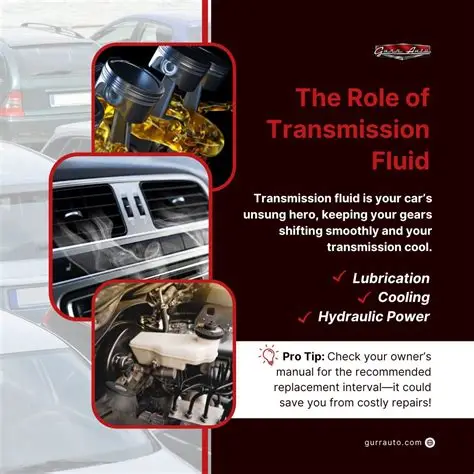
If there’s one takeaway from this article for American drivers, it’s this: your automatic transmission fluid matters more than most people realize.
Transmission fluid serves multiple critical functions simultaneously. It lubricates the hundreds of moving parts inside the transmission. It cools the transmission by absorbing and transferring heat. It provides the hydraulic pressure that actuates gear changes. And it fills the torque converter to enable power transfer from the engine to the wheels.
When transmission fluid degrades — through heat cycles, moisture contamination, or simply aging — all of these functions are compromised. The hydraulic pressure drops. The torque converter becomes less efficient. Gear changes become less precise. And yes, rollback on hills becomes more pronounced.
What should healthy transmission fluid look like?
Fresh transmission fluid is typically transparent red or pink. It should smell clean and slightly sweet — not burnt. As it ages, it darkens to a brownish-red, then eventually to a dark brown or black. Burnt-smelling fluid is a serious warning sign.
How to check it:
On vehicles with a transmission dipstick (many modern cars have sealed transmissions without one), pull the dipstick with the engine warm and running in Park, wipe it clean, reinsert, and check the level and color. If you’re unsure whether your car has a dipstick, check the owner’s manual.
When to change it:
Follow your manufacturer’s recommendation, but a practical rule of thumb used by many mechanics is every 30,000–45,000 miles for normal driving, or more frequently if you tow regularly, drive in hilly terrain often, or live in a hot climate. If you’ve never changed the fluid and the car has over 100,000 miles, have a mechanic assess it first — on high-mileage vehicles, a sudden fluid change can sometimes cause issues if worn seals have been relying on thicker, degraded fluid.
Manual vs. Automatic on Hills: What’s the Real Difference?
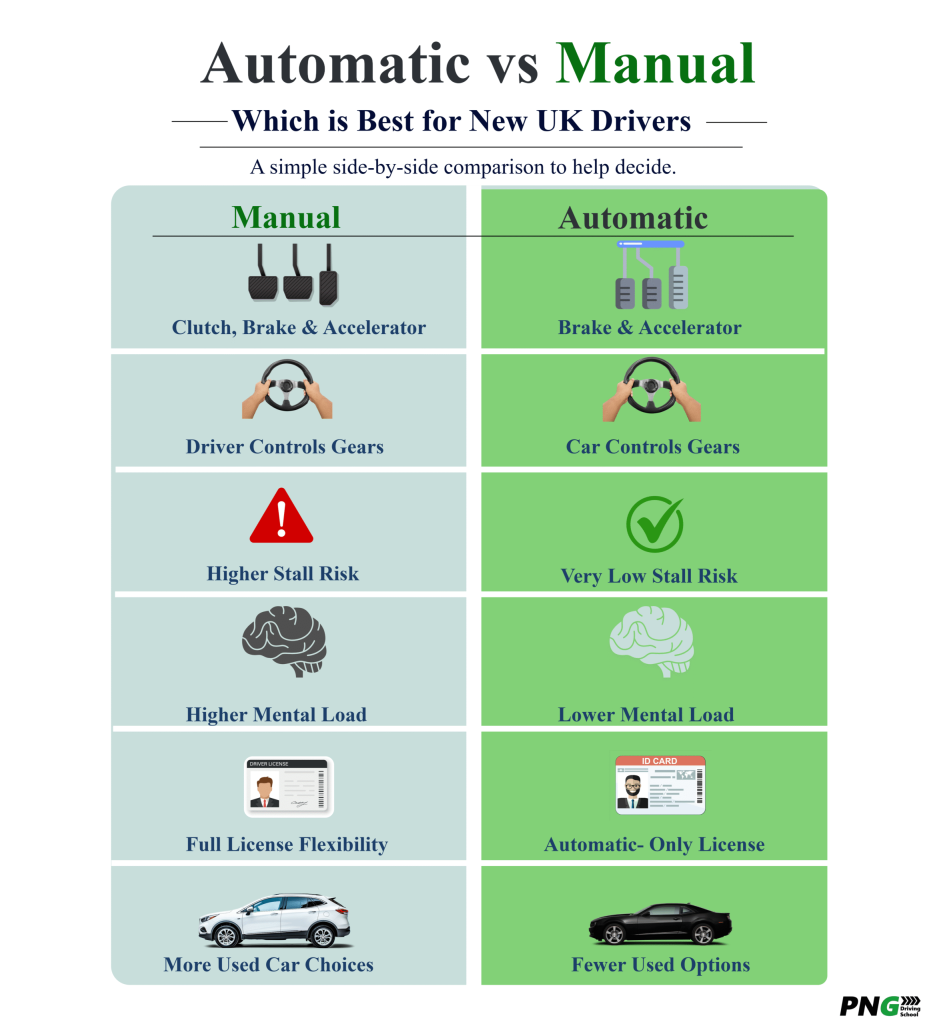
Because so many people search for information about changing gears in a manual car when researching this topic, let’s address the comparison directly.
In a manual car, the driver is fully in control of the clutch engagement. On a hill, the classic technique is the “hill start” — using the clutch’s friction point (the biting point) along with throttle to hold the car before releasing the handbrake. This requires more skill but gives the driver precise control over the power transfer.
In an automatic car, the torque converter handles this — partially and automatically. It’s easier, but it’s not foolproof on steep hills because the driver has less precise control over power transfer. The tradeoff for convenience is some loss of control in demanding situations.
Which is better for hills?
For everyday urban driving, automatics are fine. For demanding hill terrain — steep mountain grades, off-road environments, or heavy towing — many experienced drivers prefer a manual or a vehicle with a dedicated low-range gear system. The control and predictability of a manual on extreme grades is genuinely superior.
That said, modern automatics with intelligent hill-start assist, torque vectoring, and advanced transmission control modules have narrowed this gap considerably. Newer vehicles in 2024 and 2025 handle hills far better than automatics from a decade ago.
When to See a Mechanic: Don’t Ignore These Warning Signs
Rollback alone, on a steep hill, in an otherwise well-maintained vehicle, is not a reason to panic. But here are the situations where you should schedule a transmission inspection without delay:
See a mechanic immediately if:
- Rollback is happening on hills that aren’t particularly steep
- The car hesitates, shudders, or jerks when you press the gas on a hill
- You notice a burning smell, especially after hill starts
- Your transmission warning light is illuminated
- You see red fluid leaking under the car
- The car occasionally slips out of gear or revs without accelerating properly
Schedule a checkup soon if:
- You’ve never had the transmission fluid changed and have over 60,000 miles
- The fluid is dark, burnt-smelling, or you’re not sure of its condition
- Rollback has gotten noticeably worse over the past few months
- Your car has over 150,000 miles and you’re noticing any shift delays
A transmission flush and fluid replacement at a qualified shop typically costs $100–$250 at a dealership or transmission specialist. That’s a fraction of the cost of a full rebuild. Early maintenance is always cheaper than emergency repair.
Quick-Reference Summary: Automatic Car Rollback on Hills
Why it happens: Torque converter creep force is insufficient to overcome gravity on steep inclines. Also caused by DCT transmissions (no creep), absent or expired hill-start assist, low/degraded transmission fluid, or internal transmission wear.
When it’s normal: Brief rollback (a few inches) on steep hills in an otherwise healthy vehicle.
When it’s a problem: Rollback on moderate hills, worsening rollback over time, rollback accompanied by slipping, shuddering, burning smell, or warning lights.
How to prevent it: Handbrake technique (most reliable), left-foot braking, quick pedal transition, pre-loading throttle before releasing brake, or shifting to a lower gear.
Maintenance key: Keep transmission fluid clean and at the proper level. Change it per manufacturer recommendations or every 30,000–45,000 miles for regular driving.
Cost context: Fluid change: $100–$250. Minor repairs: $150–$500. Full rebuild: $1,500–$3,500. Full replacement: $3,000–$5,000+.
Final Thoughts
Rolling backward on a hill in an automatic car is one of the most unsettling — and common — experiences American drivers face. It feels like something is broken. Often, it isn’t. But it can be a symptom of something that needs attention, and knowing the difference matters.
The best approach is a combination of good driving technique — specifically, learning to use your handbrake on steep hills — and proper transmission maintenance. Check your fluid, follow your service schedule, and pay attention to changes in how your car behaves on hills over time.
If you’ve been searching for answers because rollback has gotten worse, or because you’re noticing other symptoms, don’t delay. A transmission inspection early costs a small fraction of what a full rebuild or replacement will cost later.
And if you’re coming from a manual car and learning to handle automatics on hills — or vice versa — just know that both systems have their quirks. The physics are the same. The technique is what changes.

- 10 Best Jack For F250 Review (October 2026) - October 12, 2026
- 10 Best Jack For F150 Review (October 2026) - October 12, 2026
- 10 Best Electric Hydraulic Jack For Car Review (October 2026) - October 12, 2026