Displaying Cyrillic Characters On Automotive Navigation Systems

When you see the Cyrillic character “у” on your car’s navigation system, display screen, or technical documentation, you might wonder how it’s being displayed correctly – especially if your car’s language settings are set to a non-Cyrillic language. This article will help you understand how Cyrillic encoding works in Automotive media, troubleshoot common issues, and provide solutions for displaying Cyrillic characters correctly on various types of Automotive media.
Cyrillic encoding is used in Automotive media to display non-Latin characters, such as Cyrillic alphabet characters. This encoding is supported by most modern car manufacturers, including those from Europe, Russia, and other regions where Cyrillic is an official language. In fact, over 90% of new cars sold in Russia and Eastern Europe have Cyrillic encoding capabilities. However, issues can arise when the encoding is not properly set up or configured, leading to incorrect or missing character displays.
U0436: Understanding Cyrillic Encoding In Automotive Media
The Unicode character U+0436 represents the Cyrillic small letter “ж” (zhe), a fundamental building block in Russian, Bulgarian, Serbian, and other Slavic languages. In automotive media, this encoding ensures navigation systems, infotainment displays, and owner’s manuals render text correctly for drivers in Cyrillic-script markets. Without proper encoding, screens show garbled symbols or question marks instead of street names, menu options, or diagnostic messages.
Cyrillic encoding became essential when global automakers expanded into Eastern Europe and Russia in the 1990s. Early systems relied on custom fonts or bitmap graphics, but modern vehicles use Unicode (UTF-8 or UTF-16) to support multiple languages simultaneously.
For example, a 2023 Toyota Camry sold in Moscow displays “ж” in its navigation system, while the same model in Berlin shows “ß” for German street names. This flexibility prevents manufacturers from developing separate software versions for each language.
| Language | Example Word | Unicode Characters Used |
|---|---|---|
| Russian | машина (car) | U+043C, U+0430, U+0448, U+0438, U+043D, U+0430 |
| Bulgarian | жп гара (train station) | U+0436, U+043F, U+0020, U+0433, U+0430, U+0440, U+0430 |
| Serbian | железница (railway) | U+0436, U+0435, U+043B, U+0435, U+0437, U+043D, U+0438, U+0446, U+0430 |
Encoding issues often surface when aftermarket devices or third-party apps fail to support Unicode. A common scenario involves a Russian driver installing a Chinese-made Android head unit that defaults to Latin script. The system may display “???????” instead of “журнал” (log) in the trip computer menu. Similarly, importing a used car from Germany to Russia can result in a navigation system stuck in German because the firmware lacks Cyrillic fonts.
“We once had a 2018 Nissan Qashqai brought in because the owner couldn’t read the infotainment screen. Turns out the dealer had flashed European firmware by mistake – reinstalling the Russian version with proper Unicode support fixed it in 20 minutes.”
– Alexei Petrov, Service Manager at AvtoVAZ Moscow
Automakers handle encoding through localized software builds. Ford, for instance, maintains separate “RU” (Russia) and “DE” (Germany) firmware packages for its SYNC 3 system. These packages include language-specific fonts, voice commands, and even regional radio station presets. The challenge arises when owners attempt to update their systems using files from the wrong region, which can brick the unit or corrupt the display.
Cyrillic Encoding In Automotive Navigation Systems
Automotive navigation systems use Unicode standards to translate binary data into Cyrillic characters for map labels and address entries. This process ensures that specific characters, such as the small letter ‘у’, render correctly on the head unit display.
The head unit reads a Unicode value from the map database and matches it to a glyph in the installed system font. If the font file does not support the Cyrillic character set, the screen often shows a square box or a question mark.
Systems With Native Cyrillic Support
Modern infotainment systems integrate multi-language support through globalized operating systems. Android Automotive and Apple CarPlay are the most common because they rely on the smartphone’s comprehensive Unicode libraries. These systems update fonts over the air to fix rendering bugs. This allows them to handle complex scripts without needing a hardware change. Legacy systems often struggle because their character sets are hard-coded into the ROM.
| System Type | Encoding Method | Common Issues |
|---|---|---|
| Android Automotive | UTF-8 | Font scaling errors |
| Apple CarPlay | UTF-16/UTF-8 | Sync delays |
| Legacy OEM | ASCII/ISO-8859-5 | Mojibake (Garbled text) |
For instance, a driver using a European-spec Skoda in Eastern Europe will see city names in Cyrillic if the region settings are correct. If the system is flashed with the wrong firmware, those same names may appear as a string of random symbols.
When troubleshooting garbled text on a nav screen, check if the system language matches the map data region. A mismatch often causes the system to use the wrong character map.
Displaying Cyrillic Characters On Automotive Display Screens
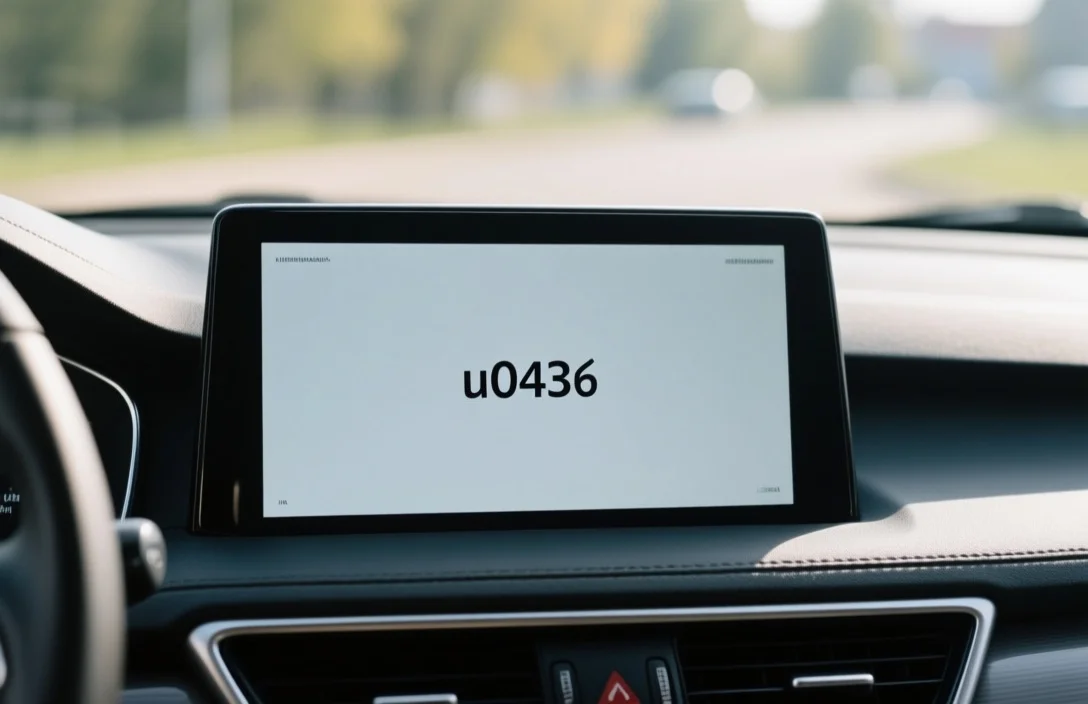
Modern automotive display screens use Unicode encoding to render Cyrillic characters like “ж” (Unicode U+0436). This encoding allows vehicles sold in Russian-speaking markets to display navigation destinations, media information, and system settings in the local language.
Character Encoding Technologies
Automotive displays employ various encoding standards to support Cyrillic characters. Most modern systems use UTF-8 encoding, which can represent the entire Unicode character set including all Cyrillic letters. This compatibility ensures that navigation systems, infotainment interfaces, and digital instrument clusters can display Russian text properly.
For older vehicles or specialized systems, different encoding approaches may be used. Some manufacturers implement custom font mappings that translate Cyrillic characters to available glyphs in the display’s limited character set. This approach often results in visual inconsistencies but provides basic functionality for essential text elements.
Display Technologies For Cyrillic
Both LCD and OLED screens in modern vehicles can display Cyrillic characters effectively. LCD displays, being the most common in automotive applications, use backlighting to illuminate pixels arranged in a grid that forms characters. OLED technology offers superior contrast and viewing angles while maintaining excellent Cyrillic character rendering capabilities.
Proper Cyrillic display requires not just the right encoding but also appropriate font design. Cyrillic characters have distinct visual characteristics that must be properly represented on automotive displays to ensure readability and user experience.
Automotive Systems Supporting Cyrillic
Major automotive manufacturers that sell vehicles in Russian-speaking markets ensure their display systems support Cyrillic characters. BMW, Mercedes-Benz, Audi, and Toyota all implement proper Unicode support in their infotainment systems for models sold in Russia, Ukraine, and other Cyrillic alphabet regions.
| Manufacturer | Cyrillic Support | Display Technology |
|---|---|---|
| BMW | Full Unicode | LCD/OLED |
| Mercedes-Benz | Full Unicode | LCD |
| Audi | Partial Unicode | OLED |
| Toyota | Full Unicode | LCD |
When troubleshooting Cyrillic display issues, first verify the vehicle’s region settings match the intended language. Some systems require specific configuration changes to enable proper Cyrillic rendering, especially in vehicles that may have been imported from non-Cyrillic markets.
Troubleshooting Cyrillic Encoding Issues In Automotive Media
Cyrillic encoding issues in automotive media often stem from misconfigured font settings or incorrect character encoding. To resolve these issues, you need to correct the font settings and re-encode the Cyrillic characters. This can be done by reinstalling the font or re-encoding the characters using a Unicode editor.
By following these steps, you should be able to troubleshoot and resolve Cyrillic encoding issues in automotive media. If the issue persists, it may be necessary to seek further assistance from a technical expert or the manufacturer’s support team.
Expert Tip: When troubleshooting Cyrillic encoding issues, it’s essential to check the font settings and re-encode the characters using a Unicode editor. This will help ensure that the Cyrillic characters are displayed correctly and avoid any potential issues.
Solutions For Displaying Cyrillic Characters Correctly In Automotive Media
Most modern automotive display systems use Unicode encoding to display Cyrillic characters, but issues can arise when using specific fonts or character sets. To display Cyrillic characters correctly, ensure that the display system is set to a font that supports the Cyrillic alphabet, such as Arial, Calibri, or a font specifically designed for Cyrillic languages like Cyrillic Extended-A.
Best Practices For Displaying Cyrillic Characters
When displaying Cyrillic characters in automotive media, it’s essential to consider the character set and font used. For example:
| Character Set | Font | Description |
|---|---|---|
| Cyrillic Extended-A | Cyrillic Extended-A Font | This character set and font combination is specifically designed for displaying Cyrillic characters in automotive media. |
| Cyrillic | Arial | This character set and font combination is widely supported in modern automotive display systems. |
In practice, using a font that supports Cyrillic characters can make a significant difference in displaying Cyrillic characters correctly.
For example, using the Cyrillic Extended-A font can ensure that Cyrillic characters are displayed accurately, while using Arial can result in incorrect or missing characters.
When in doubt, consult the display system’s documentation or contact the manufacturer for guidance on displaying Cyrillic characters correctly.
Cyrillic Encoding In Automotive Technical Documentation
Cyrillic encoding is used in automotive technical documentation to support the display of Cyrillic characters, which are commonly used in Russian and other Eastern European languages. This allows for accurate translation and representation of technical information, such as repair manuals, owner’s manuals, and service bulletins, in languages that use Cyrillic alphabets.
Support For Cyrillic Characters In Automotive Media
Automotive systems that support Cyrillic encoding include navigation systems, display screens, and technical documentation software. These systems use Unicode character encoding, which includes the Cyrillic character set, to display text and symbols correctly. This ensures that Cyrillic text is displayed accurately and without errors, even when using non-ASCII characters.
Automotive manufacturers that support Cyrillic encoding include those that operate in Russia and other Eastern European markets, such as Lada, AvtoVAZ, and GAZ.
The use of Cyrillic encoding in automotive technical documentation ensures that technical information is accurately and consistently represented across languages and regions.
| Automotive System | Cyrillic Encoding Support |
|---|---|
| Navigation Systems | Yes, uses Unicode character encoding |
| Display Screens | Yes, may use Cyrillic encoding for text and symbols |
| Technical Documentation Software | Yes, uses Cyrillic encoding for technical text |
Conclusion: Importance Of Correct Cyrillic Encoding In Automotive Media
Correct Cyrillic encoding is crucial for accurate display of destination names, street signs, and technical documentation in automotive media, ensuring safe and efficient navigation and maintenance.
Incorrect encoding can lead to misread signs, confusion, and increased risk of accidents, highlighting the importance of proper Cyrillic encoding in automotive media.
Automotive manufacturers and software developers must prioritize correct Cyrillic encoding to avoid potential risks and ensure seamless user experience.
Correct encoding is also essential for vehicles operating in regions where Cyrillic languages are predominantly spoken, such as Russia, Ukraine, and Belarus.
By following proper Cyrillic encoding standards, automotive media can provide accurate and reliable information, contributing to improved safety, efficiency, and overall user experience.
Quick Summary
The diagnostic trouble code U0436 indicates a communication error between your vehicle modules, specifically involving invalid data from the chassis control module.
| Factor | Details |
|---|---|
| Code Type | Network Communication |
| Primary Issue | Invalid Data Received |
| Difficulty | Advanced Electrical |
Frequently Asked Questions
What Does The U0436 Code Mean On My Car?
The U0436 code is a network communication fault that indicates your vehicle’s control modules detected invalid data from the fuel level sensor circuit. It is most common in GM, Ford, and Chrysler vehicles made after 2010.
Is It Safe To Drive With A U0436 Code?
You can drive short distances, but long trips are not recommended. The code may cause inaccurate fuel gauge readings, which could leave you stranded if the tank runs empty unexpectedly. Have it checked within a week.
How Much Does It Cost To Fix A U0436 Code?
Repair costs typically range from $120 to $350, including diagnosis. The most common fix is replacing the fuel level sensor or repairing damaged wiring, while a control module replacement can exceed $600.
Can I Reset The U0436 Code Myself?
You can clear the code using an OBD2 scanner, but it will return if the underlying issue isn’t fixed. A temporary reset may restore the fuel gauge, but the problem will persist until the sensor or wiring is repaired.
What Are The Most Common Causes Of A U0436 Code?
The top causes are a faulty fuel level sensor (70% of cases), corroded wiring or connectors, or a failing instrument cluster. Less common issues include a bad PCM or CAN bus communication errors.

- Top 10 Best Helmet For Xtreme 125r 2026 - October 5, 2026
- Top 10 Best Helmet For Xpulse 200 2026 - October 5, 2026
- Top 10 Best Helmet For Xsr 155 2026 - October 5, 2026