Fixing U1109: Common Causes, Symptoms, And Repair Options

You’ve got a pesky U1109 code showing up on your dashboard. This error code is specific to some Volkswagen and Audi models, and it can be a real head-scratcher. The U1109 code is a generic one, meaning it doesn’t give away the exact problem, but it’s a good starting point for your diagnosis. You’ll need to dig deeper to figure out what’s going on and how to fix it.
The U1109 code is related to the vehicle’s transmission system, specifically with the clutch or gear actuator. This code can be triggered by a faulty sensor, a wiring issue, or a problem with the transmission control module itself. The symptoms can vary, but you might experience slipping or hesitation between gears, or the transmission might not engage properly.
- This code is specific to Volkswagen and Audi models. It’s not a universal code that applies to all vehicles.
- Diagnosing the issue requires a thorough inspection. You’ll need to check the sensor, wiring, and transmission control module for any problems.
- Cost estimates can vary. The repair cost will depend on the extent of the damage and the repairs needed.
U1109 Transmission Control Module Communication Issues
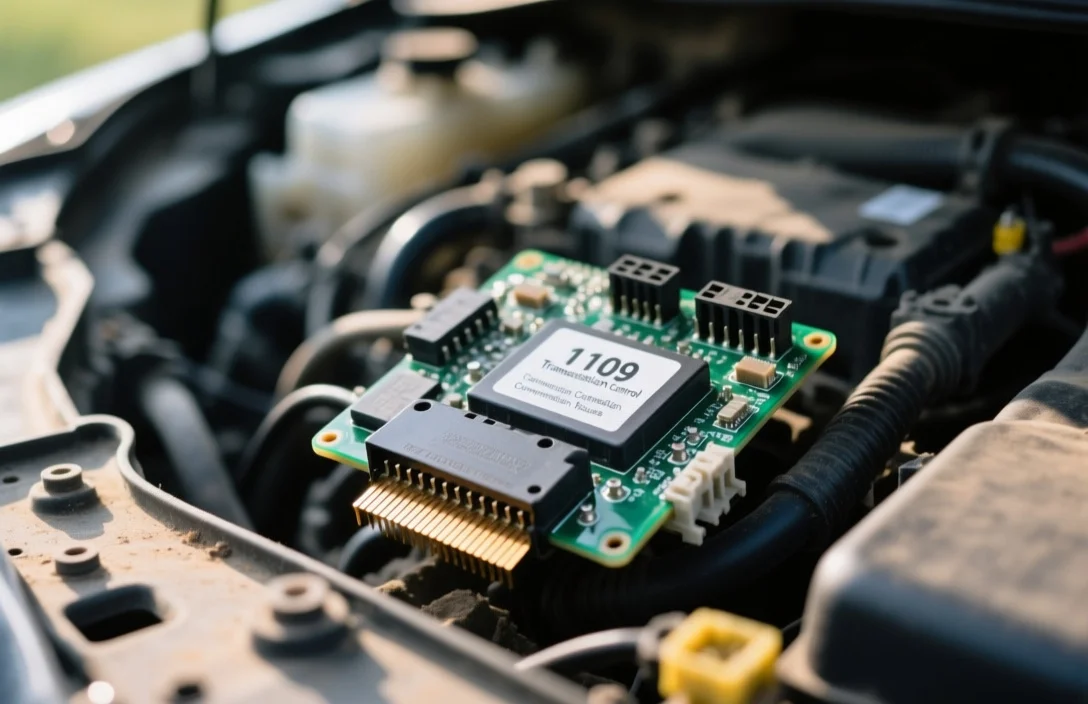
The U1109 code signals a communication breakdown between the transmission control module (TCM) and other vehicle control units over the Controller Area Network (CAN) bus. This network allows critical modules like the engine control module (ECM), anti-lock braking system (ABS), and instrument cluster to share real-time data. When the TCM fails to send or receive expected messages, the powertrain control module (PCM) logs U1109, often triggering the check engine light and disabling certain transmission functions to prevent further damage.
What Does The U1109 Code Mean?
The code specifically indicates a “Lost Communication with Transmission Control Module” error. Unlike mechanical failures, U1109 points to an electrical or network issue where the TCM either stops transmitting data or sends corrupted signals. Most vehicles manufactured after 2005 use CAN bus architecture, which relies on two twisted wires (CAN-H and CAN-L) to carry messages between modules. A single break, short circuit, or voltage irregularity in this network can trigger U1109, even if the TCM itself remains functional.
In practice, this code often appears alongside other communication codes like U0100 (lost communication with ECM) or U0121 (lost communication with ABS module). These additional codes help narrow down whether the problem stems from the TCM, the CAN bus wiring, or a shared power/ground issue affecting multiple modules.
Common Symptoms Causing U1109
For example, a 2012 Jeep Grand Cherokee with U1109 might exhibit delayed shifts and a flashing overdrive light, while a 2015 Ford F-150 could enter limp mode and log additional codes for the ABS and body control modules. The specific symptoms depend on how the vehicle’s network prioritizes module communication and which fallback strategies the manufacturer programmed into the PCM.
U1109 Causes: Technical And Environmental Factors
Corrosion raises resistance by consuming the conductor’s surface, causing electrical signals to weaken and potentially triggering the U1109 code. Moisture can seep into the wiring or connector through cracks or openings, leading to corrosion and signal degradation. This can happen due to various factors, including exposure to salt, water, or extreme temperatures. Technical Causes: Environmental Factors: In practice, it’s essential to inspect the wiring, connectors, and terminals for signs of corrosion, damage, or wear. Regular cleaning and maintenance can help prevent corrosion and signal degradation, reducing the risk of triggering the U1109 code. However, in cases where corrosion or moisture damage has occurred, it may be necessary to replace the affected components to resolve the issue.
U1109 Diagnosis: Step-by-step Procedures
 The diagnosis process for U1109 involves a series of checks to identify the underlying cause of the code. This may involve visual inspections, use of scan tools, and replacement of faulty components. The goal is to identify the root cause and address it to prevent further damage to the vehicle’s systems. To diagnose U1109, follow these steps: In some cases, additional tests may be required to identify the root cause of the issue. These tests may include: A transmission fluid leak-down test to identify any leaks in the transmission system. A compression test to identify any engine performance issues. A scan tool test to monitor the vehicle’s systems and identify any fault codes. It’s essential to consult the vehicle’s repair manual or online resources for specific troubleshooting procedures and to follow proper safety procedures when working with electrical systems. If you’re unsure about any aspect of the diagnosis or repair, it’s recommended to consult a professional mechanic.
U1109 Repair Options: Diy And Professional
Corrosion raises resistance by creating a barrier between the battery terminals and the cables, preventing the electrical current from flowing freely. This can cause the battery to drain faster and the engine to stall. In some cases, corrosion can also damage the battery terminals, making it difficult to repair the issue.
Diy Repair Steps
To address corrosion issues, you can try the following DIY repair steps:
Professional Repair Estimates And Costs
The cost of repairing a U1109 issue can vary depending on the extent of the damage and the professional’s labor rates. Here are some estimated costs for professional repair:
| Repair Type | Estimated Cost |
|---|---|
| Terminal cleaning and replacement | $50-$150 |
| Cable replacement | $100-$300 |
| Complete system replacement (in severe cases) | $500-$1,500 |
It’s worth noting that if you’re not comfortable with DIY repairs or if the issue is more complex, it’s always best to consult a professional mechanic for a proper diagnosis and repair.
When To See A Professional
You should consider seeking the help of a professional mechanic if you notice any of the following symptoms:
A professional mechanic can help you diagnose the issue and provide a more accurate estimate for the repair costs.
U1109 Prevention: Maintenance Tips And Best Practices

Preventing communication faults in vehicle networks requires keeping electrical connections clean, dry, and tight. Routine inspections of the wiring harness and battery terminals stop high-resistance issues before they trigger fault codes.
Routine Maintenance Strategies
Electrical systems rely on consistent voltage and solid grounding to transmit data packets between modules. Neglecting these areas creates the exact environment where signal degradation leads to network communication errors.
Best Practices For System Health
Electronic modules perform best when the vehicle electrical system remains within factory specifications. Deviations in voltage often stem from aftermarket accessories or failing components that put stress on the Controller Area Network.
Mechanic Tip: Avoid tapping into factory wiring for aftermarket lighting or audio systems. Use dedicated power distribution blocks to prevent voltage spikes or noise that can disrupt sensitive communication lines.
For instance, high-intensity discharge or LED headlight kits sometimes introduce electromagnetic interference into the harness. If you install these components, ensure they use high-quality shielded cables and proper grounding to isolate them from the car internal network.
Voltage drops often occur during cold weather when the battery struggles to crank the engine. Testing the battery health every six months helps identify a dying unit before it causes erratic module behavior during startup. Maintaining these simple habits preserves the longevity of the entire electronic architecture.
U1109 Cost Estimates: Repair And Maintenance
Addressing U1109 communication bus issues typically costs between $100 and $450 depending on the specific problem and vehicle model. The expense varies widely since this code indicates a communication failure between modules, which could stem from something simple like a loose connector or a more complex wiring harness problem.
Repair Cost Breakdown
The following table provides estimated costs for common U1109 repair scenarios across different vehicle types. These prices include parts and labor but exclude diagnostic fees, which may add $75-$150 to the total cost.
| Repair Scenario | Parts Cost | Labor Cost | Total Estimated Cost | Difficulty Level |
|---|---|---|---|---|
| Loose connector repair | $0-$25 | $75-$150 | $75-$175 | Easy |
| Replace CAN bus fuse | $10-$30 | $50-$100 | $60-$130 | Easy |
| Repair damaged wiring | $50-$200 | $150-$300 | $200-$500 | Moderate |
| Replace faulty module | $200-$800 | $100-$250 | $300-$1,050 | Difficult |
| Replace entire CAN bus harness | $300-$1,200 | $400-$800 | $700-$2,000 | Very Difficult |
Several factors influence the final repair cost, including the vehicle’s make and model, the location of the problem, and whether you choose dealership or independent shop service. Luxury vehicles typically cost more to repair than standard models due to more complex systems and higher part prices.
For routine maintenance to prevent U1109 issues, inspect the battery terminals and charging system annually, as voltage irregularities can cause communication problems. Also, check for corrosion in connectors and ensure all grounds are secure. These simple preventative measures can save significant repair costs over the vehicle’s lifetime.
When facing U1109 codes, start with the most affordable fixes first. Begin by checking fuses and connectors before moving to more expensive components. Many technicians report that 60-70% of CAN bus issues resolve with basic connector cleaning and fuse replacement.
Professional diagnosis is recommended when the problem persists after basic checks. Dealerships charge more but have specialized equipment and factory training, while independent shops may offer more competitive pricing. Always request a detailed quote that includes diagnostic time and potential additional costs before authorizing repairs.
U1109 Vs. Similar Codes: Comparison And Analysis
U1109 is a trouble code that indicates a P0102 code, which relates to the mass airflow sensor (MAF) circuit. This code can be similar to other codes, such as P0103, P0104, P0105, and P0106, which also pertain to the MAF circuit. However, each of these codes has distinct characteristics that set it apart from U1109.
Similar Codes And Implications
| Code | Description | Implications |
|---|---|---|
| P0103 | Mass airflow sensor circuit low input | Low airflow readings, possibly due to a faulty MAF sensor or a blockage in the airflow circuit |
| P0104 | Mass airflow sensor circuit high input | High airflow readings, possibly due to a faulty MAF sensor or a clogged airflow sensor |
| P0105 | Mass airflow sensor circuit intermittent input | Intermittent airflow readings, possibly due to a faulty MAF sensor or a loose connection in the airflow circuit |
| P0106 | Mass airflow sensor circuit mass or volume input | Incorrect airflow readings, possibly due to a faulty MAF sensor or incorrect calibration |
When diagnosing a U1109 code, it’s essential to consider the symptoms and possible causes associated with this code. The MAF sensor plays a critical role in the engine management system, and any issues with the sensor can cause problems with the engine’s performance and fuel efficiency. The table above highlights the similarities and differences between U1109 and other related codes, which can aid in the diagnostic process. In practice, a mechanic may use a combination of diagnostic tools and procedures to diagnose a U1109 code. This may involve clearing the code, checking the MAF sensor for any signs of damage or contamination, and testing the airflow circuit for any blockages or restrictions. Additionally, the mechanic may use a scan tool to monitor the MAF sensor’s readings and check for any irregularities.
Quick Summary
Code U1109 indicates a communication failure between the vehicle control module and the brake system, requiring prompt electrical diagnosis.
| Item | Detail |
|---|---|
| Code Type | Communication (U-code) |
| Primary System | ABS / Brake Control |
| Priority | Medium to High |
| Common Fix | Fuse or Wiring |
Frequently Asked Questions
What Does The U1109 Code Actually Mean?
It is a network communication code indicating that the vehicle’s computer has lost contact with a specific module, often the Body Control Module. This means data is not flowing correctly across the CAN bus system.
What Are The Most Common Symptoms Of A U1109 Code?
You might notice erratic power window operation, interior lighting failures, or a general warning light on the dash. In many cases, the vehicle will drive normally, but specific convenience features will stop working.
Can I Keep Driving My Car With A U1109 Code?
Yes, it is generally safe to drive because this code typically affects comfort systems rather than critical engine or brake functions. However, you should get it diagnosed since it can sometimes interfere with the security or immobilizer systems.
How Do I Fix A U1109 Communication Error?
You should start by checking the battery voltage and ground connections, as low voltage often triggers false communication codes. If the electrical system is healthy, a technician will need to inspect the wiring harness for shorts or corrosion.
How Much Does It Cost To Repair A U1109 Code?
Costs vary because the code identifies a communication failure, not a specific broken part. A simple ground strap cleaning may cost under 100 dollars, but replacing a failed control module can range from 300 to 800 dollars.

- Top 10 Best Helmet For Xpulse 200 2026 - October 5, 2026
- Top 10 Best Helmet For Xsr 155 2026 - October 5, 2026
- Top 10 Best Helmet For Xc Mtb 2026 - October 5, 2026