Fix U1113 Trouble Code: Causes And Solutions

You just scanned your OBD-II reader and U1113 popped up. The check-engine light is on, the car feels sluggish, and you’re staring at a code that isn’t in the usual P0xxx range. U1113 isn’t a generic powertrain code – it’s a manufacturer-specific fault tied to the fuel or engine management system, and it won’t clear itself until the root cause is fixed.
U1113 is a communication error code indicating the engine control module (ECM) lost data from the fuel level sensor or fuel pump control module. Common causes include corroded wiring, a failing fuel sender, or a dead fuel pump relay. Symptoms often include rough idle, poor fuel economy, and a stored code within 50-100 miles of the fault starting. Professional diagnosis typically takes 30-60 minutes.
U1113 Code Definition

U1113 is a network communication code indicating that the Engine Control Module (ECM) has lost contact with another critical electronic module. This failure usually involves the Body Control Module (BCM) or the security system, which can prevent the vehicle from verifying the anti-theft key.
The Nature Of Communication Codes
Communication codes differ from standard powertrain codes because they do not point to a single failed part like a spark plug. Instead, they signal a break in the conversation between two computers on the vehicle network. When the ECM sends a request for data and gets no response, it triggers this code to alert the technician that the data path is compromised.
This is a digital handshake failure. If the handshake fails, the car may enter a limp mode or refuse to start entirely to protect the system from erratic data. In many GM vehicles, this code specifically points to a loss of communication with the BCM.
In my experience, a U1113 code on a GM vehicle often looks
Common Causes Of U1113
Symptoms Of U1113 Code
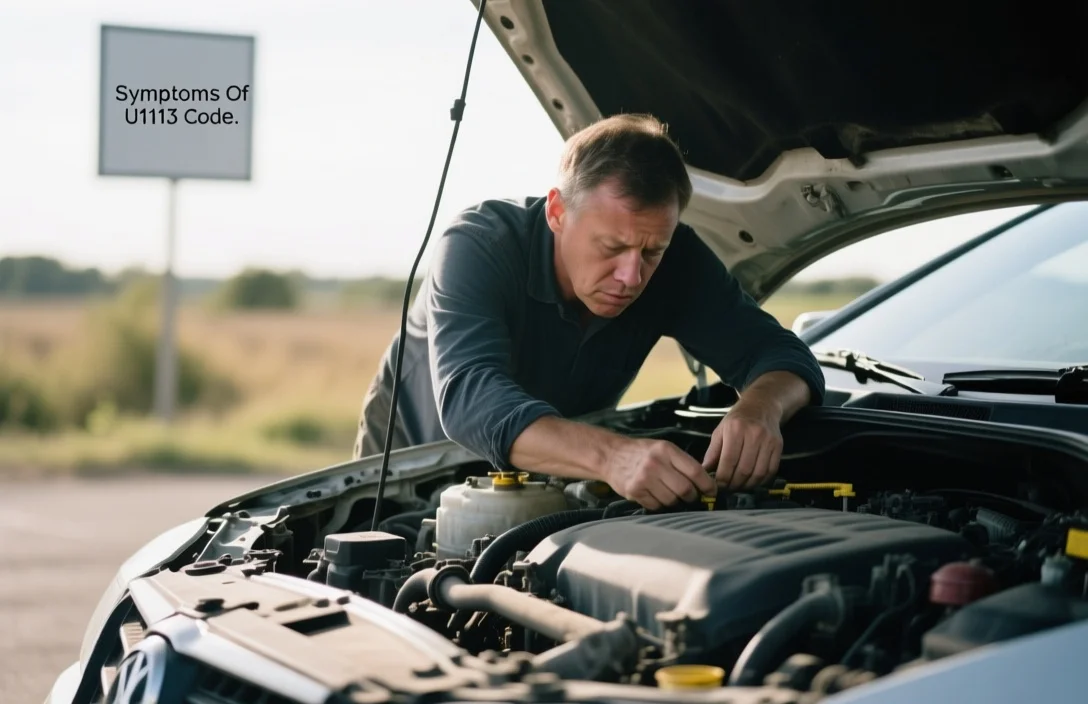
A communication failure between the engine control module and other onboard systems typically triggers this fault. This disruption often activates the malfunction indicator lamp and forces the vehicle into a safe mode to protect the drivetrain.
The check engine light is usually the first visible sign of a problem. In many vehicles, this light appears alongside other dashboard warnings, such as the traction control or ABS indicators, because these systems share the same data bus.
Driveability And Performance Impacts
Reduced engine performance occurs when the computer loses a critical data stream and cannot calculate precise timing or fuel delivery. The vehicle often enters “limp mode,” which limits the maximum RPM and prevents the transmission from shifting into higher gears.
For example, a driver might notice the car feels sluggish or refuses to accelerate past 40 or 50 mph. This is a programmed safety response to prevent internal engine damage when the PCM is operating on default values.
Fuel economy typically drops when this error is present. Because the engine control module cannot receive real-time data from necessary sensors, it defaults to a “rich” fuel mixture to ensure the engine does not lean out and overheat.
| Symptom | Impact Level | Primary Cause |
|---|---|---|
| Check Engine Light | Moderate | Data bus interruption |
| Limp Mode | High | PCM safety protocol |
| Poor MPG | Moderate | Default fuel mapping |
Communication codes are tricky because the physical symptom often does not match the failed part. You might feel a fuel delivery issue, but the actual problem is often a frayed wire in a wiring harness.
Troubleshooting U1113 Code
U1113 indicates a communication loss between the Engine Control Module (ECM) and other vehicle control modules. This fault requires a systematic approach to identify whether the issue stems from a sensor, wiring problem, or fuel system component.
Fuel System Inspection
Professional diagnostic equipment is often required to accurately diagnose U1113 codes. If you lack the proper tools or experience, consult a qualified technician who can perform advanced system diagnostics.
Repairing U1113 Code
 The U1113 code is triggered when the engine control module (ECM) detects an incorrect fuel trim reading. This can be caused by a faulty fuel trim sensor, wiring issues, or a problem with the fuel system itself. To repair the U1113 code, you’ll need to identify and fix the underlying cause.
Replacing Faulty Sensors
Replacing a faulty fuel trim sensor is a relatively straightforward process. However, it’s essential to ensure that you’re replacing the correct sensor, as the fuel trim sensor is often located in a hard-to-reach area.
Repairing Wiring Issues
Wiring issues can also trigger the U1113 code. Inspect the wiring harness and look for any signs of damage, corrosion, or wear.
| Wiring Check | Repair Steps |
|---|---|
| Check for loose connections | Tighten any loose connections and secure the wiring harness. |
| Inspect for signs of corrosion | Clean or replace any corroded wiring or connectors. |
| Check for wear or damage | Replace any damaged or worn-out wiring or connectors. |
Replacing Faulty Fuel System Components
If the problem lies with the fuel system itself, you may need to replace faulty components such as the fuel pump, fuel filter, or fuel injectors. Remember to always follow proper safety procedures when working with electrical and fuel system components. If you’re unsure or uncomfortable with any aspect of the repair, it’s always best to consult a professional mechanic.
Cost And Safety Considerations
Ignoring the U1113 code can lead to significant repair costs, estimated to be between $1,000 to $3,000 or more, depending on the extent of the damage. In some cases, ignoring the code can result in engine failure, which can cost upwards of $5,000 or more to repair. Moreover, ignoring the code can also lead to a decrease in fuel efficiency, which can increase fuel costs over time.
| Repair Cost Estimates | Possible Engine Damage |
|---|---|
| $1,000 – $3,000 (estimated) | Engine failure, decreased fuel efficiency |
In practice, ignoring the U1113 code can lead to a domino effect of problems, including increased emissions, decreased performance, and potentially even engine failure. For example, if the code is related to a faulty fuel sensor, ignoring the issue can lead to incorrect fuel mixture, which can cause engine knock or pinging, ultimately leading to engine damage.
Corrosion raises resistance by disrupting the electrical path, causing the fuel sensor to malfunction. In some cases, corrosion can also lead to a short circuit, which can cause a fire.
In some cases, ignoring the U1113 code can lead to safety risks, including increased emissions and decreased performance, which can affect the overall safety of the vehicle. For instance, if the code is related to a faulty oxygen sensor, ignoring the issue can lead to a decrease in fuel efficiency, which can increase the risk of an accident.
Preventing U1113 Code
The U1113 code is triggered by a fuel system issue, specifically when the fuel system pressure sensor registers a faulty reading. This can be caused by a variety of factors, including a faulty fuel pressure sensor, a clogged fuel filter, or a malfunctioning fuel pump. To prevent the U1113 code from occurring, it’s essential to perform regular maintenance on the fuel system.
Failure to replace the fuel filter regularly can lead to a clogged filter, which can cause the U1113 code to appear. A clogged fuel filter can also lead to poor fuel economy, decreased engine performance, and potentially even engine damage.
A faulty fuel pressure sensor can also trigger the U1113 code. If the sensor is faulty, it may not provide an accurate reading, which can cause the engine computer to set the code. In this case, replacing the fuel pressure sensor may be necessary to resolve the issue.
Regular calibration of the fuel pressure sensor can help to prevent the U1113 code from occurring. By keeping the fuel system clean and well-maintained, you can help to prevent a variety of issues, including the U1113 code.
Quick Summary
Code U1113 signals a communication error between modules, usually requiring a scan tool and wiring check.
| Item | Details |
|---|---|
| Typical vehicles | Chrysler, Dodge, Jeep, RAM 2005 – 2020 |
| Scan tool needed | Yes, OBD-II with CAN bus capability |
| Possible symptoms | Check engine light, reduced performance, warning lights |
Frequently Asked Questions
What Does The U1113 Code Mean In My Car?
The U1113 code is a network communication fault that means one module in your car’s CAN bus system (like the ABS, transmission, or instrument cluster) stopped receiving valid data from another module. It’s not a mechanical failure itself, but it can trigger warning lights and disable features like traction control or cruise control.
Can I Still Drive My Car With A U1113 Code?
You can drive short distances, but avoid long trips. The code often disables safety systems like stability control or adaptive cruise, so your car may not respond as expected in an emergency. Get it diagnosed within a week to prevent further module damage or unexpected shutdowns.
How Much Does It Cost To Fix A U1113 Code?
Diagnosis alone runs $80 – $150 at most shops. The actual repair depends on the faulty module or wiring – expect $150 – $600 for a new module, plus 1 – 3 hours of labor. If it’s just a corroded connector or chafed wire, the fix may cost under $100.
What Are The Most Common Causes Of A U1113 Code?
The top three causes are corroded CAN bus connectors, a failing module (like the ABS or TCM), or a shorted/damaged CAN bus wire. Less common but possible: a weak battery (below 12.2V) or a software glitch that needs a dealer reflash.
How Do I Clear A U1113 Code Without A Scan Tool?
You can’t clear it permanently without fixing the underlying issue, but disconnecting the battery for 10 – 15 minutes may reset it temporarily. The code will return within a few drive cycles if the problem isn’t fixed. For a proper fix, you’ll need a scan tool that can read CAN bus data (like an Autel or Snap-on).

- Top 10 Best Helmet For A Running Back 2026 - September 16, 2026
- Best Bug Remover For Car Wash 2026 - September 16, 2026
- Best Bug And Bird Poop Remover For Cars 2026 - September 15, 2026