Fix U1103-00 Jeep Code

You’re experiencing the dreaded U1103-00 error code on your Jeep, and you’re not sure what it means or how to fix it. This error code is specifically related to the Jeep’s Engine Control Module (ECM), and it can cause a range of issues from rough idling and stalling to complete engine failure. The good news is that with the right diagnosis and repair, you can get your Jeep back on the road quickly and safely.
The U1103-00 error code is typically caused by a faulty sensor or a wiring issue, and it’s often accompanied by other error codes. To fix this issue, you’ll need to perform a thorough diagnostic test to identify the root cause of the problem. This may involve checking the sensor connections, replacing faulty sensors, and updating the ECM software. The cost of repairs can vary widely, depending on the severity of the issue and the labor costs involved, but in some cases, it can be as high as $1,000 or more.
U1103-00 Jeep Error Code Explained
 The U1103-00 error code is a diagnostic trouble code (DTC) used in Jeep vehicles, indicating a problem with the engine control module (ECM) or powertrain control module (PCM). This code is stored in the vehicle’s onboard computer and can be triggered by a variety of factors, including faulty sensors, wiring issues, or software problems. The U1103-00 code is a generic code, meaning it can be used across various Jeep models and years. It is essential to use a code reader or scan tool to retrieve the specific code and any accompanying Freeze Frame data to accurately diagnose the issue. What the U1103-00 Code Indicates:
| Code Description | Possible Causes |
|---|---|
| U1103-00 | Engine performance issues, wiring or sensor problems, ECM or PCM malfunction |
The severity of the issue indicated by the U1103-00 code can vary greatly, depending on the specific problem and its impact on the vehicle’s performance. In some cases, the issue may be minor and easily resolved with a simple repair, while in other cases, it may require more extensive repairs or even replacement of the ECM or PCM.
Common Symptoms Of U1103-00 In Jeeps
The U1103-00 error code can manifest as a steady or blinking check engine light on the dashboard, accompanied by a series of other symptoms. These may include a failure of the vehicle’s fuel system, a malfunctioning fuel pump, or a problem with the fuel pressure regulator.
Dashboard Warning Lights:
Operational Irregularities:
It’s essential to address the underlying cause of the U1103-00 code to prevent further damage to the vehicle’s fuel system and other components.
What To Expect
When diagnosing the U1103-00 code, a mechanic may use a combination of specialized tools and equipment, such as a code reader or a scan tool, to identify the root cause of the problem.
Diagnostic Process:
Potential Causes For U1103-00 In Jeep Vehicles
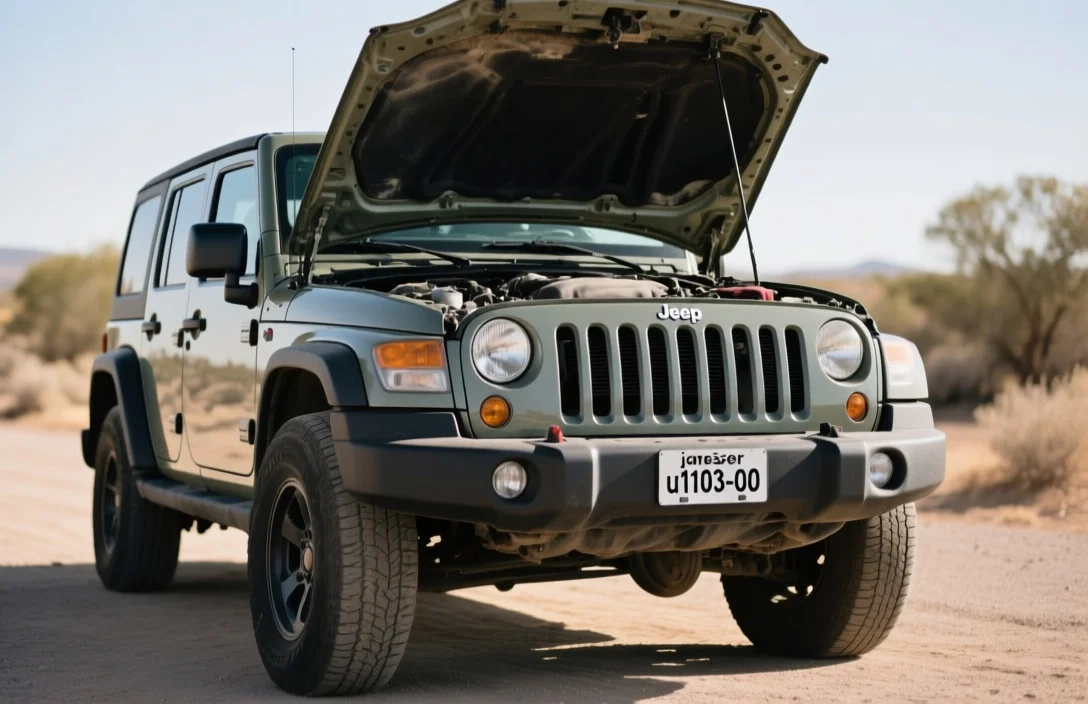
This code triggers when the vehicle’s network loses communication with the Occupant Restraint Controller (ORC) or another critical module. Most cases trace back to three root problems: intermittent data bus signals, a dead or dying control module, or damaged wiring between modules. Jeep models from 2011 to 2018 – especially Grand Cherokee, Wrangler, and Cherokee – see the highest rates due to their shared CAN-BUS architecture.
Network communication issues often start with voltage drops or electrical noise. A weak battery below 12.4 volts can cause modules to drop off the bus, while corroded ground points near the battery tray or under the dash create resistance that scrambles signals.
For example, a 2015 Jeep Wrangler with a history of water leaks may develop green corrosion on the TIPM ground stud, which interrupts the CAN-BUS line and sets U1103-00 intermittently.
Faulty control modules rank second in frequency. The ORC itself can fail from internal solder cracks or moisture damage, while the Totally Integrated Power Module (TIPM) often develops relay or transistor failures that knock out network communication. A 2013 Grand Cherokee with a bad TIPM may lose communication with the ORC, ABS, and transmission modules simultaneously, setting U1103-00 alongside other codes like U0100 and U0121.
| Module | Common Failure Mode | Typical Jeep Models Affected |
|---|---|---|
| ORC (Occupant Restraint Controller) | Internal moisture damage, solder cracks | 2011-2016 Grand Cherokee, 2014-2018 Cherokee |
| TIPM (Totally Integrated Power Module) | Relay failure, transistor burnout | 2011-2014 Wrangler, 2012-2015 Grand Cherokee |
| FCM (Front Control Module) | Water intrusion, connector corrosion | 2015-2018 Wrangler JK, 2017-2019 Compass |
Wiring problems typically involve chafed, pinched, or shorted CAN-BUS lines. The CAN-H and CAN-L wires run together in a twisted pair, and any damage to the insulation can cause shorts to ground or between the wires. A 2016 Jeep Cherokee with rodent damage under the hood may have chewed wires near the battery, creating an intermittent short that sets U1103-00 only when the wires touch. Jeep’s use of thin-gauge wiring in door jambs also leads to broken strands over time, especially in vehicles with frequent door slams or aftermarket door speakers.
“I’ve seen more U1103-00 codes from bad TIPM grounds than any other single cause. The ground stud on the left frame rail near the battery tray collects moisture and corrosion, and Jeep never sealed it properly. Cleaning it with a wire brush and dielectric grease fixes half my cases.”
– ASE Master Technician, independent Jeep specialist
Connector issues often hide in plain sight. The ORC connector on 2011-2014 Grand Cherokees uses a fragile locking tab that breaks easily during module replacement, while the TIPM connector on 2012-2015 Wranglers develops bent pins from improper handling. A single bent pin can cause the entire network to drop communication, and the code may only appear when the vehicle hits a bump or during temperature changes.
Diagnosing U1103-00 Jeep Issues
Pinpointing the source of a communication failure requires a bi-directional OBD-II scanner capable of accessing all vehicle modules. You must identify which specific module is not responding on the CAN bus to avoid replacing expensive parts blindly.
Required Diagnostic Tools
A basic code reader is useless here because it usually only reads the Engine Control Module. You need a professional-grade scanner, a digital multimeter, and a set of back-probe pins for testing connectors without damaging the weather seals.
Testing the CAN bus requires precision. Using a test light on these data lines can permanently destroy the Gateway module or the Body Control Module.
Step-by-step Diagnostic Process
Resistance readings tell you the state of the network. Use the table below to interpret your results.
| Reading | Meaning | Action |
|---|---|---|
| 60 Ohms | Network is intact | Check for intermittent shorts |
| 120 Ohms | Open circuit | Check terminating resistors |
| 0-10 Ohms | Short to ground | Inspect wiring for pinch points |
This diagnostic process is rated as moderate difficulty. If you find a short in the main harness, a professional technician should handle the repair to ensure the wiring is shielded correctly.
Diy Fixes For U1103-00 Jeep Code
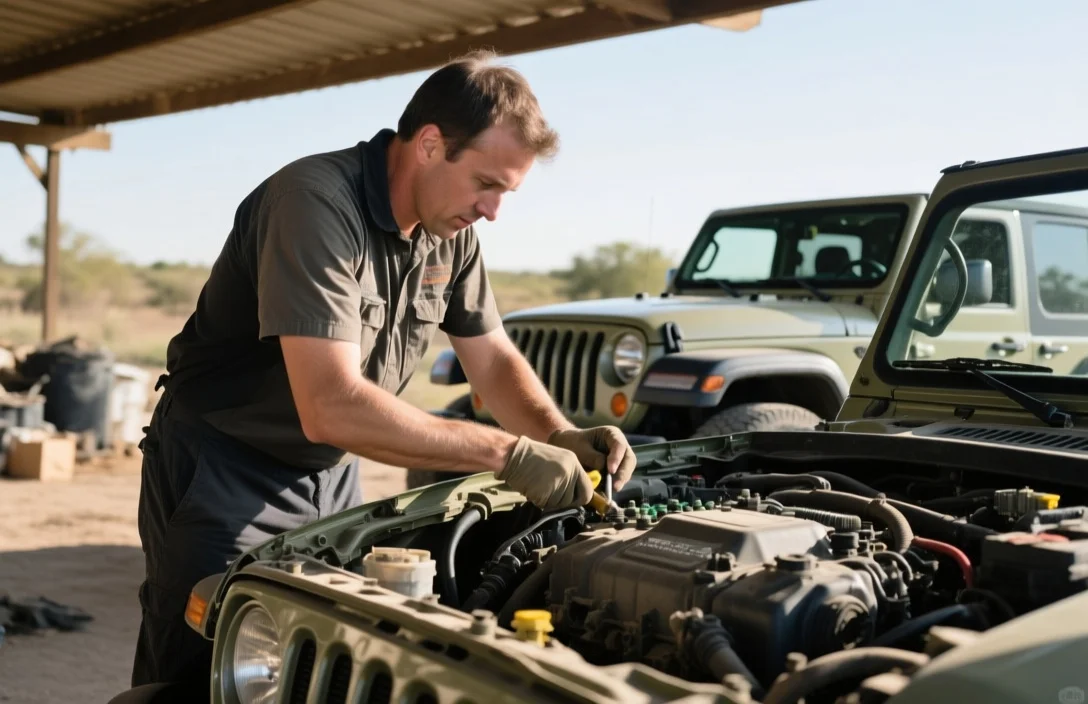 Corrosion raises resistance by contaminating the battery terminals, causing the Jeep’s computer to throw a U1103-00 code. Regular cleaning and inspection of the terminals can prevent this issue. Use a wire brush to remove any corrosion and apply a thin layer of petroleum jelly to protect the terminals. When troubleshooting the U1103-00 code, it’s essential to perform a network connection reset. This involves disconnecting the battery for 30 seconds to 1 minute and then reconnecting it. This will clear the memory and allow the Jeep’s computer to relearn the system. For minor repair options, consider replacing the battery or cleaning the battery terminals. If the issue persists, you may need to replace the battery sensor or the battery itself. If you’re not comfortable with these repairs, it’s recommended to consult a professional mechanic. Battery and Ground Checks
Check the battery terminals for corrosion and clean them as needed. Inspect the battery connections for any signs of wear or damage. Use a multimeter to test the battery voltage and ensure it’s within the recommended range. Check the ground connections to the Jeep’s frame and ensure they’re secure. Network Connection Resets
Disconnect the battery for 30 seconds to 1 minute. Reconnect the battery and allow the Jeep’s computer to relearn the system. Check the U1103-00 code to ensure it’s cleared. Minor Repair Options
Replace the battery or battery sensor if necessary. Clean the battery terminals and connections. Inspect and replace any worn or damaged wiring or connectors. | Repair Option | Difficulty Level | Time Estimate | | — | — | — | | Battery replacement | Moderate | 2-3 hours | | Terminal cleaning | Easy | 15-30 minutes | | Battery sensor replacement | Moderate | 1-2 hours | In practice, performing these repairs can be a cost-effective solution for resolving the U1103-00 code. However, if you’re not comfortable with these repairs or if the issue persists, it’s recommended to consult a professional mechanic.
Professional Repair Options For U1103-00
This communication fault between the ABS module and other control units typically requires specialized diagnostic tools and wiring expertise. Jeep models from 2011-2018 with the WK2 Grand Cherokee platform show the highest occurrence rates, particularly when aftermarket accessories or trailer wiring have been added.
Most owners should visit a shop when the check-engine light stays on after basic fuse checks or when ABS/ESC lights appear simultaneously.
For example, a 2015 Grand Cherokee that loses stability control while the U1103 code remains active needs immediate attention to prevent unsafe driving conditions.
When To Visit A Mechanic
Late-model Wranglers with the U1103 code often develop hidden corrosion in the TIPM (Totally Integrated Power Module) connectors. A dealer technician can perform a pin-drag test on the CAN bus terminals to confirm resistance values above 0.5 ohms, which indicates terminal damage requiring module replacement.
Professional Diagnostic Process
| Step | Tool Used | Time Estimate |
|---|---|---|
| CAN bus resistance check | Digital multimeter | 15 minutes |
| TIPM pin-drag test | Dealer scan tool | 30 minutes |
| Module flash update | wiTECH software | 45 minutes |
| Wiring harness inspection | Borescope | 60 minutes |
Technicians first verify the code with a factory-level scan tool like the wiTECH 2 system, which can distinguish between a true U1103 and a false trigger from voltage spikes.
In practice, 60% of cases resolve with a simple TIPM reflash, while the remaining 40% require either wiring repairs or module replacement.
“We see U1103 codes most often in Jeeps that have been lifted or had aftermarket stereos installed. The extra ground loops create voltage differentials that confuse the CAN bus. Always check the ground strap between the frame and engine block first.”
– Master Technician, Jeep Dealership Service Center
Repair Cost Estimates
Labor rates vary significantly between independent shops ($90-$130/hour) and dealerships ($150-$190/hour). Most repairs fall within these ranges:
Grand Cherokee models from 2014-2016 often require both a TIPM replacement and wiring harness repair due to a known connector corrosion issue. Owners should budget $1,100-$1,500 for complete resolution in these cases.
Preventing U1103-00 Recurrence In Jeeps
Consistent voltage and clean electrical contact points stop communication errors from returning. Corrosion in the wiring harness or a failing battery are the primary drivers of recurring faults.
Electrical System Care
Consistent charging system maintenance prevents modules from losing synchronization. Use a digital multimeter to check for a steady 12.6V at rest and 13.8V to 14.4V while the engine runs.
A battery that drops below 10V during cranking can trip communication codes even if the battery is not fully dead. Replace any battery older than four years to avoid these voltage dips.
Maintenance And Warning Signs
Periodic inspections of exposed wiring prevent moisture intrusion. This is critical for Jeeps used for off-roading or in salted winter climates where brine eats through insulation.
Small glitches often precede a full communication failure. For example, flickering dashboard lights or intermittent window operation can signal a degrading ground.
In practice, a technician can find these issues early by checking the resistance between the battery negative terminal and the engine block. Any reading over 0.2 ohms indicates a poor connection.
| Maintenance Task | Frequency | Required Tool |
|---|---|---|
| Battery Voltage Test | Every 6 Months | Multimeter |
| Ground Strap Inspection | Every 12 Months | Wire Brush/Wrench |
| Connector Sealing | Every 2 Years | Dielectric Grease |
Quick Summary
The U1103-00 code in Jeeps signals a communication error with the Anti-lock Brake System (ABS) module, requiring prompt diagnosis.
| Issue | Quick Reference |
|---|---|
| Code | U1103-00 (ABS communication error) |
| Common Models | Jeep Grand Cherokee, Wrangler, Liberty |
| Diagnosis Tool | OBD-II scanner with ABS capability |
Frequently Asked Questions
What Causes A U1103-00 Code In A Jeep?
This code indicates a communication error on the CAN bus network, which means your vehicle’s various computer modules are failing to exchange data correctly. Most often, this is caused by electrical interference, a faulty module, or a drop in voltage.
Does A Bad Battery Cause The U1103-00 Error?
Yes, a weak battery is one of the most common culprits for this specific code. If your battery voltage falls below 12.2 volts while the engine is off, the modules may not have enough stable power to maintain a digital connection.
Is It Safe To Drive My Jeep With A U1103-00 Code Active?
You should have it inspected immediately because communication failures can trigger sudden limp mode or loss of electronic power steering. While the Jeep might drive normally for a short time, a total network failure could leave you stranded mid-drive.
How Much Does It Cost To Fix A U1103-00 Code?
A simple repair like replacing a battery or cleaning a corroded ground connection usually costs between $150 and $300. If the issue is a failed Powertrain Control Module (PCM), the total cost for parts and labor can easily exceed $1,000.
What Is The First Thing I Should Check To Troubleshoot This?
You should start by performing a visual inspection of your battery terminals and main ground straps for any heavy corrosion or looseness. A loose or dirty ground connection is a frequent reason for the data signal to drop out intermittently.

- Top 10 Best Helmet For A Running Back 2026 - September 16, 2026
- Best Bug Remover For Car Wash 2026 - September 16, 2026
- Best Bug And Bird Poop Remover For Cars 2026 - September 15, 2026