10 Best Battery Maintainers for Rarely Driven Cars

If your car sits in the garage for days or weeks at a time, a dead battery is one of the most common problems you may face. Modern cars still draw a small amount of power while parked. The alarm, computer modules, keyless entry system, and other electronics continue using energy from the battery.
A battery maintainer helps prevent this slow drain. Unlike a basic charger, it monitors the battery and supplies power when needed to keep it at a healthy charge level. This makes it useful for second cars, classic cars, seasonal vehicles, and any car you do not drive regularly.
In this guide, we compare 10 battery maintainers based on charging performance, battery compatibility, safety features, ease of use, and long term storage performance. You will also see which type fits your car and how to choose the right amperage.
1. NOCO GENIUS1
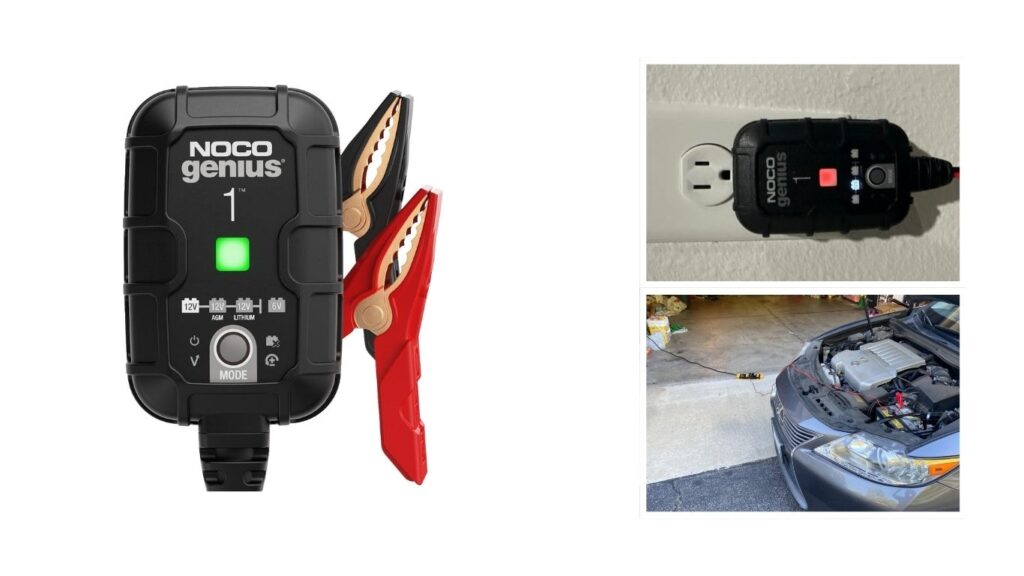
The NOCO GENIUS1 is a strong choice if your car sits unused for weeks at a time and you want a small maintainer that is easy to leave connected. It supplies 1 amp and supports both 6V and 12V batteries. It also works with several battery chemistries, including AGM, EFB, gel, wet lead-acid, and lithium batteries.
For a rarely driven car, the main advantage is its automatic maintenance function. You do not need a high-output charger simply to keep a healthy battery topped up. GENIUS1 is designed to maintain batteries across different sizes, while its safety system protects against reverse polarity, overheating, short circuits, overcharging, and sparks.
Best for
- Small and standard passenger cars
- Cars stored in a garage
- Vehicles driven every few weeks
- Owners who want a compact maintainer
- AGM and compatible lithium batteries
Pros
- 6V and 12V support
- 1A output
- Supports several battery chemistries
- Automatic maintenance
- Multiple safety protections
- Compact and lightweight
Cons
- 1A output is slow for heavily discharged batteries
- Limited to batteries up to 30Ah for charging
- Not the best choice when you need fast recovery
Verdict
Choose the GENIUS1 if your main goal is preventing battery discharge rather than quickly charging a dead battery. For a healthy battery in a rarely driven car, its compact size and automatic maintenance make it a practical option.
2. Battery Tender Plus
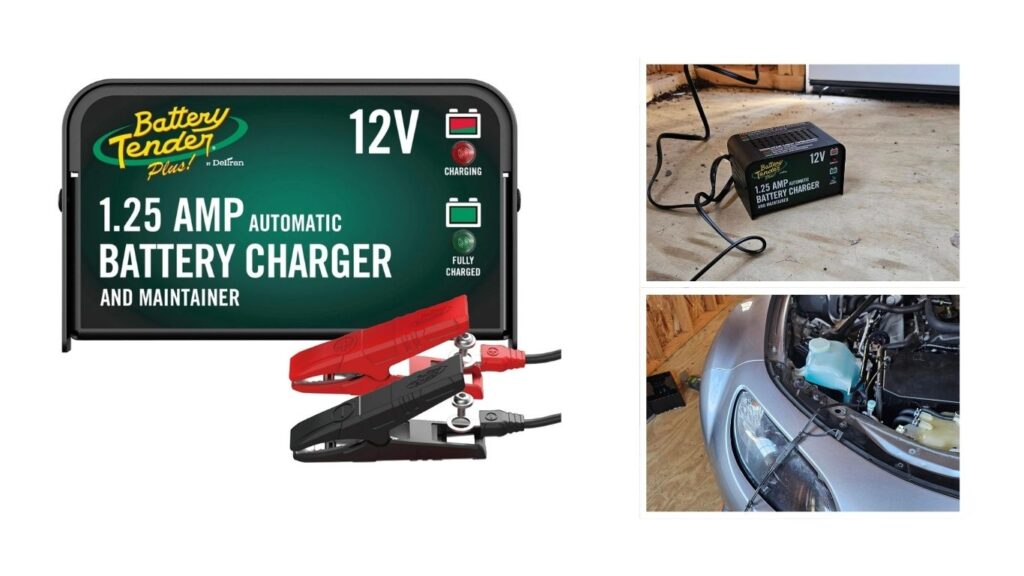
The Battery Tender Plus is designed around a simple job: charge a 12V battery and keep it maintained. It delivers 1.25 amps and supports AGM, gel, and standard sealed or flooded lead-acid batteries.
This makes it especially useful for vehicles that spend long periods parked. Once the battery reaches the appropriate charge level, the maintainer is designed to keep it there instead of continuously pushing a high charging current.
The included alligator clips and ring-terminal cable also give you two practical connection options. You can use the clips when needed or install the ring terminals for a more permanent setup.
Best for
- Seasonal vehicles
- Classic cars
- Garage-kept cars
- AGM and lead-acid batteries
- Long-term battery maintenance
Pros
- 1.25A output
- Simple operation
- Supports AGM and gel batteries
- Includes clips and ring terminals
- 12V battery support
- 10-year limited warranty
Cons
- No 6V support
- Not designed for fast charging
- Not suitable for lithium batteries according to the listed compatibility
Verdict
The Battery Tender Plus makes sense if you want a straightforward 12V maintainer for a car that spends more time parked than driven. It is better suited to maintaining a reasonably healthy battery than recovering a severely discharged one.
3. CTEK MXS 5.0
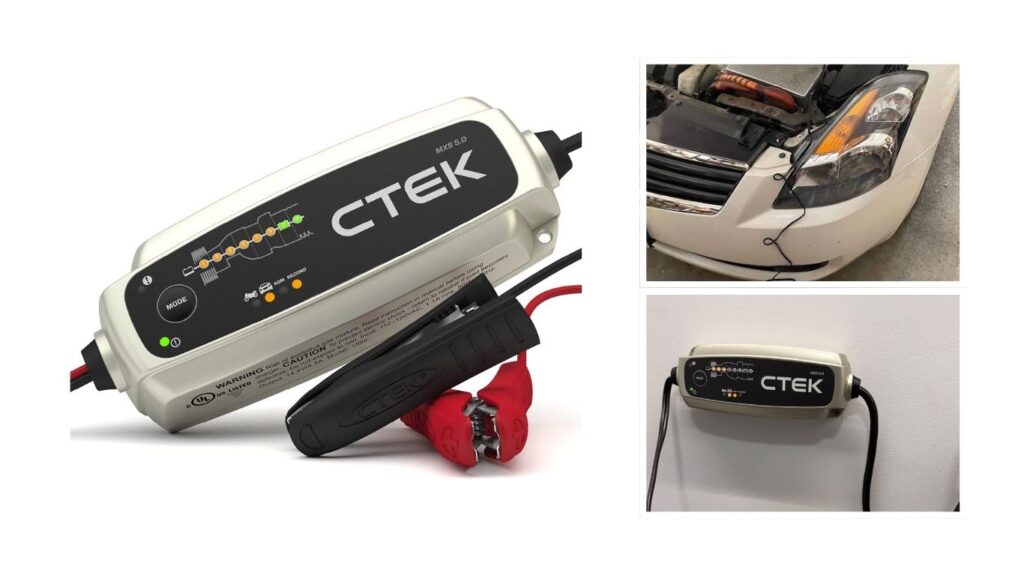
The CTEK MXS 5.0 is the most advanced option among these first five. It uses an 8-step automatic charging process and delivers up to 5 amps. It supports 12V WET, MF, Ca/Ca, AGM, EFB, and GEL lead-acid batteries.
Its biggest advantage for a rarely driven car is the dedicated maintenance system. CTEK uses a float and pulse maintenance stage for long-term connection. The charger also includes battery diagnosis, automatic desulfation, temperature compensation, and a RECOND mode for deeply discharged batteries.
The MXS 5.0 is also rated IP65 for splash and dust resistance. That gives it more flexibility for garage or workshop environments, although you should still follow the manufacturer’s installation and operating instructions.
Best for
- Long-term vehicle storage
- Modern cars with AGM batteries
- Classic cars
- Cars with larger batteries
- Owners who want advanced battery care
Pros
- 5A charging output
- 8-step automatic charging
- AGM and EFB support
- Desulfation program
- RECOND mode
- Temperature compensation
- Float and pulse maintenance
- IP65 protection
Cons
- More expensive than basic maintainers
- 12V lead-acid only
- More features than some users need
Verdict
Choose the MXS 5.0 if you want more than basic trickle maintenance. Its charging diagnostics, reconditioning mode, and long-term float/pulse maintenance make it a strong option for a vehicle that sits unused for extended periods.
4. Schumacher SC1300
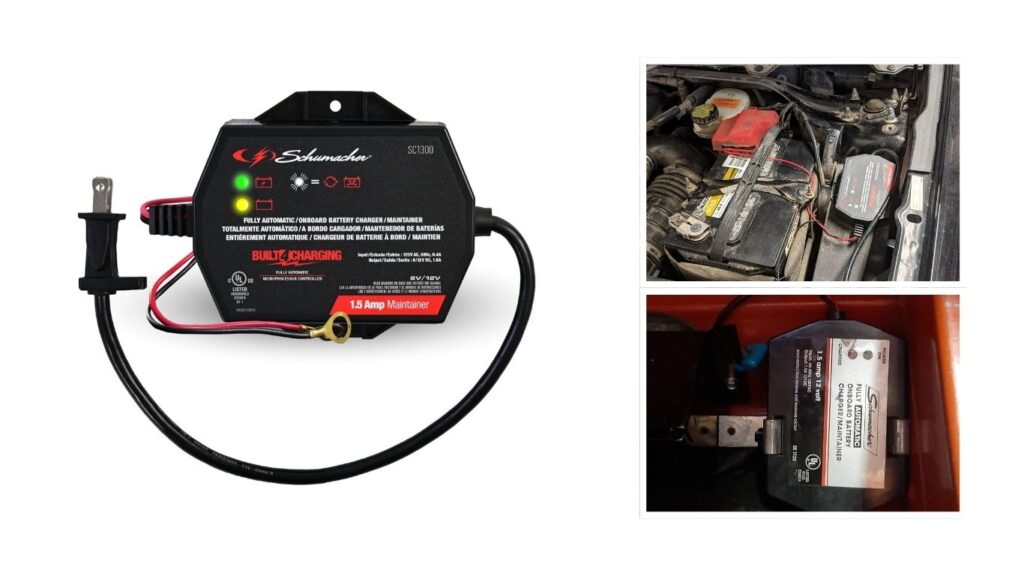
The Schumacher SC1300 is aimed at drivers who want automatic battery charging and maintenance without moving into a more specialized premium charger. It is worth considering when you want one unit for routine battery maintenance rather than only emergency charging.
For a rarely driven vehicle, look for the automatic maintenance behavior and compatibility with your specific battery before buying. The important distinction is that a maintainer should be designed for extended connection, rather than functioning only as a high-current charger.
Best for
- Infrequently driven cars
- Garage storage
- Routine battery maintenance
- Owners who prefer automatic operation
- Standard automotive batteries
Pros
- Automatic charging approach
- Designed for routine battery care
- Compact format
- Easy connection
- Suitable for storage applications
Cons
- Less advanced than the CTEK MXS 5.0
- Fewer battery-management features
- Check the exact model specifications before purchase
Verdict
The Schumacher is a reasonable middle-ground choice if you want automatic battery maintenance without paying for every advanced charging feature. Confirm the exact SC1300 version and its battery compatibility before purchasing.
5. Ampeak Smart Battery Charger
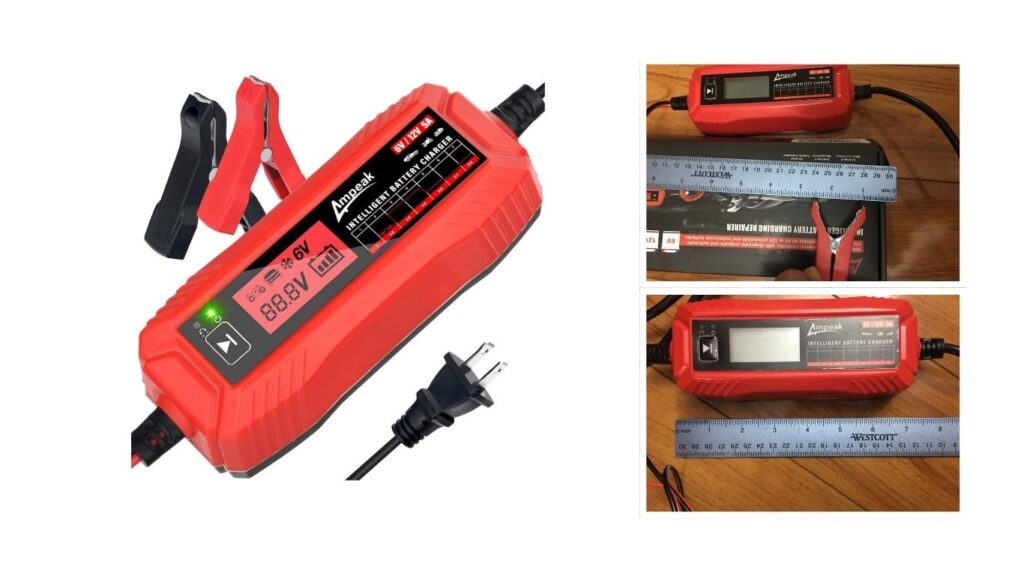
The Ampeak Smart Battery Charger is different from the smaller maintainers above because it offers considerably more charging power. The BC0253 supports 2A, 10A, 25A, and automatic charging modes for 12V lead-acid batteries. It supports standard, AGM, gel, deep-cycle, wet, SLA, and VRLA batteries.
For a rarely driven car, the automatic mode is the feature to focus on. The charger uses an 8-stage process that includes desulfation, soft start, bulk charging, absorption, battery analysis, and reconditioning. It also has protection against reverse polarity, overheating, overcurrent, overvoltage, short circuits, and other charging problems.
However, this is more charger than many owners need for simple long-term maintenance. If your battery is already healthy and you only want to compensate for normal parasitic drain, a smaller dedicated maintainer is easier to justify.
Best for
- Cars with partially discharged batteries
- Larger vehicles
- Owners who want charging and maintenance in one unit
- AGM and other compatible lead-acid batteries
- Users who want a higher-output charger
Pros
- 2A, 10A, and 25A settings
- Automatic charging mode
- 8-stage charging process
- Battery analysis
- Reconditioning function
- Multiple safety protections
- LCD display
Cons
- Larger than a basic maintainer
- More power than needed for simple maintenance
- 12V lead-acid batteries only
- Not designed for 6V or 24V batteries
Verdict
The Ampeak makes more sense if you want one device for both battery recovery and long-term maintenance. For a car that only needs its battery topped up during storage, a lower-output smart maintainer is usually the simpler choice.
6. NOCO GENIUS2
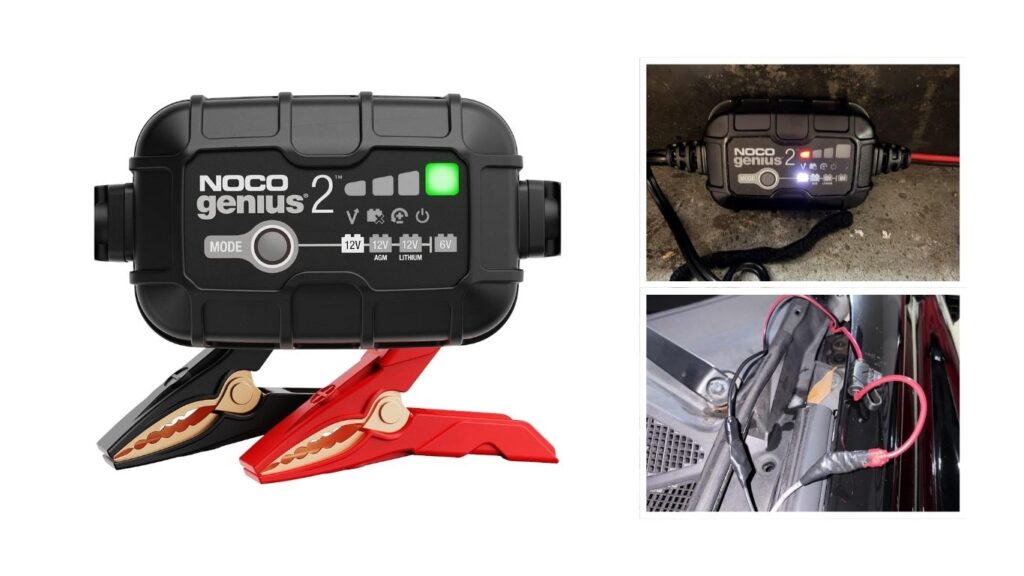
The NOCO GENIUS2 is a good step up from the GENIUS1 if your rarely driven car has a larger battery or you want faster charging when the battery level drops. It delivers 2 amps and supports both 6V and 12V batteries.
For a car that sits for weeks or months, its automatic maintenance mode is the main reason to consider it. The charger monitors the battery and adjusts its charging behavior instead of continuously sending the same current. It also supports several battery types, including AGM, EFB, gel, wet lead-acid, and compatible lithium batteries.
The compact design makes it easy to keep connected in a garage without taking up much space. Safety features such as reverse polarity protection and spark protection add another layer of convenience.
Best for
- Standard and larger car batteries
- Cars stored for several weeks
- AGM batteries
- Garage-kept vehicles
- Owners who want more output than 1A
Pros
- 2A output
- 6V and 12V support
- Multiple battery chemistries
- Automatic maintenance
- Compact design
- Safety protection
Cons
- Slower than 5A or higher chargers
- Costs more than basic maintainers
- 2A is unnecessary for simple maintenance on some small batteries
Verdict
The GENIUS2 is a practical choice if you want a compact maintainer with more charging power than a 1A model. It fits drivers who leave their cars parked for extended periods but still want the option to recharge the battery when needed.
7. Battery Tender Junior
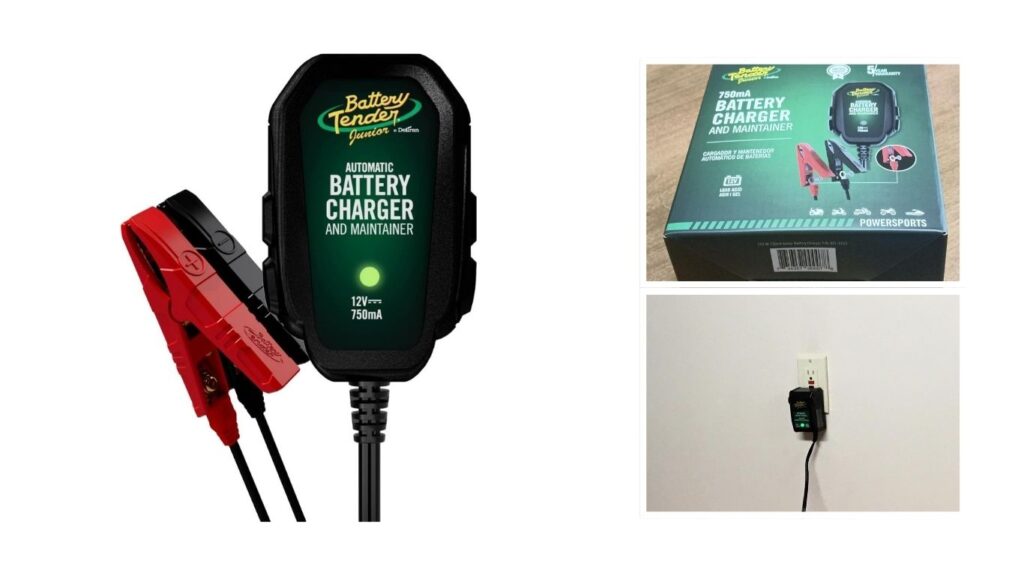
The Battery Tender Junior is designed for simple 12V battery maintenance. Its 0.75A output is relatively low, which is exactly why it works well for maintaining a healthy battery rather than rapidly charging a dead one.
If your car sits in the garage most of the time, you can use the maintainer to compensate for the small amount of power consumed by the vehicle while it is parked. The automatic charging cycle switches from charging to maintenance once the battery reaches the required level.
It is also small enough to store easily in a garage or toolbox. The included connection options make it practical for occasional use.
Best for
- Small and standard cars
- Seasonal vehicles
- Classic cars
- Long periods of storage
- Owners who want simple maintenance
Pros
- Compact
- 0.75A output
- Automatic maintenance
- Easy to operate
- Low power output for long-term maintenance
- Simple connection system
Cons
- Slow battery charging
- Limited battery chemistry support
- No 6V option
- Not suitable when you need fast battery recovery
Verdict
The Battery Tender Junior is best when your battery is already healthy and your main concern is preventing discharge. It is less suitable if your car frequently develops a deeply discharged battery.
8. Schumacher SC1281
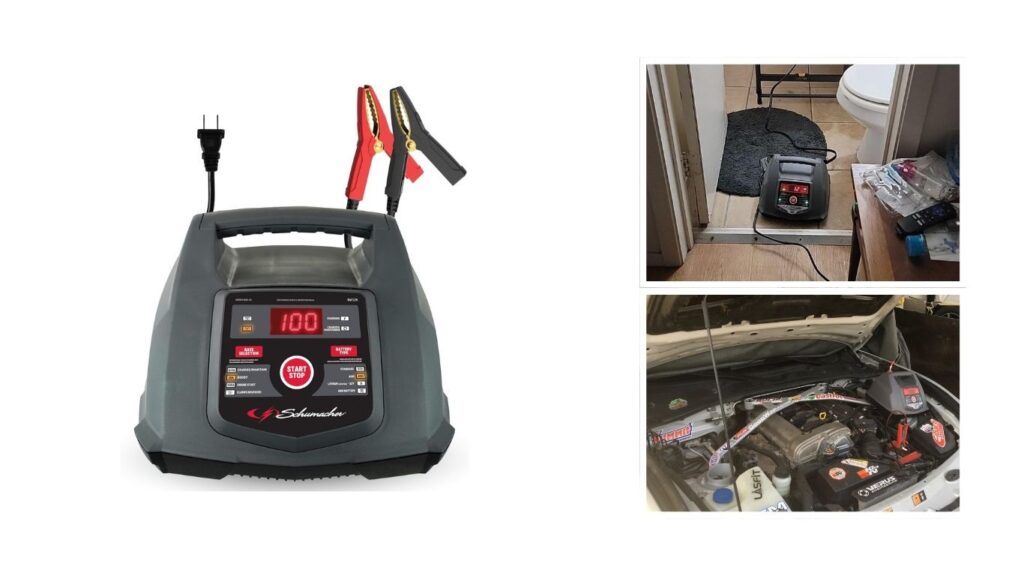
The Schumacher SC1281 is a more powerful option for drivers who want both battery charging and maintenance. Its higher charging capability makes it more useful for larger batteries found in SUVs, trucks, and other vehicles.
Unlike a small trickle maintainer, a higher-output charger gives you more flexibility when a battery has lost a significant amount of charge. Once the battery is charged, the maintenance function helps keep it ready while the vehicle remains parked.
This makes the SC1281 worth considering if you have more than one vehicle or occasionally need to recover a battery rather than simply maintain it.
Best for
- SUVs
- Trucks
- Larger batteries
- Multiple vehicles
- Long-term storage
Pros
- Higher charging capability
- Useful for larger batteries
- Charging and maintenance functions
- More versatile than a basic maintainer
- Suitable for occasional battery recovery
Cons
- Larger than compact maintainers
- More expensive than basic models
- More charging power than needed for simple maintenance
Verdict
The SC1281 is a better fit if you want one charger to handle both maintenance and heavier charging jobs. For a small car battery that only needs maintenance, a 1A or 2A smart maintainer is easier to justify.
9. OptiMate 3
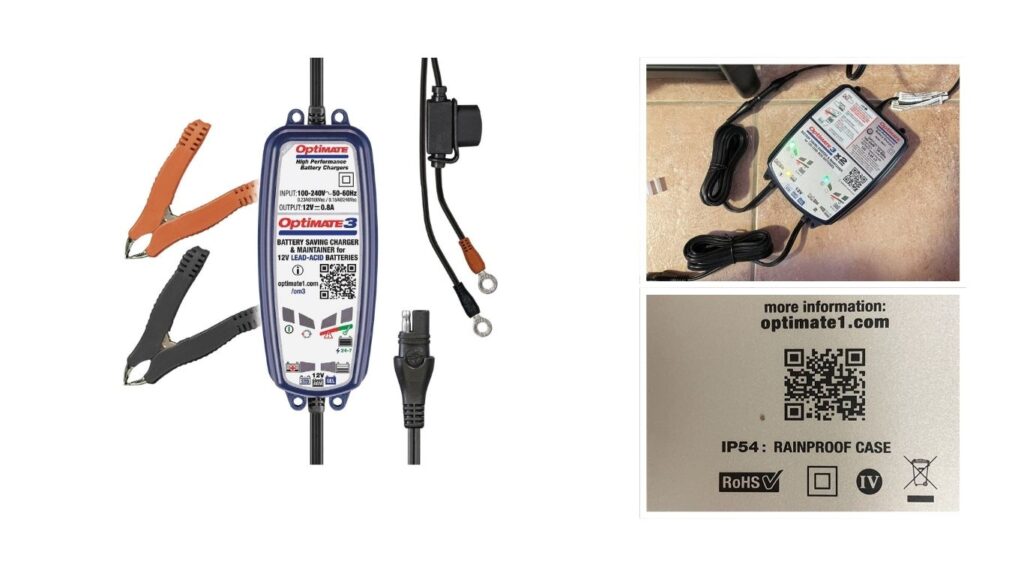
The OptiMate 3 is designed for owners who want more comprehensive battery maintenance rather than simple trickle charging. It combines automatic charging with battery testing and maintenance functions.
One useful feature for stored vehicles is its ability to work through a maintenance cycle after charging. This helps keep the battery at an appropriate charge level while the car remains unused.
It is particularly interesting for classic cars and seasonal vehicles, where the battery might sit unused for several months. Its design also focuses on protecting the battery during extended maintenance.
Best for
- Classic cars
- Seasonal vehicles
- Long-term storage
- Older lead-acid batteries
- Owners concerned about battery condition
Pros
- Automatic charging
- Battery testing
- Maintenance mode
- Designed for long-term connection
- Battery recovery features
- Good choice for stored vehicles
Cons
- Not the cheapest option
- Slower than high-output chargers
- Battery compatibility should be checked before purchase
Verdict
The OptiMate 3 is a strong choice if battery health matters as much as keeping the battery charged. It makes particular sense for a vehicle that sits unused for long periods and needs regular battery maintenance.
10. NOCO GENIUS10
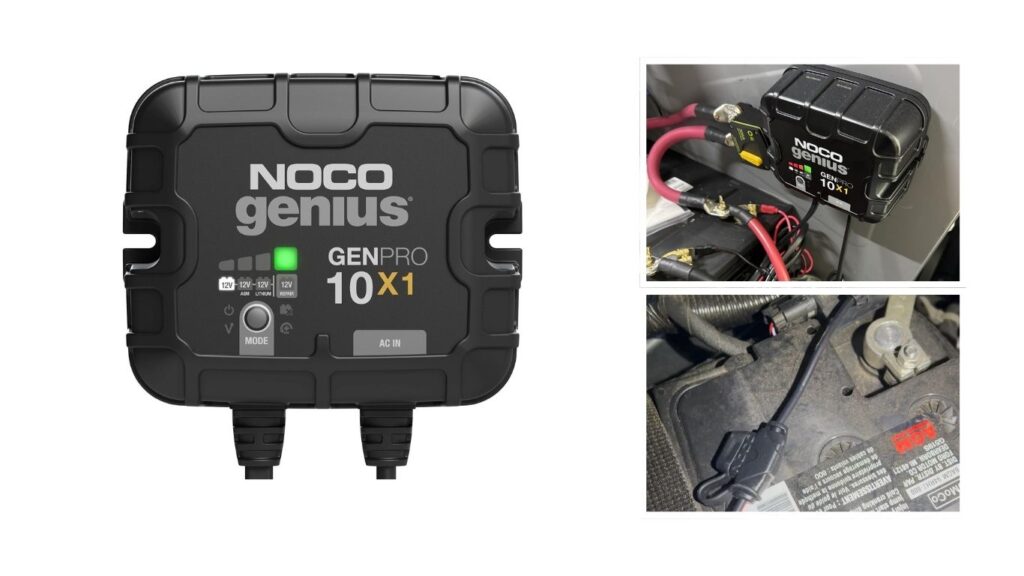
The NOCO GENIUS10 is the high-output option in this list. With 10 amps of charging power, it is aimed at larger batteries and users who want faster charging alongside long-term maintenance.
It supports 6V and 12V batteries and works with several battery chemistries, including AGM, EFB, gel, wet lead-acid, and compatible lithium batteries. This gives it broader use than many traditional 12V maintainers.
For a rarely driven vehicle, you probably do not need 10 amps simply to maintain a fully charged battery. The benefit comes when the battery has dropped significantly and you want to recover it faster. Once charged, its maintenance function helps keep the battery ready for the next drive.
Best for
- Large cars and SUVs
- Trucks
- Multiple vehicles
- Larger battery capacities
- Owners who want fast charging and maintenance
Pros
- 10A output
- 6V and 12V support
- Broad battery compatibility
- Fast charging capability
- Automatic maintenance
- Multiple safety features
- Compact for its output
Cons
- More expensive
- Overkill for basic battery maintenance
- Higher output is unnecessary for a healthy small battery
Verdict
The GENIUS10 is best if you want one charger that handles both serious charging and long-term battery maintenance. For a rarely driven passenger car with a healthy battery, the GENIUS1 or GENIUS2 is usually a more sensible size.
Quick Comparison of the Best Battery Maintainers
If you want a quick starting point, compare the main differences before looking at each model in detail. The best choice depends on your battery type, vehicle size, storage period, and whether you need simple maintenance or faster charging.
| Battery Maintainer | Output | Battery Support | Best For |
|---|---|---|---|
| NOCO GENIUS1 | 1A | 6V/12V | Small and standard cars |
| Battery Tender Plus | 1.25A | 12V | Long term storage |
| CTEK MXS 5.0 | 5A | 12V | Advanced battery care |
| Schumacher SC1300 | 1.5A | 6V/12V | Everyday maintenance |
| Ampeak Smart Charger | Varies | 12V | Budget buyers |
| NOCO GENIUS2 | 2A | 6V/12V | Larger batteries |
| Battery Tender Junior | 0.75A | 12V | Small vehicles |
| Schumacher SC1281 | Higher output | 6V/12V | SUVs and trucks |
| OptiMate 3 | Smart maintenance | 12V | Battery recovery |
| NOCO GENIUS10 | 10A | 6V/12V | Large batteries |
The table gives you the basic picture, but the charging method matters as much as the amp rating. A smart maintainer that switches between charging and maintenance modes is usually a better fit for a car that stays parked for long periods.
How to Choose a Battery Maintainer for a Rarely Driven Car
Choosing a battery maintainer is easier when you focus on your car and battery rather than the highest amp rating. A rarely driven car usually needs steady maintenance, not aggressive charging.
Match the Battery Type
Check your battery label before buying. Common types include:
- Flooded lead-acid
- AGM
- EFB
- Gel
- Lithium
Your maintainer should support the exact battery chemistry in your car. AGM and lithium batteries often require specific charging profiles.
Check the Voltage
Most modern cars use 12V batteries. Some specialty vehicles use different voltages.
Before connecting a maintainer, confirm:
- Battery voltage
- Vehicle requirements
- Maintainer voltage setting
- Battery chemistry
Choose the Right Amperage
You do not need 10 amps simply because your car has a large battery.
For basic maintenance:
- 0.75A to 1A works well for many smaller batteries
- 1A to 2A suits many standard passenger cars
- 2A to 5A gives more flexibility for larger batteries
- 5A or higher helps when you also want faster charging
For a healthy battery sitting in storage, lower output is often enough.
Look for Automatic Maintenance
A good maintainer should detect the battery’s charge level and adjust its output automatically.
Useful functions include:
- Automatic charge control
- Float mode
- Pulse maintenance
- Battery monitoring
- Automatic restart
- Overcharge protection
These features matter when you plan to leave the maintainer connected for weeks.
Check the Safety Features
Look for protection against:
- Reverse polarity
- Short circuits
- Overcharging
- Overheating
- Sparks
- Excess current
Safety features become especially important when the maintainer remains connected while you are away from the vehicle.
Battery Maintainer vs. Battery Charger
A battery charger and a battery maintainer perform related jobs, but they are designed for different situations.
Battery Charger
A charger focuses on restoring a battery after it loses charge.
It is useful when:
- The battery is partially discharged
- You need the car running soon
- The battery requires a faster recharge
- You need higher charging current
Battery Maintainer
A maintainer focuses on keeping a healthy battery charged during storage.
It is useful when:
- Your car sits for weeks
- You own a seasonal vehicle
- You drive only occasionally
- Your vehicle has parasitic electrical drain
- You want to reduce battery discharge during storage
For a rarely driven car, a smart maintainer is usually the better match.
What Size Battery Maintainer Do You Need?
The right size depends on your battery capacity and what you expect the device to do.
Small Car Battery
A 0.75A to 1A maintainer is often enough for maintaining a healthy small battery.
This works well for:
- Compact cars
- Older vehicles
- Small engines
- Long-term garage storage
Standard Car Battery
A 1A to 2A smart maintainer is a good general range for many passenger vehicles.
It provides enough current for routine maintenance while remaining practical for long-term use.
Large SUV or Truck Battery
Larger batteries benefit from a higher-output charger.
Consider:
- 2A to 5A for maintenance and moderate charging
- 5A or more when faster recovery matters
Always check the manufacturer’s battery-capacity recommendations.
Severely Discharged Battery
A maintainer is not always the right tool for a deeply discharged battery.
If the battery is nearly dead, use a suitable smart charger first. After the battery reaches a healthy charge level, switch to maintenance mode for long-term storage.
How to Use a Battery Maintainer on a Rarely Driven Car
Using a maintainer is straightforward, but correct connection matters.
Connect the Maintainer Correctly
Follow the instructions supplied with your specific model.
Typical steps include:
- Turn the vehicle off
- Connect the positive lead
- Connect the negative lead to the battery or approved ground point
- Plug in the maintainer
- Select the correct battery mode
- Check the indicator or display
Do not connect a charger to a battery type it does not support.
Select the Correct Charging Mode
If your maintainer offers multiple settings, select the one designed for your battery.
For example:
- Standard lead-acid
- AGM
- Lithium
- 6V
- 12V
Using the wrong mode can prevent proper charging or damage an incompatible battery.
Leave It Connected During Storage
A smart maintainer designed for long-term use is intended to monitor the battery after charging.
For extended storage:
- Keep the connections secure
- Keep the charger dry
- Use a suitable power outlet
- Inspect cables periodically
- Follow the manufacturer’s storage instructions
If your maintainer is not rated for continuous connection, do not assume it is safe to leave connected indefinitely.
Best Battery Maintainer by Use Case
The best maintainer depends on how you use your car. A small sedan that sits in a garage has different needs from a truck with a large battery. For long-term storage, prioritize automatic maintenance, correct battery compatibility, and safe continuous operation.
Best for a Car Driven Once a Month
Choose a 1A to 2A smart maintainer.
Good options:
- NOCO GENIUS1
- NOCO GENIUS2
- Battery Tender Junior
These are designed around maintaining an already charged battery rather than rapidly recovering a dead one.
Best for Classic Car Storage
A dedicated low-output maintainer such as Battery Tender Plus makes sense.
Look for:
- Automatic float mode
- Long-term maintenance
- Lead-acid or AGM compatibility
- Quick-connect ring terminals
- Overcharge protection
This setup works well when your classic car stays parked for several months.
Best for AGM Batteries
Choose a maintainer with a dedicated AGM charging profile.
Good choices include:
- CTEK MXS 5.0
- NOCO GENIUS series
- Other smart chargers explicitly rated for AGM
Do not assume every 12V charger is suitable for AGM batteries. Check the manufacturer’s compatibility information before connecting it.
Best for SUVs and Trucks
A 4A to 10A smart charger gives you more flexibility.
Consider:
- NOCO GENIUS10
- CTEK MXS 5.0
- Schumacher higher-output models
Higher output matters when you need to recharge a partially discharged larger battery. You do not need high amperage simply to maintain a healthy battery.
Best for Winter Storage
Choose an automatic maintainer designed for continuous maintenance.
Look for:
- Float or pulse maintenance
- Automatic charge regulation
- Temperature protection
- Correct battery chemistry
- Indoor or outdoor rating appropriate to your storage location
A smart maintainer switches from charging to maintenance instead of continuously pushing current into a full battery.
Common Battery Maintainer Buying Mistakes
Choosing the Highest Amp Rating
More amps means faster charging. It does not automatically mean better maintenance.
For a healthy car battery sitting in storage, 1A to 2A is often enough. Higher output becomes useful when you also need faster charging.
Ignoring Battery Chemistry
Check whether your battery is:
- Flooded lead-acid
- AGM
- EFB
- Gel
- LiFePO4
The charger must support the battery chemistry and its required charging profile.
Using a Basic Trickle Charger for Months
A traditional trickle charger can continuously supply current. A smart maintainer monitors the battery and changes its charging behavior.
For long-term storage, choose a unit with automatic maintenance or float mode.
Buying Without Checking Voltage
Most passenger cars use 12V batteries, but not every vehicle or battery system does.
Check:
- Battery voltage
- Charger voltage
- Vehicle charging requirements
- Manufacturer instructions
Using the wrong voltage setting is a serious mistake.
Using a Non-Rated Charger Outdoors
Do not assume a charger is weatherproof because you are using it in a garage.
Check its rating for:
- Moisture
- Dust
- Temperature
- Outdoor exposure
- Continuous operation
Keep the charger away from water unless the manufacturer specifically approves outdoor use.
Expecting a Maintainer to Fix a Dead Battery
A maintainer is primarily designed to maintain a healthy battery. It is not a guaranteed repair tool for a severely sulfated, damaged, frozen, or exhausted battery.
Frequently Asked Questions
Is a battery maintainer good for a car that sits for months?
Yes. A smart battery maintainer is specifically useful for vehicles that remain parked for weeks or months. It keeps the battery near a full charge while compensating for normal self-discharge and vehicle parasitic loads.
How long should you leave a battery maintainer connected?
You can leave an automatic maintainer connected for extended periods if the manufacturer specifically designs the unit for continuous maintenance. Smart models switch to float or maintenance operation after charging.
Does a battery maintainer prevent battery drain?
It helps prevent discharge while the vehicle is connected to the maintainer and the unit has power. It does not repair a failing battery or eliminate an excessive parasitic drain.
Can I leave a battery maintainer connected overnight?
Yes, if it is a smart maintainer designed for continuous or long-term operation. Avoid leaving an uncontrolled, constant-current trickle charger connected indefinitely.
What amp battery maintainer is best for a car?
For many rarely driven passenger cars, 1A to 2A is a practical range. Choose a higher-output unit if you also want faster charging or need to handle larger batteries.
Is a battery maintainer better than a trickle charger?
For long-term storage, a smart maintainer is usually the better choice. It monitors the battery and regulates charging instead of continuously supplying a fixed low current.
Can a battery maintainer charge a completely dead battery?
Some smart maintainers include recovery or charging modes, but a small maintainer is slow when starting with a deeply discharged battery. If the battery is severely discharged, use an appropriate charger first and then use the maintainer for storage.
Can I use a battery maintainer on an AGM battery?
Yes, provided the specific maintainer supports AGM batteries and uses an appropriate charging profile. Always verify compatibility before connecting it.
Should I disconnect my car battery when using a maintainer?
Not necessarily. Many maintainers are designed to work with the battery installed in the vehicle. Follow your vehicle and maintainer manufacturer’s connection instructions, especially on modern cars with dedicated charging points.
What is the best battery maintainer for a rarely driven car?
For a typical passenger car, a compact smart maintainer such as the NOCO GENIUS1 or GENIUS2 is a sensible starting point. If you need more charging power, the CTEK MXS 5.0 or a higher-output NOCO model offers more flexibility. The correct choice ultimately depends on your battery chemistry, capacity, voltage, and storage period.

- Top 10 Best Battery Tester Automotive 2026 - October 20, 2026
- Top 10 Best Battery Tender For Motorcycle Battery 2026 - October 20, 2026
- Top 10 Best Battery Rotary Tool 2026 - October 20, 2026

4 Comments