Can A Dealership Sell A Salvage Car?

A dealership can sell a salvage car in the United States, but the sale must comply with state title laws, dealer-licensing rules, and disclosure requirements. You may be able to buy the vehicle, but registering or re-titling it can require inspections, repair records, and additional paperwork. Before signing, confirm the exact title brand, inspect the vehicle, and get every disclosure in writing.
Salvage car sales are usually legal, but a dealer can sell only what it is licensed to sell, and the buyer must receive the correct branded title. In most states, a salvage title means the car previously met a “total loss” threshold. Your state then determines whether you can register the vehicle as-is, repair it and apply for a rebuilt or reconstructed title, or complete additional steps before driving it.
Salvage Car Purchase

- Legality varies by state. Salvage title transfers are often allowed, but licensing and buyer paperwork rules differ.
- Disclosure is mandatory. Expect written notice of the salvage status, damage history, and condition. Check that the documents are accurate before signing.
- Buyer eligibility can be limited. Some states restrict who can buy certain salvage categories or require inspections and repair records.
- Inspection affects re-title outcomes. A rebuilt or reconstructed brand usually requires a physical inspection and supporting documents.
- The discount comes with risk. Salvage cars typically cost less than clean-title cars, but repairs, inspections, insurance limits, and re-title costs can erase the savings.
- Verify everything before paying. Check the title, VIN, purchase contract, disclosures, and inspection records.
Can a Dealership Sell a Salvage Car Legally?
Yes. A dealership can generally sell a salvage car legally if it follows state title-transfer laws and dealer-licensing rules. “Salvage” is not automatically an illegal or unsellable status. It is a branded title category that creates specific requirements for the sale, paperwork, registration, and future re-titling.
Legality usually depends on three points:
- The dealer is properly licensed. The dealership must be authorized to sell vehicles in the state.
- The title is accurate. The vehicle must carry the correct title brand for that state, with no mismatched or misleading paperwork.
- The dealer makes the required disclosures. You should receive written notice of the salvage status and known condition or damage history.
If you are sitting at the dealership wondering whether the sale itself is allowed, the answer is usually yes if the documents comply with state rules. But walk away if the dealer is vague about the title brand, refuses to provide the title status before you sign, or describes the vehicle as clean-title while the paperwork shows salvage.
What Counts as a Salvage Car in Your State?

A salvage car is a vehicle that state law treats as a total loss, usually after an insurer or other reporting process determines that repairing it would cost too much to return it to a roadworthy condition. Each state sets its own thresholds and branding rules, so the definition that controls your purchase is the one used by your state’s motor vehicle agency.
The title documents matter more than the dealer’s description. Common brands include “salvage,” “rebuildable,” “reconstructed,” and “total loss.” The purchase, registration, and re-title process can change depending on which brand appears on the vehicle’s records.
Two cars can both have a salvage history while having different legal statuses. One may still carry a salvage brand, while another may have passed a state inspection and received a rebuilt or reconstructed brand. That distinction can determine whether you can register it normally, whether you can re-title it in your name, and whether an inspection is required before you drive it.
A vehicle may receive rebuilt or reconstructed branding after repairs and inspection, or it may remain salvage-branded until those steps are completed. Confirm the exact title brand on the title or title-history documents before negotiating the price.
Dealer Licenses, Disclosures, and Sale Requirements
A dealership can sell a salvage car only when it is authorized to sell that type of vehicle and follows the disclosure rules in its state. Dealer licensing matters because the purchase and transfer of titled vehicles are regulated, and salvage-branded vehicles often require additional paperwork.
Disclosure is where buyers face the most immediate risk. The dealer should identify the vehicle as salvage-branded or otherwise branded, and that statement should match the title and the documents you receive at signing. A dealer who says “it’s basically fine,” avoids naming the title brand, or refuses to provide the title status is giving you a reason to stop.
The purchase contract, odometer disclosure, and any “as-is” language also matter. A dealer may sell a salvage vehicle with fewer contractual protections than a clean-title vehicle, but “as-is” does not eliminate legally required disclosures. If the dealer must disclose the salvage status and fails to do so, the transaction creates legal risk for the dealer and a potential dispute for you.
Salvage Title Rules and Buyer Eligibility
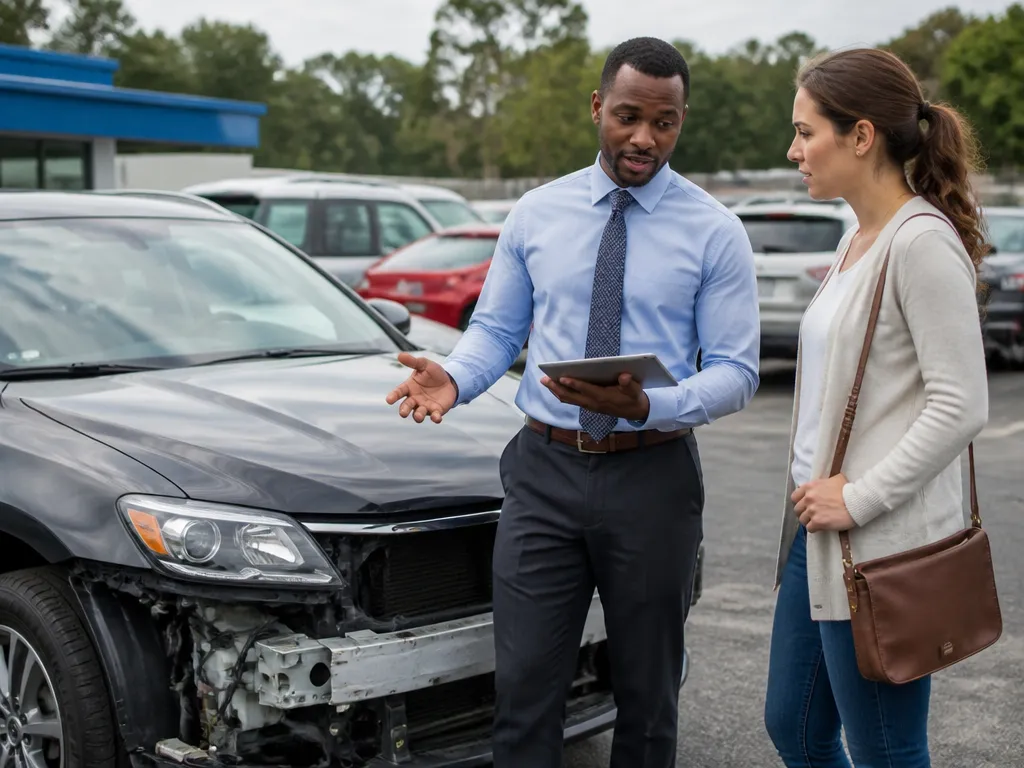
The title brand determines what you can do with the car after purchase. Some states require an inspection before a salvage vehicle can receive a rebuilt or reconstructed title. Others permit certain salvage-branded vehicles to be registered as-is, subject to additional conditions. The question “Can a dealership sell it?” is separate from “Can I register and drive it?”
Buyer eligibility can also vary. Some states restrict who may purchase certain vehicles that remain in salvage status. Others require repair documentation, proof that lawful parts were used, or a state inspection within a specified time window before the vehicle can move out of salvage branding.
The dealer’s responsibility is to transfer the vehicle correctly and disclose its branding. Your responsibility is to confirm what you can do with that exact brand in your state. You may need inspection paperwork, repair records, and other documents after paying for the vehicle.
Before committing, contact your state motor vehicle agency or review its published instructions for salvage-title registration and rebuilt or reconstructed processes, if applicable. Ask: “If I buy a vehicle with a salvage title brand, what are the exact steps for me to register it and what documents will I need?” Do not rely on a salesperson’s general answer when the state agency can tell you the specific process.
How Salvage Pricing Compares With Clean-Title Cars
Salvage cars usually cost less than comparable clean-title cars, but the discount is not pure savings. Repairs, inspections, registration issues, insurance limitations, and administrative costs can consume the price difference.
A clean title signals a different risk profile to buyers and insurers than a salvage brand. The damage behind a salvage title may involve structural repairs, deployed airbags, flood damage, fire damage, or another major loss. A vehicle that looks attractive after repairs still carries that history in its title record.
Compare similar vehicles rather than relying on a dealer’s claimed discount. Look for the same or similar year, mileage, trim, and drivetrain, then compare clean-title and salvage-listing prices. Treat the listed discount as only one part of the calculation. Add realistic costs for inspection and potential repairs before deciding whether the deal makes sense.
If the salvage price is close to clean-title pricing, assume the seller may be pricing optimistically, the damage history may be limited but still needs verification, or the documentation may contain details you have not reviewed carefully. The closer a salvage car gets to clean-title pricing, the more thoroughly you should check the title brand and repair records.
How to Inspect a Salvage Vehicle Before Buying
Then check the quality of the repairs and the vehicle’s safety systems. Look for mismatched paint, uneven panel gaps, overspray, and trim that appears to have been removed and reinstalled. Check whether the doors, trunk, and hood align consistently. Misalignment can indicate structural movement or poor bodywork.
A pre-purchase inspection by a trusted mechanic is especially important for a salvage vehicle. Ask for a system check that includes the airbags, seatbelt pretensioners, and electronic modules. A clean-looking exterior does not prove that collision-safety equipment or wiring was repaired correctly.
Take a serious test drive. Listen for clunks and vibrations, check the braking feel, and watch for pulling or alignment problems. If the dealer discourages an independent inspection, pressures you to skip a mechanic’s review, or gives vague answers about the repairs, walk away or withhold your offer until the claims are supported by documents.
Documents to Get Before You Pay
The right paperwork can prevent a salvage surprise after the sale. At minimum, get documents that establish the vehicle’s identity, title brand, condition disclosures, and repair or inspection history.
Start with the title-status documents. Ask to see the current title or the state’s title-substitute document, if your state uses one. It should show the branded category, and the VIN should match the vehicle. If the dealer cannot prove the title brand before you sign, treat that as a deal-stopper.
Request a written disclosure of the salvage status and what it means for the transaction. Also ask for available repair records, such as invoices for major work, plus inspection or certification documents related to rebuilt or reconstructed status if the vehicle has already passed inspection.
Make sure the purchase contract matches the title brand, disclosures, vehicle condition, and VIN. Review the “as-is” language carefully, but remember that “as-is” does not replace required disclosures. If the salesperson’s statement conflicts with the contract, resolve the conflict before any money changes hands.
Use this checklist:
- Title or title substitute showing the branded status, with matching VIN
- Dealer disclosure that the vehicle is salvage-branded, in writing
- Repair and inspection documentation you can obtain, especially for rebuilt status
- Purchase contract that matches the disclosed title brand and condition
- Any odometer and required transaction forms your state requires
FAQ
Can a dealership sell a salvage car to me in the United States?
Yes, usually. A dealership can sell a salvage-branded vehicle if it is properly licensed and the transfer complies with state title laws. Registration and any rebuilt or reconstructed process may become your responsibility after purchase.
What paperwork should I get before buying a salvage vehicle?
Get the title or title substitute showing the salvage brand and matching VIN. Also request written disclosure of the salvage status, available repair records, and inspection documents, especially if the vehicle has rebuilt or reconstructed branding. Before paying, confirm that the purchase contract matches the title status and vehicle identity.
Do I have to inspect or repair a salvage car before registering it?
Often, but the answer depends on your state and the vehicle’s current branding. Some states require an inspection after repairs before changing a salvage title to rebuilt or reconstructed status. Others allow limited registration with additional requirements. Contact your state motor vehicle agency with the exact title brand to get the correct process.
How much cheaper is a salvage car than a clean-title car?
There is no fixed percentage. The price depends on the model, damage type, mileage, and local market demand. Compare local clean-title and salvage-title vehicles with similar years, mileage, trim, and drivetrain, then add possible inspection and repair costs. The closer the salvage price is to clean-title pricing, the more carefully you should verify the title and repair documentation.
What is the most common mistake people make with salvage purchases?
They buy without confirming the exact title brand and supporting documents. Problems often begin when the seller’s description does not match the title or when the buyer expects easy registration but later discovers an inspection requirement. Verify the title, written disclosures, repair records, purchase contract, and VIN before signing.

- Top 10 Best Helmet For Xtreme 125r 2026 - October 5, 2026
- Top 10 Best Helmet For Xpulse 200 2026 - October 5, 2026
- Top 10 Best Helmet For Xsr 155 2026 - October 5, 2026