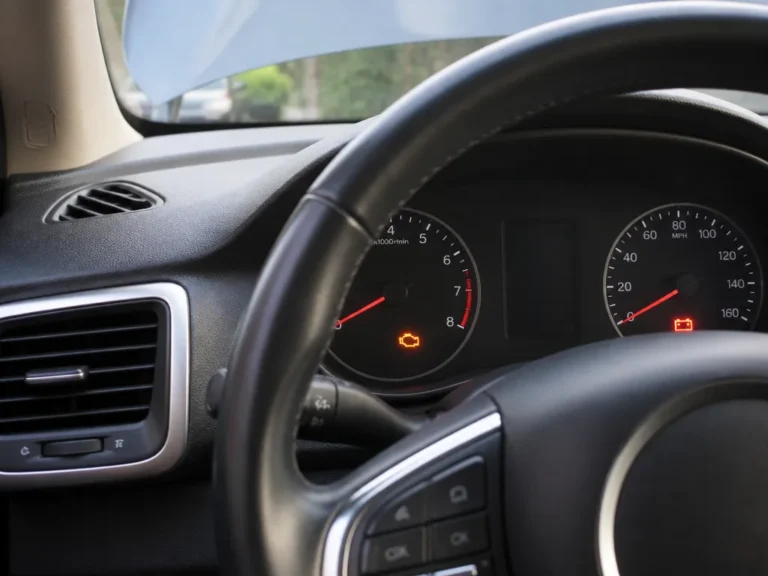
Can An Exhaust Leak Cause Check Engine Light?

Yes, an exhaust leak can turn on the check engine light, usually by distorting oxygen (O2) sensor readings. When exhaust gases escape before reaching the sensor, outside air can enter the exhaust stream. The sensor then sees an incorrect oxygen level, and the engine control module (ECM) flags a fault.
Exhaust leaks can trigger codes such as P0171, P0174, P0300, and oxygen sensor-related faults. A leak near the exhaust manifold, manifold gasket, flex pipe, or upstream O2 sensor is the most likely to cause these problems.
Key Takeaways
- Most common location: Leaks near the manifold or upstream O2 sensor affect sensor accuracy fastest.
- Codes can overlap: Lean and misfire-related codes often appear when a leak distorts sensor readings.
- Inspection helps: A careful visual check can reveal soot, cracks, and damaged joints.
- Repair location matters: Fixing the manifold, gasket, or pipe usually resolves O2-related faults when that part is leaking.
- Verify the fix: Clear the codes, repeat the driving conditions that triggered them, and confirm the same code does not return.
Can an Exhaust Leak Cause the Check Engine Light?

An exhaust leak can cause the check engine light, but usually indirectly. In most vehicles, the ECM does not detect the leak itself. It detects symptoms the leak creates, such as oxygen sensor readings that do not match the engine’s expected air-fuel mixture.
The most common mechanism involves an upstream O2 sensor. If exhaust escapes before the sensor, outside air can enter the exhaust stream. The sensor may then report oxygen levels that look too high, suggesting a lean mixture, or it may produce erratic readings. The ECM can respond by setting a fault and illuminating the check engine light.
The resulting symptoms can overlap with other problems. An exhaust leak may contribute to rough running, stalling at idle, or a stumble under acceleration, but vacuum leaks, clogged fuel systems, and ignition faults can cause similar behavior. The code alone cannot identify the leak.
How an Exhaust Leak Triggers O2 Sensor Errors
Upstream oxygen sensors measure the oxygen content of exhaust gases after combustion. They depend on exhaust flowing through the manifold, downpipe, and sensor bung without outside air entering before the sensor.
A leak upstream of the sensor – such as a cracked manifold or failed manifold gasket – can draw outside air into the exhaust stream. That extra oxygen changes the sensor’s reading, and the ECM may interpret it as a lean fuel mixture. The result can be increased fuel-trim corrections and codes for lean operation or slow or incorrect sensor response.
The readings may also fluctuate. Engine load, exhaust pressure pulses, and temperature changes affect how much outside air enters through the leak. Those changing conditions can produce intermittent O2 sensor behavior and trigger range or performance codes.
A leak can also complicate misfire detection. If it contributes to unstable combustion at low engine speeds, the ECM may store a misfire code even when the spark plugs and ignition coils are functioning properly. A misfire code does not prove that the exhaust leak caused the problem, so the ignition and fuel systems still need to be checked.
What CEL Codes Commonly Appear With Exhaust Leaks?

Codes linked to fuel mixture control and oxygen sensor performance are common when an exhaust leak is the underlying problem. Exact code descriptions vary by manufacturer, but the patterns are similar across US vehicles.
Common code types include:
- Lean codes (P0171 / P0174): These may appear with elevated short- and long-term fuel trims.
- O2 sensor-related codes: These can involve sensor response, no activity, slow response, or out-of-range voltage.
- Misfire-related codes: Codes such as P0300/P030x may appear if the leak contributes to rough running or disrupts monitoring logic.
- Catalyst efficiency codes: An upstream leak or inaccurate sensor signal can affect how the ECM evaluates catalyst performance.
Multiple codes may appear after the ECM repeatedly receives readings that do not make sense together. A lean code combined with an upstream O2 sensor code makes an exhaust leak a strong possibility. A lone generic misfire code, with no mixture or sensor codes, points less clearly toward the exhaust.
Treat the code as a starting point rather than proof. Check fuel trims, O2 sensor behavior, and the conditions under which the problem occurs. Exhaust leaks often become easier to detect during cold starts, throttle changes, and other conditions that alter exhaust pressure.
Exhaust Leak vs. Vacuum Leak Symptoms

An exhaust leak and a vacuum leak can both cause the check engine light, rough idle, and lean-running symptoms. The key difference is where outside air enters.
An exhaust leak before the upstream O2 sensor can pull outside air into the exhaust stream, causing the sensor to report a lean condition. A vacuum leak lets unmetered air into the intake, which can also make the engine run lean. Because both problems can produce similar fuel-trim readings, other symptoms and the leak location matter.
Use these clues:
- Exhaust leak clue: Ticking, hissing, or an exhaust smell near the engine bay or underneath the vehicle, especially around the manifold or pipe joints.
- Vacuum leak clue: An unstable idle or a noticeable change when vacuum hoses move or when the intake side is checked with a controlled smoke test.
- Exhaust leak clue: Codes related to upstream O2 sensor performance or sensor signal plausibility.
- Vacuum leak clue: Codes related to MAP or MAF readings, depending on the engine design.
If you suspect both problems, use the clearest evidence first. A noticeable exhaust sound or smell justifies checking the exhaust side before replacing intake components. Strong throttle-related symptoms and intake-related scan data point more toward a vacuum leak.
How to Diagnose an Exhaust Leak Causing the CEL
The most reliable approach combines scan data with a physical inspection. Start with the ECM’s complaint, then check the exhaust components most likely to create that symptom.
Use a scan tool, or have a shop read the vehicle, and record the codes and live data. Check upstream O2 sensor behavior, short- and long-term fuel trims, and whether the problem appears at idle, during warm-up, or under load. Lean fuel trims combined with upstream O2 sensor range or performance codes make an exhaust leak more likely, particularly when the vehicle also runs rough or makes an unusual exhaust sound.
With the engine cold and off, inspect the likely leak points. Look for soot marks, cracks, and loose or damaged clamps at the manifold-to-head joints, manifold gaskets, flex pipe seams, and upstream sensor bungs. Exhaust escaping from a joint often leaves a dark soot trail on nearby metal.
Use a test that matches the system being checked. A smoke test can be effective for intake leaks, but exhaust leaks usually require visual inspection, temperature clues, or controlled pressure testing performed carefully by a professional. For a basic DIY check, run the engine briefly and listen for a leak near common joints while keeping clear of hot and moving parts. Turn the engine off before touching or closely examining anything.
When to Repair the Manifold, Gasket, or Pipe
Repair the exhaust component that is actually leaking, with upstream leaks taking priority when the check engine light is tied to O2 sensor readings.
Common repair triggers include visible soot at the manifold-to-head interface, a cracked manifold, a warped or burned gasket, a rusted flex pipe seam, or a loose clamp that moves with engine vibration. A clear leak at one of these points is stronger evidence than a code alone.
Avoid relying on a temporary patch near heat shields or sensor wiring if the underlying joint is damaged. High-heat areas can reopen when mating surfaces are warped or fasteners are stretched. The leak, noise, and check engine light can then return.
The required repair depends on the failed part. A cracked manifold may need replacement rather than a gasket-only repair. Replacing only the gasket will not seal a manifold that has a crack or a warped sealing surface. A failed clamp or split flex section, by contrast, may be a simpler repair when the source is clearly visible.
After the repair, check the sensor data and scan for returning codes. That confirmation prevents parts-chasing and shows whether the repair addressed the original fault.
How to Verify the Check Engine Light Repair
Clear the codes after the repair, then repeat the conditions that originally triggered the check engine light. Many unsuccessful DIY repairs end with the code cleared but the underlying fault unconfirmed.
Drive through a similar routine, including warm-up, steady-speed cruising, and light to moderate acceleration if those conditions produced the original symptoms. If possible, monitor upstream O2 sensor behavior and fuel trims. Fuel trims that move closer to normal and O2 readings that become consistent are good signs.
Scan the vehicle again after the drive. If the same code returns quickly, the leak may still be present, the wrong location may have been repaired, or another problem may be producing the same sensor symptoms.
If the light stays off but the readings still look unusual, continue checking the vehicle over several normal trips. Some monitors take multiple drive cycles to set. Confirm that the check engine light remains off and that the scan data matches how the engine is running.
A cleared code only removes the warning from memory. The repair is confirmed when the vehicle operates normally and the same fault does not return.
FAQ
Can an exhaust leak cause the check engine light even if the engine runs fine?
Yes. Some exhaust leaks appear only under certain load or temperature conditions, and the driver may not notice any change in performance. An upstream O2 sensor can still detect oxygen levels outside the ECM’s expected range and trigger the light.
What check engine codes point to an exhaust leak?
Lean fuel-trim codes such as P0171 or P0174 and upstream O2 sensor performance codes are common patterns. Misfire-related codes can also appear when the leak contributes to rough running or disrupts the ECM’s monitoring logic.
How expensive is it to fix an exhaust leak that triggers the CEL?
The cost depends heavily on the vehicle and the failed part, such as a manifold gasket, cracked manifold, or flex pipe. If the leak location is uncertain, request an estimate that includes diagnostic time. Replacing the wrong component can leave the check engine light on.
How do you diagnose an exhaust leak at home?
Start with a cold visual inspection for soot trails and cracks around the manifold, sensor bungs, and pipe joints. Run the engine briefly and listen for hissing or ticking near those joints, while avoiding hot and moving parts. Use a scan tool to compare the codes with O2 sensor and fuel-trim behavior before replacing anything.
Is it safe to drive with an exhaust leak that turned on the CEL?
Be cautious. Exhaust gases can enter areas where they should not, creating a safety concern, especially in enclosed spaces. If you smell strong exhaust, hear excessive noise, or see smoke near the engine bay, stop driving and have the vehicle inspected.

- Top 10 Best Helmet For Xpulse 200 2026 - October 5, 2026
- Top 10 Best Helmet For Xsr 155 2026 - October 5, 2026
- Top 10 Best Helmet For Xc Mtb 2026 - October 5, 2026