Car Ac Low Side Pressure Fluctuates: 6 Main Causes Explained

Low-side pressure on a car’s AC gauge can move during normal operation, but repeated or dramatic swings usually point to a problem with refrigerant flow, airflow, or compressor control. A weak refrigerant charge, restricted condenser, failing fan, sticking expansion device, or unstable compressor control can all make the reading rise and fall.
The pattern matters. If pressure rises during pump-down and then drops sharply, suspect a charge, expansion-device, or compressor-control problem. If it changes with vehicle speed, engine RPM, or cabin blower settings, investigate airflow first.
Key Takeaways
- Normal cycling happens. Short pressure changes can occur as the compressor matches cooling demand.
- Airflow drives symptoms. A dirty condenser or weak fan can cause low-side swings as system temperatures change.
- Charge problems amplify instability. Undercharge and overcharge can both produce abnormal fluctuation patterns.
- Control valves matter. Expansion-device problems can cause hunting, with pressure repeatedly rising and falling.
- Diagnosis depends on patterns. Compare low-side behavior with high-side pressure, vent temperature, fan speed, and compressor cycling.
- Do not guess the refrigerant charge. Check airflow and temperatures first, then verify the charge with stable readings.
What Causes It
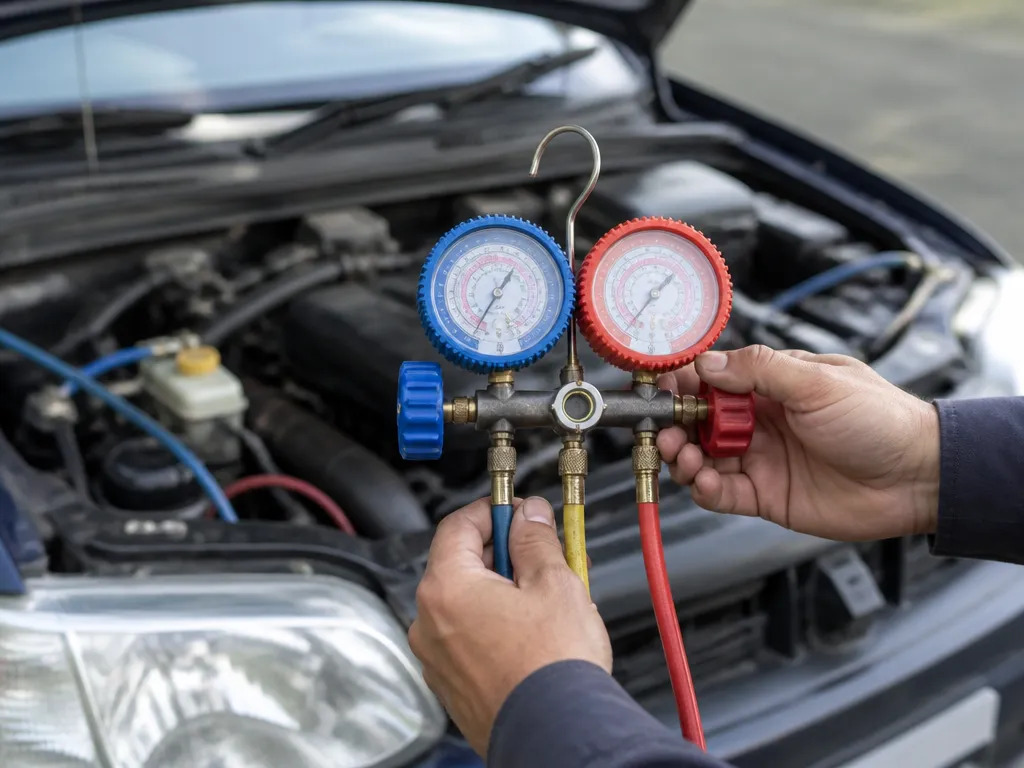
Low-side pressure fluctuates when the AC system cannot maintain a steady balance between evaporator heat absorption and refrigerant flow. The low side includes the evaporator outlet and suction line, so changes in evaporator temperature directly affect the gauge reading.
The causes usually fall into three groups:
- Refrigerant flow or charge problems: undercharge, overcharge, a restricted expansion device, or a sticking metering component.
- Compressor control problems: clutch cycling on older systems or variable-displacement compressor control hunting on newer ones.
- Airflow problems: weak condenser or cabin-blower performance, blocked airflow, or a dirty evaporator or condenser.
The symptoms can narrow the search. If the fluctuation begins when the cabin blower speed changes, suspect the evaporator side. If it follows radiator-fan operation, engine RPM, or condenser temperature, suspect condenser airflow. If the gauge bounces with steady airflow and stable temperatures, inspect the charge, expansion device, and compressor control.
How to Read Low Side Pressure During AC Cycles
Low-side pressure should behave like a controlled system rather than a random meter reading. When the AC starts, the compressor runs and the evaporator temperature falls, so low-side pressure usually moves toward a stable operating range. Once the system approaches its target, the pressure should settle and make smaller adjustments as the compressor cycles or modulates.
Watch the gauge through a complete cycle instead of judging a single instant. On a clutch-type system, pressure may remain fairly steady while the compressor runs, then change when the clutch disengages and the refrigerant equalizes. A variable-displacement compressor may produce smaller, more frequent movements because it changes its pumping rate continuously.
Pair the low-side reading with three other observations:
- Vent temperature: Does the air become steadily colder, or does it pulse warmer?
- Compressor behavior: Does the clutch switch on and off, or does engine RPM respond to variable compressor control?
- Fan behavior: Does the radiator fan change speed or switch on and off?
Large low-side swings that coincide with vent-temperature changes point toward refrigerant-feed instability or an airflow disturbance. If the low side moves substantially while vent temperature stays mostly steady, the behavior may be normal cycling. A gauge or connection problem, such as a loose Schrader cap or intermittent fitting, is another possibility.
Low Side Pressure Swings from Refrigerant Charge Issues
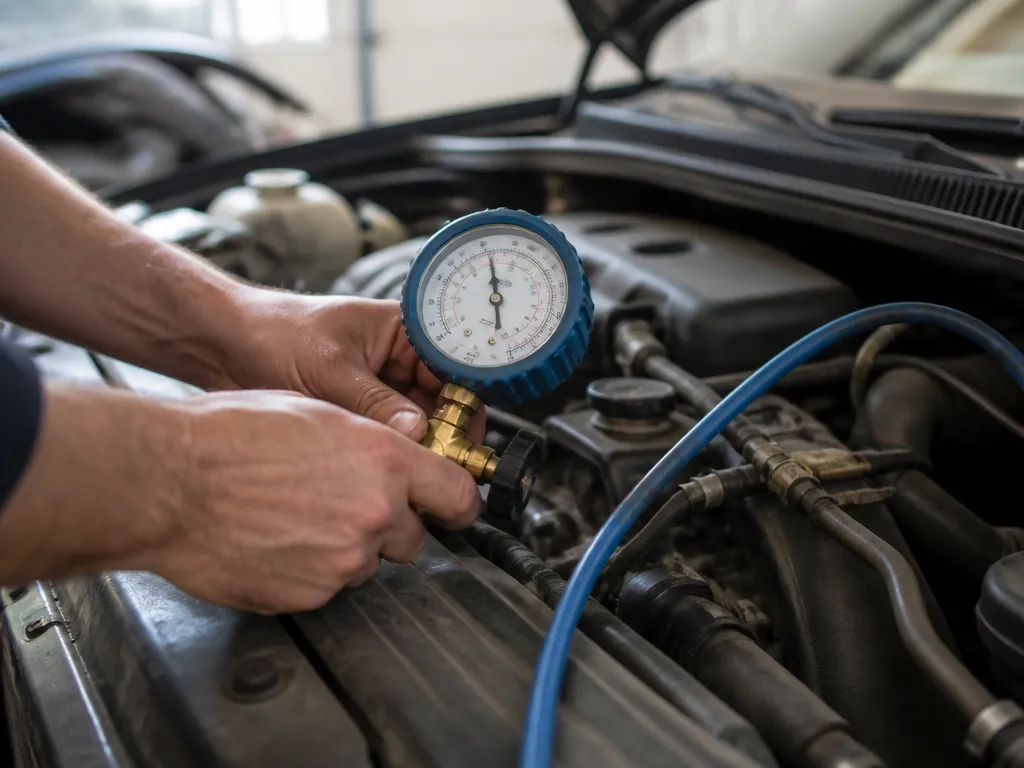
A low refrigerant charge can make the low side swing instead of stabilizing. With an undercharge, the evaporator may alternately starve and recover because too little refrigerant reaches it. Cooling becomes weaker, and the compressor keeps adjusting as the system struggles to maintain the target evaporator temperature.
Overcharge can also destabilize the low side. Excess refrigerant changes how the evaporator and condenser handle phase changes, while extra condenser loading can prevent the system from settling at its intended operating points. The resulting symptoms may resemble an undercharge: moving pressure, fluctuating temperatures, and cooling that seems to chase the target.
Other symptoms help separate the two conditions. Undercharge often causes weak cooling, larger pressure drops while the compressor runs, and vent temperatures that fail to improve steadily. Overcharge can create high-pressure concerns and may cause the system to protect itself or respond sluggishly because the condenser cannot reject heat efficiently.
Do not judge the charge from an unstable reading. If you connect gauges immediately after driving, heat soak can make the first few minutes look chaotic. Let the system run until conditions stabilize, then determine whether the low side is settling, cycling normally, or continuing to swing.
Compressor Cycling and Control Valve Effects on Pressure
Compressor cycling creates predictable pressure changes, but excessive cycling can keep the system from reaching thermal equilibrium. On a clutch-based system, the low side should remain fairly steady while the compressor is engaged and then change when the clutch disengages. If the clutch cycles extremely often, the pressure may oscillate because the compressor never runs long enough to stabilize the evaporator.
Variable-displacement compressors change pumping rate instead of simply switching on and off. If the control strategy hunts, low-side pressure repeatedly rises and falls as the system responds to changes in evaporator temperature. A sluggish control valve or sticking internal component can make that behavior worse.
The expansion device and other metering components control how much refrigerant enters the evaporator. A partially stuck device may restrict flow intermittently, causing the evaporator to starve and the low side to drop, then recover when flow resumes. That restriction-and-recovery pattern can look like a compressor problem even when the compressor is responding normally.
Hold the blower setting steady while watching the system. If pressure movement tracks changes in cabin temperature and vent output, refrigerant metering or charge becomes more likely. If the low side swings heavily while airflow remains stable and vent temperature does not follow smoothly, inspect compressor control and compressor performance.
Airflow Problems That Create Pressure Fluctuation
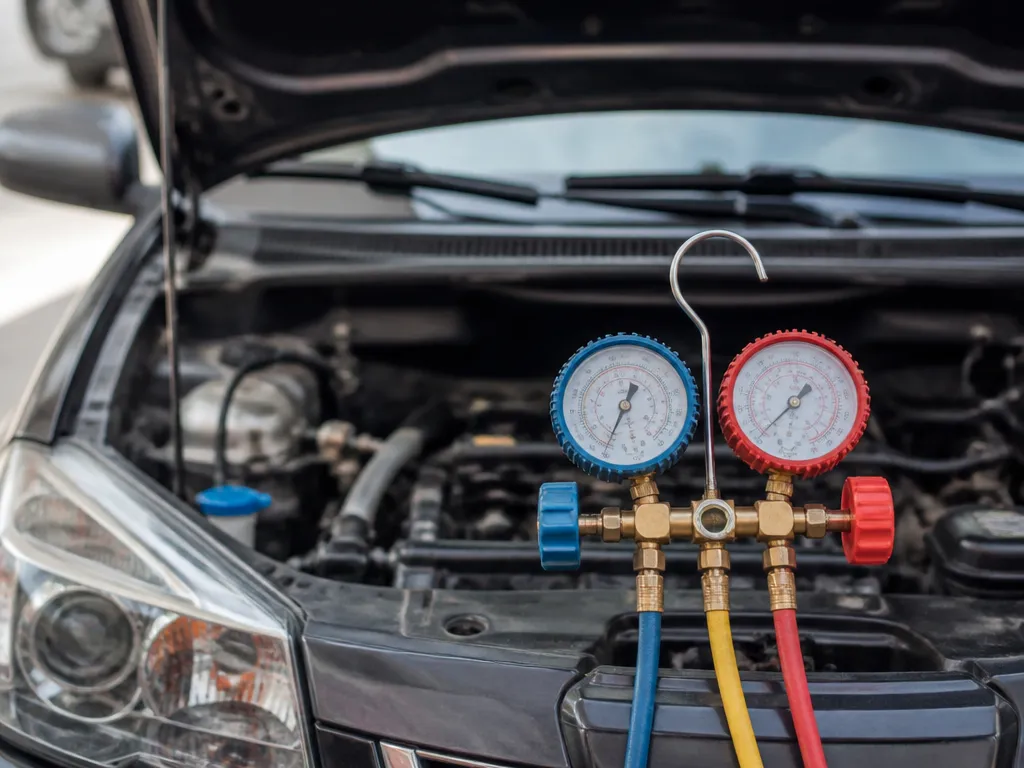
Airflow problems often cause the AC to feel as though it cools, then stops cooling, while the gauge reflects the changing system temperature. If airflow over the evaporator changes, the evaporator temperature changes with it, and suction pressure follows. The system can then enter a feedback loop in which pressure and temperature keep adjusting.
Evaporator-side problems include a weak cabin blower, clogged cabin air filter, or restricted air distribution. When the filter is blocked, airflow across the evaporator becomes uneven. Parts of the coil can heat up while other areas continue cooling, causing the low side to move as evaporator loading changes.
Condenser-side problems usually appear as cycling tied to fan operation. A weak radiator fan, intermittent fan relay, or blocked condenser can reduce heat rejection. Refrigerant saturation conditions then change, and the system responds by shifting suction pressure as it tries to maintain evaporator cooling.
Dirty Condenser or Evaporator and Their Pressure Symptoms
A dirty condenser can create unstable pressures because it blocks heat transfer where the system must release heat. As condenser heat rejection falls, high-side behavior changes and the pressure relationship throughout the system shifts. The low side may fluctuate because the compressor is still trying to reach the target evaporator temperature while the condenser cannot keep up.
A dirty evaporator produces a different pattern. Dirt and debris restrict airflow through the coil, making cooling uneven across its surface. Refrigerant may not boil off consistently, so evaporator loading and low-side pressure change during the cycle.
The driving symptoms can help separate the two. A dirty condenser often causes cooling to weaken in traffic and improve somewhat once the car is moving. A dirty evaporator usually causes weak or uneven cabin cooling at most vehicle speeds, especially when increasing blower speed does not produce the expected airflow or cooling response.
Steps to Diagnose the Fluctuation Root Cause
Start with the conditions that affect both pressure and temperature. A single low-side reading cannot identify the cause because refrigerant metering and condenser heat rejection also influence suction pressure.
- Stabilize the conditions. Run the AC for a few minutes until the vent temperature begins behaving consistently, then watch the low-side trend.
- Watch the vent temperature. If the vent temperature pulses warmer when low-side pressure drops, treat the fluctuation as a genuine cooling problem.
- Verify cabin airflow. Check the cabin air filter, confirm blower operation at each setting, and look for weak airflow from the vents.
- Check condenser cooling capacity. Confirm that the radiator fans operate correctly at idle and when AC demand is high.
- Compare idle with higher RPM. If the fluctuation decreases at higher RPM, condenser airflow or fan control is likely part of the problem.
- Inspect for metering instability. If airflow is steady but pressure continues hunting, inspect the expansion device for restriction or sticking.
- Re-check the charge only after stabilization. If a charge problem remains likely, use stable readings and follow the service manual’s charging procedure.
A high-side gauge makes the diagnosis more useful. If the low side drops while the high side rises steadily, condenser heat rejection may be failing and the system may be becoming unbalanced. If both sides behave erratically in step with compressor cycling, suspect control or metering instability. If pressure trends look normal but cooling remains weak, inspect airflow, cabin-filter restriction, and compressor efficiency rather than assuming the refrigerant is low.
FAQ
Why does my low side AC pressure fluctuate even when the air feels cold?
Low-side pressure can shift as the compressor cycles to maintain cabin temperature. If the vent temperature stays consistently cold and the pressure changes are moderate and periodic, the fluctuation may be normal. If the vents pulse warmer in sync with the gauge, investigate metering, airflow, or charge stability.
Can low refrigerant charge cause suction pressure to bounce?
Yes. Undercharge can make the evaporator alternately starve and recover, causing the low side to hunt instead of stabilize. Overcharge can also disrupt system behavior by changing refrigerant phase management and condenser heat rejection. The key question is whether the pressure continues oscillating after the system reaches steady operation.
What airflow issue most commonly causes AC pressure fluctuation?
Restricted airflow across the evaporator or condenser is a common cause. Check for a clogged cabin air filter, weak cabin blower, failing radiator fan, or blocked condenser. If the fluctuation gets worse at idle or in traffic, suspect condenser airflow and fan control first.
How long should I watch the gauge before deciding the problem is real?
Watch the AC for at least a few minutes, until the vent-temperature trend becomes consistent. Warm-soak conditions and initial thermal recovery can make the first few minutes look chaotic. Continued pressure cycling after cooling performance stabilizes is stronger evidence of a mechanical, charge, or airflow problem.
Is it safe to add refrigerant when the low side pressure fluctuates?
Adding refrigerant based on an unstable reading is risky. The system may not have reached steady operating conditions, so the charge estimate can be wrong. If airflow, fan operation, or metering is the real problem, adding refrigerant can worsen performance or trigger protective behavior.

- Top 10 Best Helmet For Xpulse 200 2026 - October 5, 2026
- Top 10 Best Helmet For Xsr 155 2026 - October 5, 2026
- Top 10 Best Helmet For Xc Mtb 2026 - October 5, 2026