Car Ac Only Works When Cool Outside In 4 Easy Steps

Car AC that only blows cold when it’s cool outside usually has a system fault, not a weather quirk. Hot weather makes the AC move more heat, so low refrigerant, restricted airflow, a weak condenser fan, or a partially frozen evaporator can fail under the extra load. Control problems involving the blend door or temperature sensors can produce the same pattern.
The most common causes are low refrigerant, a leak, poor condenser airflow, a clogged cabin air filter, evaporator icing, or a control issue that stops the system from commanding cold air. Finding the root cause restores consistent cooling.
What the Symptom Usually Means
- Normal symptom pattern. Hot weather raises AC demand, so marginal refrigerant charge or airflow problems fail under stress.
- Start with airflow. A clogged cabin air filter or restricted intake can cause weak cooling and increase the risk of evaporator freeze-up.
- Check condenser cooling. If the condenser fan is weak or not running, hot-day performance can collapse.
- Verify refrigerant level. Low charge or a leak is a common cause, and guessing can waste time and money.
- Confirm the controls work. A faulty blend door or temperature sensor can make the system stop delivering cold air.
- Verify output after repairs. Measure vent temperature and observe the AC once the problem repeats in hot weather.
Car AC Only Works When It’s Cool Outside

Pay attention to exactly what happens. Does the blower speed change? Does the compressor clutch engage and stay engaged? Does the air start cold, then turn warm after a few minutes in the heat? Those details help separate refrigerant and airflow problems from control-system faults.
Why AC Struggles When Outside Temperatures Rise
The AC system works as a heat pump. In hot weather, the condenser must release more heat, and the pressure and temperature conditions become more demanding. If airflow across the condenser drops or the refrigerant charge is low, high-side pressure can rise and cooling can become ineffective.
Low refrigerant can be deceptive. The system may cool reasonably well when the weather is mild, then struggle as the outside temperature climbs. A partially blocked cabin-air path can also cause the evaporator to ice over. Once ice forms, airflow drops and the system stops producing cold air even though the compressor may still be running.
Check Refrigerant Charge and Leak Symptoms
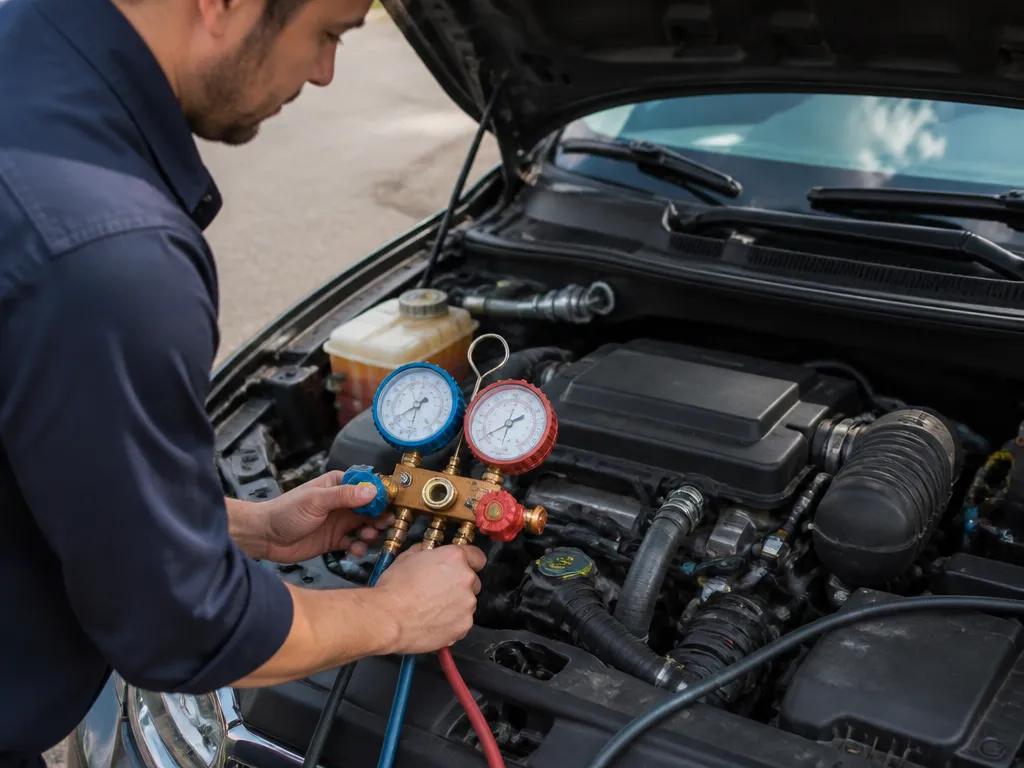
Low refrigerant is one of the most common reasons AC works under easy conditions but fails in the heat. With too little refrigerant, the system may not maintain the pressures it needs, and the evaporator may not absorb heat efficiently. The result is cold air on mild days and weak or nonexistent cooling when temperatures rise.
Look for signs of a leak without taking the system apart. Oily residue around AC fittings, hoses, the condenser, or the firewall area where the lines enter the cabin can point to a refrigerant leak. Some cars also show a pattern of cooling normally at first, then blowing warmer after running in the heat as the low charge causes the cycle to become unstable.
Refrigerant handling involves safety and environmental concerns, so have a qualified shop perform a pressure test with gauges. The goal is not simply to “top it off.” The technician needs to confirm the charge and determine whether the system is leaking. Recharging without repairing a leak usually brings the same problem back.
Follow this order to reduce guesswork:
- Verify that the problem repeats in hot weather with the AC set to MAX cool.
- Observe whether the compressor engages and stays engaged. Sustained cycling can point to other issues.
- Have a licensed shop check system pressures and look for leak sources.
- Repair the leak, then evacuate and recharge the system to the vehicle’s specification.
Test the Cabin Air Filter and Evaporator for Freeze-Up
A clogged cabin air filter reduces airflow across the evaporator and can make cooling inconsistent. On mild days, the system may still provide acceptable airflow. In hot weather, the evaporator works harder, and reduced airflow can let its surface become too cold. Ice then forms, producing the familiar pattern of cold air followed by weak or warm airflow.
Check the cabin filter first because it is inexpensive and quick to inspect on most cars. Compare the old filter with a new one rather than judging it in isolation. If it is dark, matted, or visibly packed with dust and pollen, replace it and retest the system.
Evaporator freeze-up usually appears as a noticeable change after several minutes in hot conditions. Airflow weakens, and the air becomes less cold. Some systems automatically reduce compressor output when sensors detect icing. To the driver, that still feels like the AC has stopped working.
For a basic airflow test, set the AC to MAX cool, turn the blower to high, and confirm that air comes strongly from the vents. If airflow remains weak with the fan on high, investigate the cabin filter, blower motor, duct leaks, and other airflow restrictions before focusing on refrigerant.
Inspect the Condenser Fan and External Airflow
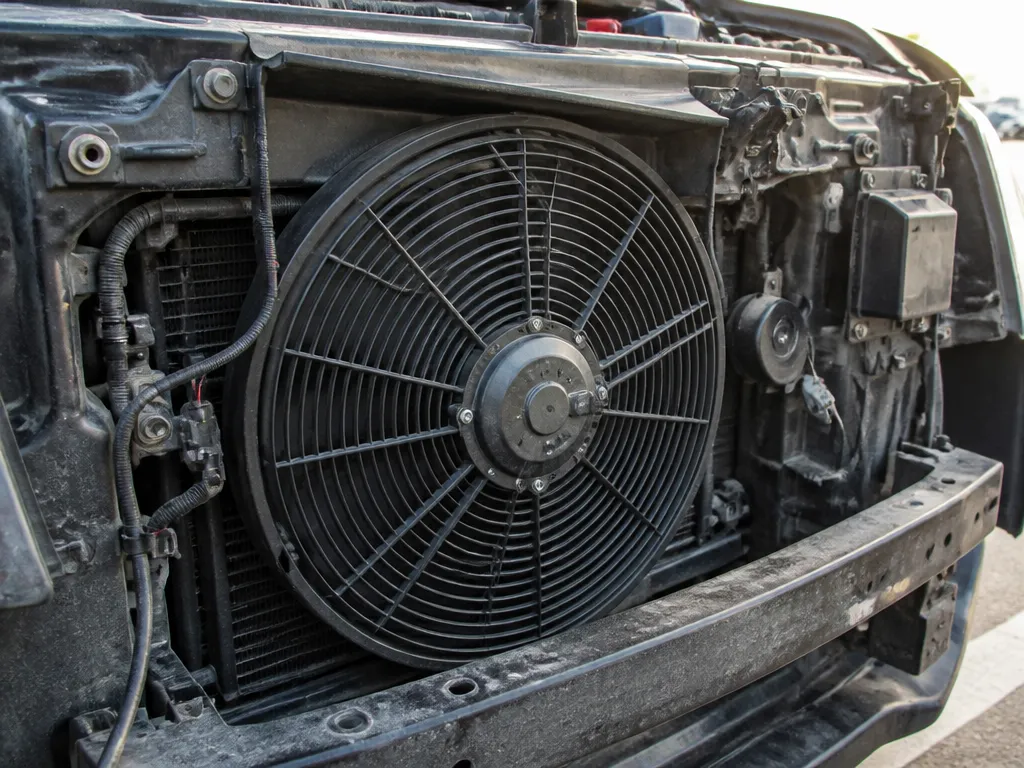
The condenser fan often separates an AC system that works on cool days from one that barely cools in the heat. The condenser needs steady airflow to release heat. If the fan is weak, starts late, fails to run, or moves too little air because of debris or a failing motor, high-side pressure rises and cooling suffers.
Start with a visual inspection. Make sure leaves, bugs, and aftermarket parts are not blocking the area in front of the condenser. Look for bent fan blades if they are visible, debris near the radiator support, and signs of fan or motor damage.
Then check whether the condenser fan runs when you turn on the AC in hot conditions. Many vehicles use multiple fan speeds or stages, so a fan that runs sometimes may still have a control or motor problem.
A failing fan circuit can remain hidden in cooler weather because the condenser can reject enough heat with less airflow. In high heat, the system needs its full cooling capacity, and the weak fan becomes obvious.
If the fan does not run when it should, fix the fan, control module, relay, wiring, or motor issue before recharging the AC. Otherwise, you may pay for refrigerant while the actual problem is inadequate heat rejection.
Confirm the Blend Door and Temperature Sensors Work Correctly
HVAC control problems can mimic low refrigerant because the system may stop commanding cold air under certain conditions. A faulty blend door can route air away from the cold evaporator path. Temperature sensors can also misread cabin or evaporator temperature and cause the control module to reduce compressor operation or airflow.
The thermostat is more of a related engine-cooling issue than a direct AC failure, but it can still matter. If engine coolant temperature control is abnormal, it may affect heat-exchanger behavior or HVAC control logic in some designs. An engine that runs hotter than normal, combined with inconsistent AC performance, deserves attention.
Blend-door symptoms often stand out. The vents may produce different temperatures, or the system may blow cold air on one setting and warm air on another. A failing blend-door motor may hunt for position or make repeated clicking or other noises when you change settings.
Sensor faults are harder to identify without diagnostic equipment. An inaccurate evaporator temperature sensor or skewed cabin-temperature sensor can trigger freeze protection too early or prevent the system from calling for enough cooling. A diagnostic scan can show the actual sensor readings while the AC is operating.
Fix the Cause and Verify Cooling in Hot Weather
Match the repair to the failure you actually found. If the refrigerant is low and you locate a leak, repair the leak, evacuate the system, and recharge it to the correct specification. If the condenser fan does not run, repair the fan control or wiring and confirm that the fan engages during AC operation in the heat. If airflow is restricted, replace the cabin air filter, confirm strong vent airflow, and watch for signs of evaporator freeze-up.
After the repair, test the AC under conditions that previously caused the failure. Set it to MAX cool, select recirculation if the vehicle has it, and run the blower on high until the system stabilizes. Measure the temperature at the center vents with a thermometer. If you do not have one, use a consistent baseline such as cold, steady air for 10 minutes at idle in 85°F+ weather.
Watch the system over time. A properly functioning system should remain cold as the engine and cabin heat-soak. If it gets colder at first and then warms after several minutes, the original problem may still be present or another fault may be affecting the system.
Use this practical order to avoid wasted effort:
- Replace the cabin air filter if its condition is questionable.
- Check condenser fan operation with the AC on in hot weather.
- Test system pressures, verify the refrigerant charge, and repair any leaks.
- Scan HVAC readings for blend-door and temperature-sensor problems.
Once the underlying fault is repaired, the AC should remain cold in hot weather because it can maintain the refrigerant cycle, airflow, and condenser heat rejection it needs.
FAQ
Why does my car AC only work in the morning or when it’s cooler out?
Hot weather increases AC workload, so airflow restrictions and condenser-fan problems appear faster. A slightly low refrigerant charge may also feel acceptable on mild mornings but fail as temperatures rise. If the AC becomes weak only after the vehicle heat-soaks, prioritize condenser-fan operation and refrigerant-charge testing.
How much does it cost to fix low refrigerant in a car AC?
The cost depends on whether the system needs only a recharge or also requires leak detection and repair. A recharge alone may cost less than finding and repairing a leak, but repeated recharges usually cost more over time. If the leak remains, the AC will likely return to the same “works only when it’s cool outside” behavior.
Can a bad condenser fan make AC warm only in hot weather?
Yes. If the condenser fan does not run properly, the system cannot reject heat effectively when outside temperatures are high. Cooling may remain stable in mild conditions but become weak or inconsistent in high heat because the condenser requires more airflow.
What should I check first before taking my car in for AC repair?
Start with the cabin air filter, then confirm strong airflow from the vents with the blower on high. Next, check whether the condenser fan runs when the AC is on and the car is hot. If both are working, have the system tested with AC gauges instead of guessing by adding refrigerant.
Is it safe to recharge car AC myself if it’s only weak in hot weather?
DIY recharging can be unsafe and may not fix the underlying problem if the system has a leak, airflow fault, or control issue. Overfilling can damage components, and stop-leak products can complicate later repairs. Have the system pressure-tested, identify the leak or fault, and recharge it to specification after the repair.

- Top 10 Best Helmet For Xpulse 200 2026 - October 5, 2026
- Top 10 Best Helmet For Xsr 155 2026 - October 5, 2026
- Top 10 Best Helmet For Xc Mtb 2026 - October 5, 2026