Car Dead And Key Stuck In Ignition: 3 Ways To Fix It Fast

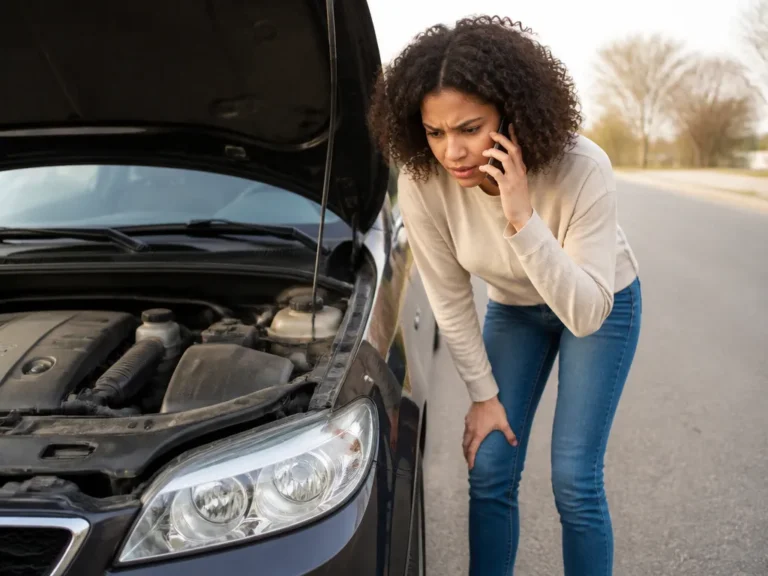
A dead car battery can leave the key stuck because low voltage may keep the ignition or electronic steering-column lock from releasing. A locked steering wheel can also put mechanical pressure on the ignition cylinder. Do not force the key. Turn the steering wheel a few degrees left and right while gently moving the key toward START or ACC, then jump-start the car.
If the key still will not move after power is restored and steering-wheel pressure is relieved, stop trying. Forcing it can bend or damage the lock cylinder and make the repair more expensive.
Key Takeaways
- Do not force the key. Repeated hard turns can damage the lock cylinder and raise repair costs.
- Relieve steering-wheel pressure. Turn the wheel left and right while gently moving the key from OFF toward START.
- Jump-start the car. Restoring battery voltage may let the ignition switch release and the key turn.
- Use jumper cables safely. Connect positive to positive, connect negative to a grounded metal point, then wait 2-5 minutes.
- Stop if resistance increases. If the key will not budge after these steps, call roadside assistance or a locksmith.
What to Do When the Battery Is Dead and the Key Is Stuck
Confirm that the car actually has a battery-related power problem. The battery may be dead if the headlights are out or very dim, the dashboard is blank, or the engine made slow cranking sounds before falling silent.
If you feel grinding or the key binds more tightly as you turn it, stop. Move to a jump-start or call for help rather than using more force.
Why a Dead Battery Can Leave the Key Stuck
Low voltage can keep some ignition-related components from operating normally. Depending on the vehicle, the ignition switch, electronic steering-column lock, or related circuits may need sufficient battery voltage before the key can rotate or release.
The steering wheel can also make the key feel jammed. If the wheel is pressed against its locking position, the lock cylinder may be under mechanical tension even when the key and cylinder are otherwise fine.
Free Checks to Try Before Calling a Locksmith
These checks cost nothing and target the most common causes of a stuck key:
- Move the key gradually. Apply light pressure, pause, and continue in small increments. A low-voltage ignition may release gradually.
- Remove and reinsert the key carefully. If the key comes out easily, remove it and reinsert it fully. If it does not come out easily, leave it in place.
- Check the keyway for debris. Use a flashlight. If you see grit or a small object, use a soft, dry cloth with a light touch. Avoid spraying in a lubricant unless you know it is safe for that ignition cylinder.
If the headlights and dashboard are completely dead, restoring battery voltage is the more useful next step.
How to Use Jumper Cables to Restore Power
A jump-start is the most practical non-locksmith option because it restores the voltage the ignition system may need. It can also confirm whether the dead battery is contributing to the problem.
Before connecting the cables, turn off all accessories. Put both vehicles in Park, or Neutral for manual transmissions, apply the parking brakes, and make sure the vehicles do not touch. Connect the cables in this order:
- Connect the red clamp to the dead battery’s positive (+) terminal.
- Connect the other red clamp to the working battery’s positive (+) terminal.
- Connect the black clamp to the working battery’s negative (-) terminal.
- Connect the other black clamp to an unpainted metal ground point on the dead car, such as an engine bracket or solid bolt head. Keep it away from the battery if possible.
Start the working car and let it run. Wait 2-5 minutes, then try turning the key. If the key turns partway but will not go farther, stop forcing it and let the dead battery charge a little longer.
Follow these safety precautions:
- Keep hands, clothing, and tools away from belts and fan blades.
- Do not let the clamps touch each other.
- If you smell burning or see smoke, disconnect the cables immediately and reassess the problem.
How to Remove the Key Without Damaging the Ignition
Avoid random lubricants in an emergency. Unknown products can attract debris or leave gummy residue inside the keyway. Use a product only if you already know it is safe for ignition cylinders and will not interfere with the lock mechanism.
If you need the key out for towing or to prevent further attempts, stop when it no longer moves in either direction. Continued force can misalign or warp the cylinder.
When a Locksmith or Mechanic Is the Safer Choice
Call roadside assistance, a locksmith, or a mechanic when:
- The key still will not move after a safe jump-start and gentle steering-wheel relief.
- Resistance increases, the cylinder grinds, or the key is only partially seated.
- The keyway or key appears damaged.
- You suspect an ignition switch failure because the car still does not respond after a jump-start and the key still will not rotate.
- The vehicle shows security-system problems, such as multiple warning lights or repeated lockouts.
- The key remains stuck and you are no longer making progress.
A jump-start attempt is usually less costly than damaging the lock cylinder. If the key remains in the “won’t turn, won’t release” state after reasonable attempts, a professional can determine whether the problem is the ignition switch, steering-lock actuator, or lock cylinder.
What to Check After the Car Starts
A jump-start may get you moving without fixing the reason the battery went dead.
Test the battery’s condition after the car starts. If it is more than a few years old or dies repeatedly after starting, plan on replacing it rather than relying on another jump-start.
Check the charging system if the car runs briefly and then dies again. Loose battery terminals, corrosion, or a failing alternator can create the same dead-battery problem repeatedly.
Pay attention to the ignition. If the key felt tight or needed wiggling, the cylinder may be wearing out. Arrange an inspection if the sticking returns.
Finally, check the jumper-cable connections and battery terminals. A loose clamp or terminal can mimic a dead battery and cause the ignition problem to return.
FAQ
Why is my key stuck in the ignition when the battery is dead?
The likely causes are low voltage affecting the ignition or electronic steering-column lock and mechanical pressure from the steering wheel. The battery may need charging before the ignition system operates normally.
Can I fix a dead-battery stuck key without jumper cables?
Sometimes, if steering-wheel pressure is the only problem. If the dashboard is completely dead, restore power with a jump-start or battery replacement.
What is the safest way to use jumper cables for this problem?
Connect the red clamps to the positive terminals first. Connect the final black clamp to a grounded metal point on the dead car, away from the battery if possible. Start the working car and wait 2-5 minutes. If anything smokes or smells hot, disconnect the cables immediately and stop.
How much does a locksmith or mechanic usually cost for this?
The price varies by vehicle and location, so request a diagnostic quote before work begins. The cost depends on whether the problem is the steering-lock actuator, ignition switch, or lock cylinder. A jump-start that solves the problem is usually cheaper than replacing the lock cylinder.
What is the most common mistake people make with a stuck ignition key?
Repeatedly forcing the key is the most common mistake. Hard turns can wear the internal lock components and damage the cylinder alignment, turning a power or steering-lock problem into a replacement job. Stop when you feel grinding or increasing resistance and call a professional.

- Top 10 Best Helmet For Xtreme 125r 2026 - October 5, 2026
- Top 10 Best Helmet For Xpulse 200 2026 - October 5, 2026
- Top 10 Best Helmet For Xsr 155 2026 - October 5, 2026