Car Keeps Running After Turned Off: 7 Possible Causes And Fixes

A car that keeps running after you turn the key off or press the Start/Stop button has not fully stopped combustion. The engine is still receiving some combination of spark, fuel, air, or control commands. The problem is usually called run-on or dieseling, and the likely cause depends on whether the car has a gas or diesel engine.
Gas engines most often keep running because of hot carbon deposits, excess idle airflow, a sticking throttle or idle-control component, or an ignition-switch or engine-control fault. Diesel engines can continue running without a spark, sometimes by burning fuel or engine oil after the normal shutdown command has been cut.
What the Shutdown Behavior Tells You

Start by watching how long the engine runs and whether the RPM stays steady or climbs. Run-on that lasts only a few seconds usually points to heat-soak ignition or a hot idle condition. Run-on that lasts tens of seconds, happens repeatedly, or causes the RPM to rise suggests uncontrolled airflow, a throttle problem, or a shutdown-control fault.
A key-off event should remove the engine’s ignition command immediately. A push-button shutdown may leave accessories or other systems powered briefly, but the engine should stop firing and idling. If you can still hear the engine running or see the tachometer moving, treat it as abnormal run-on.
Diesel engines change the diagnosis. They can continue combusting because they do not need a spark, and the engine may keep running until its fuel or oil source is controlled. That behavior is not harmless.
What the Pattern Suggests
- Safety first. If the engine keeps running with the key removed, treat it as a possible throttle or control failure. Do not let it rev.
- Check the fuel type. Diesel run-on often continues until the engine starves for fuel, while gas-engine run-on usually points to an ignition, airflow, or control problem.
- Inspect air leaks. A vacuum leak can keep a gas engine supplied with enough air to continue idling.
- Consider electrical inputs. A sticking ignition switch or failed latch circuit can leave the engine computer thinking the car is still in “run.”
- Account for heat. Carbon deposits can stay hot after shutdown and ignite the mixture for a few seconds.
- Use targeted checks. Record the run time and RPM behavior first, then inspect idle airflow, the throttle body, and shutdown wiring.
Diesel Run-On Compared With Gas-Engine Run-On
Diesel run-on occurs when fuel and air continue entering the engine after the normal shutdown command. Combustion can continue without a spark. Engine oil pulled into the intake, soot, an incorrect fuel-air balance, or a fuel-control fault can keep the engine idling until the fuel source is reduced.
Common diesel triggers include oil entering through worn turbo seals or crankcase-ventilation problems. A fuel-control problem may also fail to stop injection properly. If the engine hunts, runs unevenly, continues for a long time, or starts to accelerate, shut down safely and have it diagnosed promptly.
Gas engines usually stop when the ignition and fuel commands are cut. Continued running generally falls into three categories:
- Residual ignition from hot carbon deposits
- Airflow that keeps the engine supplied through the idle circuit
- An electrical or control fault that fails to cancel spark, fuel, or the run command
Hot-Soak Ignition After a Warm Shutdown
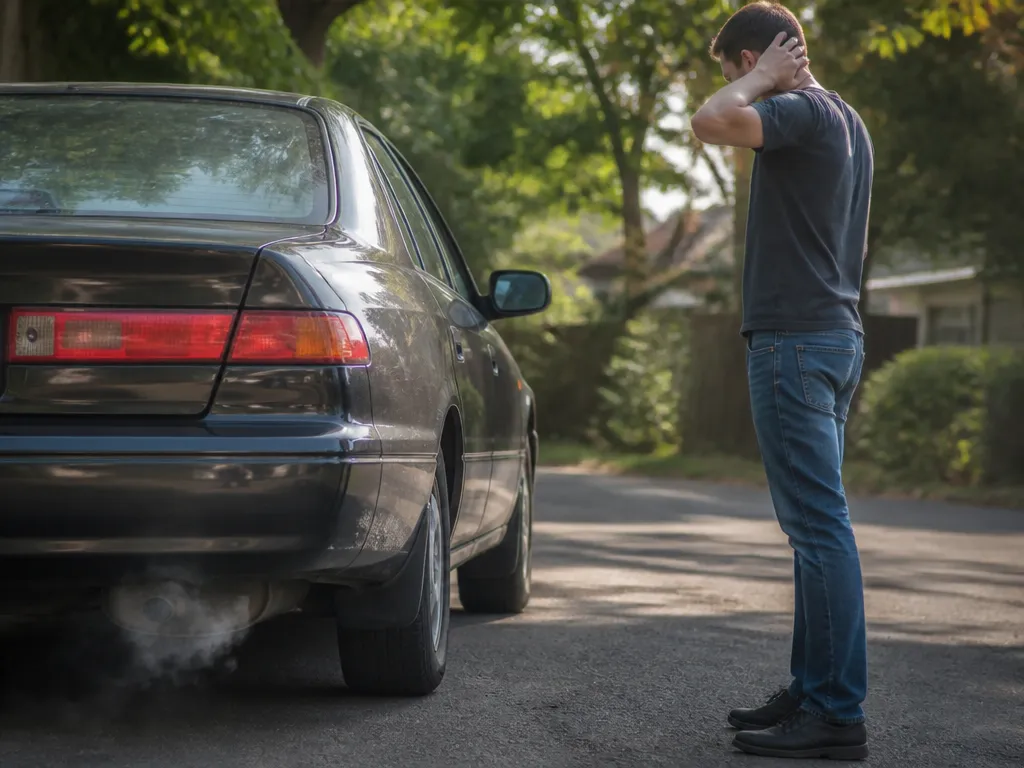
Hot-soak run-on occurs when a very hot engine keeps coughing or idling after you switch it off. Carbon deposits in the intake ports, throttle body, or combustion chambers can remain hot enough to ignite the air-fuel mixture after the normal shutdown command.
Hot-soak run-on is more likely with:
- Carbon buildup from short trips and incomplete warmups
- A dirty throttle body or intake that holds heat and residue
- A lean idle strategy or sticky idle component that allows extra airflow
A car that runs for a long time when cold, or whose RPM rises during run-on, does not fit a simple heat-soak explanation well. Long or escalating run-on usually points to an ongoing airflow or control failure.
Vacuum Leaks and Idle-Air Problems
A vacuum leak can keep a gas engine alive by supplying air through a path that should be closed at shutdown. Under normal conditions, the engine control system closes the throttle or targets a low idle and stops fueling. An unintended air path can keep the engine turning if fuel and ignition are not cut completely.
The problem may involve more than a cracked hose. Controlled idle air can pass through the throttle body, an idle-control valve on many engines, and intake-manifold vacuum passages. A leak at any of these points can bypass the throttle plate and create a permanent source of idle airflow.
Look for these clues:
- A rough hot idle or stumbling at stops points toward an idle-air problem or vacuum leak.
- A problem that began after an intake hose, PCV valve, vacuum line, or throttle assembly was replaced points toward that recent work.
- RPM that changes sharply when you add an engine load or alter airflow suggests an air-path problem rather than an ignition switch alone.
Inspect hoses, clamps, PCV connections, and intake lines for cracks, loose fittings, or connections that are not fully seated.
Ignition-Switch and Shutdown-Control Faults

The engine may keep running because the vehicle still thinks it is in “run” mode. On many cars, the ignition switch or ignition-control module sends the signals that tell the engine computer and fuel and ignition systems to shut down. A worn switch, loose connector, or failed electrical latch can prevent that command from reaching the engine control properly.
Other symptoms may include:
- The dash stays lit as if the key is still in the “on” position.
- Starting or shutting down is inconsistent.
- The engine keeps running only sometimes.
- The problem occurs even when the engine is cold.
Push-button systems add another layer because the car may retain accessory power and keep some modules active briefly. That is normal only if the engine itself has stopped firing. If it continues running every time you press Stop, electrical input or control-module problems become more likely, especially when the dash signals are inconsistent.
Throttle-Body and Idle-Control Problems
A sticking throttle body or idle-control valve can keep the engine running by preventing airflow from returning to the expected closed or minimum-idle position. Even with a shutdown command present, enough air through the throttle plate or idle-bypass circuit can keep combustion going briefly.
Common signs include:
- High idle or a delayed return to idle after revving
- Rough idle when warm
- Carbon buildup around the throttle plate
- Idle-control-valve contamination, especially in a car used for many short trips
These problems can overlap with hot-soak behavior. After driving, deposits and components heat up, and a sticky mechanism may move just enough to keep feeding air.
Throttle bodies rarely stick fully open. More often, they hold an unintended amount of idle airflow. The engine may continue at a stable RPM or creep slightly higher until another system limits it.
How to Diagnose the Cause Without Guessing
Make the symptoms repeatable without forcing the engine to run. Do not let it run for a long time or rev it to “prove” what is happening. Record the pattern, then check the simplest likely causes first.
Fastest Diagnostic Sequence
- Record the symptoms. Note whether the car uses gas or diesel, how long the engine runs, and whether the RPM stays steady or rises.
- Check the shutdown response. On a gas car, confirm that the dash and tachometer drop as expected when you turn the key off or press Stop.
- Inspect the air path. Check hoses, clamps, PCV connections, and recently serviced intake lines for cracks or loose fittings.
- Inspect throttle and idle components. Look for heavy carbon buildup on the throttle body and check idle-control-valve operation if the engine uses one.
- Compare hot and cold behavior. Test the car when fully cold, then again after a normal warm drive. Compare how long the engine runs.
- Check shutdown wiring and controls. If the engine runs even when cold and does so repeatedly, inspect ignition-switch or latch signals and relevant connectors for looseness or wear.
- Scan for fault codes. Check for codes involving idle control, throttle position, air leaks, MAF/MAP plausibility, and powertrain communication. Codes will not automatically identify the repair, but they can reduce guesswork.
Which Cause to Check First
| Likely cause area | Best first check | Typical pattern |
|---|---|---|
| Vacuum/idle air leak | Inspect hoses, clamps, PCV, and intake vacuum lines | Runs briefly or idles longer than expected after shutdown |
| Throttle body / idle control sticking | Inspect throttle-plate movement, carbon buildup, and idle-control-valve contamination | Stable idle that will not drop, worse when hot |
| Hot-soak ignition from carbon | Compare cold and hot shutdown behavior | Seconds-long run-on after a hot shutdown, then stops |
| Electrical ignition switch/latch fault | Check shutdown consistency, connectors, and related codes | Happens unpredictably or even when cold; dash signals are inconsistent |
| Diesel fuel-control fault or oil ingestion | Diagnose why fuel control is not stopping and check intake and oil sources | Continues longer on a diesel and may hunt or accelerate |
Repairs That Make Sense First
A visibly loose vacuum hose or intake connection is a sensible first repair. If the throttle body is coated with carbon, careful cleaning may resolve sticking and idle-control problems, but follow the vehicle’s procedure. Electronic throttles and idle-control valves may require inspection, cleaning, adaptation, or a relearn procedure. Replacing parts at random is an expensive way to approach the problem.
For an ignition-switch or electrical-latch fault, you can inspect connectors and wiring for looseness or damage. Avoid replacing modules without testing, because control-module repairs can become expensive quickly. If the engine does not shut down reliably, have the fault diagnosed before continuing to drive the car.
Diesel run-on deserves more urgency. An engine that continues running because of an oil or fuel supply problem can become a runaway. The correct repair depends on whether the source is fuel control, turbocharger oil leakage, crankcase ventilation, or another intake problem, so scan the vehicle and inspect the fuel and oil paths rather than guessing at parts.
Use the Behavior to Choose the Next
- Runs only a few seconds, mostly when hot: Check for hot-soak ignition, carbon buildup, and minor throttle or idle-control sticking.
- Runs longer when hot and idles strangely: Check the throttle, idle-air path, and vacuum system.
- Runs even when cold and repeats every time: Check ignition-switch, latch, and engine-control shutdown signals.
- A diesel keeps idling after shutdown for longer stretches: Check fuel-control problems and possible oil ingestion promptly.
Frequently Asked Questions
Why does my gas engine keep running for a few seconds after I turn the key off?
This is often caused by “hot-soak” ignition, where hot carbon deposits inside the engine remain hot enough to ignite the air-fuel mixture. It typically only lasts for a few seconds after the normal shutdown command is given.
How can I tell if my engine run-on is caused by a vacuum leak?
A vacuum leak may keep a gas engine running by supplying unintended airflow through a path that should be closed. Look for signs like a rough hot idle, stumbling at stops, or RPM changes when you alter the airflow.
Is it normal for a diesel engine to continue running after shutdown?
Diesel engines do not require a spark to combust, so they may continue running if fuel or oil is still entering the engine. This can happen due to fuel-control faults or engine oil being pulled into the intake through worn turbo seals.
What should I do if the engine RPM starts to rise after I turn it off?
If the RPM climbs or the engine runs for tens of seconds, it suggests uncontrolled airflow, a throttle problem, or a shutdown-control fault. Shut the engine down safely and have it diagnosed promptly to prevent damage.
Could a faulty ignition switch be the reason my car won’t stop?
Yes, a worn switch or a failed electrical latch can prevent the “stop” command from reaching the engine computer. You might notice other symptoms, such as the dashboard staying lit as if the key were still in the “on” position.

- Top 10 Best Helmet For Xtreme 125r 2026 - October 5, 2026
- Top 10 Best Helmet For Xpulse 200 2026 - October 5, 2026
- Top 10 Best Helmet For Xsr 155 2026 - October 5, 2026