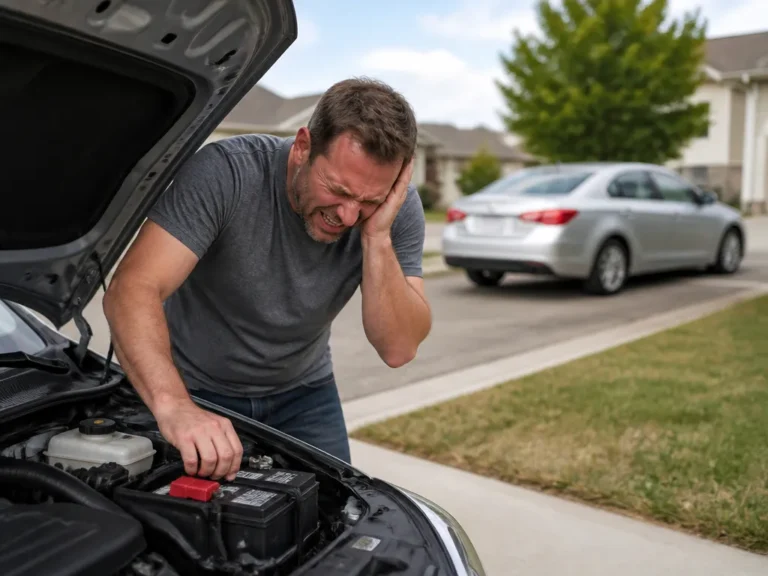
Car Sputters When Air Conditioner Is On: Why Your Car Sputters

Car sputters when the air conditioner is on because the AC adds mechanical drag and electrical demand while the engine is trying to maintain a steady idle. A weak idle-control system, vacuum leak, fuel problem, ignition misfire, or AC compressor fault may not show up with the AC off, but the extra load exposes it.
The most common causes fall into three groups:
- Idle-control problems: A dirty throttle body, vacuum leak, or poor idle air control keeps the engine from compensating for compressor load.
- Fuel or ignition problems: A weak fuel pump, regulator, spark plug, coil, or plug wire may cause a misfire when the engine is under extra load.
- AC clutch, compressor, or electrical faults: A bad relay, fuse, connector, ground, clutch, or pressure signal can make the compressor engage harshly or cycle repeatedly.
Watch for an idle drop when you turn the AC on, scan for OBD-II codes, and inspect the compressor wiring and control signals. If the symptom happens only when the AC is engaged, diagnose the AC load rather than replacing engine parts at random.
Key Takeaways
- AC adds load. Turning AC on increases engine drag and electrical demand, which can expose weak idle control.
- Codes narrow the causes. Start with an OBD-II scan, especially for misfire and idle-related codes, then inspect AC control circuits.
- Clutch or compressor faults matter. Bad clutch cycling, a failing relay, a fuse problem, or damaged wiring can create torque spikes that feel like sputtering.
- Fuel and spark can fail under load. A weak fuel pump, fuel regulator, or ignition component may work at idle with the AC off but misfire when the compressor engages.
- Vacuum leaks are common. Even a small leak can disrupt idle control and worsen sputtering when the AC turns on.
- Save compressor replacement for last. Check idle control, vacuum, fuel pressure, ignition, and AC signals before buying a compressor.
Why the AC Makes an Existing Engine Problem Sputter
Turning on the AC changes two things at once. The compressor adds resistance to the engine, and the alternator often works harder to supply the blower, cooling fans, sensors, and control modules. If the engine is already close to losing a stable idle, that added demand can expose a problem with airflow, fuel delivery, ignition timing, or AC control.
The timing of the sputter usually points to the fault:
- The idle drops and the engine stumbles as the AC turns on. This points toward idle air control, throttle body buildup, or a vacuum leak.
- The sputter comes and goes with compressor cycling. This suggests a clutch, compressor control, relay, fuse, wiring, or pressure-sensing problem.
- The engine misfires under the added load. This points toward weak fuel pressure or volume, an ignition problem, or an intake air leak.
Decide Whether the Problem Is Low Idle or a Load Surge
The fastest diagnostic clue is what happens to engine speed when the compressor engages. If the engine struggles immediately after you turn the AC on, suspect low idle control, throttle body contamination, or a vacuum leak. If the idle stays stable but the engine stumbles in repeated bursts, especially when the compressor cycles, suspect an AC load surge or control problem.
Idle speed depends on a balance between airflow, fuel, ignition timing, and vacuum signals. The ECU uses the throttle body, idle air passages, and other inputs to keep RPM steady. Carbon buildup can restrict the intended airflow, while a vacuum leak can distort the readings used to control the mixture. When the compressor adds load, the ECU may not compensate quickly or accurately enough, and the engine stumbles.
An AC load surge has a different feel. The compressor may engage harshly, cycle too often, or fail to engage smoothly because of a relay, fuse, wiring resistance, clutch-control problem, or incorrect sensor input. Each sudden engagement creates a torque change that can briefly pull down RPM and feel like a misfire.
Try this test:
- Warm the engine and let it idle in Park or Neutral with the AC off for 30 seconds.
- Note whether the idle is steady and whether the engine shakes.
- Turn the AC on and watch for an immediate RPM drop, hunting, or a repeated stumble.
The timing helps determine whether to start with idle and vacuum checks or with the compressor control system.
Use Check Engine Codes to Narrow the Cause
A scan tool can quickly separate an engine misfire from an AC control problem. If the sputtering occurs with a check engine light, or the light flashes during the symptom, record the actual code numbers instead of relying on a general description such as “running lean.”
Misfire codes are especially useful because the extra AC load can make a weak cylinder fail more often. Look for codes identifying a specific cylinder, random misfire, or a misfire that occurs under particular conditions. Fuel-trim codes can point toward a vacuum leak or intake problem. Throttle-position, idle-control, or airflow-sensor plausibility codes steer the diagnosis toward the intake and idle system.
Some vehicles also store codes for the AC compressor clutch circuit, refrigerant pressure sensor, cooling fan control, or AC system performance. The code may not include the word “AC,” so check the freeze-frame data for engine load, RPM, and throttle position when the fault occurred. That information can show whether the problem happened at idle, immediately after the AC turned on, or during compressor cycling.
Write down each code and what the car was doing when it appeared. You can then clear the codes and perform a short test with the AC on to see which one returns first. The first returning code may identify the underlying fault rather than a result of the original problem.
Inspect the AC Compressor Clutch and Electrical Circuit
The compressor should engage smoothly and consistently when the AC is turned on. Depending on the vehicle, a compressor clutch may engage directly, or the engine control module or HVAC system may vary compressor operation. A clutch that chatters, engages briefly, or drops out repeatedly can cause torque changes that feel like sputtering.
Start with a visual inspection:
- Look for rubbed-through insulation.
- Check for loose connectors.
- Inspect the compressor clutch connector for corrosion.
- Look for damaged grounds.
- Check for loose or damaged wiring near the compressor.
A high-resistance connector or ground can create an intermittent problem. Basic checks can reveal loose connections and visible damage, but deeper electrical testing requires a wiring diagram and accurate voltage measurements.
Check the AC fuses and relays as well. A weak relay or partially damaged fuse can cause low-voltage operation and incomplete clutch engagement. If the vehicle uses an AC control relay pack, corroded relay contacts can produce the same symptom.
The refrigerant pressure signal also matters. If the system incorrectly senses pressure as too high or too low, it may cycle the compressor aggressively. Repeated cycling creates repeated load changes, particularly at idle. The engine may feel as though it has a problem even though an inaccurate pressure signal is driving the AC behavior.
If live data is available, compare compressor command status with actual operation. The data may show whether the control module is requesting AC, commanding clutch engagement, or reporting an electrical fault. That distinction tells you whether the problem is with the command or with the component carrying it out.
Check Fuel, Spark, and Airflow With the AC On
Start with fuel if the sputter feels like fuel starvation. Check fuel pressure with a gauge rather than judging it by feel. Inspect the fuel filter if it is overdue for replacement, and check the fuel pump relay and wiring for voltage drop. A weak pump, dirty fuel pressure regulator, or restricted delivery system can cause hesitation and misfire under specific load conditions.
Next, check the ignition system. A misfire during AC operation may come from an ignition coil, spark plug, or plug wire on older vehicles. If the scan identifies a cylinder, match that cylinder to its ignition components. Even without a misfire code, ignition instability remains possible, but scanning and watching misfire counters during AC-on testing should come first.
Airflow and mixture can also shift when the AC changes idle stability. Inspect for vacuum leaks, cracked intake hoses, and dirty throttle body passages. On vehicles with a mass airflow sensor, a leak after the sensor can make the calculated mixture inaccurate. On vehicles using a manifold absolute pressure sensor and vacuum signals, a leak can distort load calculations. The engine may seem fine with the AC off because idle control has more margin, then stumble when the extra load leaves less room for error.
Test Idle Speed, the Throttle Body, and Vacuum Leaks
Idle stability often explains AC-on sputtering because the compressor engages while the engine is at idle or near idle. If the base idle is already too low, the ECU has less room to compensate. A dirty throttle body or vacuum leak can make that compensation even less effective.
First, verify the idle-speed specification for the exact year, make, model, and engine. Some vehicles require an idle relearn after throttle cleaning or a battery reset. If live RPM and throttle-position data are available, watch what changes when the AC turns on. A large RPM dip or hunting that does not recover quickly points toward an airflow or idle-control problem.
Inspect the throttle body and its control passages for carbon buildup. Deposits can restrict airflow around the throttle plate and interfere with the ECU’s idle strategy. Clean it with a throttle-body-safe cleaner, and avoid flooding electronic sensors. Follow the vehicle’s relearn procedure afterward. If no special procedure is available, allow the ECU to complete its idle adaptation through the driving and idle cycles specified for that vehicle.
Then inspect the vacuum system:
- Intake manifold vacuum hoses
- Brake booster hose connections
- PCV valve hoses
- Cracked rubber lines near the intake
- Intake connections and hoses
A smoke test is the most useful way to find small leaks. Spray tests can miss minor leaks or produce confusing results when AC operation changes fan load and engine behavior.
With the AC off, the idle should settle smoothly. With the AC on, it should drop slightly and recover quickly. If it drops and then sputters, the likely categories are an airflow-control problem, a vacuum leak that becomes more noticeable under load, or a fuel or ignition fault triggered by the added demand.
Match the Repair to the Confirmed Fault
Repair the system that fails the tests instead of replacing parts based on the symptom. If vacuum leaks or unstable idle air are present, fix those first and retest with the AC on. If live data shows persistent misfire counts during AC operation, address fuel pressure and ignition components. Consider compressor-related parts only after the engine runs steadily under load.
Use this repair order:
- Correct idle-control problems. Clean the throttle body, repair vacuum leaks, and confirm that idle control returns to normal when the AC engages.
- Stabilize fuel delivery. If fuel pressure is low or fluctuates under load, repair the fuel pump, filter, regulator, or wiring responsible.
- Restore ignition quality. Replace spark plugs and ignition components that match the misfire codes, then verify that the coils operate consistently with the AC on.
- Repair AC controls and wiring. Fix corroded connectors, damaged harness sections, relay problems, and ground faults before condemning the compressor.
- Replace the compressor only after confirmation. Compressor replacement makes sense when the clutch is commanded to engage, refrigerant pressure behavior is consistent, and the electrical circuit is working correctly but the compressor still fails to operate properly.
The evidence should match the repair. A compressor that receives an electrical command but cannot produce the expected pressure response may be faulty. A compressor that cycles repeatedly because of an incorrect pressure signal points instead to the sensor or its circuit. A clutch that chatters because of low control voltage points back to the wiring, relay, or ground.
The biggest savings usually come from checking the basics first. Throttle cleaning and vacuum-leak repairs can cost less than replacing components, while a proper scan can prevent an unnecessary compressor purchase. If the compressor does need replacement, follow the refrigerant-system service procedures required for that vehicle and confirm that a faulty control input is not causing the same symptom.
FAQ
Can a bad AC compressor cause engine sputtering?
Yes, but usually indirectly. A failing compressor clutch or compressor control circuit can create sudden torque changes at idle, which feel like sputtering. It can also cause harsh cycling when refrigerant pressure readings are incorrect. If the vehicle has misfire or fuel-trim codes, check fuel, spark, and vacuum before replacing the compressor.
Why does my car only sputter when I turn the AC on?
Turning on the AC adds engine load and electrical demand when idle control is already working to keep RPM steady. That extra demand can expose a vacuum leak, dirty throttle body, weak fuel delivery, or ignition problem. It can also reveal an AC electrical fault that makes compressor engagement inconsistent or causes the clutch to chatter.
How long should I drive with the AC off to avoid damage?
Keep the AC off until you diagnose the cause, especially if the engine is misfiring. If the sputtering comes with a flashing check engine light, stop driving and have the vehicle checked urgently to help prevent catalytic converter damage. If there is no flashing light and the car drives smoothly, you may be able to limit AC use while scanning the codes and performing basic inspections.
What’s the cheapest thing to check first for AC-on sputtering?
Start with an OBD-II scan, then inspect vacuum hoses and intake connections for leaks. Check the throttle body for buildup and inspect the AC fuses and relay connections for visible damage. Throttle cleaning is often less expensive than fuel-pressure testing or compressor replacement.
Is it safe to keep driving if it sputters only in Park with AC on?
It may be safe for short trips if the engine runs smoothly otherwise and the check engine light is not flashing, but the fault still needs attention. Stop driving and arrange an inspection if the sputtering worsens, the vehicle loses power, or a flashing misfire warning appears.

- 10 Best Jack For F250 Super Duty Review (October 2026) - October 12, 2026
- 10 Best Jack For Flat Tire Review (October 2026) - October 12, 2026
- 10 Best Jack For Ford Transit Review (October 2026) - October 12, 2026