Can A Pcv Valve Cause A Misfire?

Yes, a faulty PCV valve can cause an engine misfire, usually by disturbing vacuum, airflow, and the fuel mixture. A valve that sticks open, leaks, or collapses can create a lean or unstable idle that triggers misfire codes under load or at stoplights. A stuck-closed valve can also alter crankcase pressure and airflow, although rough running and oil vapor problems may appear before misfires.
A PCV problem can produce codes such as P0300 and P0301–P0304. The fastest way to narrow it down is to compare the misfire pattern with the engine’s airflow symptoms instead of immediately replacing spark plugs or coils.
PCV-Related Misfire Takeaways
- Yes, indirectly. A bad PCV can create a lean misfire by disturbing vacuum and airflow.
- Idle quality provides clues. Rough idle, hunting RPM, and misfires at idle point toward airflow-control problems.
- Compare the pattern with ignition symptoms. A PCV-related misfire often comes with intake or vacuum symptoms rather than one-cylinder-only behavior.
- Stuck-open and stuck-closed failures differ. A stuck-open valve often acts like a vacuum leak, while a stuck-closed valve causes crankcase-pressure and ventilation problems.
- A home inspection is usually quick. Check for clogging, inspect the hoses and grommets, and perform an airflow check when the valve design allows it.
Can a PCV Valve Cause a Misfire? Symptoms?
A PCV valve can cause a misfire when it creates a vacuum leak or disrupts the air-fuel mixture. Common symptoms include rough idle, hesitation during light throttle, and misfire codes that become more noticeable after the engine warms up.
Pay attention to when the misfire occurs. Misfires at stoplights, while idling in traffic, or immediately after lifting off the gas fit a problem that changes manifold vacuum and airflow – two conditions directly connected to the PCV system.
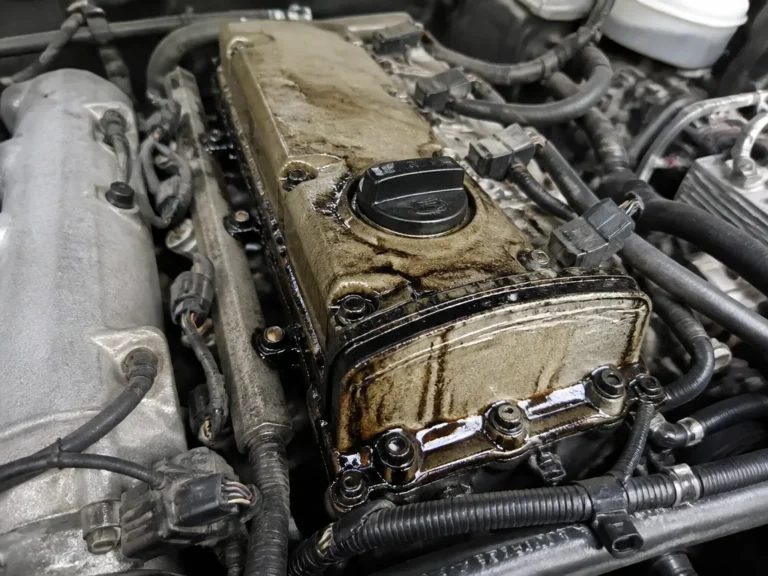
Crankcase-related clues can help narrow it down. You may see increased oil mist around the intake tract, smell blow-by vapors, or find contaminated PCV hoses. These symptoms are not guaranteed, but they often appear when the valve sticks or the PCV passage becomes restricted by deposits.
How a PCV Valve Affects Idle and Cylinder Balance
The PCV valve sends crankcase vapors into the intake so the engine can burn them. Because that path connects to manifold vacuum, a stuck-open valve or cracked hose can pull unmetered air into the intake. The resulting lean mixture is most likely to cause trouble at idle, when engine vacuum is high and the combustion margin is relatively small.
A lean mixture can upset cylinder-to-cylinder balance. One cylinder may register the first misfire because of how it receives air and fuel during an unstable idle, but the same problem can also produce multi-cylinder misfires when the overall mixture becomes inconsistent.
The engine control system depends on stable vacuum and predictable airflow at idle. A PCV fault forces it to make constant fuel-trim corrections, which may appear as oscillating RPM, surging, or a shaky engine that never quite settles.
Which One Fits the Misfire Pattern?
A stuck PCV valve and a bad spark plug can both cause misfires, but their patterns often differ. A failed plug or ignition coil usually points repeatedly to one cylinder. A PCV problem is more likely to affect overall running quality or several cylinders as vacuum changes.
Air-management symptoms support a PCV diagnosis. Rough running mainly at idle, hunting RPM, and misfires linked to manifold-vacuum conditions make the PCV system or another intake leak worth checking before you assume an ignition failure.
A spark plug or coil problem is usually more contained. The same cylinder code often returns after the codes are cleared, and the misfire may become worse under load when that cylinder cannot maintain a strong spark.
PCV Failure Modes That Can Trigger Misfires
The two main PCV failure modes are excessive flow and restricted flow. A stuck-open valve or cracked PCV hose can act like a vacuum leak, leaning out the mixture and making a misfire more likely.
With excessive flow, the engine receives more air than the mass airflow system expects, or the manifold-pressure signal used for fueling becomes inaccurate. Lean misfires often appear at idle, light cruise, and deceleration, when the engine is already operating close to the edge of stable combustion.
A stuck-closed valve is less likely to act as a direct vacuum leak, but it can still affect how the engine runs. Restricted crankcase ventilation changes crankcase pressure, increases oil-vapor buildup, and makes the airflow path less consistent. On some engines, those changes can worsen combustion stability and contribute to misfires.
The valve itself may not be the failed part. A blocked PCV passage, deteriorated hose, disconnected fitting, or failed grommet can create the same vacuum or crankcase-pressure symptoms.
How to Test the PCV Valve at Home
You can perform a useful home inspection in about 15 to 30 minutes, even without diagnostic tools. Start with the hoses and seals because many apparent PCV failures come from a leak, clog, or damaged grommet rather than the valve itself.
Inspect the PCV hose and every connection. Look for cracks, loose clamps, hardened rubber grommets, oil wetness in the wrong places, or any sign that the valve or passage is not sealing.
Check the valve for visible clogging if it is accessible. Remove it and look for sludge or thick deposits. Oily residue is common, but heavy buildup can restrict the valve and make it stick closed.
Then perform a function check appropriate to the valve design. Some PCV valves allow airflow in one direction, so gentle airflow testing can reveal a restriction or incorrect flow. Follow the vehicle’s service guidance if it specifies a different method or warns against forcing air through the valve. Some systems use internal diaphragms or spring valves that can be damaged by an aggressive test.
If the valve is old or shows deposits, damage, or a failed seal, replacement is usually more reliable than trying to clean a partially blocked passage. Afterward, inspect the hoses again so a cracked line does not leave the original vacuum leak in place.
When to Suspect a Vacuum Leak or Intake Problem
Suspect a broader intake problem when the symptoms match classic vacuum-leak behavior. An unstable idle, surging RPM, or hissing around hoses and fittings may indicate that the PCV system is providing the path for the leak.
A PCV hose or intake breather hose may connect to the intake manifold or another vacuum-controlled area. If the hose cracks or its grommet leaks, the resulting vacuum leak can mimic a bad PCV valve even when the valve itself works properly.
Intake problems are also more likely when the misfire began after work on the air system. Replacing a manifold gasket, throttle body, intake tube, or sensor can disturb a hose, fitting, or seal and create a new leak.
Verify the Repair With Codes, Idle Quality, and a Test Drive
After replacing a suspect PCV valve, clear the codes and see what returns. If the misfires disappear, especially when they occurred mainly at idle or during light throttle, the repair likely addressed the correct system.
Check the idle before taking a longer drive. A successful PCV repair should make the engine steadier at stoplights, reduce hunting RPM, and produce calmer running once the engine is warm.
If you have scan data, compare fuel trims and misfire counters before and after the repair. The misfire counts should stop accumulating under the same conditions that originally triggered them, and fuel-trim behavior should become more stable.
Take a short test drive and pay attention to deceleration and light throttle. If the misfire previously appeared after lifting off the gas or during gentle cruising and now feels consistent, the change supports an airflow or vacuum correction rather than a single-cylinder ignition repair.
FAQ
Can a PCV valve cause misfire codes like P0300?
Yes. A failing PCV valve can create incorrect vacuum or airflow, causing lean combustion and misfire codes such as P0300 for random or multiple-cylinder misfires and cylinder-specific codes. Rough idle or misfires during idle and light throttle are common because manifold vacuum is high in those conditions.
What are the signs of a bad PCV valve besides misfires?
Common signs include unstable idle, surging or hunting RPM, oil mist around hoses or intake areas, and unusual crankcase-vapor behavior. You may also hear a hiss near a PCV hose or find increased deposits where the PCV system feeds into the intake.
How do I test a PCV valve without special tools?
Inspect the valve, hoses, grommets, and connections for cracks, looseness, sludge, or other damage. If the valve is accessible, remove it and perform a basic airflow check that matches its design. Replace it if it is clogged, damaged, or does not operate as specified for the vehicle.
Can a PCV valve cause a misfire only on one cylinder?
It can, but that pattern is less typical. A PCV problem usually affects overall air and mixture stability, which can produce multiple-cylinder misfires. If the same cylinder continues to set a code after the PCV system is corrected, a spark component, injector, or other cylinder-specific fault is more likely.
If I replace the PCV valve, should the misfire stop?
It should stop if the PCV valve caused the lean or unstable mixture. Clear the codes after replacement, verify a smoother idle, and monitor misfire counts during a short drive. If the same cylinder continues to misfire, check for other vacuum leaks before testing the ignition and fuel systems.

- Top 10 Best Helmet For Xtreme 125r 2026 - October 5, 2026
- Top 10 Best Helmet For Xpulse 200 2026 - October 5, 2026
- Top 10 Best Helmet For Xsr 155 2026 - October 5, 2026